- Company Articles
- Products and Technology
- Product knowledge
- Cost-Effectiveness of Anti-Slip Adjustable Leveling Feet vs. Disposable Alternatives

Cost-Effectiveness of Anti-Slip Adjustable Leveling Feet vs. Disposable Alternatives
Related Product
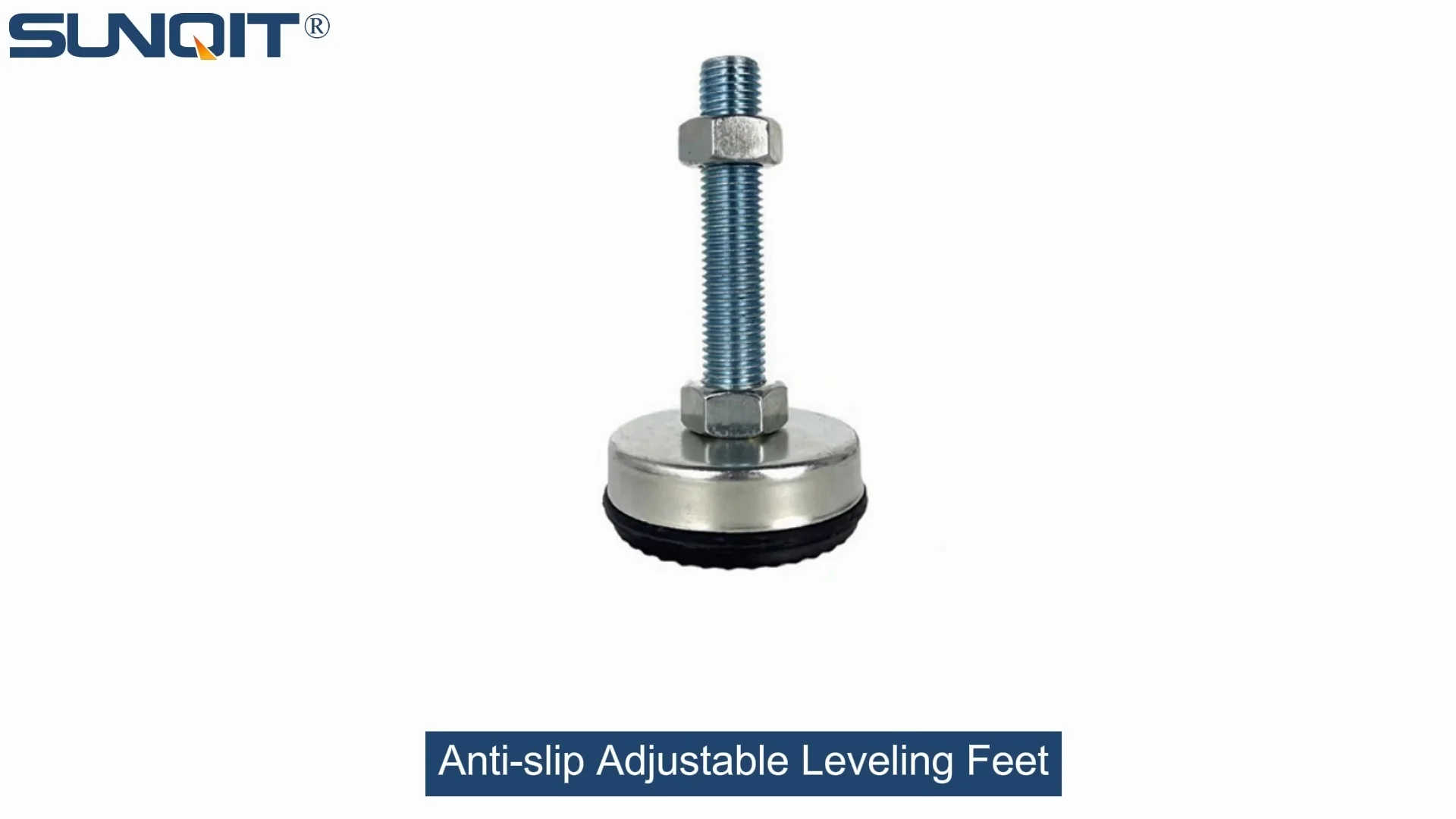
Anti-slip Adjustable Leveling Feet
Anti-slip Adjustable Leveling Feet are designed to keep machines level when placed on uneven or sloped ground, the rubber base will prevent product slip during work.
Walk into any manufacturing plant, warehouse, or workshop, and you'll notice a quiet hero keeping operations steady: the humble workbench. But what keeps that workbench from wobbling when a technician hammers a part into place, or a assembly line worker leans on it to reach a tool? More often than not, it's the components under the legs—leveling feet. Yet, not all leveling solutions are created equal. While many businesses opt for quick, cheap fixes like plastic shims or wooden blocks, others invest in anti-slip adjustable leveling feet . The question is: which choice truly delivers long-term value? In this article, we'll dive into the cost-effectiveness of these two approaches, exploring how the right leveling solution can save money, boost safety, and even enhance productivity in the long run.
The Hidden Cost of Wobbly Workbenches
Imagine this: Maria, a quality control inspector at a small electronics factory, is tasked with examining circuit boards under a microscope. Her workbench, though sturdy-looking, has a slight tilt. To fix it, the maintenance team slipped a few plastic shims under one leg last month. Today, the shims have shifted—again. As Maria adjusts her microscope, the table wobbles, and her hand jerks. A tiny scratch appears on the circuit board, rendering it defective. That's a $50 part wasted, not to mention the time spent reworking the order. Multiply that by dozens of workbenches across a facility, and the costs add up fast.
Unstable work surfaces aren't just a nuisance—they're a silent drain on resources. They lead to:
- Product defects : Wobbling tables cause misalignments, especially in precision tasks like assembly or measurement.
- Worker fatigue : Employees unconsciously compensate for instability, leading to muscle strain and reduced focus.
- Safety risks : Tools, parts, or even the workbench itself can tip over, causing injuries or equipment damage.
- Wasted time : Workers spend precious minutes readjusting shims, blocks, or (foot pads) instead of doing their jobs.
In the world of lean system principles—where efficiency and waste reduction are king—these issues directly contradict the goal of "doing more with less." So why do so many businesses stick with temporary fixes? Let's start by understanding the options on the table.
What Are Anti-Slip Adjustable Leveling Feet?
Anti-slip adjustable leveling feet are engineered components designed to stabilize equipment by compensating for uneven floors. They typically consist of a threaded stem (which screws into the equipment leg), a base plate with an anti-slip surface (often rubber or textured plastic), and a locking nut to secure the height once adjusted. Unlike one-and-done shims, these feet can be twisted to raise or lower individual legs, ensuring the workbench (or conveyor, rack, or machine) stays level even as floors settle or equipment shifts.
Take the heavy duty split foot seat variant, for example. Built with durable materials like steel or aluminum, it's designed to handle high loads—perfect for workbenches in automotive or aerospace shops where tools and parts can weigh hundreds of pounds. The anti-slip base, often made of rubber, grips concrete or tile floors, preventing slippage even when the floor is slightly oily or dusty. And because they're adjustable, they adapt to uneven surfaces without needing constant replacement.
Key Features of Quality Leveling Feet
Not all adjustable feet are created equal. The best ones offer:
- Adjustability range : At least 10-50mm of height adjustment to accommodate minor floor irregularities.
- Load capacity : Ratings from 100kg to 1000kg+ per foot, depending on the application.
- Anti-slip materials : Rubber or polyurethane bases that resist sliding, even under vibration.
- Corrosion resistance : Zinc plating or stainless steel construction for use in damp or chemical-exposed environments (like food processing plants).
- Easy installation : Threaded stems that fit standard equipment legs, with hex nuts for quick locking.

Disposable Alternatives: The "Cheap" Fix That Costs More
When faced with a wobbly table, many businesses reach for disposable or temporary solutions. These are the quick fixes—easy to find, cheap to buy, and simple to install. But as Maria's story shows, "cheap" often comes with hidden costs. Let's break down the most common disposable alternatives and their true price tags.
1. Plastic Shims: The "One-and-Done" Solution
Plastic shims are thin, wedge-shaped pieces of polyethylene or PVC, sold in packs of 50 for $5-$10. They're lightweight, easy to trim, and seem ideal for small height adjustments. But here's the catch: plastic degrades over time, especially under heavy loads. UV light, temperature changes, and even minor friction cause them to crack or warp. In a busy workshop, shims under a workbench might last 2-3 months before needing replacement.
Worse, they're prone to slipping. Unlike adjustable feet with anti-slip bases, shims have smooth surfaces that slide on concrete or tile. A single bump from a passing turnover trolley can dislodge them, leaving the workbench wobbly again. For a facility with 20 workbenches, each using 2-4 shims, that's $20-$40 per month in replacement shims alone—plus the labor cost of having a maintenance worker reinstall them.
2. Wooden Blocks: The "Eco-Friendly" Myth
Wooden blocks are another popular choice, often repurposed from scrap lumber. They're free (if you have leftover wood) and feel sturdier than plastic. But wood absorbs moisture, which causes it to swell or rot in humid environments (like warehouses with poor ventilation). Even in dry settings, constant pressure from a heavy workbench can compress the wood, reducing its thickness over time. A block that's 10mm thick today might be 8mm thick in a year, requiring a new block to take its place.
Then there's the issue of pests. In facilities near wooded areas, wooden blocks can attract termites or ants, leading to infestations that cost thousands to eradicate. And unlike plastic, rotting wood can't be recycled—it ends up in landfills, making it less eco-friendly than it seems.
3. Foam Pads: The "Soft" Option
Foam pads, often used for furniture in offices, are sometimes repurposed for workshop leveling. They're cheap ($15 for a pack of 10) and provide a bit of shock absorption. But foam compresses under weight—fast. A 200kg workbench will flatten a foam pad in weeks, turning a 10mm pad into a 2mm pancake. They also trap dust and grime, becoming breeding grounds for bacteria in food or pharmaceutical settings. For most industrial applications, foam pads are little more than a temporary band-aid.

The Cost Comparison: Short-Term Savings vs. Long-Term Gains
To truly understand cost-effectiveness, we need to look beyond the initial price tag. Let's compare anti-slip adjustable leveling feet with disposable alternatives over a 5-year period—the typical lifespan of a workbench or material rack. We'll use a hypothetical scenario: a medium-sized factory with 30 workbenches, each requiring 4 leveling solutions (one per leg).
| Factor | Anti-Slip Adjustable Leveling Feet | Disposable Alternatives (Plastic Shims/Wooden Blocks) |
|---|---|---|
| Initial Cost per Workbench | $40 (4 feet x $10/foot) | $2 (4 shims x $0.50/shim) or $0 (scrap wood) |
| Total Initial Cost (30 Workbenches) | $1,200 | $60 (shims) or $0 (wood) |
| Lifespan | 10+ years (matches workbench lifespan) | 2-3 months (shims); 6-12 months (wooden blocks) |
| Replacement Frequency | 0 replacements over 5 years | 20 replacements (shims); 5 replacements (wooden blocks) |
| Total Replacement Cost (5 Years) | $0 | $600 (shims: 30 benches x $2 x 20 replacements); $0 (wood, but labor applies) |
| Labor Cost (Installation/Replacement) | 15 minutes per workbench ($5 labor cost at $20/hour); Total: $37.50 | 10 minutes per replacement per workbench; Total: $500 (shims: 30 benches x 20 replacements x $0.83 labor) |
| Productivity Loss (Defects, Downtime) | Minimal (stable work surfaces reduce defects by ~20%) | Estimated $2,500/year (based on 5 defective parts/month at $50 each, 30 benches) |
| Total 5-Year Cost | $1,237.50 | $13,160 (shims) or $12,500 (wooden blocks, including labor and defects) |
The numbers speak for themselves. While disposable alternatives seem cheaper upfront, they cost 10x more over 5 years when you factor in replacements, labor, and lost productivity. Anti-slip adjustable leveling feet, on the other hand, pay for themselves within the first year—and keep saving money long after.

Durability: Built to Outlast the Workbench
One of the biggest advantages of adjustable leveling feet is their durability. Made from materials like steel, aluminum, or reinforced plastic, they're designed to withstand the wear and tear of industrial environments. Let's take a closer look at how they hold up over time.
Material Matters: Steel vs. Aluminum vs. Plastic
Most industrial-grade leveling feet use zinc-plated steel for the stem and base, which resists rust and corrosion. In humid or wet settings (like car washes or breweries), stainless steel models are available, adding $2-$5 per foot but lasting 15+ years. Aluminum feet, though lighter, are ideal for applications where weight matters (e.g., mobile workbenches with caster and accessories ). They're also corrosion-resistant and won't scratch delicate floors.
Even plastic adjustable feet—often dismissed as "cheap"—are built to last. High-quality polypropylene feet with metal threaded inserts can handle 150kg per foot and resist chemical damage, making them suitable for labs or cleanrooms. Compare that to disposable plastic shims, which crack under 50kg of pressure, and the difference in durability is clear.
Maintenance: Set It and Forget It
Adjustable leveling feet require almost no maintenance. Once installed and locked into place with a hex nut, they stay put. Occasional checks (every 6 months) to ensure the nut hasn't loosened are all that's needed. Disposable alternatives, by contrast, demand constant attention. A single shift can dislodge a shim, requiring a maintenance worker to drop their tasks and readjust the workbench. Over a year, that's hours of lost productivity—time that could be spent on more critical repairs.
Safety: More Than Just Stability
Injuries in the workplace cost businesses an average of $42,000 per incident, according to the Bureau of Labor Statistics. Many of these injuries stem from preventable hazards—like unstable equipment. Disposable leveling solutions increase risk in three key ways:
Slip and Trip Hazards
Dislodged shims or blocks often end up on the floor, where workers can trip over them. In a busy warehouse, with employees moving turnover trolley and rack units, a stray shim is easy to miss—until someone's ankle twists, leading to a sprain or fracture.
Equipment Tip-Overs
Wooden blocks, when rotted or compressed, can collapse suddenly. A 300kg material rack with degraded blocks under one leg could tip,ing (crushing) tools, parts, or worse, a nearby worker. Adjustable feet, with their secure locking nuts and anti-slip bases, eliminate this risk entirely.
Ergonomic Strain
Workers compensate for wobbly tables by leaning awkwardly or gripping tools tighter, leading to repetitive strain injuries (RSIs) like carpal tunnel syndrome. Over time, RSIs result in missed workdays and workers' compensation claims. A study by the National Institute for Occupational Safety and Health (NIOSH) found that stable work surfaces reduce RSI rates by up to 35%—a statistic that directly impacts a company's bottom line.
Efficiency: How Leveling Feet Boost Lean Systems
Lean manufacturing is all about eliminating waste—whether it's time, materials, or labor. Disposable leveling solutions are a form of "waste" in the lean framework: they require constant replacement (overprocessing), create defects (defects), and take time to manage (non-value-added labor). Anti-slip adjustable leveling feet , by contrast, align perfectly with lean principles:
- Stability = Consistency : Stable workbenches reduce variability in production, ensuring parts are assembled to spec the first time.
- Adjustability = Flexibility : As workflows change, adjustable feet let workers reconfigure workbenches or material racks without replacing entire systems. Need to raise a table by 50mm to accommodate a new machine? Just twist the leveling feet—no shims required.
- Durability = Longevity : Lean systems prioritize assets that provide long-term value. Adjustable feet extend the lifespan of workbenches and racks, delaying the need for costly replacements.
Real-World Impact: A Case Study
To put this in perspective, let's look at a real example: Precision Parts Co., a mid-sized manufacturer of automotive components with 50 workbenches and 20 material racks. In 2020, they relied on plastic shims and wooden blocks for leveling. Their maintenance logs showed:
- 120+ shim replacements per month, costing $80/month in materials.
- 15 hours/month of maintenance labor spent on leveling (valued at $300/month).
- An average of 3 defective parts per week due to unstable work surfaces, costing $600/week.
In early 2021, they switched to anti-slip adjustable leveling feet, investing $2,000 (50 workbenches x 4 feet x $10/foot + installation labor). Within six months, the results were staggering:
- Shim and block costs dropped to $0.
- Maintenance labor for leveling fell to 2 hours/month ($40/month).
- Defective parts decreased to 1 per month, saving $2,300/week.
By the end of 2021, Precision Parts Co. had saved over $95,000—recouping their initial $2,000 investment 47 times over. Today, they're expanding the use of adjustable feet to their conveyor systems and assembly lines, citing "unprecedented stability and cost savings."
Environmental Impact: Green Savings
In an era of increasing focus on sustainability, the environmental cost of disposable leveling solutions can't be ignored. Plastic shims, for example, are rarely recyclable (most are made from mixed plastics) and end up in landfills, where they take 450+ years to decompose. Wooden blocks, while biodegradable, contribute to deforestation when sourced from non-sustainable lumber.
Anti-slip adjustable leveling feet, by contrast, are eco-friendly by design. Many are made from recycled steel or aluminum, and their long lifespan means less waste. At the end of their life, they're fully recyclable—unlike shims or foam pads, which become contaminated with grease and grime, making recycling impossible. For businesses aiming to reduce their carbon footprint, adjustable feet are a small change with a big environmental payoff.
Choosing the Right Leveling Feet for Your Needs
Not all adjustable leveling feet are the same, so it's important to select the right type for your application. Here's a quick guide:
For Heavy-Duty Workbenches or Racks
Opt for steel leveling feet with a load capacity of 500kg+ per foot. Look for features like zinc plating (for corrosion resistance) and a large anti-slip base (100mm+ diameter) for maximum stability.
For Cleanrooms or Food Processing
Stainless steel or plastic feet with smooth, non-porous surfaces are best. They resist bacteria growth and are easy to sanitize. Avoid wooden components, which can harbor germs.
For Mobile Workstations (with Casters)
Combination feet with built-in caster and accessories allow you to lock the workstation in place while leveling. Look for feet with swivel bases that don't interfere with caster movement.
For Outdoor or Damp Environments
Stainless steel feet with rubber bases are ideal—they won't rust and provide grip on wet surfaces. Avoid standard steel feet, which can corrode quickly in moisture.
Conclusion: Invest in Stability, Reap the Rewards
At first glance, disposable leveling solutions like plastic shims or wooden blocks seem like a budget-friendly choice. But as we've seen, their true cost—hidden in replacements, labor, defects, and safety risks—far outweighs their initial savings. Anti-slip adjustable leveling feet , by contrast, offer a one-time investment that pays dividends for years, boosting productivity, safety, and sustainability.
For businesses committed to lean system principles, the choice is clear: stability isn't a luxury—it's a strategic investment. By upgrading to adjustable leveling feet, you're not just fixing wobbly workbenches; you're building a more efficient, safer, and cost-effective operation. And in today's competitive market, that's the kind of advantage that makes all the difference.
So, the next time you spot a wobbly workbench, think beyond the quick fix. Ask yourself: Is this temporary solution costing me more than I realize? Chances are, the answer is yes. And the solution—adjustable leveling feet—is simpler, more affordable, and more effective than you might think.