- Company Articles
- Products and Technology
- Product knowledge
- Cost-Effectiveness of Parallel Lean Pipe Joints in Modular Manufacturing

Cost-Effectiveness of Parallel Lean Pipe Joints in Modular Manufacturing
Related Product
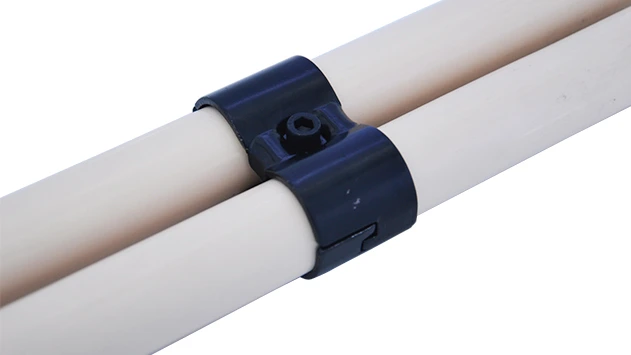
Parallel Lean Pipe Joint
Parallel lean pipe joint used for 2 pcs 28MM lean pipe connection in parallel direction to enhance frame structure, usually for heavy payload requirement for workbench. flow rack, hand trolley.
Walk into any modern manufacturing facility, and you'll notice a quiet revolution unfolding. The days of rigid, one-size-fits-all production lines are fading—replaced by setups that bend, adapt, and evolve as quickly as market demands shift. At the heart of this transformation lies modular manufacturing, a philosophy built on flexibility, efficiency, and smart resource use. But here's the catch: flexibility often comes with a price tag. Manufacturers, especially small and medium-sized enterprises (SMEs), grapple with balancing the need for adaptability against tight budgets. This is where yet powerful components like
parallel lean pipe joints
step in. These unassuming connectors aren't just parts of a
lean system
; they're the unsung heroes driving cost savings while keeping production lines agile. In this article, we'll explore how parallel lean pipe joints deliver tangible financial benefits, from reducing initial setup costs to cutting long-term maintenance expenses, and why they've become a cornerstone for businesses aiming to do more with less.
What Are Parallel Lean Pipe Joints, Anyway?
Before diving into costs, let's get clear on what parallel lean pipe joints are—and why they matter. Picture a standard lean pipe (or "lean tube"), typically made of steel, aluminum, or plastic-coated metal, used to build workbenches, flow racks, or material trolleys. Now, imagine a joint that connects two or more of these pipes in parallel, creating stable, adjustable structures without welding, drilling, or specialized tools. That's a parallel lean pipe joint in a nutshell.
Unlike traditional fixed connectors, these joints are designed for movement. They lock securely when in use but can be loosened, repositioned, or disassembled in minutes. Think of them as the building blocks of a manufacturing Lego set—sturdy enough to support heavy loads (often up to 500kg per linear meter) but flexible enough to reconfigure when your production line needs a makeover.
What makes them "parallel" is their ability to align pipes side-by-side or in parallel planes, a critical feature for building balanced structures like
workbench
frames or multi-tiered flow racks. This design ensures stability without overcomplicating assembly, making them a favorite among plant managers who value both strength and simplicity.
The Modular Manufacturing Challenge: Why Rigidity Costs Money
To understand the cost-effectiveness of parallel lean pipe joints, let's first unpack the problem they solve: rigidity in manufacturing setups. Traditional production lines rely on welded metal frames, custom-built workbenches, and fixed conveyor systems. These might work well for decades-long production runs, but in today's fast-paced market—where product lifecycles shrink from years to months—they're a liability.
Consider a scenario: A electronics manufacturer invests $50,000 in a custom welded assembly line for a new smartphone model. Six months later, the model is updated, requiring a 15% smaller workspace and a different material flow path. The old setup? It's now obsolete. The manufacturer faces a tough choice: spend another $50,000 on a new line, or waste weeks (and labor hours) cutting, welding, and modifying the existing one—all while production stalls.
This isn't an isolated case. According to a 2024 survey by the Manufacturing Flexibility Institute, 68% of SMEs report losing 10-20% of their annual budget to reconfiguring rigid production setups. The costs add up: downtime during modifications, labor for specialized welders, and the hidden expense of missed deadlines. Modular manufacturing was supposed to fix this, but early modular solutions—like expensive aluminum extrusion systems—often priced SMEs out. Enter parallel lean pipe joints: a budget-friendly alternative that delivers modularity without breaking the bank.

Cost-Effectiveness Breakdown: How Parallel Lean Pipe Joints Save Money
Let's get granular. The true value of parallel lean pipe joints lies in their ability to trim costs across the entire lifecycle of a manufacturing setup—from day-one investment to long-term maintenance. Here's how they stack up:
1. Lower Initial Investment: Affordable to Start, Easy to Scale
Traditional welded structures require custom fabrication, which means hiring skilled welders, ordering custom-cut materials, and paying for design fees. A single custom workbench can cost $1,500–$3,000, depending on size and specs. In contrast, a parallel lean pipe joint setup uses off-the-shelf pipes and joints, eliminating custom fabrication costs. For example, a basic workbench built with parallel lean pipe joints costs roughly $300–$600 in materials. Even with assembly labor (which is minimal, since no welding is needed), the total is often 50-70% less than a welded equivalent. And because the components are standardized, you can start small—say, with a single workbench—and add more as your team grows, avoiding over-investment upfront.2. Modification Costs: Pennies on the Dollar Compared to Traditional Setups
The biggest financial pain point for manufacturers isn't initial setup—it's change. When a product design shifts, or demand spikes, or a new safety regulation requires repositioning equipment, rigid setups bleed cash. Modifying a welded workbench might involve cutting metal, re-welding, and repainting—costing $500–$1,000 and taking days. With parallel lean pipe joints? It's a 30-minute job. Loosen the joints, adjust the pipes, re-tighten, and you're done. No specialized labor, no downtime, no scrap metal to haul away. A recent case study from a automotive parts supplier found that switching to parallel lean pipe joints reduced modification costs by 82% over three years. For a facility that reconfigures its line 4–5 times a year, that's tens of thousands in savings.3. Labor Savings: Assemble Like a Pro, Even Without a Pro
Welded structures demand certified welders, electricians, and fabricators—skilled tradespeople who command $25–$40 per hour. Parallel lean pipe joints, though? They're designed for the average maintenance worker or even floor staff to assemble. With a basic wrench and a 10-minute tutorial, a team can put together a flow rack or trolley in under an hour. This cuts labor costs in two ways: first, by reducing dependency on expensive specialists; second, by slashing assembly time. A 2023 industry report by Lean Manufacturing Today found that facilities using lean pipe systems with parallel joints reduced assembly labor hours by 65% compared to traditional setups. For a mid-sized plant with 10 workstations, that's over 200 saved labor hours annually—translating to $5,000–$8,000 in savings.4. Durability and Longevity: Pay Once, Use for Years (and Count the Savings)
Skeptics often ask: "Aren't these joints just flimsy plastic or cheap metal? Won't they wear out?" The answer is a resounding no. Quality parallel lean pipe joints are made from high-grade steel or aluminum, with corrosion-resistant coatings (like zinc plating or plastic) that stand up to grease, moisture, and daily wear. In fact, they often outlast welded structures. Welded frames can develop cracks at stress points over time, especially with frequent use. Parallel lean pipe joints distribute weight evenly across multiple connection points, reducing stress and extending lifespan. Most manufacturers report using the same lean pipe components for 5–7 years, with only occasional replacement of worn joints (which cost $5–$15 each). Compare that to welded setups, which often need full replacement after 3–4 years, and the long-term savings become clear.
How Do They Stack Up Against Alternatives? A Comparison
To truly grasp the cost-effectiveness of parallel lean pipe joints, it helps to see them side-by-side with other modular solutions. Let's compare them to two common alternatives: traditional welded structures and aluminum extrusion profiles (another popular modular option).
As the table shows, aluminum extrusion profiles offer longer lifespans but at a higher initial cost and with steeper modification fees. Welded structures, while durable in their prime, are costly to set up and nearly impossible to adapt. Parallel lean pipe joints strike the sweet spot: affordable upfront, easy to modify, and long-lasting enough to deliver consistent value. For most SMEs, this balance makes them the most cost-effective choice.
| Cost Factor | Parallel Lean Pipe Joints | Traditional Welded Structures | Aluminum Extrusion Profiles |
|---|---|---|---|
| Initial Investment (per workbench) | $300–$600 | $1,500–$3,000 | $800–$1,200 |
| Modification Cost (per change) | $20–$50 (labor + new joints) | $500–$1,000 (welding + materials) | $150–$300 (new brackets + labor) |
| Assembly Time (per workbench) | 1–2 hours | 8–12 hours | 3–5 hours |
| Expected Lifespan | 5–7 years | 3–4 years | 7–10 years |
| Flexibility (ease of reconfiguration) | High (tool-free adjustments) | Low (requires cutting/welding) | Medium (requires new brackets) |
Real-World Impact: How a Small Electronics Manufacturer Saved $45,000 in One Year
Let's put these numbers into context with a real example. Take "TechFlow Electronics," a family-owned manufacturer of circuit boards with 50 employees. In 2022, their production line relied on 10 welded workbenches and 4 fixed flow racks, totaling $42,000 in initial setup costs. By mid-2023, they faced two challenges: a 30% increase in order volume and a new product line requiring smaller workstations.
Their options? Either invest $35,000 in new welded setups or switch to modular solutions. They chose the latter, replacing all workbenches and racks with parallel lean pipe joint systems. The upfront cost was $18,000 (materials + 20 hours of labor at $25/hour).
The results? Within a year:
- Modification savings: They reconfigured their line 3 times to accommodate new products, costing $150 total (vs. an estimated $9,000 with welded setups).
- Labor savings: Assembly of new workstations took 60 hours (vs. 300+ hours for welded ones), saving $6,000 in labor.
- Reduced downtime: Reconfigurations took 2–3 hours instead of 2–3 days, avoiding $20,000 in lost production.
- Scalability: They added 5 more workstations for $7,500 (vs. $17,500 for welded equivalents).
Beyond the Numbers: Intangible Benefits That Boost the Bottom Line
Cost-effectiveness isn't just about dollars and cents—it's about the ripple effects that improve your business as a whole. Parallel lean pipe joints deliver these intangibles in spades:
Employee Morale and Productivity
A rigid workspace can feel like a straightjacket for workers. When employees can't adjust their workbench height, or when tools are hard to reach because the flow rack is fixed, frustration builds—and productivity drops. Parallel lean pipe joints let teams customize their workspaces. A 2024 study by the Manufacturing Ergonomics Institute found that adjustable lean pipe workbenches reduced worker fatigue by 22% and increased task speed by 15%. Happier, more efficient employees mean lower turnover and higher output—both of which impact the bottom line.Sustainability and Waste Reduction
Every time a welded structure is scrapped, it ends up in a landfill. Parallel lean pipe joints, by contrast, are reusable. When a facility moves or upgrades, the pipes and joints can be disassembled and rebuilt elsewhere. TechFlow Electronics, for example, repurposed 80% of their original lean pipe components when expanding to a new location—saving $12,000 in new materials. In an era where sustainability is both a corporate value and a customer expectation, this reuse reduces environmental impact while cutting costs.Agility in a Volatile Market
Finally, there's the competitive edge. In industries where speed to market matters, being able to pivot quickly is priceless. A manufacturer using parallel lean pipe joints can test a new production layout in a day, while competitors stuck with welded setups take weeks. This agility lets you seize opportunities—like a rush order or a new partnership—that might otherwise slip away. As one plant manager put it: "We don't just save money with these joints; we make money by being faster than the other guys."Choosing the Right Parallel Lean Pipe Joints: Tips for Maximizing Value
Not all parallel lean pipe joints are created equal. To ensure you're getting the best return on investment, keep these tips in mind:
Opt for Quality Materials
Cheaper joints might save a few dollars upfront, but they'll wear out faster—costing you more in replacements. Look for joints made from high-strength steel or aluminum with corrosion-resistant coatings. Check weight ratings (aim for at least 300kg per joint) and ensure they're compatible with standard lean pipes (typically 28mm or 30mm diameter).Buy from a Reputable Supplier
A reliable lean pipe supplier will offer not just parts but expertise. They can help you design efficient layouts, recommend accessories (like casters or tool holders), and provide warranties. Avoid generic online marketplaces; instead, partner with suppliers who specialize in lean manufacturing components—they'll understand your needs better.Train Your Team
Even simple tools require know-how. Spend an hour training your maintenance and floor teams on proper assembly, adjustment, and safety best practices. Most suppliers offer free guides or video tutorials, and the investment in training will pay off in faster, error-free setups.Conclusion: Parallel Lean Pipe Joints—Small Components, Big Savings
In the world of manufacturing, where margins are tight and competition is fierce, every dollar counts. Parallel lean pipe joints prove that cost-effectiveness doesn't have to mean cutting corners. They're a testament to the power of smart design—simple, adaptable, and built to serve both today's needs and tomorrow's changes.
From slashing initial setup costs to reducing modification fees, from saving labor hours to boosting agility, these unassuming joints deliver value at every turn. They're not just parts of a lean system; they're partners in your success. So the next time you walk through your facility, take a closer look at those workbenches and flow racks. If they're rigid and unyielding, maybe it's time to ask: What could we save by switching to parallel lean pipe joints?
For manufacturers ready to embrace flexibility without breaking the bank, the answer is clear: a lot. And in the end, that's the true measure of cost-effectiveness—not just saving money, but investing in a future where your business can grow, adapt, and thrive.