- Company Articles
- Products and Technology
- Product knowledge
- Cost-Effectiveness of T Slot Aluminum Pipe: Long-Term Savings Analysis

Cost-Effectiveness of T Slot Aluminum Pipe: Long-Term Savings Analysis
Related Product
T Slot Aluminum Pipe
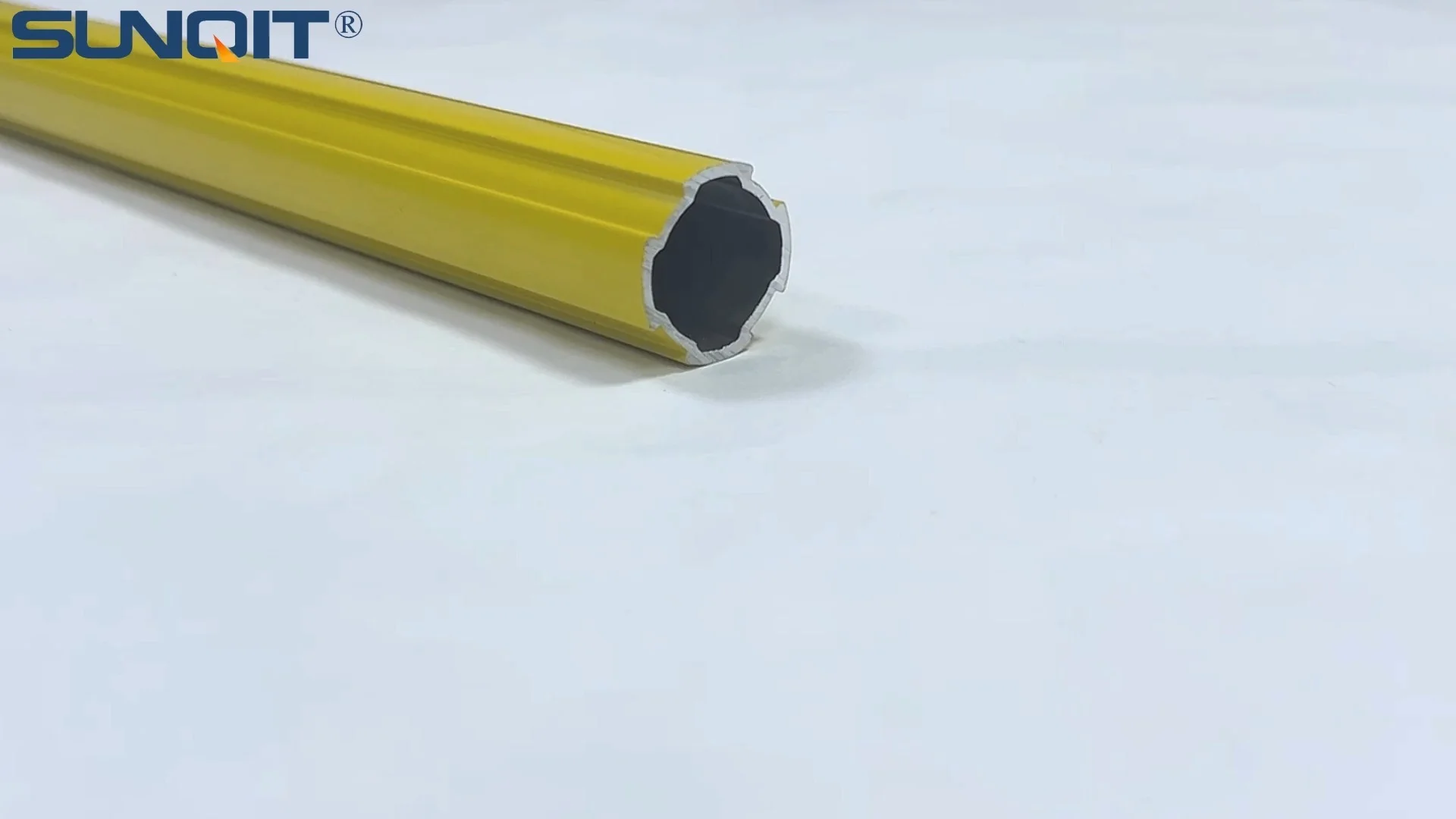
Aluminum pipe, it is used for workbench, flow rack,hand trolley assemble work with advantage of flexible and durable, yellow color makes it more attactive as a caution remind.
Introduction: The Hidden Cost of "Cheap" Solutions
Let's start with a scenario many small business owners know too well: You're setting up a new production line or reorganizing your warehouse. The budget is tight, and every dollar feels like a battle. When it comes to choosing materials for workbenches, racks, or flow systems, the options are overwhelming. Steel racks are sturdy but heavy and expensive to modify. Wooden shelves are cheap upfront but warp and rot within a few years. Then there's T slot aluminum pipe—lightweight, sleek, but with a higher initial price tag that makes you hesitate. "Is it worth the extra cost?" you wonder.
Here's the truth: Focusing solely on upfront expenses is a short-sighted approach that often costs businesses more in the long run. T slot aluminum pipe, often referred to as
aluminum extrusion profile
, isn't just another material choice—it's an investment in flexibility, durability, and long-term efficiency. In this article, we'll break down why choosing T slot aluminum pipe can lead to significant savings over time, even if the first invoice stings a little. We'll explore its durability, adaptability, and role in supporting lean manufacturing systems, all while keeping an eye on the bottom line. By the end, you'll see why this material isn't just a purchase—it's a strategic decision that pays dividends for years.
What Is T Slot Aluminum Pipe, Anyway?
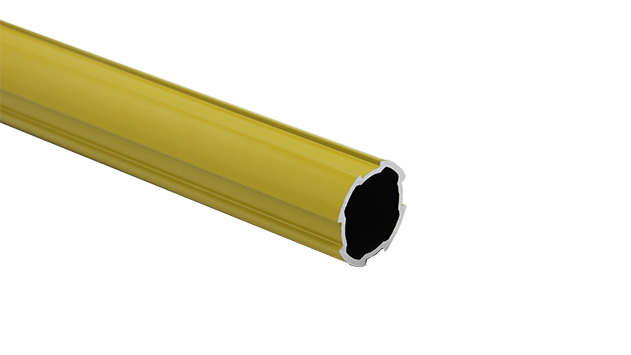
Before diving into costs, let's make sure we're on the same page about what T slot aluminum pipe is. Unlike generic aluminum tubing, T slot aluminum pipe—officially called
aluminum extrusion profile
—is created through a precision manufacturing process. Molten aluminum is forced through a die, shaping it into long, consistent profiles with built-in T-shaped slots along their length. These slots are the secret sauce: they allow for quick, tool-free assembly using specialized
aluminum profile accessories
like brackets, connectors, and end caps.
Think of it as adult Lego for industrial use. Want to build a workbench? Slide brackets into the slots, secure with bolts, and attach a tabletop. Need to add a shelf? Snap in a connector and mount a new profile. The result is a system that's both strong and surprisingly lightweight—strong enough to support heavy machinery, lightweight enough to reconfigure without hiring a crew.
But what really sets it apart is its versatility. While steel requires welding and wood needs cutting and sanding, T slot aluminum relies on simple hand tools and a few basic accessories. This modularity isn't just convenient; it's the foundation of its long-term cost-effectiveness.
The Upfront Cost Myth: Why "Cheap" Often Costs More
Let's address the elephant in the room: T slot aluminum pipe does cost more upfront than materials like steel or wood. A standard 4-foot steel workbench might run $200, while a comparable T slot aluminum version could be $350. At first glance, steel seems like the smarter choice. But here's the problem with that logic: it only accounts for day-one expenses, ignoring the total cost of ownership over time.
To illustrate, let's compare three common materials—steel, wood, and T slot aluminum—across key factors that impact long-term costs. The table below breaks down their initial investment, lifespan, annual maintenance, flexibility, and total 10-year cost:
The numbers speak for themselves. While steel and wood have lower upfront costs, their short lifespans and high maintenance requirements drive up total expenses over a decade. T slot aluminum, despite the higher initial price, ends up being the cheapest option long-term—saving $850-$1,050 per workbench over 10 years compared to steel, and even more compared to wood.
But why is this the case? Let's dig deeper into the factors that make T slot aluminum a cost-effective choice over time.
| Material | Initial Cost per Workbench | Estimated Lifespan | Annual Maintenance Cost | Flexibility (1-10 Scale) | 10-Year Total Cost* |
|---|---|---|---|---|---|
| Standard Steel | $200 | 5-7 years | $100 (rust treatment, welding repairs) | 3 (requires welding to modify) | $1,400-$1,600** |
| Wood | $150 | 3-4 years | $80 (sealing, replacing warped boards) | 2 (must be cut/rebuilt to modify) | $1,350-$1,690*** |
| T Slot Aluminum | $350 | 15-20 years | $20 (occasional cleaning, tightening bolts) | 9 (tool-free reconfiguration with accessories) | $550**** |
*Total cost includes initial investment + (annual maintenance x 10) + replacement costs. **Steel: Replaced once (year 5). ***Wood: Replaced twice (years 3 and 7). ****Aluminum: No replacement needed in 10 years.

Durability: When "Built to Last" Translates to Savings
One of the biggest drivers of long-term savings is durability. T slot aluminum pipe is built to withstand the harsh conditions of industrial environments—moisture, temperature fluctuations, heavy loads, and daily wear and tear. Unlike steel, it doesn't rust. Unlike wood, it doesn't rot, warp, or attract pests. This resilience means you won't be replacing components every few years, which is where hidden costs really add up.
Consider a warehouse in a humid climate. Steel racks might start showing rust within 2-3 years, requiring expensive sandblasting and repainting. Ignore it, and the rust weakens the structure, leading to safety risks and eventual replacement. Wood shelves in the same environment would warp from moisture, creating uneven surfaces that damage products or require shimming.
T slot aluminum, on the other hand, is naturally corrosion-resistant. Its smooth surface doesn't trap moisture, and even in damp conditions, it maintains its structural integrity. A study by the Aluminum Extruders Council found that aluminum extrusion profiles used in industrial settings have an average lifespan of 15-20 years—three times longer than steel and five times longer than wood in similar conditions.
For example, a food processing plant using T slot aluminum workbenches reported zero replacements in 12 years, despite daily exposure to water and cleaning chemicals. In contrast, their previous steel workbenches needed full replacement every 5 years. Over a decade, that's a 60% reduction in replacement costs alone.

Flexibility: Adapting Without Overhauling
In today's fast-paced business world, adaptability is key. Consumer demands change, product lines evolve, and workflows need to shift quickly to stay competitive. Rigid systems—like welded steel racks or fixed wooden workbenches—force businesses into expensive overhauls when change is needed. T slot aluminum, with its modular design and
aluminum profile accessories
, turns adaptation into a quick, low-cost process.
Let's say you run a small electronics manufacturer, and you're launching a new product line that requires a wider workbench. With a steel workbench, you'd need to hire a welder to cut and extend the frame, or buy a brand-new bench—costing time and money. With a T slot aluminum workbench, you simply loosen a few bolts, add a longer aluminum extrusion profile section using connectors, and reattach the tabletop. The whole process takes an hour, not a day, and costs a fraction of a new bench.
This flexibility is why T slot aluminum is a cornerstone of
lean system
implementation. Lean manufacturing focuses on reducing waste—including the waste of inflexible infrastructure. By using T slot aluminum, businesses can reconfigure workstations, flow racks, and material handling systems on the fly, aligning with changing production needs without investing in new equipment.
A manufacturing consultant I spoke with shared a story about a client in the automotive parts industry. The client had been using steel conveyor systems that couldn't keep up with a new, larger component. Replacing the steel system would have cost $40,000 and taken two weeks of downtime. Instead, they retrofitted the system with T slot aluminum rails and roller track accessories, adjusting the width and height in just three days for $8,000. That's a 75% cost reduction and 85% less downtime—all because the aluminum system was designed to adapt.
Maintenance: Less Time Fixing, More Time Producing
Maintenance is one of those hidden costs that sneak up on businesses. Steel needs painting, wood needs sealing, and both require frequent repairs. T slot aluminum? It's practically maintenance-free.
Let's break down the typical maintenance tasks for each material:
- Steel: Rust removal (sandblasting or chemical treatments), repainting every 2-3 years, welding to fix loose joints, replacing corroded bolts.
- Wood: Sealing with polyurethane annually, replacing warped or cracked boards, treating for mold or pests.
- T Slot Aluminum: Wiping down surfaces with a damp cloth to remove dust, occasionally tightening bolts (thanks to vibration in industrial settings), and replacing worn aluminum profile accessories (like connectors) for a few dollars each.
Case Study: How Acme Electronics Cut Costs with T Slot Aluminum
To put these concepts into practice, let's look at a fictional but realistic example: Acme Electronics, a mid-sized manufacturer of circuit boards with 50 employees and a 10,000-square-foot facility.
Before T Slot Aluminum (2018-2023):
Acme relied on steel workbenches and wooden flow racks. Over five years, they faced:
- High maintenance costs: $3,000 annually for rust treatment and repainting steel workbenches; $2,000 annually for replacing warped wooden rack boards.
- Frequent replacements: 20% of steel workbenches needed replacement every 3 years ($200 each, totaling $2,000 every 3 years).
- Production downtime: 12 days per year for reconfiguring or repairing infrastructure, costing $15,000 in lost output.
- Maintenance costs: $400 annually (cleaning, occasional bolt tightening).
- No replacements needed: All systems remain in like-new condition.
- Downtime reduced: 2 days per year for reconfigurations, costing $2,500 in lost output.
Lean System Integration: Reducing Waste, Boosting Efficiency
Beyond durability and flexibility, T slot aluminum plays a critical role in
lean system
implementation—a methodology focused on minimizing waste and maximizing value. In lean manufacturing, waste comes in many forms: overproduction, excess inventory, unnecessary movement, and inflexible infrastructure. T slot aluminum addresses the latter by providing a foundation for efficient, adaptable workflows.
For example, a
workbench
built with T slot aluminum can be customized to fit the exact needs of a task. Tools can be mounted directly to the bench using aluminum profile accessories, reducing the time workers spend reaching for supplies. Flow racks, constructed with aluminum extrusion profiles and roller tracks, ensure materials are delivered exactly where they're needed, when they're needed—eliminating the waste of excess inventory and unnecessary transportation.
A lean coordinator at a medical device manufacturer explained how T slot aluminum transformed their production line: "We used to have fixed steel workstations that couldn't accommodate different product sizes. Workers would walk 20 feet to grab tools, and we'd have piles of inventory sitting around because the racks couldn't be adjusted. After switching to T slot aluminum, we reconfigured the workbenches to be product-specific, mounted tools overhead with aluminum brackets, and built adjustable flow racks. Now, walk time is down 60%, inventory is reduced by 30%, and production output is up 25%. All from changing our infrastructure."
This integration with lean principles doesn't just save money—it makes businesses more competitive. By reducing waste and improving efficiency, T slot aluminum helps companies deliver products faster, with higher quality, and at lower costs—all of which boost the bottom line.
Calculating Your ROI: When Will You Start Saving?
At this point, you might be convinced that T slot aluminum is worth considering, but you're wondering: How long until the savings offset the initial investment? The answer depends on your specific situation—number of workstations, current maintenance costs, and how often you need to reconfigure systems—but a general rule of thumb is 2-3 years for most businesses.
To calculate your own ROI, use this simple formula:
ROI Break-Even Point (Years) = Initial Investment ÷ Annual Savings
Annual savings include reduced maintenance costs, avoided replacement costs, and savings from reduced downtime. For example, if you invest $35,000 in T slot aluminum and save $15,000 annually (from lower maintenance, fewer replacements, and less downtime), your break-even point is 35,000 ÷ 15,000 ≈ 2.3 years. After that, every year adds $15,000 to your bottom line.
For businesses with high maintenance costs or frequent reconfigurations, the break-even point can be even shorter. A warehouse with constant product line changes, for instance, might save $20,000 annually by avoiding downtime, leading to a break-even point of less than 2 years. It's also important to consider intangible savings, like improved employee morale (workers appreciate efficient, comfortable workspaces) and better customer satisfaction (faster production times). While these are harder to quantify, they contribute to long-term business success.Conclusion: Investing in Long-Term Efficiency
When it comes to choosing materials for industrial infrastructure, the decision shouldn't be based solely on upfront costs. T slot aluminum pipe—with its durability, flexibility, low maintenance, and integration with
lean system
principles—proves that a higher initial investment can lead to significant long-term savings.
From reducing maintenance headaches to eliminating the need for frequent replacements, from enabling quick reconfigurations to supporting efficient workflows, T slot aluminum is more than a material—it's a strategic asset. The case study of Acme Electronics, the comparative cost analysis, and the real-world examples all point to the same conclusion: over time, T slot aluminum is the most cost-effective choice for businesses that plan to grow and adapt.
So, the next time you're faced with the choice between "cheap" and "invest" when outfitting your workspace, remember: The true cost of a solution isn't what you pay today—it's what you pay (and save) over the years. T slot aluminum pipe isn't just about building workbenches or racks; it's about building a more efficient, more adaptable, and more profitable business.