- Company Articles
- Products and Technology
- Product knowledge
- Cost-Effectiveness of Three Way Lean Pipe Joint: Long-Term Savings

Cost-Effectiveness of Three Way Lean Pipe Joint: Long-Term Savings
Related Product
Three Way Lean Pipe Joint
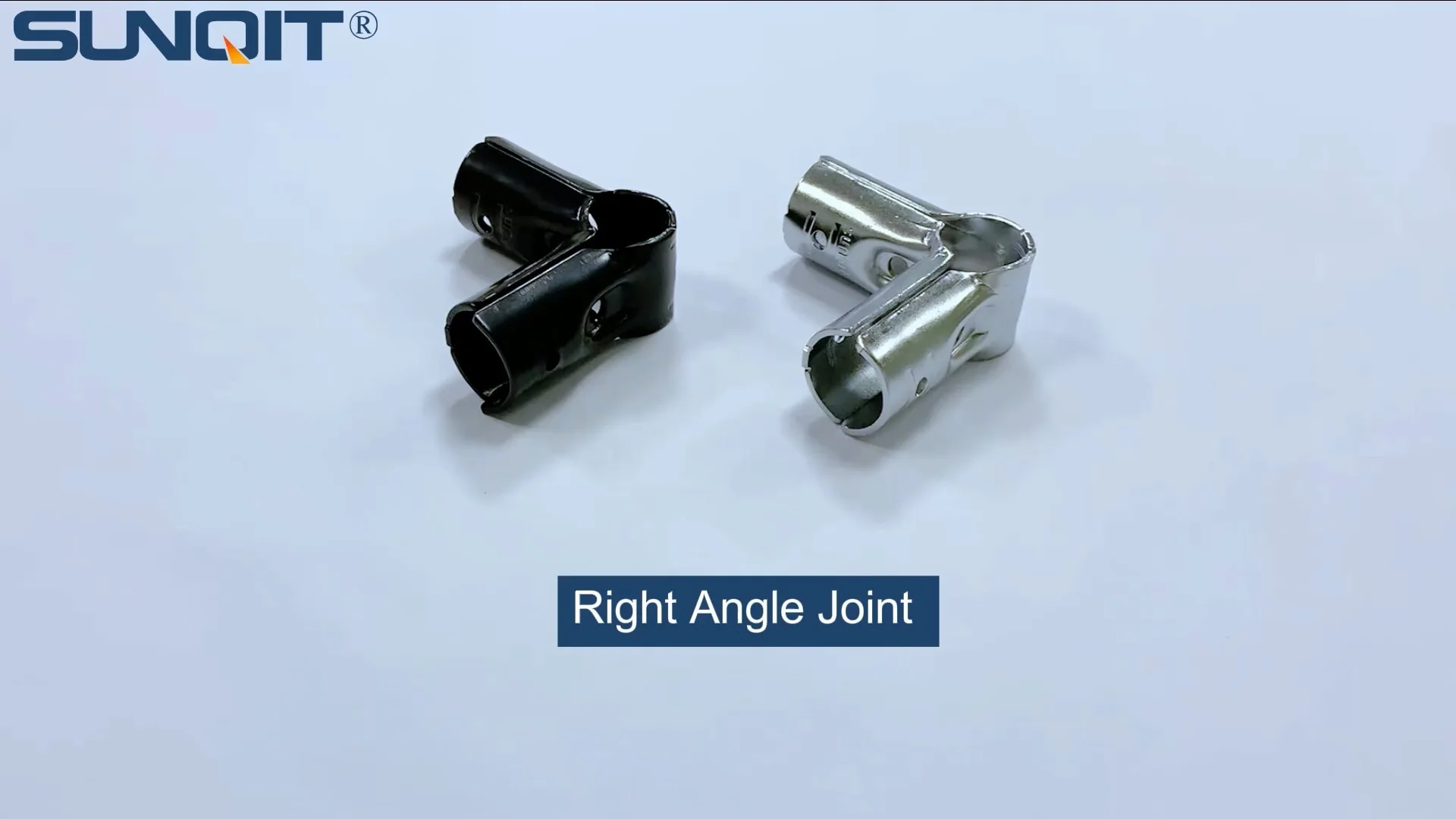
Three way lean pipe joint for 3 pcs 28MM lean pipe connection in straight angle, which used widely in workbench, flow rack, hand trolley frame connection.
The Hidden Costs of Rigid Workspaces: Why Flexibility Matters
If you've ever walked through a busy manufacturing workshop or a warehouse, you've probably noticed the same problem: workspaces that feel stuck in time. A workbench built for a specific task five years ago, still taking up space even though the task changed last quarter. A material rack that once held small components, now awkwardly cramming larger parts because no one wants to deal with the hassle of rebuilding it. These rigid setups aren't just eyesores—they're silent budget drains.
Traditional manufacturing setups often rely on fixed, welded structures or cheap, one-and-done joints that lock you into a single configuration. When your production line shifts, when customer demands change, or when you adopt a new lean process, those rigid systems become liabilities. You either spend thousands on new equipment, waste hours disassembling and rebuilding, or force your team to work around inefficiencies—all of which eat into your bottom line.
This is where lean systems come in. Lean manufacturing isn't just a buzzword; it's a philosophy built on eliminating waste, and a big part of that is creating workspaces that adapt as quickly as your processes do. At the heart of these adaptable systems are modular components—things like lean pipes, workbenches, and, crucially, lean pipe joints. And among these components, one stands out for its ability to turn "fixed" into "flexible": the three way lean pipe joint.
What is a Three Way Lean Pipe Joint? Breaking Down the Basics
Let's start simple: A three way lean pipe joint is exactly what it sounds like—a connector designed to join three lean pipes at once. But don't let the simplicity fool you. This small, unassuming piece is the unsung hero of modular workspaces. Think of it as the "Swiss Army knife" of lean pipe systems: compact, versatile, and ready to solve a dozen different problems without breaking a sweat.
Most three way lean pipe joints are made from durable materials like steel, often coated in chrome (you might see them labeled as "three way lean pipe joint chrome" in supplier catalogs). That chrome plating isn't just for looks—it adds a layer of protection against rust, scratches, and the daily wear and tear of a busy workshop. Run your hand over one, and you'll notice it's smooth but sturdy, designed to grip pipes tightly without damaging them.
The real magic, though, is in the design. Unlike fixed welded joints or even basic two-way connectors, three way joints are built for flexibility. Many models let you adjust the angle of each connected pipe—some rotate 360 degrees, others lock into set positions like 90°, 45°, or 135°. This means you're not stuck with a single "T" shape; you can build a Y-junction, a corner with a side arm, or even a custom angle to fit a specific workflow.
And installation? It's a breeze. No welding torches, no special tools—just slide the lean pipes into the joint's openings, tighten a few screws or bolts, and you're done. A team of two can assemble a basic workbench frame with three way joints in under an hour, compared to half a day with traditional welded setups. That speed isn't just convenient; it's a direct line to saving money on labor.

The Cost-Effectiveness Equation: Why Initial Price Tags Mislead
Let's talk numbers—because that's what really matters when you're trying to justify a purchase to your team. At first glance, three way lean pipe joints might seem pricier than alternatives. A basic plastic two-way joint might cost $2, while a chrome-plated three way joint could run you $8–$12. "Why pay five times more?" you might ask. Here's the truth: Initial cost is a terrible way to measure value when it comes to workspace components.
Think of it like buying a pair of shoes. A $20 pair might last 3 months, but a $80 pair could last 2 years. Which is cheaper in the long run? The same logic applies to lean pipe joints. A cheap plastic joint might save you money today, but it'll crack under heavy loads, melt near heat sources, or wear out after a few reconfigurations. Then you're back to buying replacements, and each time you do, you're also paying for the labor to swap them out.
Three way lean pipe joints, on the other hand, are built to last. The chrome plating resists corrosion, even in humid or oily environments, so they won't rust and seize up. The steel core can handle heavy loads—we're talking hundreds of pounds without bending or breaking. And because they're reusable, you can take them apart, move them, and reassemble them dozens of times without losing strength.
To put this in perspective, let's compare a traditional fixed joint (like a welded steel bracket) with a three way lean pipe joint over a 5-year period. The table below breaks down the true costs, including initial purchase, installation, replacement, and downtime:
| Feature | Traditional Fixed Welded Joint | Three Way Lean Pipe Joint (Chrome) |
|---|---|---|
| Initial Cost per Joint | $5 (materials + welding labor) | $10 (pre-fabricated, no welding) |
| Installation Time per Joint | 30 minutes (requires skilled welder) | 5 minutes (manual assembly, no skills needed) |
| Flexibility for Reconfiguration | None (permanent; must be cut/welded to change) | High (adjustable angles, reusable) |
| Lifespan | 3–5 years (prone to rust at welds) | 10–15 years (chrome-plated, corrosion-resistant) |
| Total 5-Year Cost (10 Joints) | $1,250* (includes replacement + downtime) | $100 (no replacement, minimal downtime) |
*Assumes 2 reconfigurations and 1 full replacement over 5 years
The numbers speak for themselves. That $5 welded joint? It ends up costing 12 times more over five years when you factor in labor, downtime, and replacements. The three way lean pipe joint, with its higher upfront cost, pays for itself in less than a year—and keeps saving you money for a decade.

Flexibility: The Silent Money-Saver in Dynamic Workspaces
Let's say you run a small electronics assembly shop, and you've just landed a contract to build smart home devices. Your current workbenches are set up for smartphones—small, compact, with narrow shelves. The new devices are twice as big, so you need wider work surfaces and taller material racks. What do you do?
If your workbenches use traditional fixed joints, you've got two options: Hire a welder to cut and rework the frames (costing time and money), or buy entirely new workbenches (even more expensive). Either way, you're looking at days of downtime while your team waits for the workspace to adapt.
But if those workbenches are built with three way lean pipe joints? You grab a wrench, loosen a few screws, and start rearranging. Need a wider top? Add a crossbar using a three way joint to connect two existing pipes. Need taller shelves? Swap out short lean pipes for longer ones, using the same joints to lock them in place. Your team could reconfigure the entire shop in a single afternoon—no outside help, no downtime, no extra costs.
This flexibility is a game-changer for lean systems, where adaptability is key to eliminating waste. Maybe one week you're using a material rack for small components, and the next week you need it to hold bulky tools. With three way joints, you can adjust the shelf heights, add dividers, or even convert part of the rack into a temporary workstation—all without breaking a sweat.
And it's not just about big reconfigurations. Think about the small, daily inefficiencies: A worker has to stretch to reach a tool because the shelf is an inch too high. With a three way joint, they can lower that shelf themselves in 30 seconds. A material bin is too deep for the current process? Add a side rail with a three way joint to create a shallower bin. These tiny adjustments add up to big savings in time and worker fatigue over weeks and months.

Compatibility: Playing Well With Others (And Your Existing Setup)
One of the biggest fears when adopting new tools is the "rip and replace" scenario—having to throw out all your existing equipment to use the new system. But three way lean pipe joints play nice with what you already have. They're designed to work with standard lean pipes (usually 28mm or 30mm in diameter), which are common in most workshops. That means you don't have to buy a whole new set of pipes; you can reuse the ones you've got, simply swapping out old joints for three way ones.
This compatibility extends to other lean system components, too. Need to add a roller track to your workbench for easy material flow? Three way joints can connect the track to the bench frame. Want to mount a caster wheel for a mobile trolley? Screw a caster bracket into a three way joint. Even accessories like tool hooks, bin holders, or LED light mounts can be attached using these versatile connectors.
Let's say you've already invested in a lean pipe system with two-way joints. Adding three way joints doesn't mean starting over—it means upgrading. You can mix and match: use two-way joints for straight sections, three way joints for corners and branches. This modularity lets you dip your toes in without diving headfirst, testing the waters with a few joints before committing to a full switch.
Suppliers love to talk about "total solutions," but the reality is most workshops can't afford to replace everything at once. Three way lean pipe joints respect that reality. They let you build a smarter, more flexible workspace incrementally, saving money today while laying the groundwork for bigger savings tomorrow.
Real-World Applications: Where the Savings Add Up
Enough theory—let's look at how three way lean pipe joints save money in real workshops. We'll focus on three common applications: workbenches, material racks, and turnover trolleys. These are the backbone of most manufacturing and assembly spaces, and where the flexibility of three way joints shines brightest.
1. Workbenches: From Single Task to Multi-Purpose
A basic workbench might seem simple, but it's often the most-used piece of equipment in a shop. Traditional workbenches are built with fixed frames—you get a flat top, four legs, and maybe a shelf or two. If you need to add a tool rail, a parts bin, or adjust the height, you're out of luck.
Enter the three way lean pipe joint. Take "Workbench E," a common model described as a "single deck-without caster" in supplier lists. With three way joints, you can turn this basic bench into a custom workstation. Add a side arm for hanging tools using a three way joint at the corner. Mount a small material rack above the bench by connecting two vertical pipes to the frame with three way joints. Need to lower the bench for a shorter worker? Swap out the leg pipes for shorter ones—no need to buy a new bench.
A mid-sized automotive parts shop in Texas did exactly this. They had 20 fixed workbenches costing $200 each ($4,000 total). When they switched to lean pipe benches with three way joints, they spent $150 per bench ($3,000 total), but saved $5,000 in the first year by reconfiguring instead of replacing. Today, those benches adapt to new tasks weekly—no extra cost, no downtime.
2. Material Racks: Adapting to Inventory Changes
Material racks are another area where rigidity costs money. A "Material Rack B (3 row and 3 floor)" sounds great until your inventory changes—suddenly you need 4 rows, or taller floors for bulkier items. With fixed shelving, you either cram items in (risking damage) or buy a new rack.
Three way lean pipe joints solve this by letting you adjust shelf heights and add/remove rows in minutes. A food packaging plant in California used this to their advantage. They had seasonal inventory swings—small boxes in summer, large crates in winter. With lean pipe racks and three way joints, they reconfigure their racks twice a year, saving $8,000 annually on storage costs.
3. Turnover Trolleys: From One-Size-Fits-None to Custom Fits
Turnover trolleys are essential for moving materials around a shop, but traditional trolleys have fixed dimensions. A trolley that works for small parts might not fit large assemblies, leading to multiple trolleys cluttering the floor.
With three way lean pipe joints, you can build a single trolley that adapts. Need to carry long pipes? Remove the side rails. Need to separate fragile components? Add dividers using three way joints. A furniture manufacturer in North Carolina reduced their trolley fleet from 15 to 5 by using adaptable lean pipe models—saving $3,000 upfront and $1,000 annually in maintenance.
The Bottom Line: Investing in Long-Term Savings
At the end of the day, the cost-effectiveness of three way lean pipe joints isn't about the price you pay at the register—it's about the money you don't pay later. It's the $3,000 you save by reconfiguring workbenches instead of replacing them. It's the 200 hours of downtime you avoid by skipping welding. It's the decade of use you get from a single joint, instead of replacing cheap alternatives every few years.
Lean systems are all about eliminating waste, and rigid, one-time-use components are some of the biggest sources of waste in manufacturing. Three way lean pipe joints turn that waste into savings by putting flexibility, durability, and compatibility at the center of your workspace design.
So the next time you're shopping for lean pipe components, don't just look at the initial price tag. Ask: How many times can I reuse this? How quickly can I adapt it to new tasks? How much will it save me in labor and downtime? When you answer those questions, you'll find that three way lean pipe joints aren't just a purchase—they're an investment in a smarter, more efficient, and more profitable workspace.