- Company Articles
- Products and Technology
- Product knowledge
- Cost-Efficiency of End Support for Roller Track Placon Mount with Stop in Long-Term Production

Cost-Efficiency of End Support for Roller Track Placon Mount with Stop in Long-Term Production
Related Product
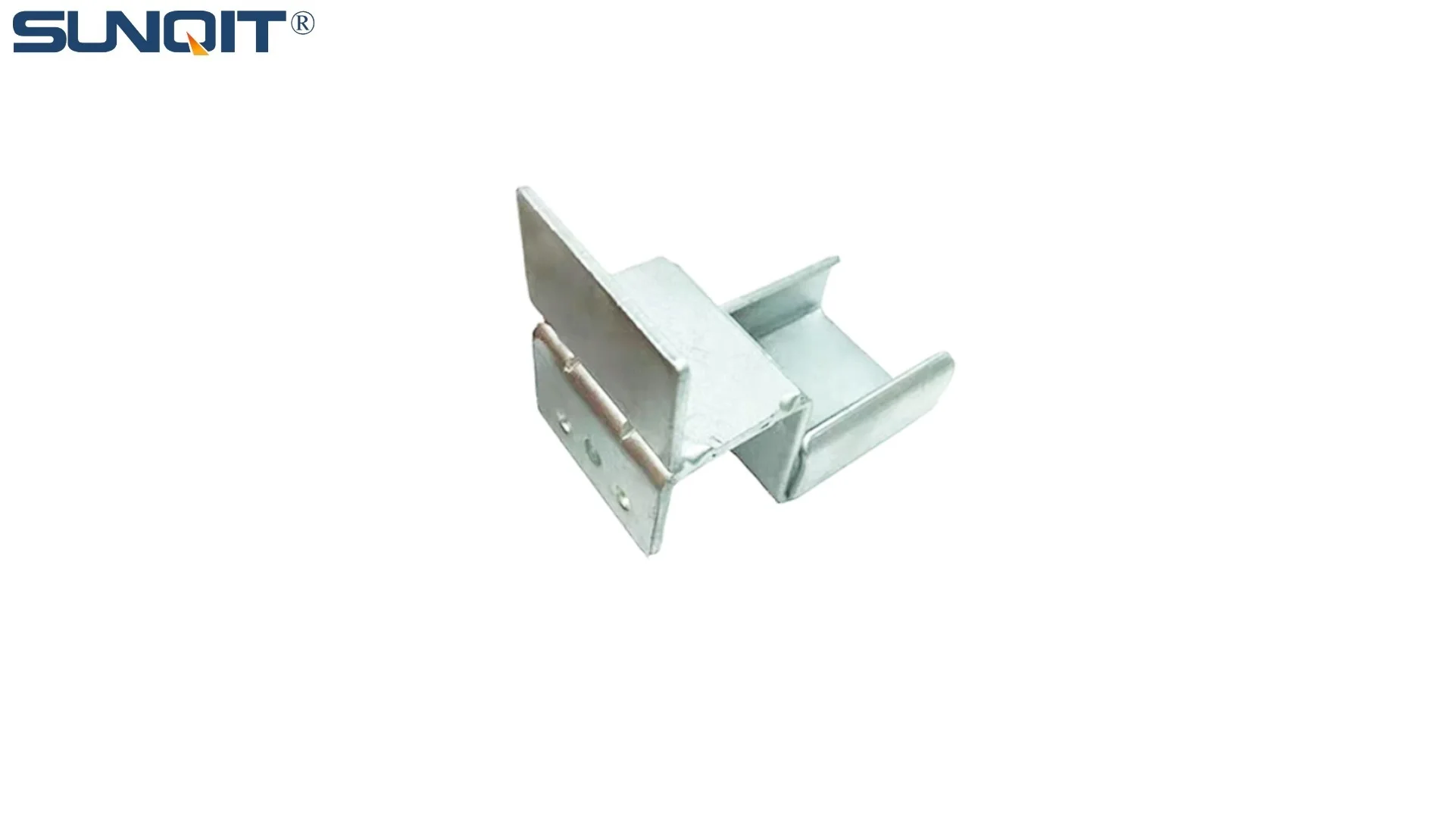
End Support for Roller Track Placon Mount with Stop
Roller track placon mount work as a connector for roller track and pipe or aluminum profile in rack syetem, it is a necessary parts in rack system which widely used in industrial plant and logistic,warehouse storage.
In the bustling rhythm of a manufacturing workshop, where every second counts, there's an unsung hero quietly ensuring the smooth flow of production: the end support for roller track placon mount with stop. It might seem like just another small component in the grand scheme of lean systems, but ask any production supervisor, and they'll tell you—this "little helper" holds the key to avoiding costly downtime, reducing worker frustration, and keeping the entire material handling process on track. Let's dive into why this unassuming part plays such a critical role in long-term production cost-efficiency, and how choosing the right one can transform your workshop's performance from "managing" to "thriving."
The Backbone of Stable Material Flow: Why End Supports Matter
Imagine a busy assembly line in an electronics factory. PCBs glide along a flow rack, heading toward workers for component installation. Suddenly, a slight wobble in the roller track causes a PCB to tilt, jamming the entire line. Workers scramble to fix it, the clock ticks, and by the time production resumes, the team has fallen behind on their hourly target. What caused this? Often, it's a worn or poorly designed end support.
End supports are the "spine" of roller tracks. They anchor the track to the frame, absorb the impact of materials sliding through, and maintain alignment even under constant use. In long-term production, where roller tracks operate 8+ hours a day, 5 days a week, the end support's ability to resist wear, vibration, and corrosion directly impacts two critical metrics: downtime frequency and maintenance workload .
A leading automotive parts manufacturer once shared their experience: after switching to reinforced aluminum end supports, their roller track-related downtime dropped by 72% in the first year. "We used to have a team member checking and tightening end supports twice a week," said their production manager. "Now, it's once a month, and they can focus on more important tasks like process optimization."
Material Matters: Why Aluminum Profile Stands Out for Long-Term Use
Not all end supports are created equal. The choice of material—whether steel, plastic, or aluminum—dictates its lifespan, maintenance needs, and ultimately, its cost-efficiency over time. Let's break down the pros and cons, with a focus on aluminum profile, a material gaining traction in modern lean systems.
| Material | Initial Cost | Corrosion Resistance | Weight | Maintenance Frequency | Typical Lifespan in Heavy Use |
|---|---|---|---|---|---|
| Standard Steel | Low | Poor (prone to rust in humid environments) | Heavy | Every 2-3 weeks (tightening, rust treatment) | 2-3 years |
| Plastic | Very Low | Good | Light | Every month (check for cracks) | 1-2 years (prone to wear under heavy loads) |
| Aluminum Profile | Moderate | Excellent (natural oxide layer prevents rust) | Lightweight | Every 2-3 months (minimal tightening) | 5-7 years |
Aluminum profile's shine in long-term scenarios. Its natural resistance to corrosion makes it ideal for industries like food processing or medical device manufacturing, where cleanliness and moisture control are critical. In one case, a medical equipment plant switched from steel to aluminum end supports and eliminated the need for quarterly rust treatments—a small change that saved 120 labor hours annually.
Another bonus? Aluminum's lightweight nature makes installation and replacement faster. A team of two can install aluminum end supports on a 10-meter flow rack in 45 minutes, compared to 1.5 hours with steel. This not only reduces initial setup time but also minimizes disruption when maintenance is needed.

Synergy with Flow Racks and Conveyors: A Lean System Perspective
End supports don't work in isolation—they're part of a larger ecosystem that includes flow racks, conveyors, and workstations. In a lean system, every component's design should complement the others to maximize efficiency. Let's see how high-quality end supports enhance the performance of two key elements: flow racks and conveyors.
Flow Racks: Reducing Bottlenecks, One Support at a Time
Flow racks rely on gravity to move materials, and uneven or unstable roller tracks can create "dead zones" where items get stuck. End supports ensure each roller segment aligns perfectly, maintaining a consistent slope for smooth material flow. In a 3C assembly plant producing smartphones, optimized end supports reduced the number of stuck components by 89%, cutting down on worker intervention and speeding up throughput by 12%.
Conveyors: Seamless Transitions for Uninterrupted Production
When roller tracks connect to conveyors, even a tiny misalignment can cause materials to jam at the transfer point. End supports with precision-engineered mounting points ensure the roller track and conveyor belt are perfectly level, eliminating gaps. A logistics warehouse reported that after upgrading end supports at conveyor junctions, their "transfer jams" dropped from 15 per day to just 2, saving 3 hours of daily labor previously spent unjamming.
It's this synergy that makes end supports a cornerstone of lean solutions. They don't just "support" roller tracks—they support the entire promise of lean manufacturing: minimizing waste, maximizing flow, and empowering workers to focus on value-adding tasks.

Custom Lean Solutions: Tailoring End Supports to Industry Needs
Different industries face unique challenges, and a one-size-fits-all end support rarely delivers the best long-term value. Custom lean solutions take into account factors like load capacity, environmental conditions, and regulatory requirements, ensuring the end support works for the industry, not against it.
Case 1: Medical Device Manufacturing – Cleanliness and Precision
Medical device assembly requires strict hygiene standards and minimal particle generation. A custom end support here might feature smooth, crevice-free aluminum surfaces (to prevent bacteria buildup) and non-marking coatings. One medical client reported that their custom aluminum end supports reduced post-production cleaning time by 30%, as there were no rust flakes or debris trapped in joints.
Case 2: Automotive Parts – Heavy Loads and Vibration
Automotive components like engine blocks are heavy, and roller tracks here need end supports that can handle constant impact. Custom solutions might include reinforced aluminum brackets with shock-absorbing gaskets. A car parts supplier saw their end support replacement rate drop from 4 times a year to once every 2 years after implementing these tailored designs.
Case 3: 3C Electronics – Lightweight and Flexibility
3C assembly lines (computers, communication, consumer electronics) often reconfigure layouts to adapt to new product models. End supports here need to be lightweight and easy to reposition. Aluminum profile end supports with quick-release fasteners allowed one electronics factory to reconfigure their flow racks 50% faster, supporting their agile production goals.

The Long-Term Cost-Efficiency Equation: Numbers That Speak
At the end of the day, cost-efficiency is about more than initial price tags. It's about calculating the total cost of ownership (TCO) over the component's lifespan. Let's crunch the numbers for a typical mid-sized manufacturing plant using 20 roller tracks, comparing standard steel end supports with custom aluminum profile end supports over a 5-year period.
| Cost Component | Standard Steel End Supports | Custom Aluminum Profile End Supports | 5-Year Savings with Aluminum |
|---|---|---|---|
| Initial Purchase (20 tracks × 2 supports each) | $800 (40 supports × $20) | $2,000 (40 supports × $50) | -$1,200 (higher initial cost) |
| Replacement Cost (every 2.5 years for steel, 5 years for aluminum) | $1,600 (2 replacements × $800) | $0 (no replacement needed in 5 years) | +$1,600 |
| Maintenance Labor (1 hour/week for steel, 1 hour/month for aluminum) | $10,400 (52 weeks/year × 5 years × $40/hour) | $2,000 (12 months/year × 5 years × $40/hour ÷ 4) | +$8,400 |
| Downtime Loss (10 hours/year for steel, 2 hours/year for aluminum) | $12,500 (10 hours × 5 years × $250/hour production value) | $2,500 (2 hours × 5 years × $250/hour) | +$10,000 |
| Total 5-Year Cost | $25,200 | $6,500 | +$18,700 |
The numbers tell a clear story: while aluminum end supports cost more upfront, they deliver over $18,000 in savings over 5 years through reduced maintenance, fewer replacements, and less downtime. For manufacturers aiming for long-term profitability, this isn't just an expense—it's an investment in operational resilience.
Beyond the Support: Building a Leaner, More Human-Centric Workshop
At the heart of every lean system is a simple truth: better tools create better work experiences. End supports for roller track placon mount with stop might seem like small components, but their impact ripples through the entire workshop. When materials flow smoothly, workers spend less time fixing jams and more time collaborating, innovating, and taking pride in their output. When maintenance needs drop, supervisors can focus on training and process improvement instead of firefighting.
Choosing the right end support—one built with durable materials like aluminum profile, tailored to your industry's needs, and integrated into a holistic lean solution—isn't just about cutting costs. It's about building a production environment where efficiency and humanity go hand in hand. After all, the most cost-effective production line isn't just the one that saves money—it's the one that empowers people to do their best work, day in and day out.
So the next time you walk through your workshop, take a moment to notice those quiet end supports. They might just be the unsung heroes turning your lean goals into reality.