- Company Articles
- Products and Technology
- Product knowledge
- Cost-Efficiency of Two Way Lean Pipe Joint: Long-Term Savings for Manufacturers

Cost-Efficiency of Two Way Lean Pipe Joint: Long-Term Savings for Manufacturers
Related Product
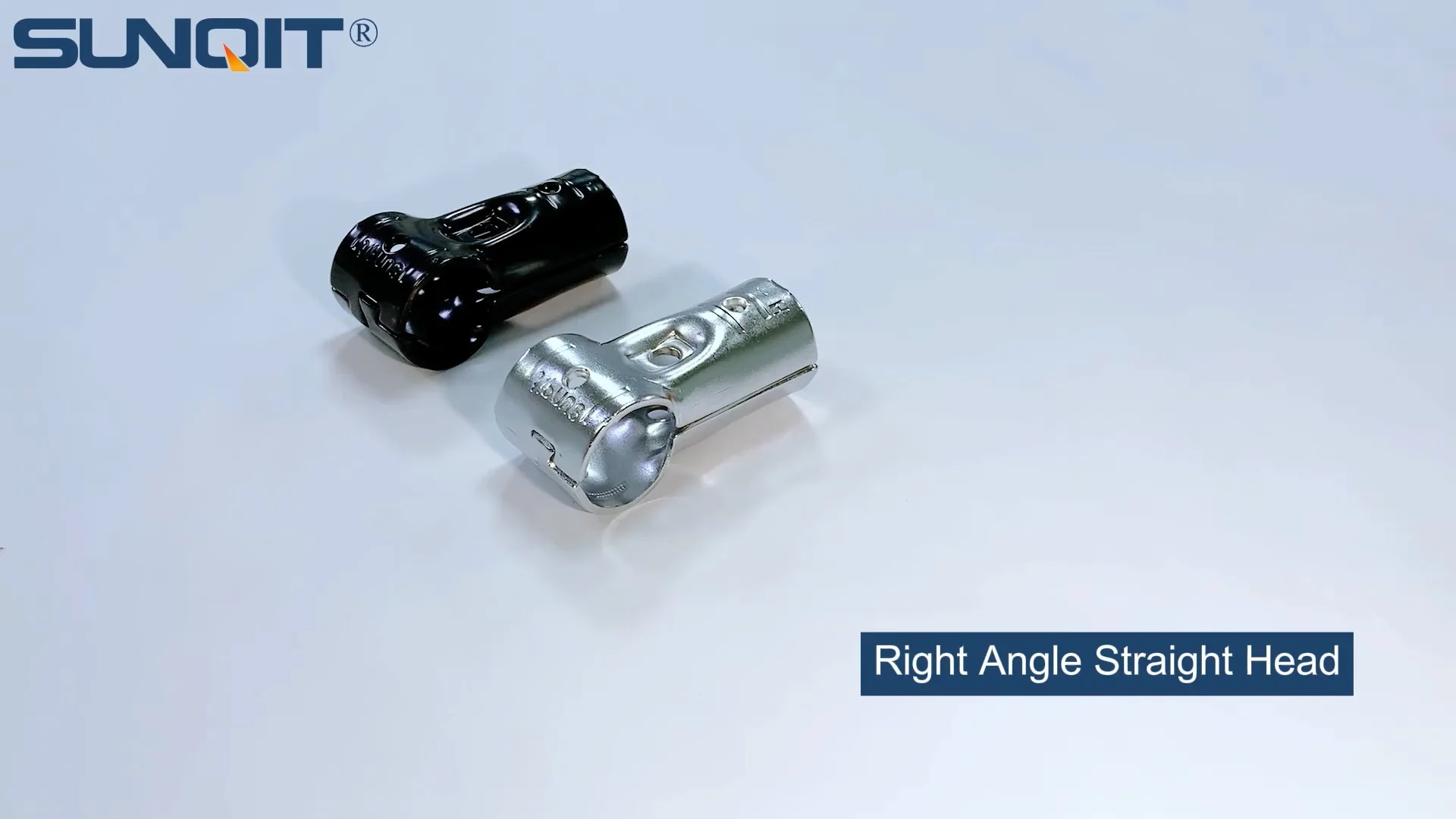
Two Way Lean Pipe Joint
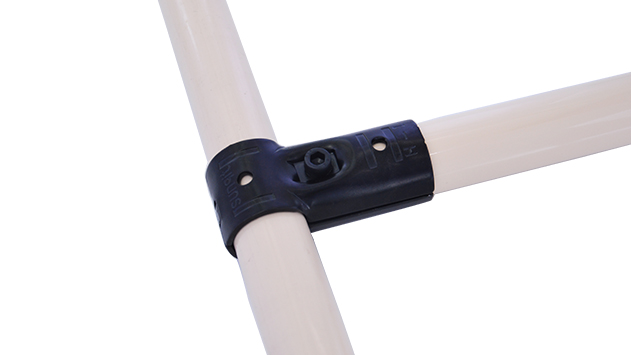
Two way lean pipe joint for 2 pcs 28MM lean pipe connection in straight angle, which used widely in workbench, flow rack, hand trolley frame connection.
Walk into any manufacturing facility, and you'll likely spot the same silent struggles: workbenches that can't keep up with new product sizes, flow racks that jam when demand spikes, and the constant hum of workers rearranging heavy, welded structures—all while the clock ticks and costs pile up. For years, manufacturers have accepted these inefficiencies as part of the job, resigning themselves to rigid setups that drain budgets and stifle growth. But what if there was a simpler, smarter way to build the backbone of your production line? Enter the two way lean pipe joint—a small, unassuming component that's quietly revolutionizing how factories operate. In this article, we'll dive into why this modular marvel isn't just a tool for organization, but a long-term investment that slashes costs, boosts flexibility, and turns your facility into a lean, adaptable powerhouse.
The Hidden Costs of Sticking with "Good Enough" Manufacturing Setups
Let's start with the basics: Most manufacturers don't set out to waste money. They start with what works—maybe a few welded steel workbenches, a custom flow rack built for their first product, and conveyors bolted to the floor. At first, it feels efficient. But over time, "good enough" turns into a money pit. Here's why:
Take Maria, a production manager at a mid-sized electronics plant I spoke with last year. Her team builds circuit boards, and when they launched a new, larger model, their existing workbenches were suddenly too small. The benches were welded steel—solid, but immovable. To fix the problem, Maria had two options: hire a welder to cut and rework the benches (costing $2,000 and three days of downtime) or buy entirely new ones (another $5,000). "We chose the welder," she said, "but then six months later, we launched a smaller model. Now those 'new' benches were too big. It felt like we were chasing our tails."
Maria's story isn't unique. Traditional setups trap manufacturers in a cycle of "buy, break, rebuild" because they're designed to be permanent. But in today's fast-paced market—where product lines shift, demand fluctuates, and customization is king—permanence is a liability. The hidden costs add up: overtime for rework, lost production during downtime, storage for outdated equipment, and the opportunity cost of not adapting quickly to new trends.
And it's not just workbenches. Flow racks, the unsung heroes of material handling, often suffer the same fate. A rigid flow rack built for 12-inch boxes becomes useless when your supplier switches to 15-inch packaging. Suddenly, you're either cramming boxes in (risking damage) or leaving half the rack empty (wasting space). Meanwhile, your lean system goals—eliminating waste, optimizing flow—go out the window because your tools are working against you, not with you.
Enter the Two Way Lean Pipe Joint: Modularity Meets Common Sense
So, what if your workbench, flow rack, or material cart could adapt as easily as your smartphone updates? That's the promise of the two way lean pipe joint. At its core, it's a simple concept: a durable, reusable connector that links lengths of lean pipe (often aluminum or steel, coated in plastic for grip and corrosion resistance) to form any structure you need—no welding, no drilling, no custom fabrication required.
Think of it like building with advanced Tinkertoys, but for grown-ups. The two way joint, as the name suggests, connects two pipes at a fixed angle (usually 90 degrees, though some designs allow for slight adjustments), forming the cornerstone of shelves, frames, or work surfaces. Pair it with other joint types (three-way, swivel, etc.), and you can build everything from a basic lean pipe workbench to a multi-tiered flow rack that snakes through your facility.
But why "two way" specifically? Because it's the workhorse of modular systems. Most structures need right-angle connections—between a vertical leg and a horizontal shelf, or a side rail and a back brace. The two way joint handles these with ease, providing stability without overcomplicating things. And unlike one-time-use welded joints, these are designed to be taken apart and reassembled. Twist a few bolts, pull the pipes apart, and you've got a pile of components ready to become something new.
Juan, a facility manager at a automotive parts plant, put it best: "We used to order custom steel racks for every new part. Now, with two way joints and lean pipe, I can have my team build a new flow rack in an afternoon. Last month, we needed a rack for a bulk order of gaskets—we grabbed some pipes, joints, and plywood, and had it up by lunch. When the order shipped, we took it apart and used the parts to expand our assembly line workbench. No waste, no waiting, no $3,000 invoice from a metal shop."
The Cost Savings Breakdown: Where Your Money (Really) Goes
It's one thing to say modular systems save money, but let's get specific. How exactly does a two way lean pipe joint translate to healthier bottom lines? Let's break it down into four key areas where manufacturers see the biggest impact:
1. Reduced Initial Investment: No More Paying for "What If"
Traditional setups force you to overbuy. When you order a custom welded workbench, you're not just paying for the steel and labor—you're paying for the engineer's time to design it, the shop's profit margin, and a buffer for "just in case" (What if we need an extra inch of depth? What if the team grows?). With two way lean pipe joints, you skip most of that. Lean pipe and joints are off-the-shelf items from your local lean pipe supplier, meaning you buy only what you need, when you need it.
Consider this: A basic 6-foot welded steel workbench might cost $800-$1,200, depending on customization. A comparable lean pipe workbench, built with two way joints, lean pipe, and a plywood top? Around $300-$500. And that's if you buy new—many manufacturers find even more savings by reusing pipes and joints from old setups. "We built our first five workbenches for under $1,500 total," said Lisa, who runs a small appliance assembly plant. "With welded ones, that would've been $5,000 easy. We used the savings to upgrade our tools instead."
2. Adaptability = Long-Term Savings: The Gift That Keeps on Giving
The biggest cost saver isn't the initial price tag—it's what happens next. Let's say you build a lean pipe workbench today for $400. Six months later, you need to add a shelf for new tools. With two way joints, you buy a few extra pipes and joints ($50), spend an hour reconfiguring, and you're done. Total investment: $450. With a welded bench? You either pay $200 to have a welder add a shelf (and hope it's straight) or buy a new bench for $1,000. Over three years, if you reconfigure that workbench just three times, you've saved over $1,500 per station.
Flow racks tell a similar story. A rigid flow rack might cost $1,500 and last 5 years before it's obsolete. A modular flow rack built with two way joints? $600 upfront, and you can reconfigure it annually to match new packaging, new products, or new workflows. After five years, you've reused the same core joints and pipes, maybe adding $200 in new parts each year—total $1,600, compared to $7,500 if you replaced a rigid rack every year. That's a 79% savings.
3. Labor and Downtime: Time Is Money, and This Saves Both
Welders, fabricators, and contractors aren't cheap. A professional welder might charge $80-$120 per hour, and even a simple workbench reconfiguration could take 4-6 hours. With two way lean pipe joints, you don't need specialized labor. Your existing team—assembly line workers, maintenance staff, even interns—can learn to build and reconfigure structures in 15 minutes. No certifications, no safety gear beyond gloves, no waiting for a contractor's schedule.
Downtime is another hidden killer. When you shut down a production line to install a new welded workbench, every minute costs money. A mid-sized factory might lose $500-$1,000 per hour of downtime. With modular setups, you can build the new structure offline (in a corner of the shop), then swap it in during a lunch break or shift change. "We used to schedule reconfigurations for weekends, paying overtime," said Mike, a production supervisor. "Now, we build the new flow rack on night shift, then roll it into place at 7 a.m. when the day shift starts. Zero downtime, zero overtime. It's like magic."
4. Maintenance: Fix the Part, Not the Whole
Traditional metal structures fail catastrophically. A rusted weld, a bent frame, or a cracked shelf often means replacing the entire unit. With modular systems, failure is localized. If a two way joint gets damaged (unlikely, but possible), you unscrew it and pop in a new one for $10-$15. If a pipe gets dented, swap it out for a new length ($20-$30). Even better, most lean pipe suppliers offer warranties on joints, so you might not pay a dime for replacement parts.
Sarah, who manages a food packaging plant, learned this the hard way: "We had a steel conveyor frame rust through at the weld after a year—salty air from the coastal location did a number on it. Replacing the whole conveyor cost $4,000. Now, we use stainless steel lean pipe with two way joints. Last month, a pipe started to corrode—we swapped it out in 10 minutes for $35. No more replacing the whole system."
| Metric | Traditional Welded Setup | Two Way Lean Pipe Joint Setup | Estimated 5-Year Savings |
|---|---|---|---|
| Initial Cost (per workbench) | $1,000 | $400 | $600 |
| Reconfiguration Cost (3 times) | $1,500 (welding + downtime) | $150 (parts + labor) | $1,350 |
| Maintenance (5 years) | $800 (repairs/replacement) | $100 (replaced joints/pipes) | $700 |
| Downtime (5 reconfigurations) | $5,000 (10 hours @ $1,000/hour) | $0 (built offline) | $5,000 |
| Total 5-Year Cost | $8,300 | $650 | $7,650 |
*Estimates based on industry averages for a single workbench; savings scale with more stations/racks.

Beyond the Numbers: The Human Side of Efficiency
Cost savings are critical, but there's another layer to the two way lean pipe joint story: how it changes the day-to-day lives of your team. When workers can adjust their lean pipe workbench to their height, or reconfigure a flow rack to reduce bending, morale goes up. When maintenance staff no longer have to beg for budget to replace a rusted shelf, frustration goes down. And when managers can respond to a customer's urgent order by rearranging a production line in hours (not days), confidence soars.
Amanda, who leads a team of assemblers at a medical device company, noticed the shift immediately: "Our old workbenches were all different heights—some too low, some too high. People were complaining about back pain, and we had more errors because they were uncomfortable. Now, with the modular workbenches, each team member adjusted theirs to fit. Absenteeism dropped, and our error rate went down 15%. You can't put a price on that, but it sure shows up in the numbers."
There's also the psychological boost of ownership. When employees can design and build their own tools—adding a shelf for their favorite wrench, or angling a flow rack to reduce reaching—they take pride in their workspace. "My team built a custom cart to move parts between stations," said Raj, a plant manager. "They measured, assembled, and tested it themselves. Now, they take extra care of it because it's 'theirs.' That kind of engagement? You can't buy that with a prefab steel cart."

Choosing Your Lean Pipe Supplier: It's About Partnership, Not Just Parts
Of course, none of this works if you skimp on quality. A flimsy two way joint, a bent pipe, or a supplier who's always out of stock can turn your modular dream into a nightmare. So, what should you look for in a lean pipe supplier?
First, prioritize quality materials. The joints should be made from durable metal (zinc-plated steel or aluminum) with smooth threads and tight tolerances—no wobbly connections. The lean pipe itself should have a strong, scratch-resistant coating (PE or PVC) to handle daily wear. Ask for samples: A good supplier will send you a joint and a pipe section to test before you buy.
Second, check their accessory range. A great lean pipe supplier doesn't just sell two way joints—they have the whole ecosystem: three-way joints, casters for mobile carts, roller tracks for flow racks, even workbench tops. The more options they offer, the more versatile your system will be.
Finally, look for technical support. Even with modular systems, it helps to have someone to bounce ideas off. Does the supplier offer design tips? Can they help you calculate how many joints and pipes you need for a project? "Our supplier walked us through our first flow rack design," said Lisa. "They suggested using swivel joints for the corners instead of two way, which made loading boxes easier. We never would've thought of that on our own."
Why Not Aluminum Profiles or Stainless Steel? The Case for Lean Pipe
You might be wondering: Aren't aluminum profiles or stainless steel systems more durable? They can be, but they come with trade-offs. Aluminum profiles are sleek and strong, but they're also heavier and more expensive—often double the cost of lean pipe. They also require specialized connectors and tools (like T-slot nuts), which add complexity. Stainless steel is great for harsh environments (food, chemicals), but it's even heavier and pricier, making it overkill for most general manufacturing.
Lean pipe with two way joints hits the sweet spot: strong enough for most applications (up to 200-300 lbs per shelf), light enough to move by hand, and affordable enough to scale. For 90% of manufacturers—from small shops to large plants—lean pipe offers the best balance of cost, flexibility, and durability. As Juan put it: "Aluminum profiles look nice, but why pay extra for features we don't need? Our lean pipe workbenches have been going strong for three years, and we've reconfigured them a dozen times. Why fix what isn't broken?"
Future-Proofing Your Facility: Ready for Whatever Comes Next
The manufacturing landscape isn't slowing down. Customization, sustainability, and rapid innovation are the new norms. Your tools need to keep up. A two way lean pipe joint isn't just a way to build a workbench today—it's a way to build a factory that can adapt to tomorrow's challenges.
Think about sustainability: Modular systems reduce waste by design. Instead of sending old steel racks to the scrapyard, you reuse the pipes and joints. Many lean pipe suppliers now offer recycled or recyclable materials, aligning with green initiatives. "We're aiming for zero waste by 2025," said Mike. "Our modular setup is a big part of that—last year, we reused 80% of our old pipe and joints when we expanded. That's tons of metal kept out of landfills."
Or consider scalability. As your business grows, you can add stations, racks, and carts incrementally—no need for a massive capital expenditure. A new product line? Build a few new workbenches. A surge in orders? Expand the flow rack. It's growth at your pace, with your budget.
Final Thoughts: Small Joints, Big Impact
At the end of the day, the two way lean pipe joint is more than a piece of hardware. It's a mindset shift—from "build it once and hope" to "build it smart and adapt." It's about recognizing that the biggest costs in manufacturing aren't always the obvious ones (raw materials, labor) but the hidden ones: inflexibility, downtime, and missed opportunities.
For manufacturers like Maria, Juan, and Lisa, the switch to modular systems wasn't just about saving money—it was about reclaiming control. Control over their workspace, their budget, and their ability to say "yes" to new opportunities. And in a world where the only constant is change, that's priceless.
So, if you're tired of watching your hard-earned dollars disappear into rigid, outdated setups—if you're ready to build a factory that works as hard as your team does—start small. Grab a few two way lean pipe joints, some pipe, and a wrench. Build a simple workbench, a mobile cart, or a small flow rack. See how it feels to adapt, to create, to build something that grows with you. Chances are, you'll wonder how you ever lived without it.