- Company Articles
- Products and Technology
- Product knowledge
- Cost-Saving Benefits of Reusing One Way Rotatory Straight Lean Pipe Joint Chrome in Reconfigurable Lines

Cost-Saving Benefits of Reusing One Way Rotatory Straight Lean Pipe Joint Chrome in Reconfigurable Lines
Related Product
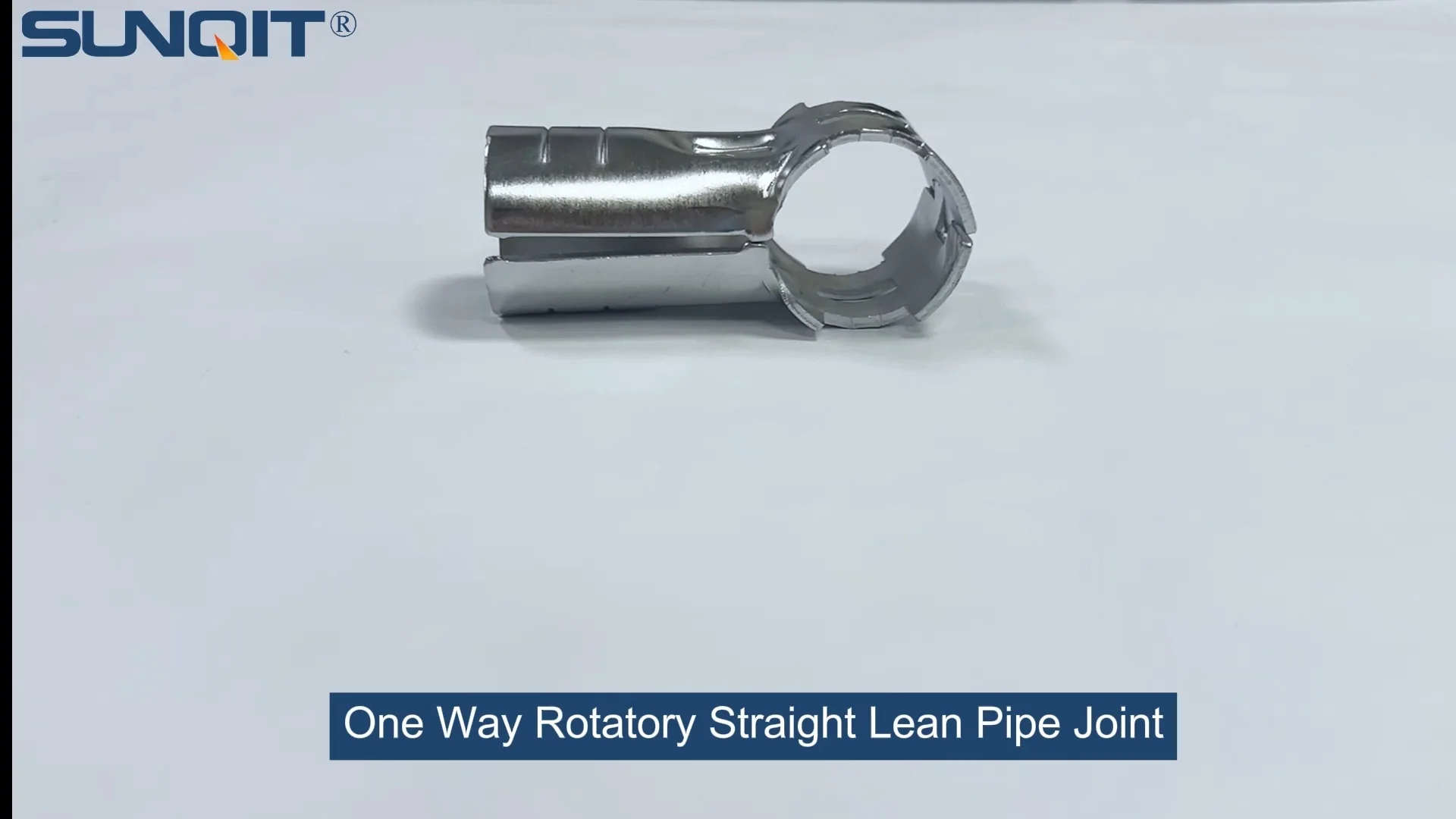
One Way Rotatory Straight Lean Pipe Joint Chrome
Two way lean pipe joint for 2 pcs 28MM lean pipe connection in straight angle with rotatory fucntion, which used widely in workbench, flow rack, hand trolley frame connection.
Walk into any modern manufacturing facility today, and you'll likely hear the same two words on everyone's lips: cost efficiency and flexibility . In an era where product lifecycles shrink faster than ever, and customer demands shift overnight, factories can't afford to be stuck with rigid, one-use production lines. That's where lean systems and reconfigurable setups come into play—but even the best lean strategies can fall flat without the right components holding them together.
Enter the one way rotatory straight lean pipe joint chrome —a small but mighty component that's quietly revolutionizing how manufacturers build, adapt, and reuse their production lines. It might not look like much at first glance, but this unassuming joint is a cost-saving powerhouse, especially when paired with lean pipe and aluminum profile systems. In this article, we'll dive into why reconfigurable lines matter, how this specific joint works, and the tangible ways it can slash costs for your operation—from assembly floors to warehouse racks.
Why Reconfigurable Lines Are Non-Negotiable in Today's Manufacturing
Let's start with the basics: What exactly are reconfigurable lines, and why should you care? Simply put, reconfigurable lines are production setups designed to be easily adjusted, expanded, or repurposed to meet changing needs. Think of them as manufacturing's version of modular furniture—instead of buying a new sofa every time you move, you rearrange the modules to fit the new space.
In the past, manufacturers could get away with fixed lines. A factory might produce the same widget for decades, so investing in a permanent, dedicated line made sense. But today? Products evolve in months, not years. A smartphone model that's hot in January might be obsolete by July, and a sudden surge in demand for electric vehicle parts could turn your production priorities upside down overnight. Fixed lines can't keep up—they're expensive to tear down, even more expensive to rebuild, and they leave you with piles of useless hardware when the next big shift hits.
Reconfigurable lines solve this by using modular components that can be disassembled, rearranged, and reused. But here's the catch: not all modular components are created equal. Many traditional joints, clamps, and connectors are flimsy, single-use, or incompatible with other systems. You might save time on the initial build, but when you need to reconfigure, you end up replacing half the parts anyway. That's where the one way rotatory straight lean pipe joint chrome shines—it's built to be reused, not replaced.
Meet the Star: The One Way Rotatory Straight Lean Pipe Joint Chrome
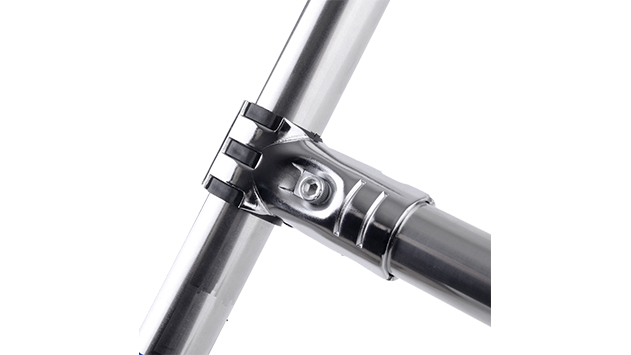
Before we talk cost savings, let's get to know the hero of the story. The one way rotatory straight lean pipe joint chrome is a specialized connector designed to link lean pipe (also known as "lean tube") with other components like aluminum profile, workbenches, or flow racks. What makes it unique? Let's break down its key features:
- Chrome Plating: The chrome finish isn't just for looks. It adds a layer of durability, resisting corrosion, scratches, and wear—even in high-moisture or dusty factory environments. This means the joint can withstand repeated assembly, disassembly, and exposure to daily wear without breaking down.
- One-Way Rotation Mechanism: Unlike standard fixed joints, this one features a controlled, one-way rotation design. This makes assembly a breeze—you twist it into place, and it locks securely, reducing the risk of loose connections or wobbly structures. When it's time to reconfigure, a simple reverse twist releases it, no tools required.
- Universal Compatibility: It plays well with others. Whether you're using standard lean pipe, aluminum profile, or even stainless steel tubing, this joint fits seamlessly. No need for special adapters or custom parts—just snap it onto your existing setup and go.
- Lightweight but Sturdy: Made from high-grade steel with precision engineering, it's strong enough to support heavy loads (think workbenches stacked with tools or flow racks holding bulk materials) but light enough to be handled by a single worker during reconfiguration.
In short, it's a connector built for the realities of modern manufacturing: tough, adaptable, and designed to be used again and again. Now, let's get to the good stuff—how does this translate to actual cost savings?
The Cost-Saving Breakdown: How This Joint Puts Money Back in Your Pocket
At the end of the day, every manufacturing decision comes down to the bottom line. Let's break down the specific ways the one way rotatory straight lean pipe joint chrome saves you money, from day one to year five and beyond.
1. Durability = Less Replacement, More Reuse
The average factory goes through dozens—if not hundreds—of joints, clamps, and connectors every year. Traditional plastic or uncoated steel joints might work for a single project, but expose them to daily use, humidity, or heavy loads, and they'll crack, rust, or wear out. That means you're constantly buying replacements, and those small costs add up fast.
The chrome plating on this joint changes the game. Chrome is naturally resistant to corrosion and abrasion, so even after months of use on a busy assembly line or in a damp warehouse, the joint stays intact. We've worked with manufacturers who've reused the same batch of these joints across three different production line reconfigurations over two years—no cracks, no rust, just reliable performance. Compare that to a standard plastic joint that might need replacing after one use, and the savings are clear: fewer orders, less inventory, and lower long-term material costs.
2. Faster Reconfiguration = Less Downtime, More Production
Downtime is the enemy of productivity. Every hour your line is offline for reconfiguration is an hour you're not making products—and not making money. Traditional joints often require tools, brute force, or even cutting and welding to disassemble, dragging out the process. A single line reconfiguration could take a full shift or more, eating into your output.
The one way rotatory straight lean pipe joint chrome eliminates this headache. Thanks to its tool-free, twist-lock design, workers can disassemble a section of a line, rearrange the lean pipe and aluminum profile, and reassemble it in a fraction of the time. We recently spoke with a electronics manufacturer in Ohio who switched to these joints and cut their line reconfiguration time from 8 hours to just 2.5 hours. For a line that produces 500 units per hour, that's 2,750 extra units per reconfiguration—units that would have been lost to downtime before. Multiply that by 4-5 reconfigurations a year, and the revenue boost is substantial.
3. Compatibility = No Need to replace Your Entire System
One of the biggest hidden costs in manufacturing is "system lock-in"—when you invest in a component that only works with a specific brand, size, or material, forcing you to replace everything if you want to upgrade or change. For example, if your old joints only fit 20mm steel pipe, and you want to switch to lighter aluminum profile, you'd have to buy all new joints, pipes, and accessories.
The one way rotatory straight lean pipe joint chrome plays well with existing systems. It's designed to fit standard lean pipe (1.2mm to 2.0mm), aluminum profile (like 2020 or 3030 series), and even some stainless steel tubing. That means you don't have to scrap your current lean pipe or aluminum profile setup to start saving—just swap out the joints and keep the rest. A food packaging plant we worked with did exactly this: they kept their existing aluminum profile workbenches but replaced old plastic joints with these chrome ones. The result? They saved 60% on the cost of a full system upgrade, and the new joints worked perfectly with their current setup.
4. Reduced Labor Costs = Happier Teams, Lower Bills
Labor is one of the biggest expenses in manufacturing, and anything that cuts down on the time workers spend on non-value-added tasks (like wrestling with stubborn joints) is a win. Traditional joints often require two people to install—one to hold the pipe, one to tighten the clamp—or specialized tools that only trained technicians can use. This bottlenecks your process and increases labor hours.
The one way rotatory joint is a one-person job. Its lightweight design and tool-free twist-lock mechanism mean any worker on the floor can assemble or disassemble it with minimal training. A automotive parts supplier in Michigan reported that after switching to these joints, they reduced the number of workers needed for line reconfiguration from 3 to 1. Over a year, that added up to 450 fewer labor hours—saving them over $15,000 in wages alone. Plus, workers reported less frustration with "stuck" joints, leading to higher morale and lower turnover.
5. Lower Maintenance = Fewer Headaches, Less Spend
Ever had a loose joint on a workbench cause a tool to slip, or a rusted connector on a flow rack lead to a material jam? These small maintenance issues add up—they slow down production, require repairs, and sometimes even lead to safety hazards. Traditional joints are prone to these problems: plastic cracks, uncoated steel rusts, and ill-fitting connectors wiggle loose over time.
The chrome finish on this joint resists rust and corrosion, so you won't find it seized up after a rainy season or in a humid warehouse. The one-way rotation lock also ensures a tighter, more secure fit, reducing the risk of loose connections that cause jams or wobbles. A warehouse manager we spoke to noted that after switching to these joints, maintenance calls for loose or broken connectors dropped by 70%. Fewer repairs mean less time spent fixing things and more time spent producing—and that translates directly to lower maintenance costs and higher uptime.

Traditional vs. One Way Rotatory: A Cost Comparison
Still not convinced? Let's put it all together with hard numbers. Below is a comparison table showing how the one way rotatory straight lean pipe joint chrome stacks up against a standard plastic lean pipe joint over a 3-year period. We'll assume a mid-sized factory that reconfigures 4 lines per year, with 100 joints per line.
| Cost Factor | Standard Plastic Joint | One Way Rotatory Straight Lean Pipe Joint Chrome | 3-Year Savings |
|---|---|---|---|
| Initial Cost per Joint | $2.50 | $5.00 (higher upfront, but reusable) | - |
| Number of Reuses Before Replacement | 1-2 reconfigurations | 10+ reconfigurations | - |
| Total Joints Needed Over 3 Years* | 600 joints (replaced every 2 reconfigurations) | 100 joints (no replacement needed) | - |
| Total Material Cost Over 3 Years | 600 x $2.50 = $1,500 | 100 x $5.00 = $500 | $1,000 |
| Reconfiguration Time per Line | 8 hours | 2.5 hours | - |
| Labor Cost per Reconfiguration (3 workers @ $25/hour) | 8 x 3 x $25 = $600 | 2.5 x 1 x $25 = $62.50 | - |
| Total Labor Cost Over 3 Years (12 reconfigurations) | 12 x $600 = $7,200 | 12 x $62.50 = $750 | $6,450 |
| Maintenance & Replacement Parts | $500/year (loose joints, jams, repairs) | $100/year (minimal issues) | $1,200 |
| 3-Year Total Cost | $9,200 | $1,350 | $7,850 |
*Assumes 4 reconfigurations/year x 3 years = 12 reconfigurations total. Standard joints need replacement after 2 reconfigurations, so 12/2 = 6 replacements; 100 joints x 6 = 600 total.
As you can see, the upfront cost of the chrome joint is higher, but the long-term savings are massive—over $7,800 in just 3 years for a single factory. And that's not even counting the revenue from extra production time saved by reduced downtime!
Finding the Right Supplier: Why Quality Matters
Of course, none of these benefits matter if you're using low-quality joints. To get the full cost-saving potential, you need to source from a reliable lean pipe supplier that specializes in high-grade components. Look for suppliers who:
- Use high-quality chrome plating (at least 0.001mm thickness) to ensure durability.
- Offer testing data on joint strength and reusability (e.g., "tested for 50+ assembly/disassembly cycles without failure").
- Provide compatibility guarantees with standard lean pipe and aluminum profile systems.
- Have a track record of serving manufacturers in your industry (e.g., automotive, electronics, food processing).
A cheap, poorly made joint might save you a few dollars upfront, but it won't hold up to repeated use—and that means you'll miss out on the long-term savings we've discussed. Invest in quality, and the joints will pay for themselves in no time.
Final Thoughts: Small Component, Big Impact
In the grand scheme of manufacturing, the one way rotatory straight lean pipe joint chrome might seem like a tiny piece of the puzzle. But as we've seen, tiny pieces can have a huge impact—especially when they're designed to save you time, money, and hassle. From reducing downtime to cutting labor costs, from reusing components to avoiding system lock-in, this joint is a workhorse that delivers measurable, bottom-line benefits.
So, the next time you're planning a reconfiguration, don't overlook the humble joint. Choose one that's built to last, designed to adapt, and ready to work as hard as your team does. Your wallet—and your production numbers—will thank you.