- Company Articles
- Products and Technology
- Product knowledge
- Cost-Saving Benefits of Using Two Way Lean Pipe Joint Chrome in Mass Production

Cost-Saving Benefits of Using Two Way Lean Pipe Joint Chrome in Mass Production
Related Product
Two Way Lean Pipe Joint Chrome
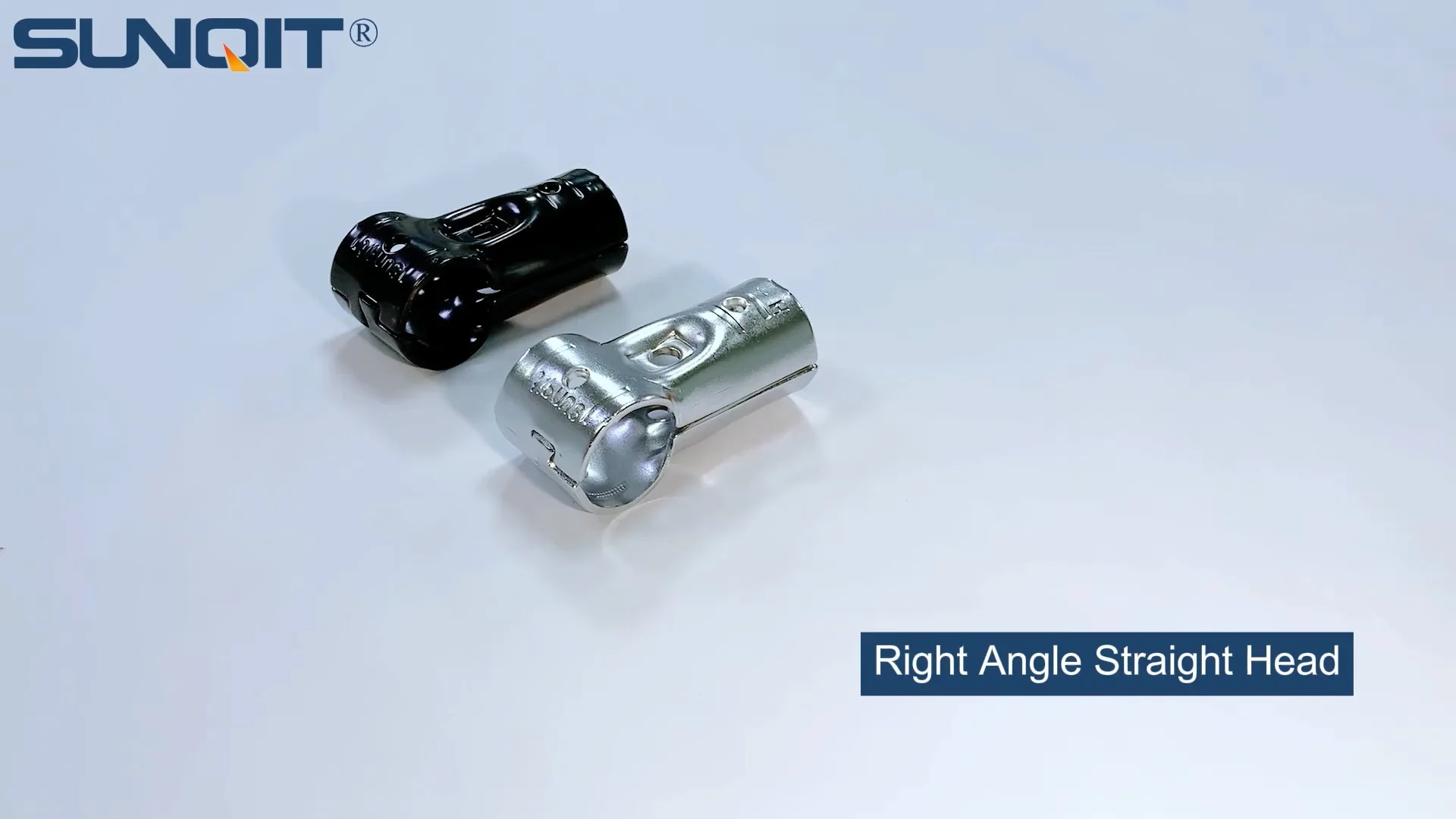
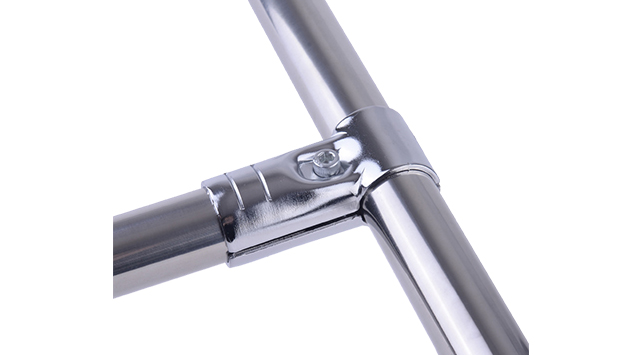
Two way lean pipe joint for 2 pcs 28MM lean pipe connection in straight angle, which used widely in workbench, flow rack, hand trolley frame connection.
The Hidden Costs of Mass Production: Why Small Components Matter
Let's face it: mass production is a high-stakes game. Every minute of downtime, every dollar spent on unnecessary materials, and every hour wasted on inefficient processes eats into profit margins. In factories around the world, managers are constantly searching for ways to trim costs without sacrificing quality. Often, the focus lands on big-ticket items—new machinery, automated systems, or large-scale process overhauls. But what if the key to significant savings lies in something far smaller? Something as as the joints that hold your production line together?
In lean manufacturing, the goal is to eliminate waste—whether it's time, labor, materials, or space. Yet, one area that's frequently overlooked is the hardware that builds the backbone of your workspace: the pipes, joints, and connectors that form workbenches, flow racks, roller tracks, and turnover trolleys. Traditional joints, often made of plastic or low-grade metal, can be a silent drain on resources. They're slow to install, prone to breaking, and hard to reconfigure. When production needs shift—and in today's fast-paced market, they always do—these joints force you to start from scratch, wasting both time and money.
Here's where the two way lean pipe joint chrome steps in. It's a small component, but its impact on mass production efficiency is anything but minor. Designed to connect lean pipes quickly, securely, and flexibly, this chrome-plated joint isn't just a tool for building structures—it's a cost-saving solution that ripples through every stage of production. Let's dive into how this unassuming piece of hardware can transform your factory's bottom line.
What Makes the Two Way Lean Pipe Joint Chrome Different?
Before we explore the cost savings, let's get to know the star of the show: the two way lean pipe joint chrome. At first glance, it might look like any other pipe connector, but its design is engineered for the unique demands of mass production. Made from high-quality steel with a chrome plating, it's built to withstand the wear and tear of busy factory floors. The "two way" design means it can connect two lean pipes at a fixed angle (typically 90 degrees, though some variants offer adjustability), creating stable frameworks for everything from workbenches to material racks.
What truly sets it apart, though, is its simplicity. Unlike traditional joints that require welding, bolts, or specialized tools, the two way lean pipe joint chrome often uses a friction-based or snap-on mechanism. This means assembly workers can connect pipes in seconds, not hours. And because it's chrome-plated, it resists corrosion from oils, coolants, and humidity—common hazards in manufacturing environments. This durability translates to less frequent replacements, which we'll explore in detail later.
But perhaps its most valuable feature is compatibility. It works seamlessly with standard lean pipes, aluminum lean pipes, and even some aluminum profile systems, making it a versatile addition to existing lean systems. Whether you're building a new roller track for material flow or reconfiguring an old workbench, this joint adapts to your needs without requiring a complete overhaul of your current setup.
Cost-Saving Benefit 1: Slashing Installation Time (and Labor Costs)
Labor is one of the biggest expenses in mass production. Every hour your team spends assembling or reconfiguring workstations is an hour they're not contributing to actual production. Traditional pipe joints often require two or more workers: one to hold the pipes in place, another to weld or tighten bolts. Even with power tools, setting up a single workbench can take half a day. Multiply that by dozens of workstations across a factory, and the costs add up fast.
The two way lean pipe joint chrome changes this equation entirely. Its tool-free design means a single worker can assemble a basic structure—say, a small material rack—in under 30 minutes. Let's break it down: Imagine your factory needs 20 new workbenches to meet a sudden order surge. With traditional joints, that might take 2 workers 5 hours each per workbench, totaling 200 labor hours. At an average hourly wage of $25, that's $5,000 in labor costs alone.
With two way lean pipe joint chrome? A single worker can assemble one workbench in 45 minutes. For 20 workbenches, that's 15 labor hours total—costing just $375. That's a 92.5% reduction in labor costs for assembly. And it's not just initial setup: when production lines need to be reconfigured (a common occurrence in mass production), these joints can be disassembled and reused just as quickly. No more cutting pipes or prying off rusted bolts—simply release the joint, adjust the pipes, and resecure. What used to take a day now takes an afternoon, keeping your team focused on what matters: making products.

Cost-Saving Benefit 2: Reusability That Cuts Material Waste
In traditional manufacturing setups, change often means waste. A product line gets updated, and suddenly the old workbench is too short, or the material rack is the wrong width. With rigid, non-reusable joints, that structure ends up in the scrap heap, and you're forced to buy new pipes, joints, and tools. Over time, this cycle of "build, break, replace" eats into your material budget and creates unnecessary waste—both financial and environmental.
The two way lean pipe joint chrome is built for reusability. Because it doesn't damage the pipes during assembly or disassembly (no welding marks, no stripped threads), you can reuse both the joints and the pipes in new configurations. Let's take an example: Suppose your factory produces smartphones, and a new model requires a longer assembly line. With traditional joints, you'd have to dismantle the old line, discard the non-reusable parts, and purchase new materials for the extended line. If that line costs $2,000 in materials, you're looking at $2,000 in waste plus $3,000 for the new line—total $5,000.
With two way lean pipe joint chrome? You disassemble the old line, save all the joints and pipes, and use them to extend the new line. You might need to buy a few extra pipes, but the majority of the materials are reused. Total cost? Maybe $500 for new pipes, and $0 for joints. That's a $4,500 savings—just from reusing what you already have. And this isn't a one-time benefit: over the life of the joint (which we'll discuss next), you might reuse it 5, 10, or even 20 times, turning a single purchase into decades of value.
Cost-Saving Benefit 3: Durability That Reduces Maintenance and Replacement Costs
Cheap joints might save money upfront, but they cost far more in the long run. Plastic joints crack under heavy loads. Unplated metal joints rust when exposed to moisture. Even mid-grade metal joints wear down over time, leading to wobbly workbenches, unstable roller tracks, and—worst of all—downtime when a structure fails. Every time a joint breaks, you're looking at repair costs, lost production time, and potential safety hazards.
The two way lean pipe joint chrome is built to last. The chrome plating acts as a barrier against corrosion, ensuring the joint stays strong even in damp or chemical-exposed environments. The steel core can support heavy loads—often up to 500 pounds per joint—without bending or warping. Compare that to a plastic joint, which might start to degrade after 6 months of heavy use, or an unplated steel joint that rusts through in a year.
Let's quantify this: Suppose your factory uses 100 plastic joints in its roller track systems. At $5 per joint, that's a $500 initial cost. But plastic joints need replacement every 6 months, so over 5 years, you're spending $5,000 (10 replacements). Add in the cost of downtime each time a joint fails—say, 2 hours per failure at $200 per hour in lost production—and you're looking at an additional $20,000 (assuming 10 failures per year). Total cost over 5 years: $25,000.
Now, switch to two way lean pipe joint chrome at $15 each. Initial cost: $1,500. With a lifespan of 10+ years (and no corrosion), you won't need replacements for the first decade. Even if you factor in occasional maintenance (a quick wipe down to remove grime), the total cost over 5 years is just $1,500. That's a savings of $23,500—all from choosing a more durable joint.
Cost-Saving Benefit 4: Adaptability to Keep Pace with Changing Demand
Mass production isn't static. Consumer trends shift, product designs evolve, and order volumes fluctuate. A factory that can't adapt quickly risks missing deadlines, losing customers, or overspending on rigid infrastructure that can't keep up. This is where the two way lean pipe joint chrome truly shines: its adaptability ensures your production line can pivot without major investments.
Consider a scenario: Your factory produces automotive parts, and a client suddenly requests a new component that's 30% larger than the previous model. Your existing workbench is too narrow to accommodate the new part, and the material rack can't hold the bulkier raw materials. With traditional joints, you'd need to design, order, and assemble entirely new structures—a process that could take weeks. In the meantime, production stalls, and you risk missing the client's deadline.
With two way lean pipe joint chrome, adaptation is instant. Your team can disassemble the old workbench, add a few extra lean pipes to widen it, and resecure the joints—all in under an hour. The material rack? Adjust the height of the shelves by moving the joints up the pipes, creating more vertical space. No new orders, no waiting, no downtime. You meet the client's deadline, keep production on track, and avoid the cost of rush-ordering new equipment. In a market where speed to market is everything, this adaptability isn't just a cost saver—it's a competitive advantage.
Real-World Impact: How a Electronics Manufacturer Saved $120,000 in 1 Year
To put these benefits into perspective, let's look at a hypothetical (but realistic) case study. A mid-sized electronics manufacturer with 500 employees was struggling with high assembly costs and frequent production line reconfigurations. Their workbenches and material racks used plastic joints and welded steel pipes, leading to:
- 8 hours of labor per new workbench assembly
- Monthly replacement of 20+ plastic joints due to breakage
- 2-3 days of downtime every quarter for line reconfigurations
In 2023, they switched to lean pipe systems using two way lean pipe joint chrome. Here's what happened:
- Labor costs: Assembly time for workbenches dropped from 8 hours to 1 hour per unit. With 40 new workbenches built that year, labor savings totaled $70,000.
- Material costs: Plastic joint replacements fell from 240 per year to 0 (chrome joints showed no signs of wear). Savings: $12,000.
- Downtime reduction: Reconfigurations that took 3 days now took 4 hours. Annual downtime savings: $38,000 (based on $2,000 per hour in lost production).
Total annual savings: $120,000. For a single component upgrade, that's a return on investment (ROI) of over 800%—and the savings continue to grow as the joints' durability and reusability keep paying off year after year.
Traditional Joints vs. Two Way Lean Pipe Joint Chrome: A Comparative Look
| Metric | Traditional Plastic/Unplated Joints | Two Way Lean Pipe Joint Chrome | Cost Savings Potential |
|---|---|---|---|
| Assembly Time per Workbench | 8 hours (2 workers) | 1 hour (1 worker) | 92% reduction in labor hours |
| Reusability | Low (often damaged during disassembly) | High (can be reused indefinitely) | 80% reduction in material waste |
| Annual Maintenance Cost (per 100 joints) | $1,200 (replacements + repairs) | $0 (no replacements needed) | 100% reduction in maintenance costs |
| Durability (Lifespan) | 6-12 months | 10+ years | 90% reduction in replacement frequency |
| Downtime for Reconfiguration | 2-3 days per line | 4-6 hours per line | 85% reduction in downtime |
Conclusion: Small Joints, Big Savings
In mass production, success often hinges on the details. The two way lean pipe joint chrome might be small, but its impact on cost savings is undeniable. By slashing labor hours, reducing material waste, minimizing maintenance, and enabling rapid adaptation, it transforms how factories operate—turning inefficiency into efficiency, and waste into value.
Whether you're building a new lean system from scratch or upgrading an existing one, this joint isn't just a component—it's an investment in your factory's future. It's proof that sometimes, the most powerful cost-saving solutions are the ones you can hold in the palm of your hand. So the next time you're looking to cut costs in mass production, don't overlook the joints that hold your operation together. With the two way lean pipe joint chrome, those small connections could be the key to big savings.