- Company Articles
- Products and Technology
- Product knowledge
- Cost-Saving with 3060 Aluminum Angle Yards: Long-Term Investment Value

Cost-Saving with 3060 Aluminum Angle Yards: Long-Term Investment Value
Related Product
3060 Aluminum Angle Yards
It used for 90° flat connection for 20 series aluminum profile.
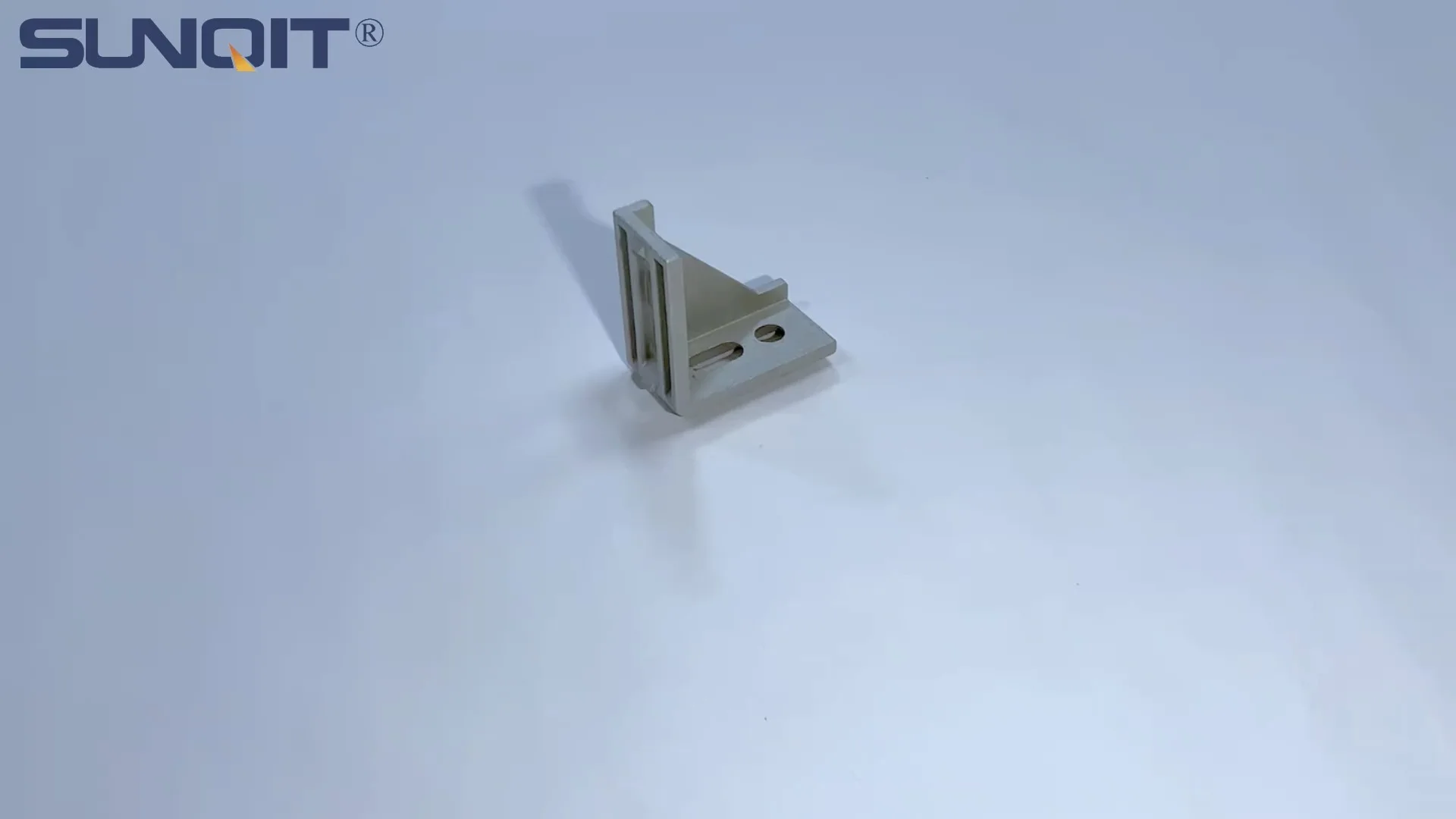
Walk into any modern manufacturing facility, and you'll notice a common thread: the push for efficiency. Every tool, every workstation, every inch of space is designed to reduce waste and boost productivity. But for many small to mid-sized businesses, this dream of a streamlined operation often hits a wall—cost. Investing in high-quality equipment feels out of reach, especially when budgets are tight and every dollar counts. That's where 3060 aluminum angle yards come in. These unassuming structural components might not grab headlines, but they're quietly revolutionizing how workshops, warehouses, and production lines balance durability, flexibility, and affordability. In this article, we'll dive into why 3060 aluminum angle yards are more than just a purchase—they're a long-term investment in your business's efficiency and bottom line.
What Are 3060 Aluminum Angle Yards, Anyway?
Before we jump into the cost-saving benefits, let's get clear on what 3060 aluminum angle yards actually are. Part of the broader family of aluminum extrusion profiles, these components are precisely engineered with a 30mm x 60mm cross-section and an angular design, making them ideal for structural support. Think of them as the backbone of modular systems—whether you're building a workbench, a material rack, or a custom storage solution. Unlike generic steel brackets or flimsy plastic parts, 3060 aluminum angle yards are crafted through the aluminum extrusion process, which involves forcing heated aluminum alloy through a die to create consistent, high-strength shapes. This process ensures uniformity, so every piece you buy fits together seamlessly, reducing the guesswork (and frustration) of assembly.
What sets them apart? For starters, aluminum's natural properties: it's lightweight, corrosion-resistant, and surprisingly strong. The "angle" design adds rigidity, making these yards perfect for load-bearing applications without adding unnecessary bulk. And because they're part of the aluminum extrusion profile ecosystem, they work with a wide range of accessories—connectors, brackets, hinges—that let you customize almost any setup. Whether you need a simple shelf or a complex lean system, 3060 aluminum angle yards provide the flexibility to adapt as your needs change.
The Hidden Cost of Cutting Corners: Why Cheap Materials Hurt Your Bottom Line
It's tempting to opt for the cheapest materials when setting up a workspace. A few dollars saved on a flimsy workbench or a rickety material rack might seem like a win today, but let's fast-forward six months. That "affordable" wooden shelf starts to warp under the weight of tools. The steel brackets on your workstation rust after a few spills, leaving unsightly stains and weakening the structure. You're forced to replace parts, rearrange the workspace, and even halt production temporarily to fix issues. Suddenly, those "savings" vanish—and then some. According to a 2023 survey by the Manufacturing Efficiency Institute, businesses that skimp on structural components spend 23% more annually on repairs and replacements compared to those that invest in quality materials upfront.
Take material racks, for example. A basic wooden or plastic rack might cost half the price of one built with 3060 aluminum angle yards, but how long does it last? Wood absorbs moisture, leading to rot or mold in humid environments. Plastic cracks under heavy loads or UV exposure. Steel, while strong, is prone to rust if not regularly painted or treated—adding maintenance costs. 3060 aluminum angle yards, on the other hand, laugh off these issues. Their corrosion resistance means they'll stay looking (and performing) like new even in damp warehouses or outdoor settings. No repainting, no replacing warped boards, no repairs. Over time, that initial investment pays for itself in reduced downtime and fewer replacements.

Cost-Saving Benefit #1: Lightweight = Lower Labor and Shipping Costs
Aluminum is about one-third the weight of steel, and that matters more than you might think. Let's break it down: when you order 3060 aluminum angle yards, their lightweight nature slashes shipping costs. A pallet of steel brackets might cost hundreds of dollars to transport; the same volume of aluminum yards? Significantly less. For businesses that source materials from suppliers (like many lean pipe suppliers or aluminum profile suppliers), this translates to lower per-unit costs right out of the gate.
But the savings don't stop at shipping. Installation is faster and easier, too. Imagine assembling a workbench with steel components: you'd need two people, heavy tools, and maybe even a forklift to move parts into place. With 3060 aluminum angle yards, one person can carry and position pieces without straining, cutting labor time by up to 40%, according to industry estimates. Faster installation means your team can get back to revenue-generating tasks sooner. And if you ever need to reconfigure your workspace—say, adding a new production line or rearranging for a lean system audit—disassembling and moving aluminum components is a breeze. No need for welding torches or power tools; just loosen a few connectors, reposition, and you're done. That's flexibility that saves time (and time, as we know, is money).

Cost-Saving Benefit #2: Low Maintenance, High Durability
Let's talk long-term costs—the ones that sneak up on you years after the initial purchase. Steel needs regular painting or coating to prevent rust. Wood requires sealing to fend off moisture and pests. Even plastic degrades under sunlight or heavy use. 3060 aluminum angle yards? They're practically maintenance-free. Aluminum forms a natural oxide layer when exposed to air, which acts as a protective barrier against corrosion. That means no rust, no rot, and no need for expensive treatments. Wipe them down with a damp cloth if they get dirty, and they'll keep shining for decades.
Durability also means fewer replacements. A well-built aluminum workbench or material rack can last 15–20 years with minimal upkeep, compared to 3–5 years for a wooden equivalent or 7–10 years for steel (if properly maintained). Let's do the math: Suppose a basic wooden material rack costs $150 and needs replacing every 4 years. Over 20 years, that's 5 replacements, totaling $750. A 3060 aluminum angle yard rack might cost $300 upfront, but lasts 20 years with zero replacements. That's a $450 saving over two decades—plus, you avoid the hassle of downtime during replacements. For businesses that rely on consistent workflow (which is most of us), that reliability is priceless.

Cost-Saving Benefit #3: Modularity = Adaptability, No Waste
The manufacturing world isn't static. Your needs today might be very different in a year—new products, larger orders, or shifts in production methods. Traditional fixed structures (think welded steel racks or custom-built wooden workbenches) can't keep up. When you need to expand or reconfigure, you're stuck either paying to modify them or scrapping them entirely. That's waste—of money, materials, and time.
3060 aluminum angle yards thrive on change. Thanks to their modular design and compatibility with aluminum profile accessories, you can easily add shelves, extend a workbench, or repurpose a material rack. Need to turn a single-deck workbench into a double-deck? Just add more angle yards and a few connectors. Want to convert a static storage rack into a mobile trolley? Attach casters (another aluminum extrusion profile accessory) and you're mobile. This adaptability means you're not throwing away perfectly good equipment when your needs evolve—you're reusing it. It's the ultimate lean system principle: reduce waste by maximizing resource efficiency.
Real-World Impact: How 3060 Aluminum Angle Yards Transform Workspaces
Enough theory—let's look at real scenarios where 3060 aluminum angle yards deliver tangible savings. Take a small electronics manufacturer we worked with last year. They were using a mishmash of wooden workbenches and steel shelving, which constantly needed repairs. Their biggest pain point? Material handling. Parts would get stuck on warped wooden surfaces, and employees wasted 10–15 minutes per shift just searching for tools buried in disorganized shelves. They decided to invest in a lean system built around 3060 aluminum angle yards: new workbenches, a material rack b (3 row and 3 floor) for components, and a custom roller track for moving assemblies between stations.
The results? Within three months, their production time per unit dropped by 8%, and tool retrieval time fell by 70%. The aluminum workbenches were sturdy enough to hold heavy equipment but lightweight enough to reposition when they added a new assembly line. The material rack, with its modular shelves, kept parts organized and accessible, reducing errors from misplaced components. Best of all, when they landed a larger contract six months later, they expanded the system by adding a few more angle yards and connectors—no need for a complete overhaul. Over two years, they estimated the switch saved them $12,000 in labor costs alone, not counting the avoided repair bills.
Another example: a warehouse struggling with space constraints. They were using bulky steel racks that couldn't be adjusted, leading to wasted vertical space. Switching to 3060 aluminum angle yards let them build taller, narrower racks that fit more inventory without sacrificing stability. The lightweight design also meant they could install the racks closer together (since floors didn't need to support as much weight), freeing up 15% more floor space for additional storage. For a warehouse paying $10 per square foot annually, that's a savings of $1,500 per 100 square feet—every year.
Comparing the Options: 3060 Aluminum vs. Steel, Wood, and Plastic
| Material | Initial Cost (per 10ft length) | Estimated Lifespan | Annual Maintenance Cost | Flexibility (Reconfigurability) | Weight (per 10ft length) |
|---|---|---|---|---|---|
| 3060 Aluminum Angle Yard | $45–$60 | 15–20 years | $0 (minimal cleaning) | High (modular, tool-free adjustments) | 8–10 lbs |
| Steel Angle Iron (30x60mm) | $30–$40 | 7–10 years (with maintenance) | $15–$25 (painting, rust treatment) | Low (requires welding/cutting to reconfigure) | 25–30 lbs |
| Hardwood Angle Bracket | $20–$30 | 3–5 years | $10–$15 (sealing, repairs) | Very Low (fixed, prone to warping) | 12–15 lbs |
| Plastic Composite Angle | $25–$35 | 2–4 years (outdoor use: 1–2 years) | $5–$10 (cleaning, replacement of cracked parts) | Medium (limited accessory compatibility) | 5–7 lbs |
The table above tells a clear story: while 3060 aluminum angle yards have a higher initial cost than steel, wood, or plastic, their long lifespan, zero maintenance, and flexibility make them the most cost-effective choice over time. Steel might seem cheaper upfront, but the annual maintenance and shorter lifespan eat into savings. Wood and plastic are even worse, with frequent replacements and limited adaptability. For businesses planning for the future, aluminum is the smart bet.
Beyond Cost: The Lean System Connection
We've talked a lot about dollars and cents, but 3060 aluminum angle yards also play a key role in lean system implementation—another critical driver of long-term savings. Lean manufacturing is all about eliminating waste: wasted time, wasted space, wasted materials. Aluminum's modularity aligns perfectly with this philosophy. Need to implement a kanban system? Build a custom material rack with 3060 angle yards to hold just-in-time inventory, reducing overstock. Want to improve workflow? Design an ergonomic workbench that keeps tools within arm's reach, cutting down on motion waste. Even 5S principles—sort, set in order, shine, standardize, sustain—become easier when your workspace is built with adaptability in mind. A cluttered, disorganized area can be transformed into a streamlined zone with a few adjustments to your aluminum setup, making it simpler for teams to maintain order.
Lean consultants often recommend aluminum extrusion profiles for this very reason. Unlike fixed structures, which lock you into inefficient layouts, 3060 aluminum angle yards let you experiment, iterate, and optimize. Maybe you notice parts are piling up at a certain station—add a roller track (another aluminum accessory) to move them along faster. Or perhaps your team needs more storage for small tools—attach a side shelf to the workbench in minutes. These small, incremental improvements add up to big efficiency gains over time, all made possible by the flexibility of aluminum.
Choosing the Right Supplier: Why Quality Matters
Not all 3060 aluminum angle yards are created equal. To maximize your investment, you need to partner with a reputable aluminum profile supplier. Here's what to look for: First, material quality. The best suppliers use high-grade aluminum alloys (like 6061 or 6063) that offer the perfect balance of strength and malleability. Avoid cheap imports that skimp on alloy purity—they're prone to bending or cracking under load. Second, precision. Extrusion tolerances should be tight (within ±0.1mm) to ensure parts fit together seamlessly. A good supplier will provide detailed specs and even sample pieces so you can test compatibility.
Third, accessory availability. The true value of 3060 aluminum angle yards lies in their compatibility with other components. Make sure your supplier offers a wide range of connectors, brackets, casters, and panels. This way, you're not locked into a single system—you can mix and match to create exactly what you need. Finally, customer support. Even the most modular systems can hit snags during assembly. A supplier with knowledgeable staff who can answer questions or help with design advice will save you hours of frustration (and mistakes).
Wholesale options are another consideration, especially if you're planning a large project. Many suppliers offer bulk discounts on 3060 aluminum angle yards and accessories, which can lower your per-unit cost significantly. Just be sure to ask about minimum order quantities and shipping times—you don't want to delay your project waiting for materials.
Final Thoughts: Investing in Your Business's Future
At the end of the day, 3060 aluminum angle yards aren't just about saving money—they're about investing in your business's ability to grow and adapt. In a world where efficiency is king, having a workspace that can evolve with your needs is no longer a luxury; it's a necessity. Whether you're a small workshop owner looking to upgrade your workbench or a plant manager overhauling your entire lean system, these aluminum extrusion profiles offer a rare combination of durability, flexibility, and long-term value.
So, the next time you're tempted to cut costs with cheap materials, remember: the price tag is just the beginning. The true cost includes maintenance, replacements, downtime, and missed opportunities for efficiency. 3060 aluminum angle yards might require a slightly larger upfront investment, but they pay dividends for decades—freeing up cash flow, reducing stress, and letting you focus on what really matters: growing your business. After all, in manufacturing, as in life, the best investments are the ones that keep giving long after the initial purchase.