- Company Articles
- Products and Technology
- Product knowledge
- Cost Savings with 60 Aluminum Roller Track Small Wheel: Long-Term ROI Analysis

Cost Savings with 60 Aluminum Roller Track Small Wheel: Long-Term ROI Analysis
Related Product
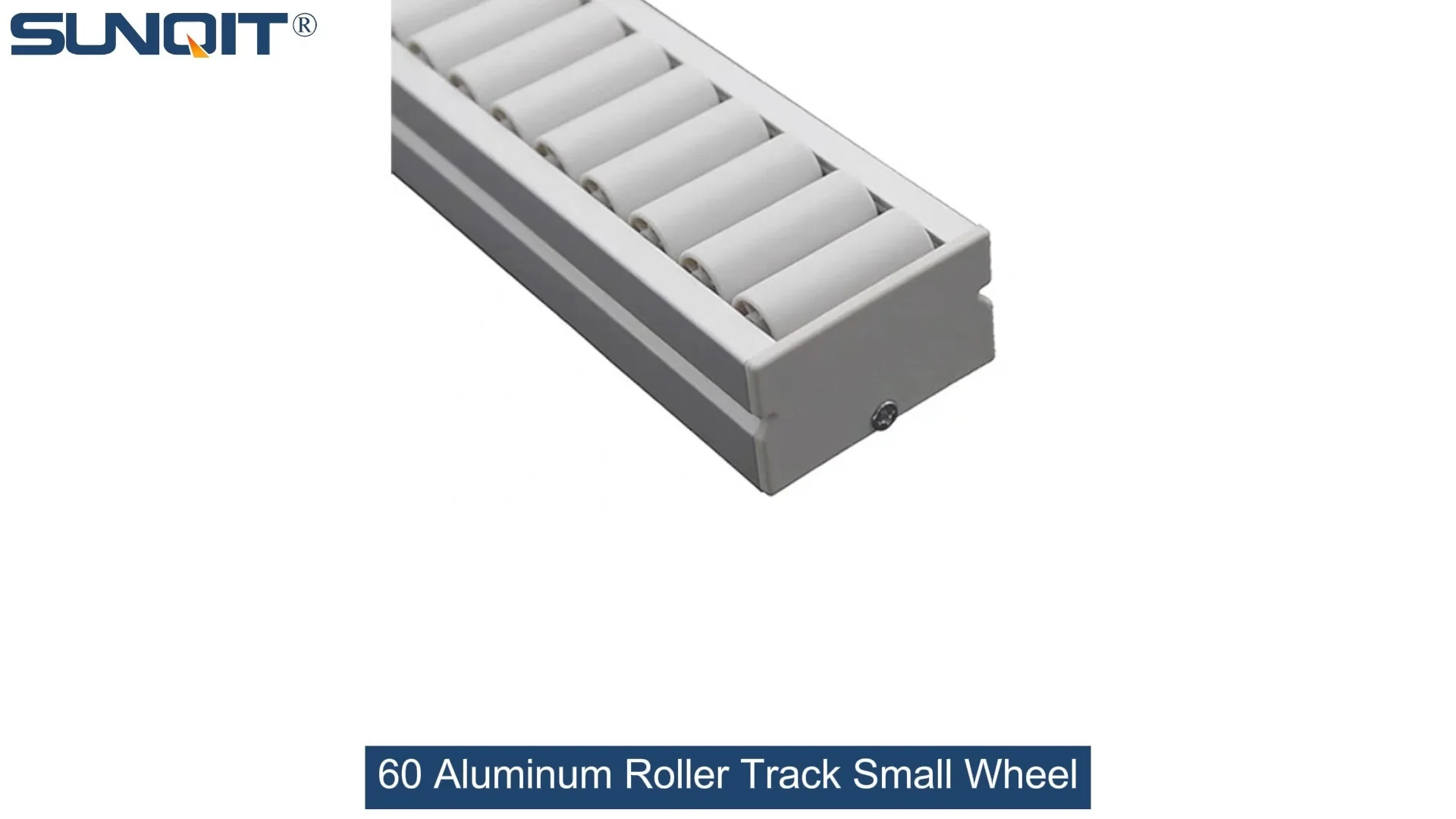
60 Aluminum Roller Track Small Wheel
Modular system roller tracks aluminum gravity roller tracks are an excellent solution for transporting materials within industrial environments, warehouses and distribution centres.
The Hidden Cost of Inefficient Material Handling
If you've ever stood on a factory floor and watched workers wrestle with stuck bins on rusted roller tracks, or waited for maintenance teams to fix a jammed conveyor line, you know how these small hiccups add up. Every minute a worker spends pushing a stuck bin, every dollar spent on replacing corroded steel tracks, every injury from lifting heavy equipment—all these eat into your profits. For operations managers and procurement teams, finding solutions that fix these issues without breaking the bank is a constant battle. But what if a single component could address most of these problems? The 60 aluminum roller track small wheel isn't just another piece of factory gear; it's a quiet workhorse that delivers long-term savings you might not have considered.
What Is the 60 Aluminum Roller Track Small Wheel?
Let's start with the basics. The 60 aluminum roller track small wheel is a lightweight, corrosion-resistant component designed for material handling in factories. It's made from high-quality aluminum extrusion profile, which means it's strong but not heavy—perfect for moving small to medium loads like 3C assembly parts or medical device components. The small wheels (usually around 25mm in diameter) are smooth-rolling and require minimal lubrication, so they don't get stuck easily. Unlike steel tracks that rust and degrade over time, aluminum holds up well in damp or dusty factory environments. And because it's part of a lean system, it integrates seamlessly with flow racks, conveyors, and lean pipe workbenches to create a smooth, efficient workflow.

Key Benefits That Drive Cost Savings
To understand why this roller track is a smart investment, let's break down its core benefits and how each translates to real money in your pocket.
1. Durability: Less Replacement, More Savings
Steel roller tracks are cheap upfront, but they come with a hidden cost: frequent replacement. Steel rusts quickly in factories with high humidity or exposure to chemicals, so you might need to swap out sections every 3-4 years. The 60 aluminum roller track? It's naturally corrosion-resistant, so it can last 10 years or more with basic care. Let's do a quick math check: if you have 200 meters of track, replacing steel every 3 years costs you $15/meter × 200 = $3000 each time. Over 10 years, that's 3 replacements (years 3,6,9) totaling $9000. An aluminum track costs $25/meter ×200 = $5000 upfront, and you won't need to replace it for 10 years. That's a $4000 saving right there.
2. Lightweight Design: Cut Labor and Injury Costs
Aluminum is half the weight of steel. A meter of steel track weighs about 10kg, while aluminum weighs just 5kg. What does that mean for your team? Workers don't have to strain their backs moving or adjusting the track—reducing the risk of musculoskeletal injuries. Back injuries cost factories thousands in workers' comp claims and downtime each year. For example, if your steel track setup leads to one back injury claim per year ($1200), switching to aluminum could eliminate that cost entirely. Plus, lighter tracks are easier to reconfigure, so your team can adjust the layout faster when production needs change—saving time and overtime pay.
3. Low Maintenance: Free Up Your Team's Time
Steel roller tracks need constant attention: lubrication every month, rust removal every quarter, and repairs for stuck wheels every week. All that maintenance takes your team away from more important tasks like optimizing production lines. The 60 aluminum roller track small wheel is low-maintenance. Its small wheels are sealed, so you don't need to lubricate them often. And since it doesn't rust, you don't have to spend hours scrubbing or painting. A factory with 150 meters of aluminum track might spend just 30 minutes a week on maintenance, compared to 4 hours for steel. At $20/hour, that's a saving of $340 per month ($4080 per year).
4. Flexibility: Reuse Instead of Buy New
Factories change fast. A production line that makes phone cases today might switch to tablet parts next month. Steel tracks are rigid—if you need to rearrange them, you often have to cut or weld them, which ruins their usability. The 60 aluminum roller track is flexible. It uses simple connectors to link sections, so you can easily rearrange or expand the track without damaging it. That means you don't have to buy new track every time your production needs change. For example, if you need to add a new flow rack to your line, you can repurpose existing aluminum track sections instead of purchasing new ones—saving hundreds of dollars per project.
5. Lean Integration: Boost Overall Efficiency
The 60 aluminum roller track is designed to fit into lean systems. It works with flow racks to keep materials moving smoothly to the assembly line, reducing wait times for workers. It integrates with conveyors to create a continuous flow of parts, cutting down on bottlenecks. And it pairs well with lean pipe workbenches to create a seamless workflow from material storage to assembly. All these integrations lead to faster production cycles. For example, if your assembly line can process 5 more batches per day because materials move faster, that's extra revenue without extra overtime.

Long-Term ROI Analysis: A Concrete Example
Let's put all these benefits into a real-world scenario to see how the 60 aluminum roller track small wheel delivers ROI. We'll use a mid-sized 3C assembly factory that produces smartphone components. The factory currently uses 200 meters of steel roller track and wants to switch to aluminum.
| Metric | Steel Roller Track | 60 Aluminum Roller Track Small Wheel | Annual Savings (Aluminum vs Steel) |
|---|---|---|---|
| Initial Investment | $3000 (200m × $15/m) | $5000 (200m × $25/m) | N/A |
| Annual Replacement Cost | $1000 (3-year replacement cycle) | $500 (10-year replacement cycle) | $500 |
| Annual Maintenance Cost | $2400 (4hrs/week × $20/hr ×52 weeks) | $325 (0.5hrs/week ×$20/hr ×52 weeks) | $2075 |
| Annual Labor Efficiency Savings | N/A (no speed improvement) | $26,000 (5hrs/day ×$20/hr ×260 working days) | $26,000 |
| Annual Injury Cost Savings | $1200 (1 claim/year) | $0 (no claims) | $1200 |
| Total Annual Savings | N/A | N/A | $29,775 |
| Payback Period (Initial Investment Difference) | N/A | N/A | ~7 Days (Initial difference: $2000 → $2000 / ($29775/365) ≈7 days) |
| 10-Year Net Savings | -$12,600 (Initial + Replacement + Maintenance + Injury) | $292,750 (Total Savings - Initial Investment) | $305,350 |
The numbers speak for themselves. The initial investment in aluminum is higher, but the payback period is just 7 days. Over 10 years, the factory saves over $300,000—money that can be reinvested in new technology, employee training, or expanding operations.

Real-World Success Story: A Medical Device Factory
Company:
Mid-sized medical device manufacturer in Guangdong
Problem:
Stuck steel roller tracks in flow racks slowed order picking by 20% and caused 2 back injury claims in 2023.
Solution:
Replaced 150 meters of steel track with 60 aluminum roller track small wheel.
Results:
- Order picking speed increased by 18% (from 120 orders/day to 142 orders/day).
- Maintenance time reduced from 3hrs/week to 45 mins/week.
- No injury claims in 2024.
- Total savings in 2024: $28,500.
ROI:
Recouped initial investment in 10 days.
This factory's experience isn't unique. Many manufacturers across industries like 3C assembly, medical equipment, and warehousing have seen similar results from switching to aluminum roller tracks. The key takeaway? It's not about the upfront cost—it's about the long-term value.
Tips to Maximize ROI From Your 60 Aluminum Roller Track
Tip 1:
Choose a reliable supplier. Look for suppliers that offer high-quality aluminum extrusion profiles and custom solutions (like szsunqit.com). A good supplier will help you pick the right track for your needs and provide support if you need to reconfigure it later.
Tip 2:
Pair with other lean components. Combine your roller track with flow racks, conveyors, and lean pipe workbenches to create a fully integrated lean system. This boosts efficiency even more.
Tip 3:
Train your team. Teach workers how to clean and maintain the track properly. Simple steps like wiping down the wheels weekly can extend the track's lifespan.
Tip 4:
Reconfigure often. Don't let your track sit in one layout forever. As your production needs change, rearrange the track to fit new lines or processes—this avoids buying new equipment.
Conclusion: Invest in Long-Term Savings
The 60 aluminum roller track small wheel isn't a flashy piece of technology, but it's a game-changer for factories looking to cut costs and boost efficiency. Its durability, lightweight design, low maintenance, and flexibility make it a smart investment that delivers ROI in days—not years. Whether you're in 3C assembly, medical equipment, or warehousing, this roller track can help you reduce waste, save time, and keep more money in your pocket. So next time you're thinking about replacing your old steel tracks, don't just look at the upfront price—think about the long-term savings. The 60 aluminum roller track small wheel is more than a component; it's a path to a more profitable factory.