- Company Articles
- Products and Technology
- Solution
- Cost Savings with Lean Pipe Clamp Chrome: Long-Term ROI Analysis

Cost Savings with Lean Pipe Clamp Chrome: Long-Term ROI Analysis
Related Product
Lean Pipe Clamp Chrome
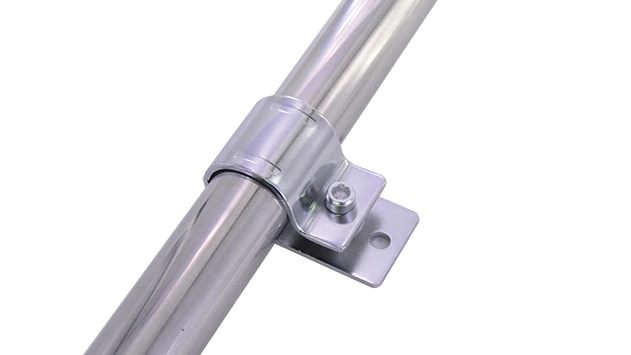
Lean pipe clamp is used for rack system hang monitor or other panel for workbenck, flowrack in production daily use.
In the fast-paced world of manufacturing and warehousing, every dollar counts. From the factory floor to the distribution center, managers are constantly on the hunt for tools and systems that don't just get the job done—but do it smarter, cheaper, and with room to grow. If you've spent any time in operations, you know the struggle: rigid workstations that can't adapt to new product lines, flimsy material racks that wear out after a year, and the endless cycle of replacing parts that just weren't built to last. What if the solution to these headaches was something small enough to hold in your hand? Enter the lean pipe clamp chrome —a but mighty component that's quietly revolutionizing how businesses approach lean manufacturing. In this article, we'll dive into why this simple clamp deserves a spot in your operation, how it integrates seamlessly with lean systems , and how it delivers long-term cost savings that go far beyond the initial price tag.
What Makes Lean Pipe Clamp Chrome Stand Out?
First, let's get familiar with the star of the show. A lean pipe clamp chrome is exactly what it sounds like: a clamp designed to connect lean pipes (often made of steel, aluminum, or plastic) into sturdy, customizable structures. But what sets the chrome-plated version apart? For starters, that chrome finish isn't just for looks. It's a protective layer that resists rust, corrosion, and daily wear and tear—critical in environments where moisture, oils, or chemicals might be present. Unlike plastic clamps that crack under heavy loads or unplated steel that starts to rust after a few months, chrome-plated clamps are built to stick around. And because they're compatible with standard lean pipes, aluminum profiles , and even some flow rack components, they're the ultimate team player in any material handling setup.
But durability is just the beginning. The real magic of these clamps lies in their simplicity. No welding, no specialized tools, no calling in a contractor. With a basic wrench, your team can assemble, disassemble, and reconfigure structures in minutes. Need to adjust the height of a lean pipe workbench for a new operator? Swap out a few clamps. Expanding your flow rack to accommodate larger boxes? Add a section with ease. This flexibility isn't just convenient—it's a cost-saver waiting to happen.
Fitting into the Lean System Puzzle
Lean manufacturing isn't just a buzzword; it's a philosophy centered on eliminating waste, streamlining processes, and maximizing value. At its core, lean is about adaptability—being able to pivot quickly without sinking money into overhauls. This is where lean pipe clamp chrome shines. Let's break down how it aligns with key lean principles:
Waste Reduction (Muda): Traditional workstations and racks are often overbuilt or underutilized. A welded steel bench, for example, might cost thousands upfront and become obsolete the moment your product line changes. With chrome clamps, you build only what you need, using modular components that can be repurposed. No more paying for space or materials you don't use.
Flexibility (Heijunka): In today's market, customer demands shift fast. One month you're assembling small electronics; the next, you're scaling up to larger appliances. A lean system built with chrome clamps adapts with you. Need a longer flow rack? Add more pipes and clamps. Want to reposition a workbench to reduce bottlenecks? Loosen a few bolts and move it. This agility means you're never stuck with a "one-and-done" setup.
Continuous Improvement (Kaizen): Your team knows their workstations better than anyone. With chrome clamps, they can tweak their setup on the fly—raising a shelf, adding a tool holder, or adjusting a roller track—without waiting for approval or outside help. This empowers employees to own their workspace, leading to smarter, more efficient processes over time.

Cost Savings: Breaking Down the Numbers
Talk is cheap—let's get to the data. How exactly does lean pipe clamp chrome translate to real dollars saved? Let's break it down into four key areas:
1. Lower Initial Setup Costs
Traditional manufacturing setups often require custom fabrication. A welded steel workbench, for example, might cost $1,500–$3,000 per unit, plus delivery and installation fees. Compare that to a lean pipe workbench built with chrome clamps: a standard 6-foot bench with aluminum profiles, chrome clamps, and a plywood top runs about $300–$500 in materials. Even if you factor in labor (which is minimal, since no welding is needed), you're looking at a fraction of the cost. For a small operation with 10 workstations, that's a savings of $10,000–$25,000 upfront. And because the clamps are reusable, you can repurpose parts if you need to downsize or reconfigure later.
2. Reduced Maintenance and Replacement Costs
Let's talk longevity. A plastic clamp might last 1–2 years before cracking under heavy use. Unplated steel clamps? They'll rust in humid environments, weakening the connection and putting your team at risk. Chrome-plated clamps, on the other hand, can last 5–7 years with minimal upkeep. Even better, if a clamp does wear out (which is rare), replacing it costs $5–$10, compared to $50–$100 for a replacement part on a welded structure. Over five years, the maintenance savings alone add up. For a facility with 50 clamps in use, that's $2,000–$4,500 saved on replacements.
3. Scalability Without the Overhead
Growth is great, but it can be expensive. Adding a new production line with traditional equipment often means buying all-new workbenches, racks, and conveyors. With chrome clamps, you can expand incrementally. Need a new section for your flow rack? Buy a few extra pipes and clamps—no need to replace the entire system. This "pay-as-you-grow" model prevents over-investing in equipment you might not need long-term. For example, a company scaling from 10 to 15 workstations could save $7,500–$12,500 by reusing existing clamps and adding only the necessary components.
4. Labor Efficiency Gains
Time is money, and nowhere is that truer than on the factory floor. Traditional setups require skilled labor (like welders) for assembly and modifications, which can take days. With chrome clamps, a basic workstation can be built in under an hour by a regular team member. Even complex structures, like multi-level flow racks, take a fraction of the time. Let's say reconfiguring a work area with traditional methods takes 8 hours at $50/hour (total $400). With chrome clamps, the same job takes 2 hours ($100). Over a year, if you reconfigure just 10 times, that's $3,000 saved in labor costs alone.
| Cost Category | Traditional Steel/Welded Setups (5-Year Projection) | Lean Pipe Clamp Chrome Setups (5-Year Projection) | Total 5-Year Savings |
|---|---|---|---|
| Initial Setup (10 Workstations) | $25,000 | $5,000 | $20,000 |
| Maintenance & Replacements | $5,000 | $500 | $4,500 |
| Scalability (Adding 5 Workstations) | $12,500 | $2,500 | $10,000 |
| Labor for Reconfigurations (10 Times/Year) | $12,000 | $3,000 | $9,000 |
| Total 5-Year Cost | $54,500 | $11,000 | $43,500 |
Real-World Results: A Case Study
From Frustration to Savings: How a Small Electronics Manufacturer Cut Costs by 40%
Let's take a look at a real example. PrecisionTech, a small electronics manufacturer in Ohio with 30 employees, was struggling with outdated workstations. Their production line had grown from 2 to 5 product models in three years, and their fixed steel workbenches couldn't keep up. Workers were wasting time reaching for tools stored on separate racks, and the company was spending $8,000 annually on replacing rusted flow rack components.
In 2022, PrecisionTech switched to a lean system built with lean pipe clamp chrome, aluminum profiles, and flow racks. Here's what happened over the next two years:
- Setup Costs: They replaced 8 workstations at $450 each (total $3,600) vs. the $16,000 they would have spent on new welded benches.
- Maintenance: Rust-related replacements dropped from $8,000/year to $300/year (chrome clamps resisted corrosion in their humid factory).
- Reconfigurations: They adjusted workstations 12 times (for new product launches) in 2 years, saving 60 hours of labor ($3,000 at $50/hour).
- Scalability: Added 3 new workstations for $1,350 (reusing clamps from old setups) instead of $6,000 for new fixed benches.
Total savings after two years? $27,750 . And with the system still going strong, they project another $20,000+ in savings over the next three years. "We used to dread product launches because of the setup costs," said their operations manager. "Now, we can reconfigure a line in a morning and focus on making parts, not building benches."
Why Chrome Clamps Beat the Alternatives
You might be thinking, "Aren't there cheaper clamps out there?" It's true—plastic clamps cost less upfront, and unplated steel clamps are budget-friendly too. But when you factor in long-term costs, chrome clamps pull ahead. Let's compare:
Plastic Clamps: At $2–$3 each, they're tempting for tight budgets. But they're prone to cracking under heavy loads, melting in high temperatures, and wearing out quickly. A plastic clamp might last 6–12 months in a busy factory, meaning you'll replace them 5–10 times over 5 years. The total cost for 50 plastic clamps over 5 years? $500–$1,500, plus labor for replacements. Chrome clamps, at $8–$10 each, last 5+ years—total cost $400–$500, with no replacement labor. Over time, plastic costs more.
Unplated Steel Clamps: These cost about $5–$7 each, and while sturdier than plastic, they rust. In humid or wet environments, they'll corrode within a year, weakening connections and posing safety risks. Replacing rusted clamps every 1–2 years adds up, and the risk of a rack collapse (and damaged inventory) is a hidden cost plastic and chrome avoid. Chrome's protective layer eliminates this risk entirely.
Welded Joints: Welding creates permanent connections, so you pay for flexibility upfront. If you ever need to adjust a structure, you'll have to cut the welds, grind down the metal, and re-weld—costing time and labor. Chrome clamps let you make changes without destroying the original structure, saving on materials and downtime.
Beyond the Numbers: Intangible Benefits
ROI isn't just about dollars and cents. Lean pipe clamp chrome also delivers benefits that are harder to quantify but equally valuable:
Employee Satisfaction: When workers can adjust their workstations to fit their needs, morale improves. A survey by the Manufacturing Institute found that 72% of employees report higher productivity when they can customize their workspace. Happier employees mean lower turnover, fewer errors, and better overall performance.
Safety: Loose or rusted clamps are a hazard. Chrome clamps maintain their grip over time, reducing the risk of falling tools or collapsing racks. This translates to fewer workplace accidents, lower insurance premiums, and less downtime due to injuries.
Sustainability: Lean manufacturing and sustainability go hand in hand. By reusing components and reducing waste, chrome clamps help your business shrink its carbon footprint. And since they're made from recyclable steel, they're better for the planet than plastic alternatives that end up in landfills.
Final Thoughts: The ROI of Thinking Small
In the grand scheme of manufacturing budgets, lean pipe clamp chrome might seem like a minor detail. But as we've seen, these small components deliver big results. From lower setup costs to reduced maintenance, from faster reconfigurations to happier employees, the savings add up—often to tens of thousands of dollars over just a few years. And in an industry where margins are tight, that kind of ROI can be the difference between thriving and just surviving.
So, if you're looking to build a lean system that grows with you, resists the test of time, and keeps more money in your pocket, don't overlook the power of a well-made clamp. Lean pipe clamp chrome isn't just a tool—it's an investment in your operation's future. After all, in lean manufacturing, the best solutions are often the ones that work quietly, reliably, and cost-effectively. And that's exactly what these clamps do.