- Company Articles
- Products and Technology
- Application Cases
- Creative Uses of 3030a EU Standard Aluminum Profile in Modern Factories

Creative Uses of 3030a EU Standard Aluminum Profile in Modern Factories
Related Product
3030A EU Standard Aluminum Profile
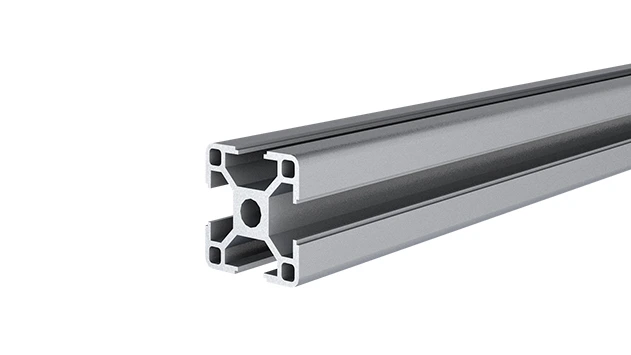
3030 is a 3.00 x 3.00CM fractional 30 series square extrusion T-slot profile with four open T-slots, each side with 3.00cm face. The profile has align-a-grooves to assist in aligning connecting profiles.
Walk into any cutting-edge manufacturing facility today, and you'll notice a quiet revolution unfolding on the factory floor. Gone are the days of rigid, one-size-fits-all production setups—replaced instead by dynamic, adaptable workspaces that pivot with shifting demands. At the heart of this transformation lies a deceptively simple component: the 3030a EU Standard Aluminum Profile. Lightweight yet robust, modular yet durable, this aluminum extrusion has become the backbone of modern factory design, empowering teams to build, modify, and reimagine their workflows with unprecedented flexibility. In this article, we'll explore how this unassuming profile, paired with clever engineering and the right aluminum profile accessories, is reshaping everything from workbenches to material handling systems—proving that sometimes, the most innovative solutions are the ones that let you think outside the (fixed) box.
Why 3030a Aluminum Profile? A Quick Primer
Before diving into its creative applications, let's unpack why the 3030a EU Standard Aluminum Profile has become a factory favorite. First, its dimensions: 30mm x 30mm, with a standardized T-slot design that runs along its length. These slots are the profile's secret superpower—they allow for quick, tool-free attachment of accessories like brackets, connectors, and panels, turning a simple extrusion into a building block for almost anything. Made from high-grade aluminum alloy, it strikes the perfect balance between strength and weight: strong enough to support heavy machinery, yet light enough to be maneuvered by a single worker during reconfigurations.
But what truly sets it apart is its commitment to the "lean system" philosophy—minimizing waste, maximizing efficiency, and prioritizing adaptability. Unlike traditional steel frames or wooden structures, which are often welded or bolted into permanent shapes, 3030a profiles can be disassembled, reconfigured, and reused as production needs change. This not only reduces material waste but also cuts down on the time and cost of overhauls when a new product line is introduced or a workflow is optimized. Pair this with a wide range of aluminum profile accessories—from corner brackets to adjustable feet—and you have a system that grows with your factory, not against it.
1. Modular Workbenches: The Heart of Adaptive Production
From Static to Dynamic: Rethinking the Workbench
Workbenches are the unsung heroes of the factory floor—where assembly happens, tools are organized, and workers spend the majority of their shifts. Yet for decades, they've been stuck in a rut: heavy, wooden or steel tables bolted to the floor, with fixed shelves and limited customization. Enter the 3030a aluminum profile workbench—a setup that's as flexible as the tasks it supports.
Take, for example, a typical electronics assembly line. One day, workers might be assembling small circuit boards; the next, larger components that require more workspace. With a 3030a-based workbench, swapping between these tasks is a breeze. Using aluminum profile accessories like sliding brackets, teams can adjust the height of the work surface to match ergonomic needs (no more straining backs!). Need extra shelf space for tools? Snap on a few T-slot shelves. Want to integrate a lighting bar or ESD mat for sensitive components? Simply slide the accessories into the profile's T-slots and tighten with a hand knob. Even mobility is easy: add caster wheels to the base, and the entire workbench can be rolled to a new location in minutes—perfect for rebalancing production lines or creating temporary workstations during peak demand.
Case in Point: The "Workbench E" Reinvention
Many factories start with basic workbench models, like the "Workbench E (single deck-without caster)"—a simple, no-frills setup. But with 3030a profiles, even these bare-bones benches become canvases for creativity. A manufacturer of automotive parts, for instance, might modify their Workbench E by adding vertical 3030a uprights to support overhead tool rails, where pneumatic tools hang within easy reach. They might attach a small roller track along the back edge to slide components from one end to the other, reducing manual lifting. And when a new part with different dimensions comes along? They can disassemble the upper shelves, reposition the uprights, and have a custom-fit workbench ready in under an hour—no welding, no sawing, no downtime.

2. Roller Tracks: Smooth Material Flow, No Conveyor Belt Required
Material handling is the lifeblood of any factory—get it wrong, and bottlenecks, delays, and worker fatigue follow. Traditional conveyor belts work for high-volume, fixed routes, but they're overkill for small-batch production or lines that change weekly. That's where 3030a aluminum profiles and roller track systems shine. By combining 3030a frames with roller track and accessories like plastic roller track guide rails (yellow or grey, depending on visibility needs), factories can build custom material flow paths that adapt on the fly.
Imagine a line where components need to move from the "Material Rack B (3 row and 3 floor)" to the assembly workbench. Instead of workers carrying heavy bins back and forth, a simple gravity-fed roller track—built with 3030a profiles as the frame and plastic roller track guide rails to keep items aligned—slopes gently from the rack to the bench. As soon as a bin is placed at the top, it glides down smoothly, stopping just at the worker's side. Need to reroute the flow? Loosen the T-slot bolts holding the roller track to the 3030a frame, adjust the angle, and retighten. It's that simple.
For more control, add swivel roller balls (1 inch or 0.5 inch, depending on load size) to the mix. These small, omnidirectional balls fit into plates that mount directly onto 3030a profiles, turning a flat surface into a "magic carpet" for small parts. Workers can slide components in any direction—no more lifting or twisting—reducing strain and speeding up transfer times. And because the roller track placon mount connectors (used to join rails) are compatible with 3030a's T-slots, extending or shortening the track takes minutes, not days.
3. Custom Storage Racks: "One and Done" Shelving
Storage is another area where 3030a profiles excel. Traditional metal shelving is sturdy but static—buy a 5-tier rack, and you're stuck with 5 tiers, even if half your items are too tall for the spacing. 3030a-based racks, however, are like grown-up Legos for factories. Take the "Material Rack B (3 row and 3 floor)"—a standard design, but with 3030a, it's never truly "standard." Need to add a fourth floor to accommodate taller bins? Just cut two more 3030a uprights, attach them with aluminum profile accessories like 90° connectors, and slide in new shelves. Suddenly, your 3-floor rack is a 4-floor rack, and you didn't have to buy a whole new unit.
But the creativity doesn't stop there. Factories are getting clever with vertical space, using 3030a profiles to build "mezzanine" racks that hang from the ceiling or attach to walls, freeing up floor space for production. Others are adding caster wheels to the base of small racks, turning them into mobile storage units that can be rolled directly to the workbench when parts are needed—eliminating trips to the storage room. And for delicate items, like electronic components, 3030a frames can be paired with ESD (electrostatic discharge) panels, creating safe, grounded storage that protects sensitive parts from static damage.
| Feature | Traditional Steel/Wooden Setups | 3030a Aluminum Profile Systems |
|---|---|---|
| Customization | Limited—requires welding, cutting, or drilling; hard to modify post-installation. | Unlimited—T-slots and aluminum profile accessories allow tool-free adjustments in minutes. |
| Weight | Heavy—often requires machinery to move or reconfigure. | Lightweight—single workers can assemble/reposition components; caster wheels add mobility. |
| Durability | Prone to rust (steel) or warping (wood); lifespan tied to initial design. | Weather-resistant, corrosion-proof aluminum; reusable for decades with proper care. |
| Cost Over Time | High—frequent replacement of fixed setups when needs change. | Low—initial investment pays off via reusability and minimal downtime for reconfigurations. |
| Lean System Alignment | Poor—encourages waste (e.g., unused space, over-purchasing of new racks). | Excellent—supports just-in-time adjustments, reduces waste, and adapts to lean workflows. |
Real-World Impact: How a Small Electronics Factory Boosted Efficiency by 35%
Let's put this into context with a real example. A mid-sized electronics manufacturer in Germany was struggling with a common problem: their production line for smart home devices was growing, but their fixed workbenches and steel racks couldn't keep up. Workers wasted 20 minutes per shift just walking to and from storage, and reconfiguring the line for new product launches took 2 full days of downtime.
Their solution? A complete overhaul using 3030a aluminum profiles. They replaced old workbenches with modular setups, adding caster wheels for mobility and integrating roller tracks along the line to slide components between stations. Storage racks were rebuilt with adjustable shelves, and mobile "tote caddies"—also made from 3030a—were introduced to bring parts directly to workers. The result? Walk time dropped by 75%, line reconfigurations now take 4 hours instead of 2 days, and the factory has since expanded production by 35% without adding square footage. As the plant manager put it: "We didn't just buy aluminum profiles—we bought the ability to stop working around our tools and start making our tools work for us."
4. Beyond the Basics: Creative Hacks with 3030a and Accessories
The true beauty of 3030a aluminum profile lies in its ability to inspire innovation. Factories around the world are finding unexpected uses for this versatile material, often combining it with off-the-shelf aluminum profile accessories to solve unique challenges. Here are a few standout examples:
Ergonomic Standing Desks for Quality Inspectors
Quality control stations often require workers to stand for hours, inspecting parts. One factory solved this by building height-adjustable standing desks with 3030a profiles. Using telescoping uprights and a hand-crank mechanism (mounted via T-slot brackets), inspectors can raise or lower the desk surface to their ideal height, reducing fatigue and improving focus.
Temporary Partition Walls for Quick Work Zones
When a factory needs to isolate a production area (e.g., for a cleanroom or to separate noisy machinery), 3030a profiles become instant walls. Frames are assembled on-site, then covered with transparent plastic panels (attached via T-slot clips). When the project ends, the walls are disassembled and stored—no permanent construction, no wasted materials.
Custom Tool Carts with Built-In Power
Maintenance teams often struggle with carrying tools and power cords to equipment. One clever solution: a tool cart built from 3030a profiles, with shelves for tools, a built-in power strip (mounted via T-slot brackets), and caster wheels for mobility. Now, technicians roll the cart to the machine, plug in, and have everything they need at arm's length.
The Future of Factory Design: Adaptability as Standard
As manufacturing continues to evolve—with shorter product lifecycles, smaller batch sizes, and a growing focus on sustainability—the demand for adaptable infrastructure will only increase. The 3030a EU Standard Aluminum Profile, with its modular design, reusable components, and endless compatibility with aluminum profile accessories, is perfectly positioned to lead this charge. It's not just a material; it's a mindset—one that says, "We don't have to accept 'good enough' when we can build 'exactly what we need, right now.'"
So the next time you walk through a factory, take a closer look at the workbenches, the racks, the material flow systems. Chances are, if they're nimble, customizable, and built to last, there's a 3030a aluminum profile at their core—quietly proving that the most innovative factory upgrades aren't about flashy technology. They're about giving people the tools to imagine, build, and rebuild—one T-slot at a time.