- Company Articles
- Products and Technology
- Product knowledge
- Creative Uses of Three Way Lean Pipe Joint Beyond Manufacturing

Creative Uses of Three Way Lean Pipe Joint Beyond Manufacturing
Related Product
Three Way Lean Pipe Joint
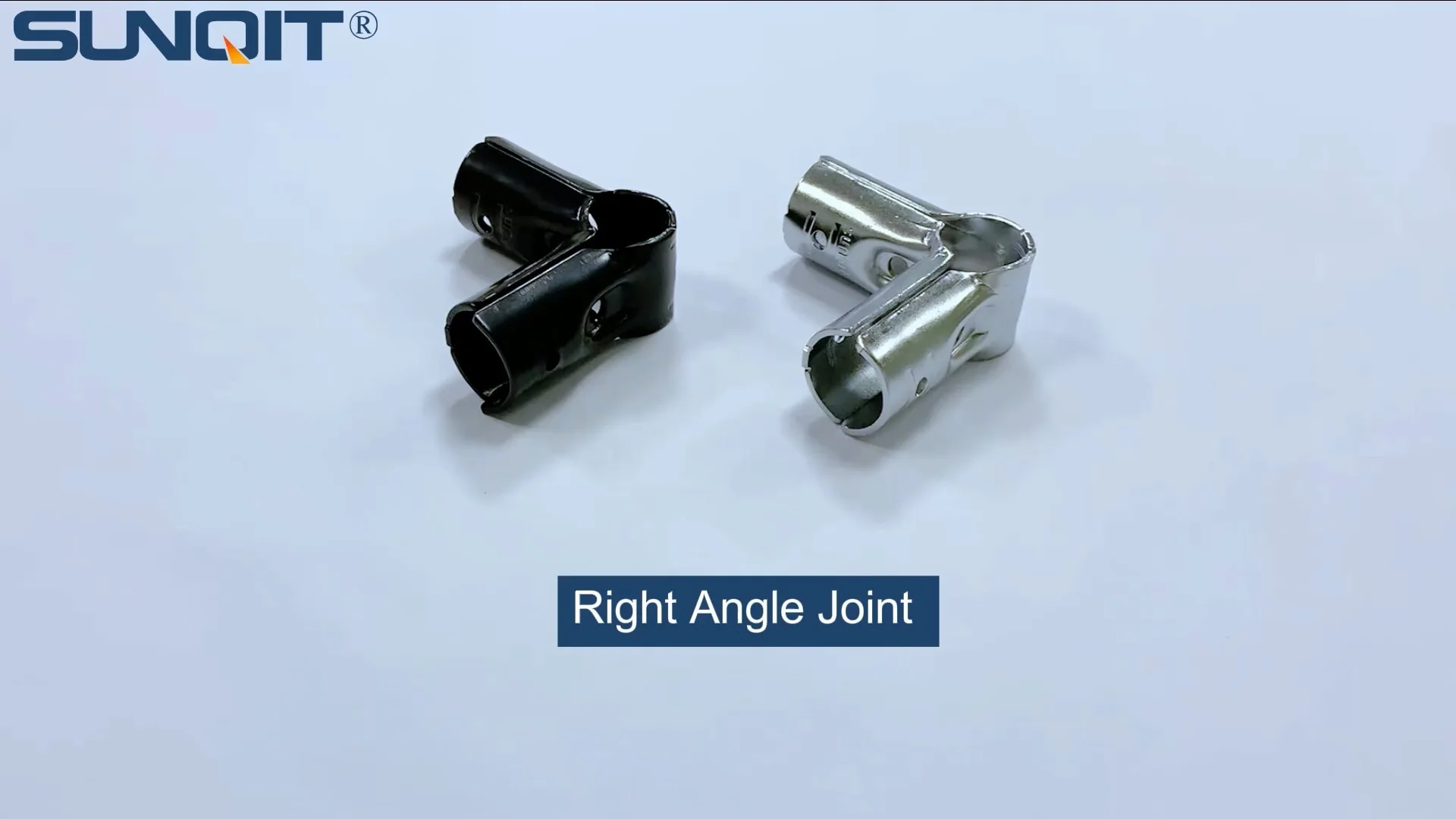
Three way lean pipe joint for 3 pcs 28MM lean pipe connection in straight angle, which used widely in workbench, flow rack, hand trolley frame connection.
Every object has a hidden story of potential. A mason jar becomes a candleholder, a wooden pallet transforms into a coffee table, and now, an industrial component designed for factory floors is finding its way into living rooms, cafes, and community spaces. The three way lean pipe joint—small, unassuming, and originally built to connect metal pipes in manufacturing lines—has quietly become a star of the repurposing movement. What if the same piece that once held together assembly line workbenches could now organize your kitchen, display handmade crafts, or even shape community art? Let's explore the unexpected versatility of this industrial workhorse.
What is a Three Way Lean Pipe Joint, Anyway?
To appreciate its repurposed magic, we first need to understand its roots. The three way lean pipe joint was born from the principles of lean manufacturing—efficiency, adaptability, and minimal waste. In factories, it's the unsung hero that connects lean pipes (hollow metal tubes) into structures like workbenches, flow racks, and material conveyors. Its design is deceptively simple: a small, often metal or aluminum connector with three openings, allowing pipes to meet at angles (usually 90 degrees or 135 degrees) to form stable, modular frames.
What makes it special? Durability, for one. Built to withstand the wear and tear of industrial environments, it's tough enough to hold heavy loads. Then there's modularity: loosen a screw, reposition a pipe, and the joint adapts—no welding or specialized tools needed. Most importantly, it plays well with others: compatible with lean pipes, aluminum profiles, and even accessories like caster wheels or roller tracks, it's a team player in any build.
| Original Manufacturing Role | Repurposed Creative Potential |
|---|---|
| Connecting pipes for rigid production line workstations | Building adjustable, mobile furniture for small spaces |
| Assembling flow racks to move parts between stations | Creating sliding storage systems for home or retail |
| Supporting heavy-duty material racks | Forming lightweight frames for art installations |
Home Organization: Taming Chaos with Industrial Smarts
Clutter is the enemy of calm, but store-bought organizers rarely fit our unique spaces. Enter the three way lean pipe joint: your custom solution for spaces that refuse to conform. Let's start in the kitchen, where every inch counts. Imagine a spice rack that grows with your collection: use aluminum profiles (sleeker and lighter than steel pipes) as vertical posts, connected by three way joints at 12-inch intervals. Add horizontal bars between the joints, and suddenly you have tiered shelves that can expand upward as you buy more spices. Attach caster wheels to the base, and it glides out from under the counter when you need it—no more digging through crowded cabinets.
The Garage: From Cluttered to Command Center
Garages often become dumping grounds for tools, sports gear, and holiday decorations. With the three way joint, you can build a system that actually works for your stuff. Start with a frame of aluminum profiles (they resist rust, perfect for garages) connected by three way joints to form a tall, narrow shelf unit. Add roller tracks horizontally between the posts, and suddenly you have sliding bins for car supplies, gardening tools, or camping gear—no more lifting heavy boxes down from high shelves. For larger items like bikes or ladders, attach vertical pipes with hooks, using the joints to adjust hook height as needed. One DIYer even built a fold-down workbench by hinging a wooden top to a three way joint frame—when not in use, it folds flat against the wall, freeing up floor space.

Retail and Small Business: Flexible Displays on a Budget
Small businesses thrive on personality, but custom display furniture can cost a fortune. The three way lean pipe joint is a budget-friendly alternative that lets you adapt as your business grows. Take a boutique clothing store, for example. Traditional clothing racks are static—you can't change their height or shape without buying new ones. But with aluminum profiles and three way joints, you can build racks that adjust in minutes. Want to display long dresses? Extend the vertical pipes using extra joints. Hosting a pop-up sale? Add caster wheels to the base, and roll the racks outside or rearrange the store layout in an hour. One indie designer in Portland used this setup to create a "changing room" frame: a simple cube of aluminum profiles connected by three way joints, draped with fabric, and on wheels—easy to move for in-store events.
Cafés and Coffee Shops: Cozy, Custom, and Mobile
Cafés live and die by atmosphere, and every inch of counter space is precious. A local café owner in Seattle built a condiment station using three way joints and aluminum profiles that's become a customer favorite. The frame, about the size of a small end table, has shelves connected by joints at different heights: the top holds sugar and napkins, the middle has a roller track for sliding milk cartons, and the bottom shelf stores extra cups. Attached caster wheels mean they can roll it next to the espresso machine during rush hour and tuck it away when things slow down. "It cost a third of what a custom wooden station would have," the owner noted, "and when we rebrand next year, we can just repaint the aluminum profiles and reposition the joints—no need to buy new furniture."

Educational Spaces: Learning That Grows with Kids (and Teachers)
Classrooms and makerspaces need furniture that keeps up with curious minds. Kids grow, projects change, and what worked for a first-grade art class might not work for a middle-school robotics club. Enter the three way lean pipe joint: the ultimate flexible learning tool. A teacher in Chicago used aluminum profiles and three way joints to build modular workbenches for her science classroom. Each bench is a simple rectangle of profiles connected by joints, with a plywood top. When students work on group projects, the benches can be pushed together to form a large table by aligning the aluminum profiles and securing them with extra joints. For individual work, they separate into smaller stations. Best of all, the height is adjustable—no more kids hunched over too-low desks. "We even added a roller track along one side for storing science journals," she said. "The kids love sliding their notebooks into place—it makes cleanup feel like a game."
Libraries: Interactive Book Displays for Young Readers
Libraries are no longer just about quiet shelves—they're community hubs. A children's librarian in Boston wanted to make picture books more accessible to toddlers, so she built low, colorful book racks using three way joints and basic aluminum pipes. The racks, only 18 inches tall, have slanted shelves (achieved by angling the pipes via the joints) so kids can see the book covers without adult help. To make it fun, she added caster wheels painted bright blue, and now the "book cart" rolls to storytime sessions or even outside for summer reading events. "Parents tell me their kids now run to the racks instead of asking for help," she laughed. "It's like the joint's adjustability gave the books a voice."

Community Art and Public Spaces: Building Together, One Joint at a Time
Art has always been about reimagining materials, and the three way lean pipe joint is inspiring artists to create interactive, community-driven pieces. In Philadelphia, a local arts collective used over 100 three way joints, aluminum profiles, and recycled plastic panels to build a "Story Wall" in a neighborhood park. The structure, a grid of connected pipes and panels, lets residents attach handwritten notes, photos, or small artworks using clips on the joints. The best part? It's modular. If a panel gets damaged, you unscrew the joint, swap it out, and the wall lives on. "We wanted something that felt like the community—ever-changing and owned by everyone," said one artist. "The joints made that possible—no two sections are the same, just like our neighborhood."
Community Gardens: Raised Beds That Grow with the Seasons
Urban gardening is a lifeline for many communities, but raised garden beds can be expensive and hard to adjust. A community garden in Detroit solved this with three way joints and aluminum profiles. Their beds are frames of aluminum pipes connected by joints, with wooden planks for the sides. In spring, they use shorter vertical pipes (connected via joints) for shallow-rooted plants like lettuce. In summer, they add extra pipe sections and joints to make the beds taller for tomatoes and peppers. At the end of the season, the whole thing disassembles for storage—no more rotting wooden beds or heavy concrete blocks. "We even added caster wheels to a few small beds," said a volunteer, "so elderly gardeners can roll them closer to the path instead of bending over."
Why It Works: The Magic of Modularity
So, what makes the three way lean pipe joint such a repurposing rockstar? It all comes down to modularity. Unlike fixed furniture or welded frames, it's designed to be taken apart and rebuilt. Need more space? Add another joint and pipe. Moving to a smaller apartment? Disassemble the shelf into a box. On a budget? Buy used joints and pipes from factory surplus stores (they're often cheaper than new furniture parts). It's also eco-friendly: reusing industrial components reduces waste, and aluminum profiles are recyclable if you ever decide to retire a project.
Final Thoughts: The Industrial Component as a Creative Catalyst
The three way lean pipe joint is a reminder that creativity isn't about fancy tools or expensive materials—it's about seeing potential where others see only a "part." What was once a cog in the manufacturing machine is now a tool for organizing homes, supporting small businesses, and bringing communities together. It's proof that innovation often happens when we cross boundaries—between industrial and domestic, between "work" and "play," between what is and what could be.
So the next time you walk into a factory, a hardware store, or even a garage sale, take a second look. That small metal joint on the shelf? It might just be the start of your next big project.