- Company Articles
- Products and Technology
- Solution
- Custom 3060 Aluminum Angle Yards Solutions for 3C Product Assembly

Custom 3060 Aluminum Angle Yards Solutions for 3C Product Assembly
Related Product
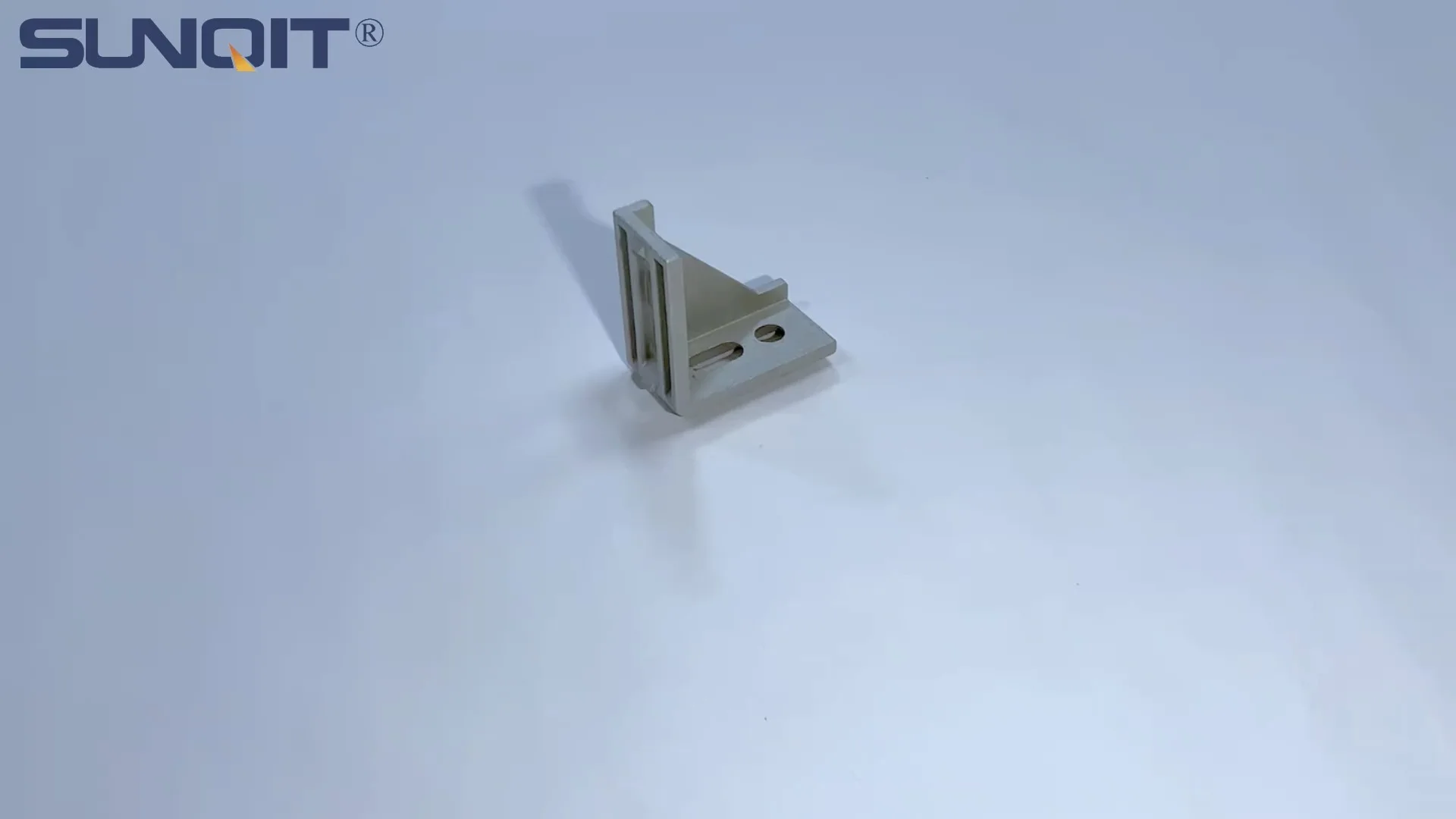
3060 Aluminum Angle Yards
It used for 90° flat connection for 20 series aluminum profile.
In the fast-paced world of 3C (computers, communications, consumer electronics) manufacturing, where product cycles shrink from months to weeks and consumer demands shift overnight, the assembly line is the heartbeat of production. Every second counts, and every inch of space matters. Yet, many manufacturers still grapple with rigid, one-size-fits-all assembly setups that were designed for a bygone era—setups that resist change, slow down workflows, and turn product transitions into logistical nightmares. This is where custom 3060 aluminum angle yards solutions step in, offering a blend of strength, flexibility, and adaptability that's tailor-made for the unique challenges of 3C product assembly.
Understanding 3060 Aluminum Angle Yards: More Than Just Metal Bars
First, let's demystify the star of the show: 3060 aluminum angle yards. These are not just any metal bars—they're precision-engineered aluminum profiles with a specific cross-sectional dimension (30mm x 60mm), designed to serve as the backbone of modular assembly systems. What makes them stand out? For starters, aluminum's natural properties: it's lightweight yet surprisingly strong, resistant to corrosion (critical in factory environments where moisture or chemicals might be present), and infinitely recyclable, aligning with the growing push for sustainable manufacturing. But the real magic lies in their design: T-slot grooves run along their length, allowing for easy attachment of accessories like brackets, joints, panels, and even conveyor components without the need for welding or drilling. This means reconfiguration isn't a weekend-long project—it's a matter of loosening a few screws, adjusting the angle, and locking everything back into place.
You might be wondering, "Why 3060? There are smaller profiles like 2020 or larger ones like 4080." Great question. In 3C assembly, where components range from tiny microchips to larger battery modules, balance is key. 2020 profiles, while versatile for lightweight tasks, might lack the structural rigidity needed for heavier workbenches or multi-tiered material racks. On the flip side, 4080 profiles, though robust, can add unnecessary weight and bulk to setups that don't require industrial-grade load-bearing. 3060 hits that sweet spot: it's sturdy enough to support workbenches with tool cabinets, conveyor tracks with flowing components, and overhead shelving, yet lightweight enough to keep the overall system agile. It's the Goldilocks of aluminum profiles for 3C—just right.
Design Flexibility: Adapting to 3C's Ever-Changing Needs
In 3C manufacturing, product diversity is the norm. One month, your line might be assembling smartwatches with 1.5-inch screens; the next, it's shifting to fitness trackers half that size, or larger tablet components. Traditional assembly setups—think fixed steel workbenches or welded material racks—struggle with this variability. They're built for one purpose, and repurposing them often means cutting, welding, or even replacing entire sections, which is costly and time-consuming. 3060 aluminum angle yards, by contrast, thrive on change.
Consider a typical scenario: TechGadget Inc. produces three models of wireless earbuds—Basic, Pro, and Pro Max. Each has different internal components: the Pro Max includes noise-canceling modules, while the Basic has a simplified circuit board. A year ago, their assembly line had separate workbenches for each model, taking up valuable floor space. When demand for the Pro model spiked, they couldn't reallocate space from the Basic line without dismantling it. Enter 3060 aluminum angle yards. Today, their workbenches are modular: the core frame is 3060 profiles, with interchangeable top panels (ESD for circuit boards, non-slip for casing assembly) and tool holders that can be swapped in 15 minutes. When Pro demand surges, they reconfigure two Basic-model workbenches to Pro specs by adjusting the T-slot brackets, adding specialized jigs, and repositioning material bins—no cutting, no welding, just quick adjustments. Floor space usage dropped by 25%, and changeover time between models went from 4 hours to under 30 minutes.
This flexibility extends beyond workbenches. Material racks, a staple in 3C assembly for storing components like PCBs, batteries, and casings, can be built using 3060 profiles and adjusted to fit different part sizes. Need to add a shelf for new battery modules? Slide a bracket into the T-slot, secure it with a knob, and you're done. Want to tilt the rack to make picking easier? Attach angle-adjustable joints to the 3060 frame. Even accessories like LED task lighting or barcode scanners can be mounted directly onto the profiles, keeping workspaces organized and efficient.

Integration with Workbenches: Creating Ergonomic, Efficient Command Centers
Workbenches are where the magic happens in 3C assembly—where operators spend 8+ hours a day soldering, testing, and assembling components. Their design directly impacts productivity, operator satisfaction, and even product quality. 3060 aluminum angle yards transform workbenches from static tables into dynamic, operator-centric hubs.
Ergonomics is a top priority here. 3C components are often small and require precise movements, so workbench height, angle, and tool placement can make or break operator comfort. With 3060 profiles, height adjustment is simple: leg brackets can be slid up or down the T-slots and locked at the ideal height (typically 750-850mm for seated work, 900-1000mm for standing). Tilted work surfaces, which reduce neck strain during detailed tasks like screen bonding, are easy to install using adjustable angle brackets. One manufacturer reported a 32% reduction in operator complaints about wrist and back pain after switching to 3060-adjustable workbenches.
Tool organization is another area where 3060 shines. Instead of cluttered toolboxes or wall-mounted racks that require operators to reach across the bench, tools can be mounted directly onto the workbench frame using T-slot tool holders. Soldering irons, tweezers, screwdrivers—each has a dedicated spot within arm's reach, reducing "hunt and search" time. For larger tools like heat guns or testing equipment, overhead shelves built from 3060 profiles keep surfaces clear while keeping tools accessible. And since the holders are attached via T-slots, they can be rearranged if an operator prefers a different layout—personalization that boosts morale and efficiency.
Electrostatic discharge (ESD) protection is non-negotiable in 3C assembly, where a single static spark can fry a $50 microchip. 3060 workbenches address this by integrating ESD-safe materials seamlessly. ESD mats, which prevent static buildup, can be clamped to the bench top using T-slot edge brackets, and the aluminum frame itself can be grounded via a simple wire connection to the facility's grounding system. Unlike wooden benches, where ESD mats often peel or shift over time, 3060's secure mounting ensures consistent protection shift after shift.

Lean System Optimization: Streamlining Workflows with 3060
Lean manufacturing—focused on eliminating waste, improving flow, and maximizing value—has become a cornerstone of efficient 3C production. 3060 aluminum angle yards don't just support lean principles; they make them actionable. Let's break down how:
Waste Reduction : Motion waste—operators walking to retrieve tools or components—is a common issue in 3C lines. With 3060's modular design, workstations can be arranged in U-shapes or cells, where everything an operator needs (tools, parts, testing equipment) is within a 1-2 meter radius. Material racks, built from 3060 profiles, can be positioned above or beside the workbench, reducing walking time from minutes per hour to seconds. Inventory waste is also minimized: since 3060 material racks are adjustable, you can store just enough components at the point of use (kanban-style), avoiding overstocking.
Continuous Flow : In traditional lines, components often sit idle between stations, waiting to be moved manually. 3060 systems integrate with conveyors to keep parts moving. For example, a gravity-fed roller track, mounted on 3060 frames, can carry PCBs from the soldering station to the testing station. The track's slope can be adjusted via T-slot brackets to control speed, ensuring a steady flow without bottlenecks. Motorized conveyors, too, use 3060 profiles as their support structure, with side guides and sensors mounted via T-slots to keep components aligned and trigger stops at specific stations.
Standardization : Consistency is key to quality in 3C assembly. With 3060, every workbench in the line can be identical—same height, same tool placement, same material rack configuration. This reduces variability in operator performance: a new hire trained on one bench can work on any other with minimal adjustment. Standardization also simplifies maintenance: replacement parts (brackets, knobs, joints) are universal across the line, so you don't need a closet full of specialized spares.
| Lean Principle | Traditional Assembly Setup | 3060 Aluminum Angle Yards Solution |
|---|---|---|
| Motion Waste | Operators walk 20+ meters/hour to retrieve tools | U-shaped cells with tools/materials within 1-2m reach; 70% reduction in walking |
| Inventory Waste | Overstocked components in central storage | Adjustable 3060 material racks at point of use; 40% reduction in excess inventory |
| Changeover Time | 4-8 hours to reconfigure for new products | 15-30 minutes via tool-free T-slot adjustments |
| Standardization | Inconsistent workbench heights/tools placement | Uniform 3060 frames with standardized tool positions; 25% faster training |

Conveyor Integration: Keeping Components Moving Smoothly
In 3C assembly, the journey of a component—from raw part to finished product—involves multiple stops: PCB assembly, component mounting, testing, casing, and packaging. For this journey to be efficient, components need to move between stations without delays or damage. This is where conveyor systems, supported by 3060 aluminum angle yards, become indispensable.
Roller tracks are a favorite in 3C lines for their simplicity and cost-effectiveness. These tracks, made of plastic or metal rollers, use gravity to move lightweight components like phone casings or small circuit boards. Mounting them onto 3060 frames is a breeze: specialized brackets slide into the T-slots, and the track can be tilted to control speed (steeper for lighter parts, gentler for delicate items). For example, a 3060-supported roller track at MobileTech Co. carries smartphone casings from the painting station to the screen attachment station. The track's slope is adjustable via T-slot angle brackets, so if a batch of casings is slightly heavier (due to thicker paint), they just tweak the angle to maintain flow speed. No more manual carrying, no more dropped parts—just a steady stream of components.
For heavier or larger components (like tablet batteries or laptop chassis), motorized conveyors are the way to go. 3060 profiles serve as the conveyor's frame, providing a stable, lightweight base. The T-slot design allows for easy installation of side guides (to keep components centered) and photo-eye sensors (to stop the conveyor when a component reaches a workstation). At TabPro Inc., their laptop assembly line uses 3060-supported belt conveyors with adjustable speed controls. When assembling 15-inch vs. 13-inch laptops, they adjust the side guides by sliding them along the T-slots and locking them in place—no tools needed. The conveyor frame itself is also adjustable: if they need to raise the belt height to align with a new testing station, they extend the 3060 legs using telescopic brackets, ensuring seamless integration.
Case Study: How 3060 Aluminum Angle Yards Transformed a 3C Assembly Line
Let's dive into a real-world success story. PrecisionElectronics, a manufacturer of smart home sensors, was struggling with their assembly line for motion detectors. Their challenges included: long changeover times (6 hours between sensor models), high operator error rates (5% due to disorganized workspaces), and frequent damage to delicate components during manual handling. Their production manager, Raj, was tasked with finding a solution that wouldn't break the bank. After researching options, he partnered with an aluminum profile supplier specializing in 3060 systems.
The supplier's team conducted a workflow analysis and proposed a custom solution centered on 3060 aluminum angle yards. Key elements included:
- Modular Workbenches : 3060 frames with ESD tops, adjustable height (750-900mm), and interchangeable tool panels. Each bench included overhead 3060 racks for material storage, with bins labeled by component type.
- Roller Track Conveyors : Two 5-meter gravity-fed roller tracks (mounted on 3060 frames) connecting the PCB station to the testing station, and the testing station to packaging. The tracks had adjustable slopes and side guides to prevent component damage.
- Quick-Change Jigs : Custom jigs for sensor alignment, mounted on 3060 brackets that could be swapped via quick-release knobs. Each jig was labeled by sensor model, reducing setup errors.
The results were transformative. Within three months of installation:
- Changeover time between sensor models dropped from 6 hours to 45 minutes.
- Operator error rates fell to 1.2%, thanks to organized workspaces and standardized tool placement.
- Component damage during handling decreased by 80%, as the roller tracks eliminated manual carrying.
- Production output increased by 18%, even with the same number of operators.
Raj noted, "We used to dread product launches because reconfiguring the line took a full shift. Now, we can prototype a new sensor model's workstation in a day and scale it up the next week. The 3060 system didn't just fix our problems—it made us ready for whatever comes next."
Key Benefits for 3C Manufacturers
So, what makes custom 3060 aluminum angle yards solutions a must for 3C manufacturers? Let's distill the advantages:
Cost-Effectiveness : While the upfront investment is higher than basic steel workbenches, 3060 systems save money long-term. Their durability (10+ year lifespan) and reusability mean you won't replace them every 3-5 years. Changeover costs plummet, and floor space efficiency improves, reducing the need for facility expansions.
Competitive Agility : In 3C, the ability to launch new products quickly is a competitive edge. 3060 systems let you reconfigure lines in hours, so you can capitalize on trends (like a sudden demand for foldable phones) before competitors.
Improved Quality : Organized workspaces, ESD protection, and gentle component handling via conveyors reduce errors and damage, leading to fewer defective products and higher customer satisfaction.
Sustainability : Aluminum is 100% recyclable, and modular designs reduce waste from equipment replacements. Many suppliers offer recycled aluminum options, helping manufacturers meet sustainability goals.
Getting Started with a Custom 3060 Solution
Ready to explore a custom 3060 aluminum angle yards solution for your 3C assembly line? The process is straightforward, thanks to suppliers specializing in these systems. Here's what to expect:
Step 1: Needs Assessment : A supplier representative visits your facility to understand your workflow, pain points (changeover times, space constraints, operator feedback), and goals (new product launches, production targets). They'll take measurements and photos to identify opportunities.
Step 2: Design & Engineering : Using CAD software, the supplier creates 3D models of the proposed system, incorporating your requirements (workbench height, conveyor length, ESD needs). You'll review designs and provide feedback until everything aligns.
Step 3: Prototyping (Optional) : For complex setups, a small prototype (e.g., a single workbench) may be built to test functionality, ensuring the design works in practice.
Step 4: Manufacturing & Installation : Components are manufactured, shipped, and installed by the supplier's team. Most parts arrive pre-cut, reducing on-site assembly time.
Step 5: Training : The supplier trains your team on reconfiguring the system, replacing parts, and basic maintenance (like cleaning T-slots to prevent debris buildup).
Conclusion: The Future of 3C Assembly is Modular
In the 3C industry, where change is the only constant, rigidity is a liability. Custom 3060 aluminum angle yards solutions offer the flexibility, durability, and efficiency needed to stay ahead. They transform assembly lines from static, one-use setups into dynamic, adaptable systems that grow with your business—whether you're launching a new product, scaling production, or optimizing workflows. From workbenches to conveyors, from material racks to testing stations, 3060 profiles are the backbone of modern 3C manufacturing. The question isn't whether you need them—it's how soon you can start reaping their benefits.