- Company Articles
- Products and Technology
- Product knowledge
- Custom 3060 Aluminum Profile End Caps: Tailored for Workbench E

Custom 3060 Aluminum Profile End Caps: Tailored for Workbench E
Related Product
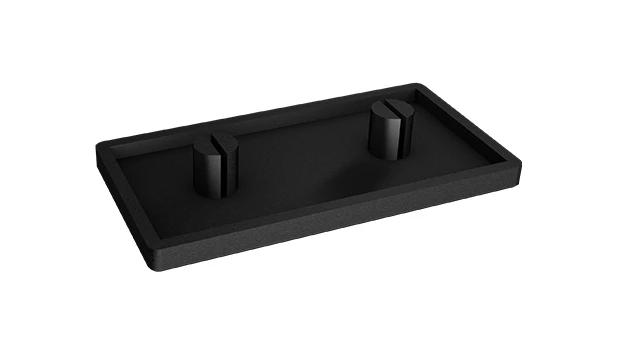
3060 Aluminum Profile End Cap
The aluminum profile end cap adds a finishing touch to your project and closes off profile ends to limit dust and debris buildup, also it can avaid some scratch for material and labor during the assemble work.
Walk into any busy workshop, and you'll notice the little things that make or break a team's efficiency. It might be a cluttered corner slowing down tool retrieval, a wobbly shelf causing delays, or—if you look closely—something as as the sharp edge of a workbench profile catching on a worker's sleeve. These small irritations add up: a minor cut here, a tool snagged there, and suddenly, what should be a smooth workflow feels like navigating a minefield. For Maria, a production supervisor at a mid-sized electronics assembly plant, this was exactly the problem plaguing her team's Workbench E (single deck-without caster) stations. "We'd just invested in these sleek aluminum workbenches, but within weeks, the edges of the 3060 profiles were already showing wear, and two of my technicians had nicked their hands," she recalls. "That's when we realized: even the best workbench is only as good as its smallest components—like the end caps that protect those profiles."
In the world of industrial workspaces, aluminum extrusion profiles are the unsung backbone of productivity. Lightweight yet sturdy, they form the frames of workbenches, material racks, and assembly lines, thanks to their modular T-slot design that lets you attach accessories with ease. But for all their versatility, these profiles have a Achilles' heel: their raw, cut ends. Left unprotected, they're not just a safety hazard—they collect dust, debris, and moisture, which can degrade the profile over time. That's where aluminum profile accessories like end caps step in. And when it comes to a workhorse like the 3060 aluminum extrusion profile, off-the-shelf end caps often fall short. This is the story of why custom 3060 aluminum profile end caps aren't just an upgrade—they're a necessity, especially for specialized setups like Workbench E.
The Role of Aluminum Profile End Caps: More Than Just a "Cap"
Before diving into the specifics of 3060 profiles and Workbench E, let's take a step back. What exactly are aluminum profile end caps, and why do they matter? At first glance, they might seem like little more than plastic or rubber plugs that snap onto the ends of aluminum extrusion profiles. But their role is surprisingly multi-layered.
First and foremost, safety. Raw aluminum profile ends are often rough, with burrs left behind from cutting. Run your hand along one, and you'll feel the sharp edges—hardly ideal in a space where workers are moving quickly, handling tools, or reaching across workbenches. A well-fitted end cap smooths that edge, turning a potential hazard into a harmless surface. "After we installed end caps, I didn't hear a single complaint about nicks or snags," Maria notes. "It sounds small, but when your team stops worrying about getting hurt, they focus on the task at hand."
Then there's protection for the profile itself. Aluminum extrusion profiles rely on their T-slots for versatility—these slots let you mount shelves, lights, or tool holders with bolts or brackets. But if debris like metal shavings, dust, or even spilled liquids get into those slots, they can jam accessories or corrode the aluminum over time. End caps act as a barrier, sealing off the open ends and keeping the T-slots clean and functional. "We used to spend 15 minutes every morning cleaning out the slots on our old workbenches," Maria says. "With end caps, that time dropped to zero. The T-slots stay crisp, and attaching our ESD mats or tool hooks is still as easy as day one."
Finally, there's aesthetics. A workshop with raw, unfinished profile ends looks unpolished—like a project left half-done. End caps give workbenches a clean, professional finish that signals attention to detail. "Our clients visit the floor occasionally, and those little touches matter," Maria adds. "A workbench with neat, color-matched end caps feels intentional, like we care about the space our team works in. That pride translates to better morale."
Key Takeaway: Aluminum profile end caps are critical for three reasons: safety (smoothing sharp edges), profile protection (keeping T-slots clean and debris-free), and aesthetics (creating a polished, professional workspace). For high-use setups like Workbench E, they're not optional—they're essential maintenance.
Why 3060 Aluminum Extrusion Profiles Deserve Special Attention
Not all aluminum profiles are created equal. The 3060 aluminum extrusion profile, named for its 30mm (width) x 60mm (height) cross-section, is a favorite in industrial settings for good reason. Its balance of size and strength makes it ideal for medium-duty applications—think workbenches, material racks, and light assembly line frames. Unlike smaller profiles (like the 2020, better for lightweight shelving) or larger ones (like the 4080, used for heavy machinery), the 3060 hits the sweet spot for workbenches like Workbench E. "It's sturdy enough to hold our tools, bins, and even a small oscilloscope, but not so heavy that we can't reconfigure the bench if we need to," Maria explains. "That versatility is why we chose it for our assembly stations."
But this popularity comes with a catch: 3060 profiles have unique dimensions that standard end caps often can't match. Most off-the-shelf end caps are designed for the most common profile sizes (like 2020 or 4040), leaving 3060 users with options that are either too loose (risking falling off) or too tight (cracking during installation). "We tried three different 'universal' end caps before giving up," Maria says. "One was so loose it fell off when we moved the bench; another was made of cheap plastic that split when we tried to push it on. It was frustrating—we'd invested in quality aluminum, but we were compromising on the very thing protecting it."
The issue boils down to precision. Aluminum extrusion profiles are manufactured to tight tolerances—often within 0.1mm of their specified dimensions—to ensure compatibility with T-slot accessories. End caps, to work effectively, need to mirror that precision. A 3060 profile with a 30mm width might have a slightly rounded corner radius or a specific wall thickness, depending on the manufacturer. A custom end cap accounts for these nuances, creating a snug, seamless fit that standard caps can't replicate. "When we finally got our custom 3060 aluminum profile end caps, the difference was night and day," Maria recalls. "They slid on smoothly, stayed in place, and you could barely tell they were there—until you ran your hand over the edge, that is."
The Anatomy of a Custom 3060 End Cap
What makes a custom end cap for 3060 profiles so effective? Let's break it down. At its core, it's a simple component: a plug that fits snugly into the open end of the profile. But the details matter.
Material Selection: Custom end caps aren't one-size-fits-all in material, either. Depending on the workspace, you might need something flexible (like PVC) to absorb impacts, something rigid (like nylon) for durability, or even aluminum for a seamless, matching look. For Workbench E, which sits in an electronics assembly area, Maria opted for ESD-safe nylon. "Our work involves sensitive circuit boards, so static is a big concern," she explains. "Standard plastic end caps can build up static charge, but the ESD-safe version dissipates it. It's a small detail, but it prevents costly damage to our components."
Fit Precision: Custom end caps are designed using CAD models of the exact 3060 profile in use, ensuring the inner dimensions match the profile's outer dimensions exactly. This includes accounting for corner radii (the rounded edges of the profile) and wall thickness. "Our custom end caps have a lip that wraps around the profile's edge, not just plugging the end but covering the top and bottom surfaces slightly," Maria notes. "That extra coverage means no more dust getting into the T-slots from the sides—it's a complete seal."
Design Flexibility: Beyond fit and material, custom end caps can be tailored to the workbench's specific use case. For example, Workbench E (single deck-without caster) doesn't have wheels, so its end caps don't need to withstand the vibration of movement—but they do need to handle frequent cleaning (since electronics assembly requires strict hygiene). Maria's end caps include a smooth, non-porous surface that wipes clean with a damp cloth, unlike the textured plastic of standard caps that trapped dust. "We also added a small notch on the bottom edge," she adds. "It's subtle, but it lets water drain if we spill a cleaning solution, instead of pooling inside the profile."
Pro Tip: When ordering custom 3060 end caps, ask your supplier for a sample first. A good supplier will provide a prototype that you can test for fit, durability, and compatibility with your workspace's unique needs (like ESD protection or chemical resistance). Maria's team tested three prototypes before finalizing their design: "The first was too thick, making the bench edge bulky; the second had a color that clashed with our workbench panels. The third? Perfect."

Workbench E (Single Deck-Without Caster): A Case Study in Customization
To understand why custom 3060 aluminum profile end caps are a game-changer for Workbench E, let's take a closer look at this specific workbench model. Workbench E (single deck-without caster) is designed for stability and simplicity: a single flat work surface supported by 3060 aluminum legs and rails, with no wheels (hence "without caster") to ensure it stays firmly in place during precision tasks like soldering or component assembly. It's a popular choice for labs, electronics shops, and small-batch production lines where mobility isn't needed, but durability and cleanability are.
For Maria's team, these workbenches were the centerpiece of their new assembly line. "We needed stations that were ergonomic, easy to clean, and built to last," she says. "Workbench E checked all those boxes—until we hit the end cap problem." The issue wasn't just safety; it was also efficiency. The team uses the T-slots on the 3060 profiles to attach tool holders, bin rails, and cable management clips. When standard end caps fell off or cracked, debris would accumulate in the T-slots, making it hard to slide accessories into place. "One morning, a technician spent 10 minutes trying to attach a bin rail because sawdust had packed into the slot," Maria recalls. "That's 10 minutes of downtime we couldn't afford."
After switching to custom 3060 aluminum profile end caps, the transformation was immediate. Here's how the end caps addressed Workbench E's specific challenges:
| Challenge | Standard End Caps | Custom 3060 End Caps for Workbench E |
|---|---|---|
| Safety Risks | Loose caps fell off, exposing sharp edges; 2 reported injuries in 1 month. | Snug, lip-sealed fit; zero injuries in 6+ months post-installation. |
| T-Slot Debris | Loose fit allowed dust, sawdust, and moisture into slots; required weekly cleaning. | Seamless seal prevents debris buildup; cleaning reduced to monthly. |
| Durability | Cheap plastic cracked after 2–3 months of use; needed frequent replacement. | ESD-safe nylon construction; end caps still intact after 1 year of daily use. |
| Workflow Efficiency | Debris in slots slowed accessory installation; 10–15 minutes lost per week per bench. | Clean slots allow quick accessory changes; time savings of ~5 hours/week across 8 benches. |
| Aesthetics & Morale | Mismatched colors and cracked caps made workbenches look unprofessional. | Color-matched (light gray) caps with smooth finish; team reported "pride in the workspace." |
"The numbers speak for themselves," Maria says. "We're saving time, reducing injuries, and our workbenches still look brand-new a year later. But the best part? The team notices. One of my senior technicians joked that the end caps are 'the best upgrade we never knew we needed.' It's those little wins that make a big difference in daily morale."

Beyond Workbench E: Who Else Needs Custom 3060 End Caps?
While Workbench E (single deck-without caster) is a prime example, custom 3060 aluminum profile end caps are valuable for any workspace using 3060 aluminum extrusion profiles. Here are a few scenarios where they shine:
Material Racks and Shelving: 3060 profiles are commonly used for mid-weight material racks (like Material Rack B (3 row and 3 floor) models). These racks hold bins of components, tools, or raw materials, and their exposed ends are at eye level—making sharp edges a risk for anyone reaching for items. Custom end caps here add a layer of safety and prevent small parts from falling into the profile ends.
Assembly Line Frames: In manufacturing, 3060 profiles often form the frames of conveyor systems or pick-and-place stations. These frames are subject to constant vibration and movement, so end caps need to stay in place without loosening. Custom caps with a friction-fit design (using rubberized edges) are ideal here, as they resist vibration better than standard plastic.
Laboratories and Clean Rooms: Labs using 3060 profiles for workbenches or equipment stands require end caps that are non-outgassing (to avoid contaminating samples) and easy to sterilize. Custom caps made from medical-grade materials (like autoclavable silicone) meet these strict standards, something off-the-shelf options rarely do.
Educational Settings: Technical schools and vocational training centers often use 3060 profiles for student workbenches. Here, end caps need to withstand rough handling (from learners still mastering tools) and frequent reconfiguration (as classes change projects). Custom caps with reinforced corners and impact-resistant materials (like polypropylene) hold up better than fragile standard caps.
"I've since recommended custom end caps to other departments in our plant," Maria says. "Our maintenance team uses 3060 profiles for their tool carts, and they're now using the same supplier for their end caps. It's a small investment that pays off across the board."
Choosing the Right Supplier: What to Look For
Not all custom end cap suppliers are created equal. To ensure you get a product that fits your 3060 profiles and Workbench E's needs, look for these key qualities:
Expertise in Aluminum Extrusion Profiles: A supplier that specializes in aluminum profile accessories (not just general plastic parts) will understand the nuances of 3060 dimensions, T-slot designs, and material compatibility. Ask if they've worked with 3060 specifically—experience matters. "Our supplier had a catalog of 3060-specific accessories, which gave us confidence they knew what they were doing," Maria says.
Customization Capabilities: Look for suppliers that offer in-house design and prototyping. Ideally, they should accept CAD files of your profile (or can measure it for you) and provide 3D renderings before production. Avoid suppliers that only offer "semi-custom" options—true customization means tailoring every aspect (material, fit, features) to your needs.
Quality Materials: End caps are only as durable as the materials they're made from. Ask about material certifications (like ESD compliance for electronics workspaces) and request samples to test for impact resistance, flexibility, and chemical compatibility. "We bent a sample end cap 90 degrees to test flexibility—it didn't crack, which told us the nylon was high-quality," Maria notes.
Responsive Customer Service: From initial design to post-delivery support, a good supplier should be easy to reach and willing to iterate. Maria's supplier adjusted the end cap's lip design after the first prototype was too thick: "They didn't charge extra for the revision—they wanted it to be right as much as we did."
Competitive Lead Times: Custom doesn't have to mean slow. Most reputable suppliers can turn around prototypes in 1–2 weeks and bulk orders in 3–4 weeks. If a supplier quotes 6+ weeks for a simple end cap, it may be a red flag for inefficiency.
Conclusion: The Small Component That Makes a Big Difference
In the grand scheme of industrial workspaces, 3060 aluminum profile end caps might seem trivial. But as Maria's team learned, they're the difference between a workbench that frustrates and one that empowers. For Workbench E (single deck-without caster) and other 3060-based setups, custom end caps aren't just an upgrade—they're a statement: that every detail, no matter how small, deserves attention. They protect your investment in aluminum extrusion profiles, keep your team safe, and turn a functional workspace into one that feels intentional and professional.
"I used to think of end caps as an afterthought," Maria admits. "Now, they're the first thing I mention when other supervisors ask about our workbench setup. Because when you get the little things right, the big things—like productivity, morale, and safety—follow naturally."
So, if you're working with 3060 profiles—whether it's a Workbench E, a material rack, or an assembly line—don't settle for off-the-shelf mediocrity. Invest in custom end caps tailored to your needs. Your team (and your aluminum profiles) will thank you.