- Company Articles
- Products and Technology
- Solution
- Custom 4080B EU Standard Aluminum Profile Solutions for Medical Device Assembly

Custom 4080B EU Standard Aluminum Profile Solutions for Medical Device Assembly
Related Product
4080B EU Standard Aluminum Profile
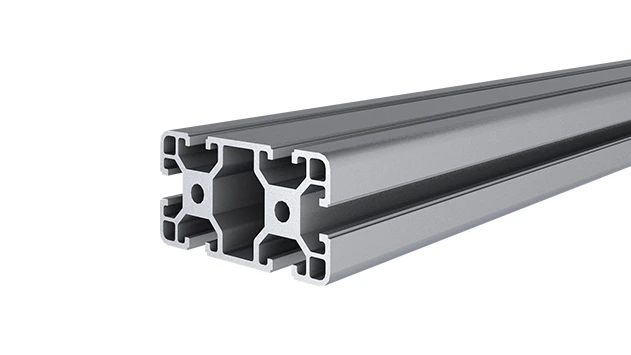
4080B is a 4.00x8.00 CM fractional 40 series square extrusion T-slot profile with two side open T-slots, each side with 4.00cm face, two side with 8.00cm face. The profile has align-a-grooves to assist in aligning connecting profiles.
In the world of medical device manufacturing, every detail matters. From the precision of a surgical instrument to the sterility of a diagnostic tool, the stakes are high—and so are the demands for efficiency, compliance, and adaptability. At the heart of meeting these demands lies a often-overlooked hero: the 4080B EU standard aluminum profile . More than just a structural component, this extrusion has become the backbone of modern medical assembly lines, offering a unique blend of strength, modularity, and customization that aligns perfectly with the industry's need for both rigidity and flexibility. Let's dive into how this profile, paired with the right aluminum profile accessories and integrated into a lean system , is transforming how medical devices are built.
Why Aluminum Profiles Are Non-Negotiable in Medical Assembly
Medical device assembly isn't just about putting parts together—it's about doing so in an environment where contamination risks are minimized, workflows are optimized, and regulatory standards are met without exception. Traditional materials like steel or wood fall short here: steel is heavy and prone to corrosion (a nightmare for cleanrooms), while wood harbors bacteria and lacks durability. Aluminum, however, checks all the boxes:
- Sterility by Design : Aluminum's non-porous surface resists bacterial growth, and its compatibility with harsh cleaning agents (like ethanol or hydrogen peroxide) makes it ideal for cleanroom environments. Unlike painted steel, it won't chip or flake, preventing particulate contamination.
- Strength Without the Weight : Medical assembly often requires frequent reconfiguration—whether adjusting a workbench height for ergonomic use or rearranging material racks to accommodate a new product line. Aluminum's high strength-to-weight ratio means structures can be both sturdy and movable, reducing strain on operators and floor staff.
- Regulatory Compliance : EU standards (like EN 1090 for structural aluminum) ensure that profiles meet strict safety and performance criteria. For medical manufacturers, this isn't just a bonus—it's a requirement for CE marking and market access.
Among aluminum profiles, the 4080B EU standard stands out. Let's break down why it's become the go-to choice for medical device assembly teams.
The 4080B EU Standard Aluminum Profile: A Closer Look
The "4080B" designation refers to the profile's dimensions: 40mm in width and 80mm in height. But its value goes far beyond size. This extrusion is engineered with medical assembly in mind, featuring a T-slot design (a hallmark of aluminum extrusion profile versatility) that allows for quick, tool-free attachment of accessories. Here's what makes it indispensable:
T-Slot Design: The Key to Modularity
Imagine a workbench where you can add a tool holder in seconds, or a material rack where a new shelf can be bolted on without drilling—all thanks to the T-slots running along the profile's length. These slots accept a range of fasteners (like T-nuts, bolts, and brackets) that lock securely in place, making reconfiguration a 10-minute task instead of a full-day project. For medical manufacturers, this means adapting to new product launches or process improvements without halting production.
Material Quality: Beyond Basic Aluminum
Not all aluminum is created equal. The 4080B EU standard uses 6063-T6 aluminum alloy, a heat-treated grade known for its excellent mechanical properties and corrosion resistance. This alloy is also anodizable—an electrochemical process that thickens the natural oxide layer on the surface, enhancing wear resistance and making it even more resistant to chemicals. In medical settings, where spills of disinfectants or lubricants are common, this anodized finish ensures the profile maintains its integrity over time.
| Feature | 4080B EU Standard Aluminum Profile | 3030 EU Standard Aluminum Profile (Common Alternative) | Why It Matters for Medical Assembly |
|---|---|---|---|
| Load Capacity | Up to 500kg per linear meter (when properly supported) | Up to 200kg per linear meter | Medical devices range from lightweight sensors to heavy surgical equipment. 4080B handles heavier loads without bending, ensuring stability during assembly. |
| T-Slot Configuration | 4 slots (2 on each broad face, 1 on each narrow face) | 4 slots (smaller T-slot size) | More slots mean more accessory mounting points—critical for attaching tools, bins, or ESD (Electrostatic Discharge) mats to workbenches. |
| Surface Finish | Anodized (20μm thickness, as per EU 1090) | Anodized (10-15μm thickness) | Thicker anodization resists scratches and chemical wear, maintaining sterility in high-traffic assembly areas. |

Customization: Building Solutions That Grow With Your Needs
No two medical device manufacturers are the same. A company producing insulin pumps has different workflow needs than one building MRI components. The 4080B profile's true power lies in its ability to be customized—thanks in large part to the ecosystem of aluminum profile accessories designed to work with it. Let's explore how this customization plays out in real-world scenarios.
Workbenches: Ergonomics Meets Precision
A typical medical assembly workbench built with 4080B profiles isn't just a table—it's a command center. Here's how accessories transform it:
- Height-Adjustable Legs : Using telescopic aluminum tubes and locking pins, workbenches can be adjusted from 700mm to 1100mm, ensuring operators of all heights can work comfortably (a must for reducing repetitive strain injuries).
- ESD Integration : Medical electronics (like pacemaker PCBs) are sensitive to static electricity. ESD mats, wrist straps, and grounding clips can be mounted directly to the T-slots, creating a fully grounded workspace that protects components from electrostatic damage.
- Tool Racks and Bin Holders : Accessories like aluminum pipe clamps and tray holders attach to the bench's side or back, keeping tools (forceps, torque wrenches) and small parts (screws, gaskets) within arm's reach—eliminating time wasted searching for supplies.
One manufacturer we worked with recently needed a workbench for assembling catheter tips, which require microscopic precision. By integrating a 4080B frame with a honeycomb aluminum top (for lightweight rigidity) and adjustable LED task lighting (mounted via T-slot brackets), they reduced assembly errors by 18% in the first quarter alone.
Material Racks: Streamlining Inventory Flow
In medical assembly, material handling is a balancing act: parts must be accessible but not overstocked (to avoid waste), and traceable but not buried in paperwork. 4080B profiles shine here, too. For example, a material rack built with 4080B can include:
- Roller Tracks : Plastic or aluminum roller tracks (mounted via T-slot connectors) allow bins of components to glide smoothly, reducing the effort needed to restock workbenches.
- Label Holders : Clear plastic label holders (attached with adhesive or clips) display batch numbers and expiration dates, ensuring compliance with FDA's traceability requirements.
- Adjustable Shelving : Using angle brackets and locking bolts, shelves can be repositioned in 10mm increments to accommodate different bin sizes—no need to buy a new rack when product dimensions change.
Lean System Integration: Doing More With Less
Lean manufacturing isn't just a buzzword in medical device production—it's a survival strategy. With margins tight and competition fierce, manufacturers need to eliminate waste (time, materials, space) while maintaining quality. The 4080B EU standard aluminum profile is a lean system's best friend, supporting key principles like:
Just-In-Time (JIT) Inventory
JIT relies on having parts arrive exactly when they're needed, not before. 4080B material racks, with their modular design, can be sized to hold just 2-3 hours of inventory per workstation—preventing overstock and freeing up floor space. One orthopedic implant manufacturer we partnered with reduced on-hand inventory by 30% by reconfiguring their 4080B racks to match JIT schedules.
Continuous Improvement (Kaizen)
Kaizen thrives on experimentation: testing a new workflow, measuring results, and iterating. With 4080B profiles, reconfiguration is so fast (most changes take under an hour) that teams can experiment without disrupting production. For example, a diagnostic device maker recently rearranged their assembly line from a linear layout to a U-shape (using 4080B workbenches on casters) to reduce operator walking time by 22%. They tested the layout for a week, measured the impact, and made adjustments—all without calling in contractors.
5S Workplace Organization
The 5S methodology (Sort, Set in Order, Shine, Standardize, Sustain) depends on visual order. 4080B profiles, with their clean lines and customizable accessories, make "Set in Order" effortless. Colored bin holders (yellow for incoming parts, green for in-progress, red for defective) and shadow boards (cut from aluminum sheets and mounted to the profile) turn workstations into visual cues, reducing errors and training time for new operators.
Choosing the Right Supplier: More Than Just Parts
A 4080B profile is only as good as the system it's part of. When selecting a lean system supplier for your medical assembly needs, look for one that offers more than just profiles and accessories—they should be a partner in optimization. Here's what to prioritize:
- Compliance Documentation : Ask for material certificates (like EN 10204 3.1) and test reports for corrosion resistance and load capacity. Reputable suppliers will have these readily available, saving you time during audits.
- Custom Design Support : Medical assembly needs are rarely "off-the-shelf." A good supplier will have engineers on staff who can design custom workbenches, racks, or trolleys using 4080B profiles—ensuring the solution fits your exact workflow, not the other way around.
- Inventory Depth : Delays in receiving accessories (like end caps or hinges) can halt production. Choose a supplier with a large in-stock inventory of aluminum profile accessories to avoid lead time headaches.
The Future of Medical Assembly: Adaptability Is Everything
Medical device technology is evolving faster than ever. Today's assembly line might be building a wearable heart monitor; tomorrow, it could be retrofitted for a robotic surgical tool. In this landscape, rigidity is a liability. The 4080B EU standard aluminum profile, with its modularity, durability, and compatibility with lean system principles, isn't just a solution for today—it's an investment in tomorrow. It's the difference between struggling to keep up with change and leading it.
So, whether you're setting up a new assembly line or upgrading an existing one, remember: the right foundation matters. With 4080B profiles, aluminum profile accessories , and a focus on customization, you're not just building medical devices—you're building a system that can adapt, grow, and thrive in an industry where precision and progress go hand in hand.