- Company Articles
- Products and Technology
- Solution
- Custom Adjustable Leveling Feet Solutions for Unique Warehousing Needs

Custom Adjustable Leveling Feet Solutions for Unique Warehousing Needs
Related Product
Adjustable Leveling Feet
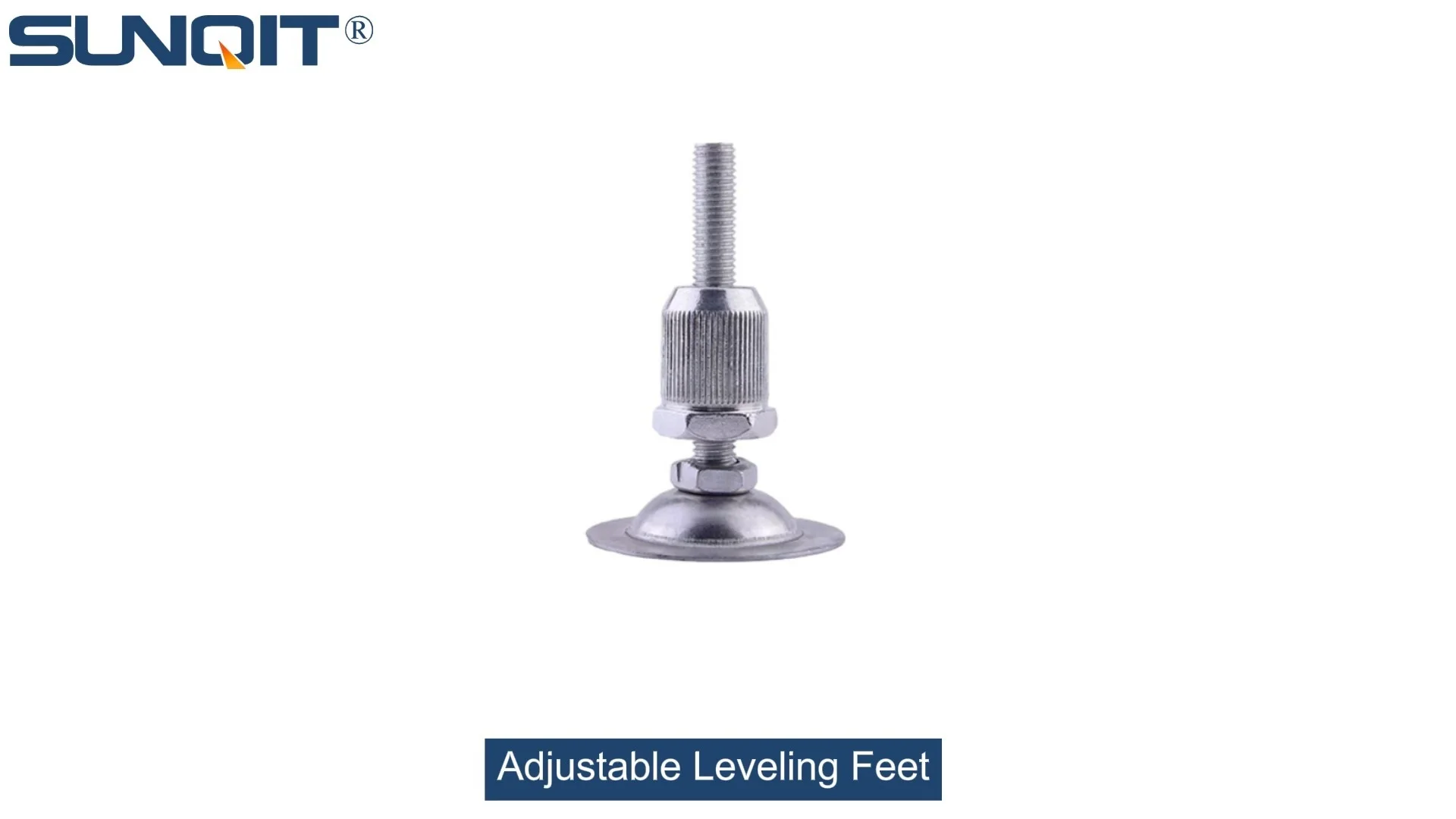
Adjustable leveling feet are designed to keep machines level when placed on uneven or sloped ground. Otherwise known as adjustable equipment feet, they are available to order in a wide variety of size and load capacity combinations.
It's a Tuesday morning at BrightStar Logistics' warehouse, and Maria, the operations manager, is staring at a problem she's been trying to fix for months. The new aluminum profile workbench she ordered last quarter—supposed to streamline the picking process—wobbles so badly that packages slide off its surface if employees so much as bump into it. Down the aisle, the flow rack holding fragile electronics leans to one side, its metal legs scraping the concrete floor and leaving unsightly scratches. Worst of all, last week, a turnover trolley loaded with inventory tipped slightly, damaging three cartons of high-value components. "It's the floors," the maintenance team keeps telling her. "They're uneven—nothing we can do." But Maria knows better. Uneven floors might be a fact of life in warehouses, but that doesn't mean her team has to live with instability, inefficiency, or safety risks. What they need is a solution that adapts to the problem, not the other way around. Enter adjustable leveling feet —the unsung heroes of warehouse stability that few talk about, but every operations manager wishes they'd discovered sooner.
The Hidden Cost of Wobbly Equipment: Why Stability Matters More Than You Think
Walk into any warehouse, and you'll notice the big-ticket items: conveyor belts humming, forklifts zipping by, towering pallet racks stuffed with goods. What you might not notice? The tiny gaps between equipment legs and the floor. A quarter-inch here, a half-inch there—seemingly insignificant, but collectively, these gaps cost warehouses time, money, and peace of mind. When a workbench rocks, employees slow down to avoid spills, doubling the time it takes to process orders. When a material rack leans, inventory shifts, leading to crushed boxes and mislabeled stock. And when a trolley tips, it's not just damaged goods—it's a near-miss (or worse) for the team member pushing it.
"We used to think instability was just an annoyance," says Raj, who manages a 100,000-square-foot distribution center for a retail giant. "Then we started tracking the data. Over six months, we had 12 incidents of damaged inventory directly linked to wobbly equipment—costing us over $15,000. Plus, our ergonomics audit found that employees were straining their backs trying to stabilize racks while loading them. That's when we realized: stability isn't a luxury. It's the foundation of everything we do."
The root cause? More often than not, it's the floors. Concrete settles over time, especially in older warehouses. Newer facilities aren't immune either—shifts in soil, heavy machinery traffic, and even temperature changes can create uneven surfaces. And while re-leveling an entire warehouse floor is expensive (think tens of thousands of dollars and weeks of downtime), there's a smarter, more affordable fix: adjustable leveling feet . These small, unassuming devices attach to the bottom of equipment—workbenches, racks, trolleys, conveyors—and let you tweak their height individually, compensating for uneven floors and creating a stable base.
What Are Adjustable Leveling Feet, Exactly? Breaking Down the Basics
At their core, adjustable leveling feet are simple: a threaded stem (usually metal) topped with a base (rubber, plastic, or metal) that can be screwed up or down to adjust height. But don't let their simplicity fool you—they're engineered to solve a complex problem. Let's break down how they work:
- Threaded Stem: The "adjustable" part. By rotating the stem, you raise or lower the base, fine-tuning the height to match the floor's contours. Most stems are made of steel or stainless steel for durability, with threads that lock securely once set.
- Base: The part that touches the floor. Bases come in materials like rubber (for grip and floor protection), plastic (for lightweight applications), or metal (for heavy loads). Some bases even have anti-slip textures or suction cups for extra stability.
- Load Capacity: Every leveling foot is rated to support a specific weight. Light-duty feet might handle 200-500 lbs per unit, while heavy-duty options can bear over 2,000 lbs—critical for equipment like industrial workbenches or multi-tier material racks.
But not all leveling feet are created equal. Just as warehouses have unique needs—from cold storage facilities with icy floors to automotive plants with oily surfaces—there are specialized leveling feet designed to thrive in those environments. Let's take a closer look at the types that matter most for warehousing.

From Standard to Heavy-Duty: Choosing the Right Leveling Feet for Your Warehouse
Walk into a supplier's catalog, and you'll see dozens of leveling foot options. How do you pick? Start by asking: What's the equipment used for? How much does it weigh? What's the floor like? Here are the top contenders for warehouse applications:
1. Standard Adjustable Leveling Feet: The Workhorse for Everyday Use
Standard feet are the most common, and for good reason. They're affordable, easy to install, and perfect for light to medium loads—think workbenches, small turnover trolleys, or single-tier material racks. Most have a rubber base to prevent scratching floors and reduce noise (no more metal legs screeching when you move a trolley!). For example, a basic M10*56 rubber leveling foot (the "M10" refers to the thread size, "56" to the stem length) is a popular choice for workbenches. Its 56mm stem allows up to 2 inches of height adjustment, enough to compensate for most minor floor unevenness. "We use these on all our packing stations," says Maria, the operations manager from BrightStar Logistics. "They're simple—twist to adjust, lock with a nut, and done. No more wobbly tape dispensers or sliding boxes."
2. Anti-Slip Adjustable Leveling Feet: Grip When You Need It Most
Wet floors, oily surfaces, or high-traffic areas where equipment might shift? Anti-slip adjustable leveling feet are your best bet. These feet have bases made of high-friction rubber or textured plastic that "grab" the floor, preventing sliding even when pushed or jostled. They're a must in food and beverage warehouses (where spills are common) or automotive facilities (where oil drips are par for the course). "We had a problem with our mobile workbenches sliding on our epoxy floors," recalls Raj. "After switching to anti-slip feet, we haven't had a single incident. The difference is night and day."
3. Heavy Duty Split Foot Seats: For When "Sturdy" Isn't Enough
When you're dealing with equipment that weighs a ton—literally—standard feet won't cut it. Enter heavy duty split foot seats . These beefed-up leveling feet feature a split metal base that distributes weight over a larger area, reducing pressure on the floor and preventing sinking. They're designed for extreme loads: think 3,000+ lbs per foot, making them ideal for multi-tier racking, industrial conveyors, or machinery like palletizers. "Our 8-foot-tall material racks hold 10 pallets each—easily 5,000 lbs per rack," says Tom, a warehouse manager at an automotive parts distributor. "We tried standard feet first, but they'd sink into the concrete over time. Split foot seats spread the weight, and now the racks haven't budged in two years."
4. Suction Cup Anti-Slip Foot Adjusters: The "No-Slip" Guarantee
For ultra-smooth floors (like polished concrete or tile) where even anti-slip rubber might not be enough, suction cup leveling feet are a game-changer. These feet have a rubber cup base that creates a vacuum seal with the floor when weight is applied, essentially "sticking" the equipment in place. They're perfect for equipment that's moved occasionally but needs to stay put during use—like mobile assembly stations or temporary packing tables. "In our electronics warehouse, we have static-sensitive workbenches that can't shift an inch," explains Priya, a facilities coordinator. "Suction cup feet keep them locked down, even when someone bumps into them with a trolley."
| Type of Leveling Foot | Load Capacity (per foot) | Best For | Key Feature | Floor Compatibility |
|---|---|---|---|---|
| Standard Adjustable (e.g., M10*56 Rubber) | 200-1,000 lbs | Workbenches, small trolleys, light racks | Rubber base prevents scratches; affordable | Concrete, epoxy, tile (dry conditions) |
| Anti-Slip Adjustable | 500-1,500 lbs | Wet/oily environments, mobile equipment | Textured rubber base for grip; resists sliding | Concrete, metal, epoxy (wet or oily floors) |
| Heavy Duty Split Foot Seat | 1,500-5,000+ lbs | Multi-tier racks, industrial conveyors, heavy machinery | Split metal base distributes weight; prevents sinking | Concrete, asphalt, uneven industrial floors |
| Suction Cup Anti-Slip | 300-800 lbs | Static-sensitive equipment, smooth floors | Vacuum seal base; locks equipment in place | Polished concrete, tile, smooth epoxy |

The Power of Customization: When "Off-the-Shelf" Just Isn't Enough
Most warehouses start with standard leveling feet, but as operations grow, so do the demands. Maybe you've invested in a custom aluminum profile workbench with non-standard leg sizes, or you need feet that can withstand the extreme cold of a freezer warehouse. That's where customization comes in. Reputable suppliers don't just sell products—they partner with you to design leveling feet that fit your exact needs. Here are the most common customizations warehouses request:
Thread Size and Length: Matching Your Equipment's Legs
Not all equipment legs have the same thread size. A standard workbench might use M10 threads, but a heavy-duty conveyor system could require M16 or larger. If you try to force a mismatched foot, you'll risk stripping the threads or creating an unstable connection. Custom suppliers can create feet with any thread size—from tiny M6 for lightweight trolleys to M24 for industrial machinery—and stems as short as 20mm or as long as 150mm for deep unevenness.
Material Upgrades: Surviving Harsh Environments
Warehouses aren't always clean, dry places. Cold storage facilities have condensation; chemical warehouses have spills; coastal warehouses have salt air. Standard steel feet might rust in these conditions, but custom options let you swap materials for durability: stainless steel stems for corrosion resistance, Viton rubber bases for chemical resistance, or aluminum for lightweight, rust-free applications. "We switched to stainless steel feet in our seafood warehouse," says Mike, a logistics director. "Before, we were replacing rusted feet every 6 months. Now they last 3+ years—well worth the small upgrade cost."
Specialized Bases: Solving Unique Floor Problems
Got floors with deep grooves or potholes? A standard flat base might not make contact. Custom suppliers can create bases with beveled edges (to fit into grooves), larger diameters (to cover potholes), or even swivel bases (to adapt to sloped floors). One automotive warehouse, for example, needed feet that could handle both oily concrete and occasional pressure washing. Their supplier designed a foot with a rubber base infused with oil-resistant additives and drainage holes to prevent water pooling—simple, but exactly what they needed.

The ROI of Stability: How Adjustable Leveling Feet Save You Money
At this point, you might be thinking: "Leveling feet sound great, but are they worth the investment?" Let's crunch the numbers. A standard adjustable leveling foot costs $5-$15 per unit; heavy-duty options run $20-$50. If you need 20 feet for 5 workbenches, that's $100-$1,000 total—chump change compared to the costs of instability:
- Damaged Inventory: A single carton of electronics or pharmaceuticals can cost $500+. If unstable equipment causes just one damaged carton per month, that's $6,000 a year—6x the cost of leveling feet.
- Employee Injuries: A slip or fall due to a wobbly rack could lead to workers' compensation claims, medical bills, and lost productivity. The average workplace injury costs $40,000, according to OSHA—enough to buy 4,000 standard leveling feet.
- Equipment Wear and Tear: When a conveyor belt wobbles, its motors and gears strain, leading to breakdowns. A single conveyor repair can cost $1,000-$5,000. Leveling feet reduce strain, extending equipment life by years.
"We installed leveling feet on all 12 of our material racks last year," says Raj. "The total cost was $800. Since then, we've had zero damaged inventory from leaning racks, and our maintenance team hasn't touched the conveyors—saving us at least $3,000 in repairs. It's the best ROI we've had all year."
Installation 101: How to Set Up Your Leveling Feet (No Expertise Required)
You don't need a engineering degree to install leveling feet—just a wrench, a level, and 15 minutes per piece of equipment. Here's a step-by-step guide to get it right:
- Prepare the Equipment: Empty the equipment (remove inventory from racks, clear workbenches) to make it easier to adjust. If it's heavy, use a jack or lift to raise it slightly—just enough to slide the feet under the legs.
- Screw in the Feet: Align the threaded stem with the hole in the equipment leg and screw it in by hand until it's tight. For legs without pre-drilled holes, use a tapping tool to create threads first (suppliers can often do this for you if you provide leg specs).
- Level the Equipment: Place a spirit level on the equipment's surface. Rotate the leveling feet clockwise to lower them or counterclockwise to raise them, adjusting one foot at a time until the bubble is centered. For extra security, lock the feet in place with a jam nut (a second nut that tightens against the leg to prevent rotation).
- Test Stability: Push gently on the equipment from all sides. If it wobbles, recheck the level and adjust as needed. For heavy equipment, have a colleague stand on one corner to simulate load—this ensures the feet can handle real-world weight.
Pro tip: Label each foot with its ideal height setting (e.g., "1.25 inches") using a marker or sticker. If you ever need to move the equipment, you can reset the feet quickly without re-leveling from scratch.
Finding the Right Supplier: What to Look For
Not all leveling foot suppliers are created equal. To avoid cheap, flimsy products that fail after a month, look for these qualities:
- Industry Experience: Choose a supplier that specializes in warehouse or industrial equipment. They'll understand your needs better than a general hardware store.
- Customization Capabilities: Even if you don't need custom feet now, you might later. Ask if they offer made-to-order options and how quickly they can deliver them.
- Testing and Certifications: Reputable suppliers test their feet for load capacity, durability, and safety. Look for certifications like ISO 9001 (quality management) or RoHS (for environmentally friendly materials).
- Technical Support: You shouldn't have to guess which foot to buy. A good supplier will ask about your equipment, load, and floor conditions, then recommend the best option.
Conclusion: Stability Starts with the Right Foundation
Maria from BrightStar Logistics finally found her solution. After installing anti-slip adjustable leveling feet on her wobbly workbench and heavy duty split foot seats on her leaning material racks, the difference was immediate. "The workbench hasn't slid once," she says. "Our pickers are faster, our inventory is safer, and the team no longer complains about backaches from stabilizing equipment. I should have done this years ago."
Warehouses are busy, chaotic places—you don't need the added stress of unstable equipment. Adjustable leveling feet are a small investment that delivers big returns: happier employees, fewer headaches, and a bottom line that's healthier for it. So the next time you notice a wobbly rack or a sliding trolley, don't blame the floors. Fix the foundation instead.