- Company Articles
- Products and Technology
- Solution
- Custom All Direction Roller Track Solutions for Unique Industry Needs

Custom All Direction Roller Track Solutions for Unique Industry Needs
Related Product
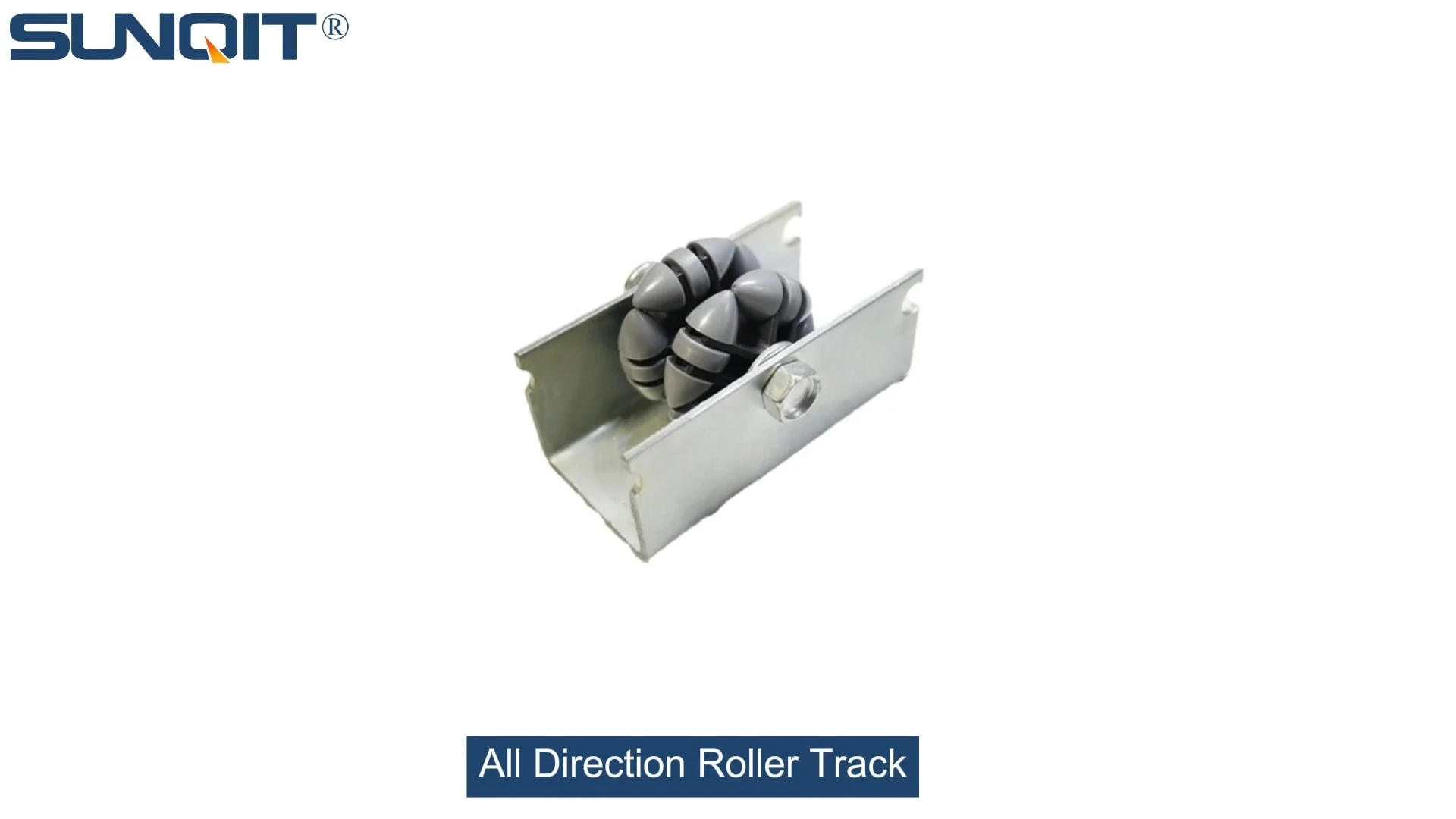
All Direction Roller Track
All direction roller track made of steel frame and multiple direction move wheel which will make boxes are always in contact with the rollers, reducing jams and enhancing flow reliability.
Walk into any manufacturing plant today, and you'll quickly notice the unsung heroes keeping operations moving: the conveyor belts, the workbenches, the material racks. But talk to plant managers, and you'll hear a common frustration: "Our production line feels stuck in a rigid box." Maybe it's a 3C assembly workshop where phone models change every quarter, requiring constant reconfiguration. Or a medical device factory where sterile environments demand equipment that's both durable and easy to sanitize. Or a warehouse struggling to handle everything from small electronic components to heavy automotive parts on the same floor.
The problem? One-size-fits-all material handling equipment just doesn't cut it anymore. Industries evolve, product lines shift, and space constraints get tighter. That's where all direction roller track solutions step in—not as just another piece of machinery, but as a flexible partner that adapts to your unique workflow. Let's dive into how these systems are transforming factories, workshops, and warehouses by putting "lean" principles into action, one roller at a time.
What Are All Direction Roller Tracks, Anyway?
If you're picturing a standard conveyor belt that only moves forward and backward, think again. All direction roller tracks (or "omni-directional roller tracks") are like the Swiss Army knives of material handling. Each roller on the track can rotate 360 degrees, letting products glide, turn, and even change direction without manual lifting or complicated mechanical adjustments. Imagine a production line where a circuit board can slide from a lean pipe workbench onto a roller track, then smoothly pivot 90 degrees to align with an assembly station—no stops, no jams, no wasted time.
But these tracks aren't just about movement. They're built on the idea that your equipment should work with your team, not against them. Made from durable materials like aluminum or stainless steel, they're lightweight enough to reconfigure in hours (not days) and strong enough to handle heavy loads. And when paired with other lean system components—like adjustable workbenches, modular conveyors, or ESD (anti-static) workstations—they become part of a complete ecosystem designed for efficiency.
Why "All Direction" Matters More Than You Think
Traditional roller tracks force materials into straight lines or fixed curves. All direction tracks? They adapt to your space. A warehouse with tight corners can route boxes around obstacles. A 3C assembly line with multiple workstations can create "U-shaped" workflows where products circle back without dead ends. Even in cleanrooms, these tracks reduce the need for manual material handling, cutting down on human error and contamination risks.
The Heart of Customization: Building Solutions, Not Just Products
Here's the truth: No two factories are identical. A automotive parts manufacturer might need roller tracks that handle 50kg engine components, while a medical device maker needs tracks that can be wiped down with harsh disinfectants daily. That's why "customization" isn't just a buzzword here—it's the starting point of every project.
Let's break down how these solutions are tailored to different industries:
| Industry | Key Challenges | All Direction Roller Track Customizations | Real-World Impact |
|---|---|---|---|
| 3C Assembly (Phones, Laptops) | Small parts, frequent line reconfigurations, ESD protection needs | Mini aluminum roller tracks (38mm width), yellow/black ESD wheels, quick-connect joints for easy layout changes | A major smartphone factory in Shenzhen reduced changeover time between models from 8 hours to 2 hours |
| Medical Device Manufacturing | Sterile environments, strict hygiene standards, lightweight but sturdy equipment | Stainless steel swivel roller balls (1 inch), smooth aluminum guide rails, easy-to-dismantle components for deep cleaning | A surgical instrument producer in Jiangsu now meets ISO 13485 standards with 50% less time spent on equipment sanitization |
| Warehouse & Logistics | Mixed load sizes, high throughput, space optimization | Adjustable roller spacing (from 0.5 inch to 2 inches), heavy-duty steel wheel roller tracks (85 staggered models), all-directional flow racks | A third-party logistics firm in Shanghai increased pallet handling efficiency by 35% in their picking area |
| Automotive Parts | Heavy loads, oil/chemical resistance, durability | 40 steel roller tracks with yellow wheels (oil-resistant), reinforced aluminum guide rails, caster wheels for mobile track sections | An auto parts supplier in Guangzhou reduced workplace injuries from manual lifting by 60% |
The magic lies in the details. For example, plastic roller track guide rails come in yellow and grey—not just for aesthetics, but to help workers visually distinguish between different product lines at a glance. Swivel roller balls (0.5 inch vs. 1 inch) are chosen based on the size of parts being transported; smaller balls for tiny screws, larger ones for bulkier items. And when paired with a lean pipe workbench, these tracks create a seamless workflow where assembly and material transport happen in perfect sync.

Beyond Movement: How Roller Tracks Bring "Lean" to Life
You've probably heard the term "lean manufacturing" thrown around—but what does it actually mean for your day-to-day operations? At its core, lean is about eliminating waste: wasted time, wasted space, wasted effort. All direction roller tracks embody this philosophy in three key ways:
1. Flexibility That Saves Time (and Sanity)
Remember that 3C factory we mentioned earlier? With traditional fixed conveyors, reconfiguring the line for a new phone model meant calling in engineers, disconnecting motors, and drilling new holes in the floor. With modular roller tracks, it's a different story. Using internal rotatary aluminum joints and basic aluminum tubes, the team can disassemble sections, rearrange the layout, and have the line up and running again before lunch. One plant manager joked, "We used to dread product launches—now we look forward to them because we can test new layouts in a day."
2. Sustainability That Cuts Costs (and Carbon Footprints)
"Why throw it away when you can reuse it?" That's the mindset behind lean solutions. Our roller tracks are built with components that can be repurposed, replaced, or reconfigured as your needs change. A plastic roller track guide rail that's no longer needed for one line can be swapped to another. A lean pipe joint from an old material rack can find new life in a workbench upgrade. Over time, this reduces the need for new equipment purchases—and keeps tons of metal and plastic out of landfills. One automotive client calculated that they saved ¥120,000 in equipment costs over three years by reusing components.
3. Precision That Boosts Productivity (and Morale)
Ever watched a team struggle to align a heavy part on a misaligned conveyor? It's frustrating for workers and risky for the product. All direction roller tracks eliminate that friction. The rollers glide smoothly, the tracks lock into place with precision, and the result is a workflow where materials arrive exactly where they need to be, exactly when. A technician at a computer peripheral factory put it best: "Before, I'd spend 20 minutes a day just pushing boxes into position. Now, I can focus on testing the products instead of wrestling with the equipment."
"We don't sell tracks—we sell peace of mind. When your material handling system works so well you forget it's there, that's when you know you've got the right solution." — A senior engineer with 15 years in factory design

What Makes Our Roller Tracks Stand Out?
Sure, there are other roller track suppliers out there. But what sets custom solutions apart is the attention to the details that matter to your team. Let's take a closer look at the components that make these systems reliable, adaptable, and built to last:
Aluminum: The Unsung Hero of Lightweight Strength
Aluminum isn't just for soda cans—it's the backbone of our most popular roller tracks. Why? It's strong enough to handle daily use (even with heavy loads), lightweight enough for easy reconfiguration, and resistant to rust and corrosion. Take our basic aluminum tube: at just 1.2mm thick, it's easy to carry, but pair it with parallel fixation aluminum pipe joints, and it can support up to 80kg per linear meter. For medical or food-grade environments, we use anodized aluminum that's smooth, non-porous, and easy to clean—no more hiding spots for bacteria.
Wheels and Rollers: Built for the Long Haul
The rollers are the heart of the system, so we don't cut corners here. From plastic roller track guide rails in bright yellow (easy to spot in busy environments) to steel wheels with ESD coatings (to protect sensitive electronics), each component is tested for 100,000+ rotations to ensure smooth performance. For example, our 40 steel roller track with black ESD wheels is designed to dissipate static electricity, making it ideal for circuit boards and semiconductors. And for heavy-duty use, like in automotive plants, we offer 85 staggered steel roller tracks that distribute weight evenly, reducing wear and tear.
Joints and Connectors: The Glue That Holds It All Together
Ever tried to build furniture with loose screws? Annoying, right? Now imagine that furniture is part of a production line carrying expensive equipment. Our joints—like the 90° aluminum crossing joint or the multi-angle fixed aluminum joint—are engineered to lock tight and stay tight. The internal rotatary aluminum joint, a customer favorite, lets tracks pivot smoothly without loosening over time. One maintenance technician noted, "I used to tighten joints every week. Now, I check them once a month, and they're still as secure as day one."

From Blueprint to Reality: How We Create Your Custom Solution
So, you're convinced—all direction roller tracks could solve your material handling headaches. But how does the process actually work? It starts with a conversation, not a catalog. Here's a peek behind the curtain:
Step 1: Listen (A Lot)
We start by visiting your facility (or hopping on a video call if you're far away) to see your space, meet your team, and understand your pain points. A 3C assembly line manager might say, "We need to reduce the distance between station A and B by 2 meters." But digging deeper, we might find the real issue is that workers are wasting time walking around a fixed conveyor. That's when we know a compact all direction roller track layout could solve the problem better than just shortening the line.
Step 2: Design with Your Team (Not Just for Them)
Our engineers work with your supervisors and operators to draft a layout. We'll ask questions like: "What's the heaviest item you'll move?" "How often do you change your production schedule?" "Do you need to clean under the tracks daily?" Then we'll create 3D models and even mock up small sections to test. One warehouse team was skeptical about a proposed layout—until we built a 2-meter prototype and let them run test pallets through it. "That's when we saw it would work," they told us later.
Step 3: Build, Deliver, and Set Up (With Training)
Once the design is approved, we manufacture the components in our facility, using high-precision tools to ensure every roller, joint, and rail fits perfectly. Then we deliver and install—often in just 1-3 days, depending on the size. But we don't just walk away after setup. We train your team on how to adjust the tracks, replace parts, and even reconfigure layouts themselves. One client's maintenance team was so confident after training that they reconfigured their entire line for a new product launch without calling us for help.
Step 4: Follow Up (Because Your Success is Our Success)
Three months later, we'll check in to see how the system's performing. Did it meet your efficiency goals? Are there tweaks that could make it even better? We once followed up with a medical device client and learned that their cleaning crew was struggling with a hard-to-reach corner of the track. Our solution? A quick design change to add a removable section—problem solved. That's the benefit of working with a supplier that sees itself as a long-term partner, not just a vendor.
Why Settle for "Good Enough" When You Can Have "Perfect for You"?
At the end of the day, manufacturing is about people: the workers on the line, the managers trying to meet deadlines, the engineers designing the next big product. Rigid, outdated material handling equipment doesn't just slow down production—it drains morale. All direction roller track solutions are about giving your team the tools they deserve: tools that adapt, tools that last, tools that make their jobs easier.
Whether you're running a small workshop or a large-scale factory, the right roller track system can turn chaos into order, waste into efficiency, and frustration into pride. It's not just about moving products—it's about moving forward.
So, what's your unique challenge? A cramped space? Frequent product changes? Specialized safety requirements? Let's talk. Because when it comes to material handling, "one size fits all" is a thing of the past. Your perfect solution is waiting to be built.