- Company Articles
- Products and Technology
- Solution
- Custom Aluminum Foot Base Solutions for Medical Device Production Floors

Custom Aluminum Foot Base Solutions for Medical Device Production Floors
Related Product
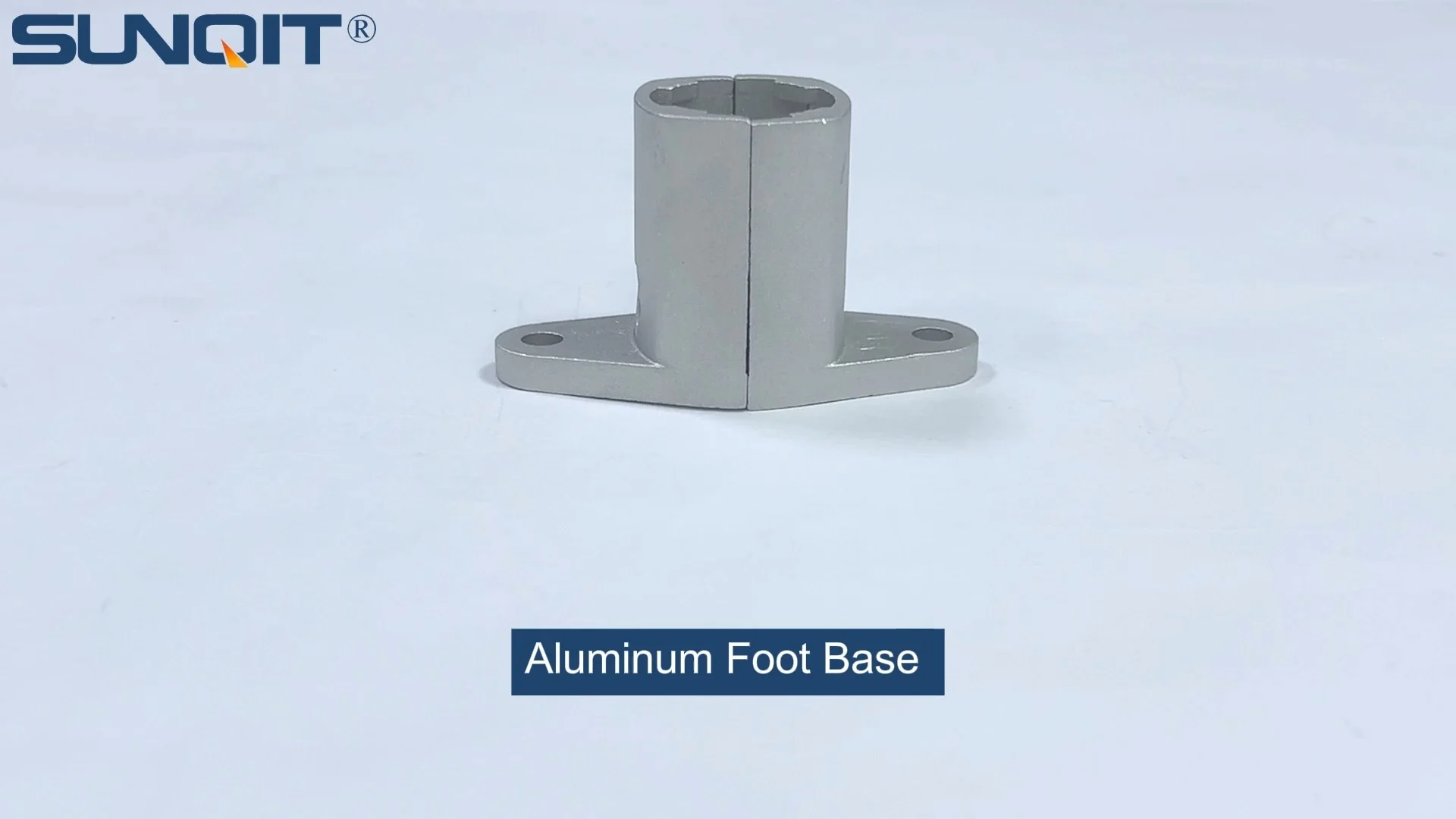
Aluminum Foot Base
Aluminum foot base to connect 28mm aluminum pipe and fixed it on the ground and prevent pipe fall and move.
The Unsung Hero of Precision: Why Aluminum Foot Bases Matter in Medical Manufacturing
Walk into any medical device production floor, and your eyes might first be drawn to the high-tech machinery, the sterile white surfaces, or the teams in lab coats meticulously assembling components smaller than a grain of rice. But beneath those workbenches, material racks, and precision tools lies a component so critical it can make or break the quality of life-saving devices: the humble yet mighty aluminum foot base. These unassuming structures are the silent backbone of stability, hygiene, and efficiency in an industry where even the smallest vibration or misalignment can compromise a product's safety and efficacy.
In medical device manufacturing, where compliance with FDA regulations, ISO standards, and strict hygiene protocols is non-negotiable, every element of the production environment is scrutinized. From the air filtration systems to the cleaning agents used on work surfaces, nothing is left to chance. Aluminum foot bases, often overlooked, play a pivotal role in meeting these demands. They're not just metal blocks holding up a table—they're engineered solutions that address the unique challenges of medical production floors, from uneven concrete to the need for rapid reconfiguration of workflows.
This article dives into the world of custom aluminum foot base solutions, exploring why they're indispensable in medical device manufacturing, how they're tailored to fit specific needs, and the tangible benefits they bring to production teams, compliance officers, and ultimately, patients relying on the devices produced.
The Unique Challenges of Medical Device Production Floors
Medical device production isn't just manufacturing—it's a delicate dance between precision, hygiene, and human ergonomics. Unlike automotive or consumer goods production, where tolerance for error might be measured in millimeters, medical devices often require precision down to micrometers. A misaligned catheter, a loosely fitted pacemaker component, or even a tiny scratch on a surgical instrument can have life-threatening consequences. This level of precision demands an environment that minimizes variables, and that starts with the very foundations of the workspace: the surfaces and supports holding the equipment.
Hygiene: Non-Negotiable and Ever-Present
Medical device production floors are held to the same hygiene standards as operating rooms. Bacteria, dust, and even trace chemicals can contaminate devices, leading to infections or product recalls. Surfaces must be non-porous, easy to disinfect, and resistant to corrosion from harsh cleaning agents. Traditional materials like untreated steel or wood fall short here—steel can rust if not properly sealed, and wood harbors bacteria in its grain. Aluminum, however, offers a naturally smooth, non-porous surface that resists corrosion and can be easily wiped down with alcohol or bleach without degrading.
Ergonomics: Protecting the Human Element
Behind every precision device is a team of workers spending hours hunched over assembly lines, adjusting microscopes, or lifting heavy trays of components. Poor ergonomics leads to fatigue, repetitive strain injuries, and decreased productivity—all of which increase the risk of errors. Workbenches and material racks must be height-adjustable, and their bases must provide stable, wobble-free support to prevent workers from overcompensating for unsteady surfaces. An aluminum foot base with adjustable leveling feet, for example, ensures that a workbench remains perfectly level even if the floor beneath it dips or slopes, allowing workers to maintain proper posture and focus on the task at hand.
Adaptability: Keeping Pace with Innovation
The medical device industry is constantly evolving. New technologies, like 3D-printed implants or AI-driven diagnostic tools, require production lines to reconfigure quickly. A facility might need to shift from assembling syringes one month to producing ventilator parts the next. Fixed, rigid infrastructure slows this process down, but modular solutions—like aluminum foot bases compatible with aluminum profile accessories—allow for rapid changes. Need to add a new material rack B (3 row, 3 floor) to accommodate larger components? Swap out the old foot base for a custom-sized aluminum one, adjust the leveling feet, and you're ready to go—no need for extensive renovations or downtime.
Compliance: Navigating a Maze of Regulations
Regulatory bodies like the FDA and ISO don't just inspect the final product—they audit the entire production process, including the tools and surfaces used. A foot base that rusts, traps debris, or fails to support equipment stably could lead to non-compliance, halting production until issues are resolved. Aluminum foot bases, with their corrosion resistance, easy-to-clean design, and structural reliability, help manufacturers stay on the right side of these regulations, reducing the risk of costly delays or fines.

Why Aluminum? The Material Advantage in Medical Settings
When it comes to choosing materials for foot bases in medical device production, aluminum isn't just a good option—it's often the only option that checks all the boxes. Let's break down why aluminum outperforms other common materials like steel, plastic, or wood in this critical role.
Strength Without the Weight
Medical production equipment, from microscopes to automated assembly arms, can be surprisingly heavy. A typical workbench E (single deck, without casters) might support 200-300 pounds of tools, components, and materials. Steel is strong enough for this, but it's also heavy—making it difficult to move or reposition if workflows change. Aluminum, by contrast, has a strength-to-weight ratio that's unmatched. It's 30% lighter than steel but offers comparable load-bearing capacity, especially when paired with reinforced aluminum profile designs. This lightweight nature makes installation easier, reduces strain on floor structures, and allows for more flexibility in reconfiguring workspaces.
Corrosion Resistance: A Must for Hygiene
Medical production floors are cleaned constantly—often multiple times per shift—using aggressive disinfectants like hydrogen peroxide or quaternary ammonium compounds. These chemicals can eat away at steel, causing rust that not only weakens the structure but also flakes off into dust, contaminating devices. Aluminum, however, forms a natural oxide layer when exposed to air, creating a protective barrier that resists corrosion. For even greater protection, aluminum foot bases can be anodized—a process that thickens this oxide layer, making the surface even more durable and resistant to chemicals. This means less maintenance, longer lifespans, and a lower risk of contamination.
Sustainability: Aligning with Green Manufacturing Goals
Today's medical device manufacturers aren't just focused on compliance—they're also prioritizing sustainability. Aluminum is 100% recyclable, and recycling it requires just 5% of the energy needed to produce new aluminum. This aligns with corporate social responsibility goals and reduces the carbon footprint of production. Unlike plastic foot bases, which can leach chemicals over time and end up in landfills, aluminum foot bases are a sustainable choice that supports long-term environmental stewardship.
Modularity: Working with the Tools You Already Have
Medical production floors rarely use one-size-fits-all equipment. Workbenches, material racks, and trolleys come in countless configurations, each with unique dimensions and load requirements. Aluminum foot bases excel here because they're modular by design. They pair seamlessly with aluminum profile accessories like adjustable leveling feet, caster installation bases, and aluminum pipe clamps, allowing manufacturers to build custom solutions that fit their exact needs. Need a foot base for a narrow material rack B? Use a slimmer aluminum profile. Need to add casters to a previously fixed workbench? Swap out the fixed foot base for one with caster wheel compatibility. It's this flexibility that makes aluminum the go-to material for adaptive production environments.

Customization: Tailoring Aluminum Foot Bases to Your Production Needs
No two medical device production floors are identical. A facility manufacturing orthopedic implants will have different needs than one producing diagnostic test kits. That's why off-the-shelf foot bases rarely work—they're designed for average conditions, not the unique challenges of your workflow. Custom aluminum foot bases, however, are engineered to fit your specific environment, equipment, and goals. Let's explore the key customization options and how they address real-world needs.
Material Thickness and Aluminum Profile Design
Aluminum foot bases start with the right aluminum profile—a structural framework that determines load capacity, rigidity, and compatibility with accessories. Profiles come in various thicknesses, from 1.2mm for lighter applications (like supporting a small hand trolley) to 3mm or more for heavy-duty equipment (like automated assembly stations). For example, a material rack B with 3 rows and 3 floors, holding hundreds of pounds of sterilized components, would require a thicker, reinforced aluminum profile to prevent sagging or instability. Manufacturers can work with suppliers to select profiles with T-slots, which allow for easy attachment of accessories like adjustable leveling feet or side guards—no welding or drilling required.
Size and Dimensions: Fitting the Space You Have
Production floors are often tight, with limited space between workstations to maintain workflow efficiency. A foot base that's too wide could block walkways or make it hard for workers to access tools. Customization allows for precise sizing—whether you need a compact 24x24-inch base for a benchtop microscope or a 48x30-inch base for a large assembly table. For irregularly shaped equipment, like a curved conveyor or angled workbench, foot bases can be designed with cutouts or asymmetric shapes to fit without wasting space.
Load Capacity: Supporting What Matters Most
Underestimating load capacity is a recipe for disaster. A foot base that buckles under the weight of equipment can damage tools, compromise precision, or even cause injury. Custom aluminum foot bases are engineered to meet exact load requirements, calculated based on the weight of the equipment, components, and any dynamic forces (like vibrations from machinery). For example, a workbench used for laser cutting medical stents might require a base supporting 500 pounds, while a simple inspection station could get by with 150 pounds. Suppliers use finite element analysis (FEA) to test designs, ensuring they can handle not just static loads but also sudden impacts or shifts in weight.
Adjustability: Conquering Uneven Floors
Few production floors are perfectly level—even new concrete can have slight dips or slopes from settling. This unevenness is a problem for precision work: a wobbly workbench can throw off measurements, leading to misaligned components. Custom aluminum foot bases solve this with adjustable leveling feet—threaded feet that can be extended or retracted to compensate for uneven surfaces. These feet often have rubber or suction cup bases to grip the floor and reduce vibrations. For example, M10*56 rubber leveling feet are a popular choice, offering 56mm of adjustability to ensure the base remains stable even on floors with up to ½-inch variations in height.
Mobility vs. Fixity: Choosing When to Move
Some workstations need to stay put—like a cleanroom assembly bench where precision is critical. Others, like material transport trolleys or mobile inspection stations, need to move. Custom foot bases can be designed for either scenario: fixed bases with non-slip feet for stability, or bases with integrated caster wheels for mobility. When mobility is needed, caster installation bases are added to the foot base, allowing for easy attachment of swivel or locking casters. For example, a workbench used for batch assembly might have locking casters, letting workers move it to a new location, then lock the wheels to ensure stability during use.
Finish and Hygiene Features
In medical settings, the finish of the foot base is just as important as its structure. Anodized finishes are the gold standard—they create a smooth, non-porous surface that resists scratches, stains, and bacterial growth. Anodization also comes in medical-grade options, like clear or white finishes, which reflect light and make it easier to spot dust or debris during cleaning checks. For added hygiene, some foot bases include rounded edges to eliminate crevices where dirt can hide, or drainage channels to prevent water from pooling during cleaning.

Key Components and Accessories: Building a Complete Solution
A custom aluminum foot base is more than just a slab of metal—it's a system, integrated with accessories that enhance functionality, safety, and adaptability. Let's take a closer look at the most common components that turn a basic aluminum base into a tailored solution for medical production floors.
| Component | Function | Medical Production Benefit |
|---|---|---|
| Adjustable Leveling Feet | Threaded feet that extend/retract to level the base on uneven floors | Prevents wobbling, ensuring precision in assembly and inspection |
| Caster Wheels | Swivel or locking wheels for mobility | Allows repositioning of workstations without heavy lifting, supporting agile workflows |
| Aluminum Profile T-Slots | Grooves in the profile for attaching accessories | Enables quick addition of side guards, tool holders, or extra shelves without modifications |
| Anodized Finish | Thickened oxide layer on aluminum for durability and hygiene | Resists corrosion from disinfectants, easy to clean, and prevents bacterial growth |
| Caster Installation Base | Plate or bracket that connects casters to the foot base | Ensures secure attachment of casters, preventing wobbling during movement |
| Suction Cup Anti-Slip Feet | Rubber suction cups that grip smooth floors | Reduces vibrations from machinery, critical for micro-precision tasks |
Adjustable Leveling Feet: The Foundation of Stability
Adjustable leveling feet are perhaps the most critical accessory for aluminum foot bases. They come in various designs, from simple rubber-tipped bolts to heavy-duty suction cup models. In medical settings, rubber-tipped feet with a wide base (like M10*56 rubber leveling feet) are popular because they distribute weight evenly, grip concrete floors well, and dampen vibrations. For extra stability on smooth surfaces like epoxy-coated floors, suction cup anti-slip feet create a vacuum seal, preventing even minor shifts during use. These feet are often height-adjustable by up to 2 inches, making them ideal for floors with significant unevenness.
Caster Wheels: Adding Mobility Without Sacrificing Stability
When workstations need to move—whether to accommodate a new production line layout or to transport materials between cleanrooms—casters are the solution. Medical-grade casters are designed with non-marking wheels (to avoid scuffing floors) and locking mechanisms to keep the base stationary when in use. For example, 360° swivel expanding stem casters with brakes allow for easy maneuvering around tight corners, then lock securely to prevent movement during assembly. Caster installation bases ensure these wheels attach firmly to the aluminum foot base, eliminating play or wobbling that could affect precision.
Aluminum Profile Accessories: Expanding Functionality
Aluminum profiles with T-slots are like the "Swiss Army knife" of foot base design—they accept a wide range of accessories that turn a basic base into a fully functional workstation. Need to add a shelf for tools? Slide in T-slot brackets and attach an aluminum honeycomb panel. Want to install a side guard to prevent components from rolling off? Snap in aluminum guide rails. These accessories are easy to add or remove, making it simple to adapt the foot base as needs change. For example, a workbench used for both assembly and inspection could start with a basic base, then have a tool holder and LED light bar added later using T-slot accessories—no drilling or welding required.
Real-World Impact: A Case Study in Custom Aluminum Foot Bases
To understand the tangible benefits of custom aluminum foot bases, let's look at a real case study: a mid-sized medical device manufacturer specializing in orthopedic implants (screws, plates, and joint replacements) that was struggling with production errors and worker fatigue. Here's how custom aluminum foot bases transformed their operations.
The Problem: Wobbling Workstations and Rising Errors
The manufacturer's assembly line consisted of 12 workbenches, each used for inspecting and packaging implants. Over time, they noticed an increase in rejected parts—small scratches or misalignments that were slipping through initial quality checks. Workers reported that the workbenches felt "unsteady," especially when using precision tools like torque wrenches or microscopes. A floor assessment revealed that the concrete beneath the workbenches had settled unevenly, causing the benchtops to slope by up to ¼ inch in some areas. The existing steel foot bases had fixed, non-adjustable feet, so there was no way to level the workstations. Additionally, the steel bases were rusting in spots despite regular cleaning, creating concerns about contamination.
The Solution: Custom Aluminum Foot Bases with Adjustable Leveling Feet
The manufacturer partnered with an aluminum profile supplier to design custom foot bases for each workstation. The key requirements were: (1) adjustability to level the workbenches, (2) corrosion resistance to withstand daily cleaning, and (3) compatibility with existing workbench tops. The solution included:
- Aluminum Profile Design: 2mm-thick aluminum profiles with T-slots, chosen for their strength (supporting 300+ pounds) and compatibility with accessories.
- Adjustable Leveling Feet: M10*56 rubber-tipped leveling feet with 56mm of adjustability, allowing workers to tweak each foot to level the bench.
- Anodized Finish: Clear anodization to enhance corrosion resistance and make cleaning easier.
- Custom Sizing: Bases sized to match the existing workbench tops (48x30 inches), with cutouts to fit around floor drains.
The Results: Fewer Errors, Happier Workers, and Compliance Peace of Mind
Within three months of installing the new aluminum foot bases, the manufacturer saw significant improvements:
- Error Reduction: Rejected parts dropped by 40%, as the level workbenches eliminated wobbling that caused misalignments during inspection.
- Worker Satisfaction: Fatigue complaints decreased, with workers noting the steady surface made tasks like torque wrench use less strenuous.
- Compliance Confidence: The anodized aluminum surfaces passed FDA audits with zero findings related to corrosion or contamination risks.
- Adaptability: When the manufacturer added a new laser marking machine to one workstation, they used T-slot accessories to attach a cooling fan and cable management system—no modifications to the foot base itself.
The plant manager summed it up: "We didn't realize how much the old steel bases were holding us back until we switched to aluminum. The difference in stability and cleanliness is night and day. It's one of those small changes that makes a huge impact on our ability to produce safe, high-quality implants."
Choosing the Right Supplier: What to Look For
Custom aluminum foot bases are only as good as the supplier who designs and manufactures them. With so many options on the market, it's critical to choose a partner with experience in medical device production, a commitment to quality, and the ability to deliver tailored solutions. Here are the key factors to consider when selecting a supplier:
Experience in Medical Manufacturing
Not all aluminum suppliers understand the unique demands of medical device production. Look for suppliers who have worked with medical manufacturers before—they'll be familiar with FDA and ISO requirements, hygiene standards, and the need for precision. Ask for case studies or references from similar clients to ensure they can deliver solutions that meet regulatory needs.
Engineering and Design Capabilities
Custom solutions require custom engineering. A good supplier should have in-house engineers who can work with your team to assess needs, conduct load calculations, and design bases using 3D modeling or FEA. Avoid suppliers who offer "one-size-fits-most" designs—your production floor is unique, and your foot bases should be too.
Quality Control and Materials
Aluminum quality varies, and subpar material can lead to premature failure. Ensure suppliers use high-grade aluminum (6061-T6 is common for structural applications) and have strict quality control processes, including testing for corrosion resistance, load capacity, and finish durability. Ask about certifications like ISO 9001, which ensures consistent quality management.
Flexibility and Lead Times
Medical production schedules are tight, and delays can be costly. Look for suppliers who offer short lead times (4-6 weeks for custom designs) and are willing to accommodate rush orders if needed. Also, check if they stock common accessories like adjustable leveling feet or caster installation bases, so you can make quick adjustments without waiting for custom parts.
After-Sales Support
Even the best-designed foot bases may need tweaks after installation. A reliable supplier should offer after-sales support, including help with adjusting leveling feet, replacing damaged accessories, or modifying bases if workflows change. Avoid suppliers who disappear once the product is delivered—you need a partner invested in your long-term success.
Looking Ahead: The Future of Aluminum Foot Bases in Medical Manufacturing
As medical device manufacturing continues to evolve—with trends like automation, miniaturization, and personalized medicine driving change—aluminum foot bases will evolve too. Here are three trends shaping the future of these critical components:
Integration with Smart Manufacturing
Industry 4.0 is transforming production floors with sensors, IoT connectivity, and data analytics.,,.,,,.,,."",.
Advanced Materials and Coatings
While aluminum is already ideal for medical settings, new alloys and coatings are making it even better. For example, aluminum-magnesium alloys offer enhanced strength without adding weight, allowing for thinner, lighter foot bases that still support heavy loads. Nanocoatings, applied during anodization, can repel liquids and bacteria even more effectively, reducing cleaning time and improving hygiene. These advancements will make aluminum foot bases even more durable and low-maintenance.
3D-Printed Custom Components
3D printing is revolutionizing customization, and aluminum foot bases are no exception. While the main profile will likely still be extruded (for strength and cost-effectiveness), complex accessories like caster brackets or leveling foot adapters can be 3D-printed to fit unique requirements. This allows for even more precise tailoring—for example, a foot base for a custom-shaped robotic arm could have 3D-printed brackets that perfectly match the arm's mounting points. 3D printing also reduces lead times for one-off designs, making it easier to prototype and iterate quickly.
Conclusion: The Foundation of Quality Medical Device Production
Custom aluminum foot bases may not be the most glamorous part of medical device manufacturing, but they are undeniably essential. They provide the stability needed for precision, the hygiene required for compliance, and the flexibility to adapt to changing workflows. By investing in tailored aluminum foot base solutions, manufacturers can reduce errors, protect workers, meet regulatory demands, and position themselves for future innovation.
Whether you're producing life-saving implants or diagnostic tools, the right foot base isn't an afterthought—it's a strategic investment in quality. With the ability to customize material, size, load capacity, and accessories, aluminum foot bases can be engineered to fit your exact needs, ensuring your production floor is as reliable as the devices you manufacture. In the end, that's what matters most: creating a foundation you can trust, so you can focus on what you do best—saving and improving lives.