- Company Articles
- Products and Technology
- Solution
- Custom Aluminum Guide Rail A Solutions: When Standard Sizes Aren't Enough

Custom Aluminum Guide Rail A Solutions: When Standard Sizes Aren't Enough
Related Product
Aluminum Guide Rail A
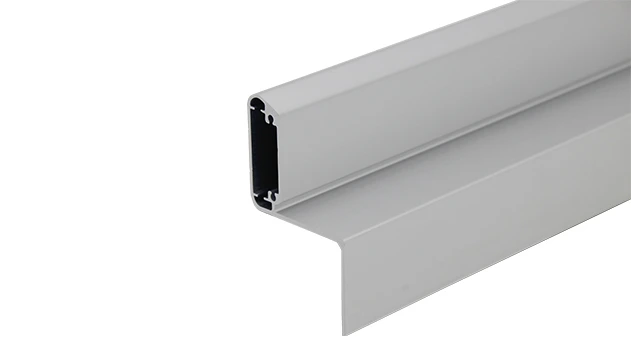
The aluminum guide rails hold the transport goods securely on the roller track. For installation, the guide rails are simply pushed over the roller tracks.To protect sensitive products.
Imagine walking into a busy manufacturing workshop—conveyors humming, workers assembling components, and every second counting toward meeting daily production targets. Now, picture the frustration of a production supervisor staring at a misaligned workbench, where the standard aluminum guide rail just doesn't fit the unique shape of the new medical device part. Or a warehouse manager watching as boxes get stuck on a flow rack because the roller track's standard width can't accommodate the company's specific package sizes. These aren't just hypothetical scenarios; they're everyday headaches in factories across industries like 3C assembly, medical equipment production, and logistics. When off-the-shelf parts fall short, that's where custom solutions shine—and Aluminum Guide Rail A is leading the charge.
The Hidden Costs of "One-Size-Fits-All" in Manufacturing
For decades, standardization has been the backbone of manufacturing efficiency. Standardized parts mean faster production, lower costs, and easier replacements—at least, that's the theory. But walk into any modern factory, and you'll quickly realize: today's manufacturing landscape is anything but one-size-fits-all. From ultra-precise 3C components the size of a thumb to bulky medical devices requiring sterile workflows, the demands are as diverse as the products themselves. And standard aluminum guide rails? They often become the bottleneck.
Why Standard Sizes Fail in Key Industries
- 3C Assembly Lines: When assembling smartphones or laptops, components are tiny, delicate, and constantly evolving. A standard guide rail might be too wide, causing parts to shift during transport, or too rigid to adapt to frequent product design changes. The result? Wasted time adjusting fixtures, increased defect rates, and missed deadlines.
- Medical Device Manufacturing: Cleanrooms, strict sterilization requirements, and custom tooling make medical production a minefield for standard parts. A standard rail with crevices where bacteria can hide? Not an option. A one-size guide rail that can't integrate with specialized ESD workbenches? A compliance nightmare.
- Warehouse Logistics: E-commerce boom has led to warehouses handling everything from small electronics to large appliances. A standard flow rack with fixed rail widths forces workers to use extra packaging (wasting materials) or risk damaging goods—all while slowing down picking speeds.
These aren't just minor inconveniences. According to lean manufacturing principles, every second spent adjusting ill-fitting parts, every defective product due to misalignment, and every square foot of wasted space adds up to significant operational costs. And in an industry where margins are tight and competition fierce, those costs can make or break a business.
Aluminum Guide Rail A: The "Shape-Shifter" of Lean Manufacturing
Enter Aluminum Guide Rail A—a solution designed not just to fit into your workflow, but to adapt to it. Made from high-grade aluminum extrusion profiles, this isn't your average metal rail. It's a modular, customizable foundation that works with your existing lean system—whether you're building a new workbench, upgrading a flow rack, or revamping an entire production line. Let's break down why it's become the go-to for manufacturers who refuse to settle for "close enough."
Engineered for Flexibility
Aluminum Guide Rail A's magic lies in its T-slot design and internal rotary aluminum joints. Unlike rigid steel rails, it can be cut to any length, bent to specific angles (thanks to 45° and 90° aluminum pipe joints), and paired with a range of accessories—from plastic roller track guide rails (yellow for visibility, grey for cleanrooms) to swivel roller balls for smooth part transfer. Need a 12.7cm width for small electronics? Done. A 40cm rail with side guides to prevent slipping? No problem. It's manufacturing on your terms.
Built to Last (and Adapt)
Aluminum isn't just lightweight—it's tough. Resistant to corrosion, easy to clean (critical for medical and food industries), and strong enough to handle heavy loads, Aluminum Guide Rail A outlasts standard steel rails in most environments. But here's where it truly aligns with lean principles: it's reusable . When your production line changes (and it will), you can disassemble the rail, reconfigure the joints, and repurpose it for a new task. No more scrapping entire systems—just sustainable, cost-effective adaptation.
Works Seamlessly with Your Existing Setup
Custom doesn't mean starting from scratch. Aluminum Guide Rail A plays well with others—your existing workbenches, flow racks, conveyors, and even ESD workstations. Need to connect a guide rail to a Material Rack B for 3-row, 3-floor storage? The aluminum profile accessories (like end supports with stops or placon mount connectors) make integration a breeze. It's not about replacing your workflow—it's about enhancing it.

From Blueprint to Production: How Our Custom Aluminum Guide Rail A Solution Works
At the heart of our approach is a simple belief: great custom solutions aren't just about building parts—they're about solving problems. That's why our process starts long before a single aluminum profile is cut. It starts with listening to your unique challenges.
-
Step 1: Deep Dive into Your Workflow
Our team of engineers doesn't just ask for dimensions—we walk your floor. We observe how parts move from conveyor to workbench, how workers interact with flow racks, and where bottlenecks occur. For a 3C client recently, we noticed their standard guide rails caused a 15-second delay per unit when transferring circuit boards. That 15 seconds? It added up to 2,500 lost units per month. We didn't just build a rail—we built a solution to reclaim that time.
-
Step 2: Design with "Future-Proofing" in Mind
Using 3D modeling, we draft a custom Aluminum Guide Rail A design tailored to your needs—whether it's a curved rail for a tight workspace or a (ESD) coated version for sensitive electronics. But we don't stop there. We ask: What if your product line expands next year? What if you need to add more rollers or adjust the height? The design includes modular elements so you can adapt without rebuilding.
-
Step 3: Prototype, Test, Refine
A design on a screen is just an idea. We build a physical prototype, install it in your facility, and run real-world tests. For a medical client producing surgical tools, we tested three prototypes before landing on a guide rail with rounded edges (to prevent bacteria traps) and a quick-disconnect feature (for easy sterilization). The result? A 40% reduction in cleaning time and zero compliance issues during their last audit.
-
Step 4: Production & Installation with Minimal Downtime
Once approved, we manufacture your custom rails using precision aluminum extrusion profiles. Our team installs them during off-hours to avoid disrupting production. And we don't just walk away—we train your team on adjusting, maintaining, and reconfiguring the rails, so you're empowered to make changes yourself down the line.
-
Step 5: Continuous Improvement (Because Lean Never Stops)
Lean manufacturing isn't a one-and-done project—it's a mindset. Six months after installation, we follow up to see how the rails are performing. Did your needs change? Can we tweak the design for even better efficiency? For a warehouse client, we added all-direction roller tracks to their custom guide rails after they expanded into handling irregularly shaped packages. The result? A 20% faster picking rate and happier workers (no more struggling with awkward boxes).

Real Results: How Custom Aluminum Guide Rail A Transformed These Industries
Numbers tell the story best. Here's how our custom Aluminum Guide Rail A solutions have helped manufacturers turn "good enough" into "great."
| Industry | Challenge | Custom Solution | Results |
|---|---|---|---|
| 3C Assembly (Smartphone Production) | Standard guide rails too wide for new slim circuit boards; parts shifting caused 8% defect rate. | 38mm Aluminum Guide Rail A with yellow side guides + swivel roller balls (0.5 inch) for precise alignment. | Defect rate dropped to 1.2%; production speed up by 12%. |
| Medical Device (Surgical Tool Manufacturing) | Standard rails had crevices; cleaning took 2 hours/day; risk of bacterial contamination. | Aluminum Guide Rail A with smooth, rounded edges + ESD coating; quick-disconnect joints for sterilization. | Cleaning time reduced to 45 minutes/day; passed FDA audit with zero observations. |
| Warehouse Logistics (E-commerce Fulfillment) | Standard flow rack rails couldn't handle mix of small (cosmetics) and large (electronics) packages; 15% of packages damaged. | Adjustable-width Aluminum Guide Rail A with 40 steel roller track (yellow wheels) + plastic guide rails (grey) for flexibility. | Damage rate dropped to 2%; picking efficiency up by 25%. |
| Automotive Parts Manufacturing | Heavy engine components bent standard steel rails; frequent replacements cost $10k/year. | Heavy-duty Aluminum Guide Rail A (40mm thickness) + aluminum pipe adjustable leveling feet for stability. | Rail lifespan extended from 6 months to 3+ years; replacement costs reduced by 85%. |
Why Manufacturers Trust Our Custom Aluminum Guide Rail A Solutions
You're not just buying a guide rail—you're investing in a partner who understands manufacturing's unique pressures. Here's why companies across industries choose us:
We Speak Your Language (No Engineering Jargon)
Our team includes former manufacturing supervisors who've been in your shoes. We don't throw around terms like "aluminum extrusion profiles" without explaining what they mean for your floor. We translate your challenges into solutions you can visualize—and trust.
We Prioritize Your Downtime (Because Every Minute Counts)
We know shutting down production for installation is costly. That's why we schedule installations during off-hours, weekends, or slow periods. For urgent projects, we've even designed temporary workarounds so you can keep running while we upgrade.
Lean Isn't Just a Buzzword—It's Our Process
"Reusable, sustainable, and continuously improving" isn't just marketing for us. It's how we design every rail, every joint, every accessory. We build solutions that grow with you, so you're never stuck with outdated equipment.
We Stand Behind Our Work (Even After Installation)
Got a question six months later? Need to tweak the design? Our support team is here. We don't just sell parts—we build long-term partnerships. One client recently told us: "You didn't just solve our rail problem; you helped us rethink our entire workflow." That's the goal.
When Standard Sizes Fail, Custom Aluminum Guide Rail A Leads the Way
Manufacturing today isn't about cutting corners—it's about cutting waste, boosting efficiency, and staying agile in a world of constant change. Standard aluminum guide rails have their place, but when your products, workflows, or standards are anything but standard, "one-size-fits-all" becomes a liability.
Custom Aluminum Guide Rail A isn't just a part—it's a promise: that your manufacturing line can be as unique as the products you build. It's about working with your workflow, not against it. It's about turning frustration (those misaligned parts, those wasted hours) into momentum (smoother production, happier teams, better bottom lines).
So if you're tired of forcing square pegs into round holes, let's talk. Tell us about your challenges, your goals, and that one part of your line that's been keeping you up at night. We'll bring the Aluminum Guide Rail A—and the expertise to make it work for you .
After all, in manufacturing, the best solutions aren't just built—they're crafted . And we craft solutions that last.