- Company Articles
- Products and Technology
- Solution
- Custom Aluminum Pipe with Tray Holder: Tailored Solutions for Warehousing

Custom Aluminum Pipe with Tray Holder: Tailored Solutions for Warehousing
Related Product
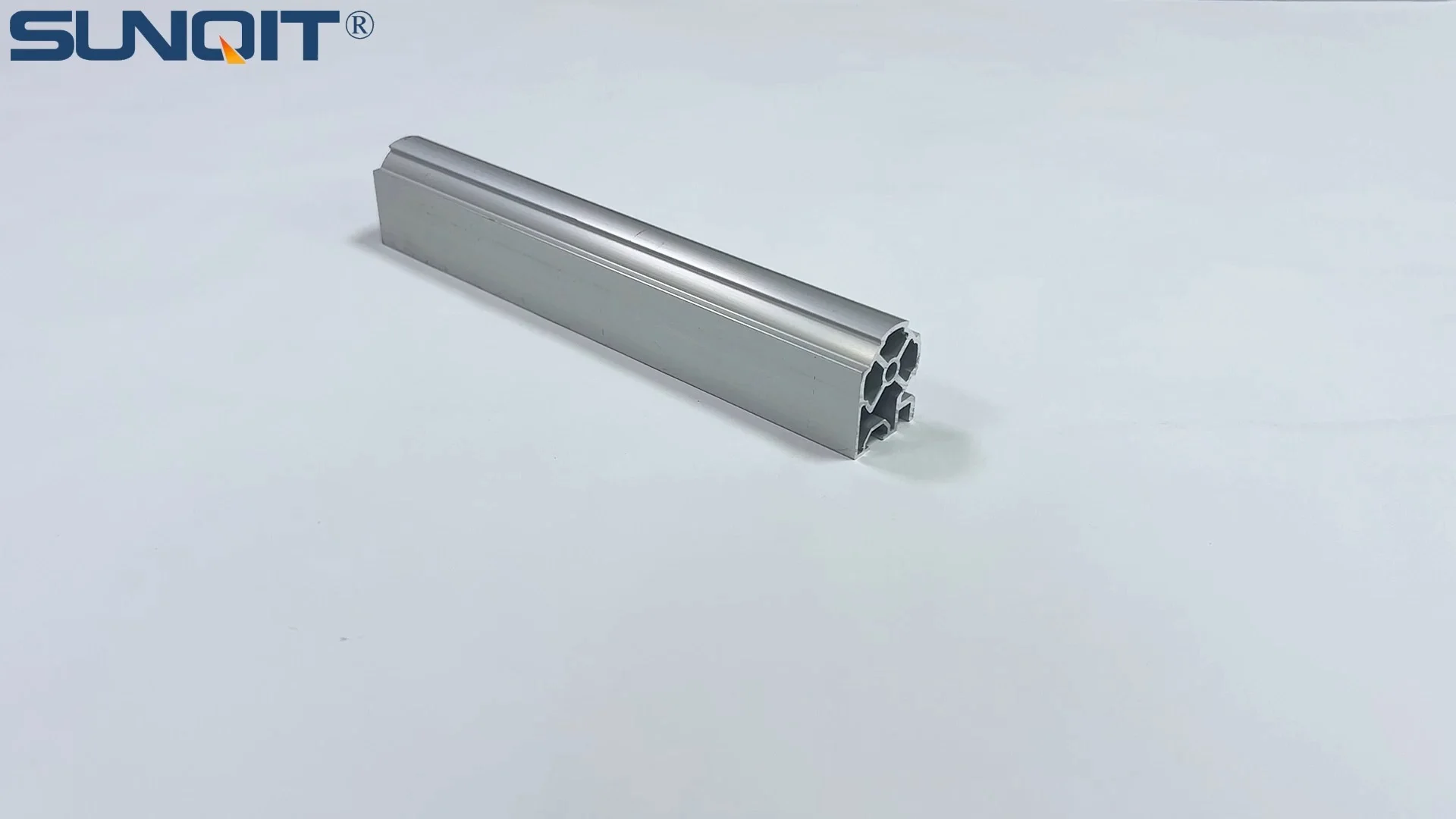
Aluminum Pipe with Tray Holder
Aluminum pipe with tray holder,the pipe one side connected by a joint, the other side with a slot which can hold a tray or a aluminum pannel.
How modular aluminum systems transform disorganized spaces into hubs of productivity
The Hidden Cost of "One-Size-Fits-All" Warehousing
Walk into almost any warehouse, and you'll likely spot the same frustrating patterns: shelves that leave gaping empty spaces because they're too tall, workbenches where tools dangle off the edges because the surface is too narrow, and material racks that force workers to stretch or kneel to reach items—wasting time and increasing the risk of injury. These aren't just minor inconveniences; they're symptoms of a deeper problem: relying on generic, one-size-fits-all storage solutions in environments that are anything but generic.
Every warehouse has unique needs. A small electronics facility storing delicate circuit boards requires anti-static surfaces and precise organization for tiny components. A large distribution center handling bulk goods needs heavy-duty racks that maximize vertical space. A food processing plant demands corrosion-resistant materials that can withstand frequent cleaning. When you force these distinct operations into the same rigid, prefab systems, you're not just underutilizing space—you're stifling productivity, compromising safety, and leaving money on the table.
The good news? There's a better way. Custom aluminum pipe with tray holder systems are emerging as the gold standard for modern warehousing, offering the flexibility to design storage and workflow solutions that fit your space, your inventory, and your team. Let's dive into how these modular systems work, why aluminum is the material of choice, and how they can transform even the most chaotic warehouses into models of efficiency.
What Are Custom Aluminum Pipe with Tray Holder Systems?
At their core, these systems are modular frameworks built from lightweight yet durable aluminum pipes, connected by versatile joints, and fitted with customizable trays. Think of them as the "building blocks" of warehousing—you can mix, match, and reconfigure components to create everything from workbenches and material racks to mobile trolleys and conveyor feeders. Unlike fixed wooden shelves or welded steel racks, they're designed to adapt as your needs change, making them a long-term investment in flexibility.
The key components include:
- Aluminum Pipes : Available in various diameters and lengths (like the basic aluminum tube or t-slot aluminum pipe ), these form the structural backbone. Aluminum's unique properties—lightweight, corrosion-resistant, and easy to cut—make it ideal for both stationary and mobile applications.
- Tray Holders & Trays : These are the workhorses of the system. Trays come in different sizes, depths, and materials (plastic, metal, or anti-static variants) to hold everything from small screws to heavy boxes. Tray holders attach securely to the aluminum pipes, keeping contents organized and within arm's reach.
- Accessories : From internal rotatary aluminum joints that let you adjust angles on the fly to caster wheels for mobility, and roller track placon mounts for integrating gravity-fed conveyor systems, accessories turn basic frames into fully functional tools.
What makes them "custom"? Unlike off-the-shelf solutions, every element is tailored to your specs. Need a workbench that's 4 feet wide with three tiers of trays for tools? Done. A material rack that's 6 feet tall, 3 rows deep, and 3 floors high (like material rack b (3 row and 3 floor) ) to fit your warehouse's ceiling height? No problem. Even specialized needs—like ESD-safe surfaces for electronics or food-grade materials for perishables—can be accommodated.

Why Aluminum? The Material That Changes the Game
You might be wondering: Why aluminum? Why not stick with traditional materials like steel or wood? The answer lies in aluminum's unique combination of strength, versatility, and cost-effectiveness—especially in warehousing environments.
Lightweight Yet Strong
Aluminum is about 1/3 the weight of steel, which makes assembly and reconfiguration a breeze. A single worker can disassemble a material rack and rebuild it in a new location without heavy machinery—a huge plus for warehouses that need to rearrange layouts seasonally or as inventory shifts. Don't let the light weight fool you, though: Aluminum pipes (especially aluminum lean pipe or aluminum extrusion profile ) are surprisingly strong, with load capacities ranging from 50 to 500+ pounds per shelf, depending on the design.
Corrosion & Rust Resistance
Warehouses are tough environments. Moisture, chemicals, and frequent cleaning can take a toll on metal racks. Aluminum naturally forms a protective oxide layer that resists rust and corrosion, making it ideal for food processing, pharmaceutical, or outdoor storage areas. Unlike steel, it won't require repainting or treatment to stay looking and performing like new.
Easy to Modify & Reuse
Steel racks are often welded or bolted into place, making changes time-consuming and expensive. Aluminum systems, by contrast, use simple joints and clamps that can be loosened, adjusted, or replaced in minutes. Need to add a shelf? Just slide on a new joint and pipe. Moving to a smaller space? Disassemble the system and rebuild it with shorter pipes. This reusability means your initial investment goes further—you won't have to buy new racks every time your needs change.
Ergonomic & Aesthetic Benefits
Aluminum's lightweight nature also makes it easier to design ergonomic workspaces. Adjustable-height workbenches reduce strain on workers' backs and shoulders, while mobile trolleys (fitted with caster accessories ) let employees move materials without heavy lifting. Plus, aluminum has a clean, modern look that brightens up warehouses—a small detail that can boost morale and make spaces feel more organized.

Tailored Solutions for Every Warehouse Need
No two warehouses are the same, and neither are their storage needs. Let's explore how custom aluminum pipe with tray holder systems can be adapted to solve common warehousing challenges:
1. Workbenches: Where Precision Meets Productivity
Assembly lines, packing stations, and quality control areas all rely on workbenches. A poorly designed workbench forces workers to stretch, bend, or search for tools—slowing down production and increasing errors. Custom aluminum workbenches (like the workbench e (single deck-without caster) ) solve this by letting you specify:
- Height : Adjust to elbow height for standing work or desk height for seated tasks, reducing fatigue.
- Surface Area : Wide enough for equipment but not so large that tools get lost. Add side trays for small parts or bins for waste.
- Special Features : ESD (electrostatic discharge) surfaces for electronics, anti-slip mats for food handling, or integrated lighting for detailed work.
Example: A electronics manufacturer might opt for a 6-foot-wide workbench with a top, three levels of trays (for resistors, capacitors, and screws), and a lower shelf for tools. Add caster wheels , and the workbench can be moved to different assembly lines as needed.
2. Material Racks: Maximize Storage, Minimize Headaches
Traditional shelving often wastes space—either by being too deep (items get buried in the back) or too shallow (tall items overhang). Custom material racks, like the material rack b (3 row and 3 floor) , are designed to fit your inventory's dimensions. For example:
- Row & Floor Configuration : A 3-row, 3-floor rack might store small boxes on the top floor, medium bins in the middle, and heavy pallets on the bottom—optimizing access and load distribution.
- Adjustable Spacing : If you start storing taller items, simply loosen the joints and raise the shelves—no need to buy a new rack.
- Accessibility : Add swivel roller balls 1 inch to tray bottoms, and boxes glide forward with a light push, eliminating the need to reach deep into shelves.
3. Mobile Trolleys: Move Materials, Not Mountains
Transporting goods from receiving to shipping or between workstations can be a logistical nightmare with fixed racks. Aluminum turnover trolleys, fitted with caster wheels and secure trays, let you move entire batches of materials at once. Key features include:
- Lockable Casters : Keep trolleys stationary during loading/unloading, then unlock to roll smoothly across warehouse floors.
- Foldable or Stackable Design : Save space when not in use by folding down or nesting trolleys.
- Custom Tray Dividers : Prevent items from shifting during transport—critical for fragile goods like glassware or electronics.
4. Conveyor Integration: Streamline Workflow with Roller Tracks
For warehouses with high-volume material flow, integrating roller track systems into aluminum pipe frames creates gravity-fed or powered conveyors. Roller tracks—fitted with plastic roller track guide rail yellow or grey —let boxes, totes, or parts glide from one station to the next with minimal effort. For example, a picking station might feed into a packing station via a downward-sloping roller track, reducing manual carrying.
Case Study: How a Furniture Warehouse Cut Costs by 25% with Custom Aluminum Racks
The Problem : A mid-sized furniture warehouse was struggling with inefficiency. Their fixed wooden shelves were too deep, so employees spent 15–20 minutes per order digging for specific chair legs or table parts. The shelves also couldn't support the weight of larger items, leading to frequent damage. Annual losses from wasted time and broken inventory totaled $45,000.
The Solution : The warehouse invested in custom aluminum material racks: 5 units of material rack b (3 row and 3 floor) , each with adjustable shelves and swivel roller balls 1 inch on the top two floors. They also added mobile aluminum trolleys with trays to transport parts from racks to assembly lines.
The Results :
- Time Savings : Order picking time dropped to 5–7 minutes per order—a 60% improvement. Over a year, this saved 1,200 labor hours.
- Reduced Damage : Adjustable shelves and roller balls prevented items from getting crushed or scratched, cutting inventory loss by $30,000 annually.
- Space Gains : The new racks used vertical space more efficiently, freeing up 150 sq. ft. for additional storage.
Total annual savings: $48,000—more than covering the initial investment in 6 months.
The Role of Accessories: Small Parts, Big Impact
What truly sets aluminum pipe systems apart is their accessories. These small, often overlooked components turn basic frames into powerful tools. Let's highlight a few game-changers:
Joints: The Flexibility Engine
Internal rotatary aluminum joints are the unsung heroes of modular systems. Unlike fixed steel brackets, these joints let you rotate pipes 360 degrees, adjust angles, and lock them in place—perfect for creating sloped roller tracks or angled shelves. 90° aluminum crossing joints or three way aluminum pipe joints let you build multi-directional frames, like a workbench with a side extension for tools.
Casters: Mobility on Demand
Add caster wheels to a workbench or trolley, and suddenly it becomes a mobile workstation. Look for swivel casters with brakes for stability, and heavy-duty options (rated for 200+ pounds) for loaded trolleys. For uneven floors, adjustable leveling feet (like the anti-slip adjustable leveling feet ) keep stationary racks stable.
Roller Tracks & Balls: Smooth Material Flow
Swivel roller balls 1 inch or 0.5 inch turn flat surfaces into "smart" platforms where boxes glide with minimal friction. They're ideal for picking stations or packing tables—employees can slide items across the surface without lifting. For longer distances, roller track placon mounts attach roller tracks to aluminum profiles, creating gravity-fed lanes for totes or packages.
End Caps & Guards: Safety First
Sharp pipe ends are a hazard in busy warehouses. Plastic pipe end caps cover exposed aluminum pipe edges, preventing cuts. Aluminum side guards on material racks keep items from falling off, while anti-slip foot adjusters prevent racks from sliding on smooth floors.
Traditional vs. Custom Aluminum Systems: A Comparison
| Feature | Traditional Systems (Wood/Steel Shelving) | Custom Aluminum Pipe with Tray Holders |
|---|---|---|
| Flexibility | Fixed design; hard to modify without tools/welding. | Modular; reconfigure in minutes with basic tools. |
| Durability | Wood rots/warps; steel rusts; lifespan 5–7 years. | Aluminum resists corrosion; lifespan 15+ years with proper care. |
| Weight | Heavy (steel racks can weigh 200+ lbs); hard to move. | Lightweight (aluminum racks ~50–80 lbs); easy to relocate. |
| Cost Over Time | Low upfront cost, but high replacement costs (every 5–7 years). | Higher upfront cost, but no replacement needed; saves money long-term. |
| Safety | Sharp edges (steel); splinters (wood); fixed height increases strain. | Smooth edges, adjustable height, anti-slip feet; reduces injury risk. |
Choosing the Right Supplier: What to Look For
Not all aluminum pipe systems are created equal. To ensure you get a system that meets your needs, look for a supplier who offers:
Custom Design Support
A good supplier won't just sell you parts—they'll help you design the system. Look for companies with in-house engineers or design consultants who can visit your warehouse, assess your space, and create a 3D mockup before production. Avoid suppliers who only offer prefab "kits"—they'll limit your customization options.
Quality Materials
Check that the aluminum pipes are made from high-grade aluminum (6063-T5 is common for structural applications) and that accessories like joints and casters are durable (e.g., steel-reinforced plastic casters for heavy loads). Ask for material certifications if needed (e.g., food-grade or ESD compliance).
Comprehensive Accessories
The best systems are only as good as their accessories. Choose a supplier that stocks a wide range, from aluminum profile accessories to roller track connectors and caster accessories . This ensures you can upgrade or modify your system later without switching suppliers.
After-Sales Support
Installation help, warranty coverage, and replacement parts are critical. Look for suppliers that offer at least a 5-year warranty on structural components and 1-year on accessories. Some even provide training for your team on how to reconfigure the system.
Investing in Your Warehouse's Future
Warehousing isn't just about storing goods—it's about creating a workflow that empowers your team to work faster, safer, and smarter. Custom aluminum pipe with tray holder systems do exactly that by putting you in control of your space. They adapt as your business grows, reduce waste, and turn inefficiency into opportunity.
Is the upfront cost higher than buying a cheap steel shelf? Yes. But consider this: The average warehouse spends 20–30% of labor hours on non-value-added tasks like searching for items or moving materials. A well-designed aluminum system can cut that by 15–20%, paying for itself in a year or less. Plus, with a lifespan of 15+ years, it's a investment that keeps giving.
So, if you're tired of working around your warehouse's limitations, it's time to start building solutions that work for you. Custom aluminum pipe with tray holder systems aren't just storage—they're the foundation of a more productive, profitable, and sustainable warehouse.