- Company Articles
- Products and Technology
- Solution
- Custom Aluminum Workbench C: Tailored Solutions for Unique Industry Needs

Custom Aluminum Workbench C: Tailored Solutions for Unique Industry Needs
Related Product
Aluminum Workbench C
aluminum-tube-workbench-is-more-flexible-and-durable,-compared-with-traditional-pe/abs-coated-steel-tube.-it-is-easy-to-assemble,-anti-corrosion,-rust-protection,-and-recycle-use-after-disassemble.
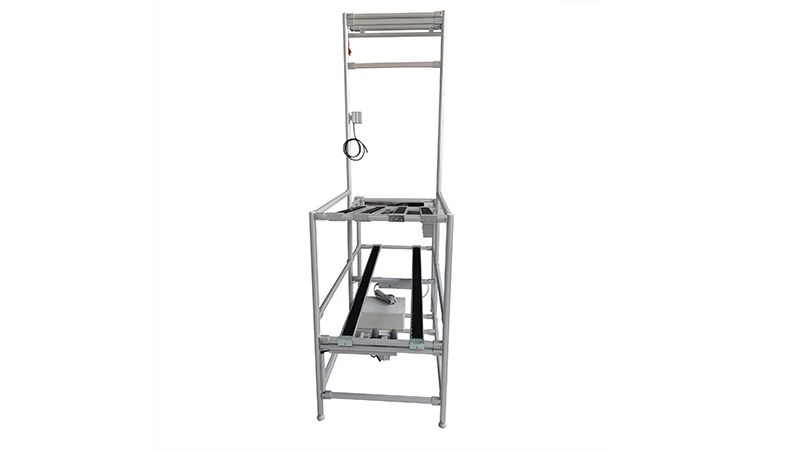
In the heart of every production line, laboratory, or workshop lies a silent workhorse: the workbench. It's where ideas take shape, components are assembled, and precision meets productivity. But not all workbenches are created equal. Walk into a bustling electronics factory, and you'll find surfaces that guard against static electricity. Step into a heavy machinery shop, and durability is non-negotiable. Visit a research lab, and flexibility to adapt to evolving experiments is key. Off-the-shelf workbenches often feel like a one-size-fits-all puzzle piece—close, but never quite right. That's where the Custom Aluminum Workbench C steps in: a solution designed not just to fit a space, but to elevate how work gets done.
Understanding the Need for Customization
Think about the last time you tried to force a square peg into a round hole. Frustrating, right? That's the reality for many teams using generic workbenches. A standard 6-foot bench might leave a gap in a 7-foot workspace, or lack the height adjustment needed for ergonomic comfort. A wooden surface might warp in a humid factory, while a steel frame could add unnecessary weight to a mobile setup. Industries today don't just need workbenches—they need partners that adapt to their unique rhythms, tools, and challenges. Custom Aluminum Workbench C isn't just a piece of furniture; it's a modular system built around aluminum extrusion profile and aluminum profile accessories , engineered to grow, change, and evolve with your operations.
What Makes Custom Aluminum Workbench C Stand Out?
1. The Foundation: Aluminum Extrusion Profile—Strength Meets Flexibility
At its core, Custom Aluminum Workbench C relies on aluminum extrusion profile —a material that's revolutionized industrial design. Unlike traditional steel or wood, aluminum extrusion starts with raw aluminum billets heated to malleability, then pushed through a die to create consistent, complex cross-sections. The result? Profiles that are lightweight (about 1/3 the weight of steel) but surprisingly strong, resistant to corrosion, and infinitely customizable. Imagine building with tinker toys for adults: the profiles come in various shapes—square, rectangular, with T-slots for easy accessory attachment—and can be cut to any length, drilled, or anodized for a sleek, protective finish. This isn't just material; it's a canvas for innovation.
2. A Workbench That Grows with You: Modularity at Its Best
What if your workspace expands next year? Or your team needs to add a tool rail, a shelf, or even a second tier for storage? With Custom Aluminum Workbench C, you won't need to buy a whole new bench. Thanks to aluminum profile accessories —think brackets, connectors, and mounting plates—upgrades are as simple as clicking together new components. Need a place to hang power tools? Attach a tool rail using T-slot nuts. Want to add a keyboard tray for a computer station? Slide in a bracket and secure it with a few screws. Even the height can be adjusted by swapping out leg profiles, ensuring that whether you're standing or sitting, the workbench meets you at eye level. This modularity isn't just convenient; it's cost-effective, letting you invest in only what you need now and scale later.
3. Built for the Details: Customization That Goes Beyond Size
Custom Aluminum Workbench C isn't just about length and width (though those are fully adjustable). It's about the small, critical details that make a big difference in daily work. Let's break it down:
- Surface Options: Choose from ESD-safe tops (essential for electronics manufacturing), chemical-resistant laminates (perfect for labs), or stainless steel (ideal for food processing). Each surface is sealed to resist scratches, stains, and wear.
- Storage Integration: Add drawers, bins, or overhead racks using aluminum profile brackets. Need to keep tools within arm's reach? A pegboard panel can be mounted directly to the bench frame.
- Mobility (or Stability): While the base model comes as a single deck without casters (think: rock-solid stability for precision work), you can easily add locking casters for portability—great for workshops that need to reconfigure layouts on the fly.
- Accessory Compatibility: From LED task lights to power strips, aluminum lean pipe extensions can be attached to the frame, turning the bench into a hub for all your tools.

Material Matters: Why Aluminum?
You might be wondering: Why aluminum? Why not stick with steel, wood, or plastic? Let's compare. Steel is strong, but it's heavy—moving a steel bench requires a team and a dolly. Wood looks warm, but it warps with moisture and scratches easily. Plastic is lightweight, but it lacks the rigidity needed for heavy tasks. Aluminum, though? It's the sweet spot. Its natural resistance to rust means it holds up in humid factories or outdoor workshops. Its light weight makes assembly a one-person job (no more strained backs). And because it's recyclable, it aligns with the sustainability goals many businesses are prioritizing today. When you choose aluminum, you're not just choosing a material—you're choosing longevity, adaptability, and peace of mind.

How Custom Aluminum Workbench C Stacks Up: A Comparison
Still on the fence? Let's put Custom Aluminum Workbench C head-to-head with a standard steel workbench—the most common alternative. The table below breaks down the key differences:
| Feature | Custom Aluminum Workbench C | Standard Steel Workbench |
|---|---|---|
| Material | Aluminum extrusion profile (lightweight, corrosion-resistant) | Carbon steel (heavy, prone to rust without coating) |
| Weight | ~50-70 lbs (easy to move when paired with casters) | ~150-200 lbs (requires multiple people to reposition) |
| Customization | Unlimited: size, height, surface, accessories, and add-ons via aluminum profile accessories | Limited: fixed sizes, few surface options, minimal accessory compatibility |
| Durability | Anodized finish resists scratches, dents, and corrosion; lasts 10+ years with minimal maintenance | Prone to chipping paint; rusts if scratched; lifespan of 5-7 years with regular upkeep |
| ESD Compatibility | Available with ESD-safe surfaces and grounding kits | Requires aftermarket ESD mats (additional cost and installation) |
| Cost Over Time | Higher upfront cost, but lower long-term expenses (no replacement needed; easy upgrades) | Lower upfront cost, but higher over time (replacement, maintenance, and add-ons) |

Real-World Applications: Where Custom Aluminum Workbench C Shines
Let's dive into how different industries are using Custom Aluminum Workbench C to transform their workflows. These aren't just hypothetical scenarios—they're stories from teams that made the switch.
Electronics Manufacturing: Static-Free Precision
A mid-sized electronics company in California was struggling with static damage to circuit boards. Their old steel workbenches, even with ESD mats, weren't fully grounding static charges. The solution? Custom Aluminum Workbench C with an ESD-safe laminate top and integrated grounding straps. The aluminum frame itself acted as a secondary ground, reducing static-related defects by 40% in the first quarter. Plus, the team added tool holders and a small conveyor track (using aluminum lean pipe) to feed components directly to the bench, cutting down on reaching and wasted motion.
Automotive Repair: Durability Meets Ergonomics
A car repair shop in Texas needed workbenches that could handle heavy tools and resist oil stains. They also wanted adjustability—their mechanics range in height from 5'4" to 6'3", and ergonomic injuries were on the rise. Custom Aluminum Workbench C delivered: a 7-foot stainless steel top (resistant to oil and chemicals) mounted on adjustable-height aluminum legs. The team added pegboards for tool storage and a lower shelf for parts bins. Six months later, mechanics reported less back pain, and the shop's insurance premiums dropped due to fewer workplace injuries.
Research Lab: Flexibility for Evolving Experiments
A university biology lab was tired of rebuilding workbenches every time a new experiment required different equipment. Their Custom Aluminum Workbench C solved this with modular components: removable shelves, clamp-on microscope arms, and a fold-down extension that could be added when extra space was needed. When the lab switched from cell culture to PCR testing, they simply reconfigured the bench—no new furniture required. "It's like having a workbench that can read our minds," one researcher joked.
The Aluminum Advantage: Why It's More Than Just Metal
At this point, you might be thinking, "Aluminum sounds great, but isn't it more expensive than steel?" It's true—Custom Aluminum Workbench C has a higher upfront cost. But consider this: a steel workbench might need to be replaced in 5 years, while an aluminum one will last 15. Add in the cost of ESD mats, replacement parts, and lost productivity from a poor fit, and aluminum becomes the smarter investment. Plus, aluminum is 100% recyclable, so at the end of its life, it won't end up in a landfill—it'll be melted down and made into something new. For businesses committed to sustainability, that's a win-win.
Choosing Your Custom Aluminum Workbench C: What to Consider
Ready to take the plunge? Here's how to ensure your Custom Aluminum Workbench C is perfect for your needs:
- Map Your Workflow: Walk through a typical day at the bench. What tools do you use most? Where do you store materials? Do you need space for a computer or monitor?
- Measure Twice: Note the exact dimensions of your workspace, including ceiling height (for overhead storage) and doorways (to ensure delivery!).
- Think About the Future: Are you expanding your team? Adding new equipment? Choose a design that can grow with you—extra T-slots, adjustable legs, and modular components.
- Don't Forget the Extras: Aluminum profile accessories like cable management clips, LED light bars, or bin dividers can turn a good workbench into a great one.
Final Thoughts: Work Smarter, Not Harder
The Custom Aluminum Workbench C isn't just a piece of equipment—it's a statement. It says, "We value our team's comfort, our work's precision, and our business's future." It's the difference between a workspace that holds you back and one that propels you forward. Whether you're assembling circuit boards, repairing engines, or discovering new scientific breakthroughs, this workbench doesn't just fit your needs—it anticipates them.
So, what will you build on yours?