- Company Articles
- Products and Technology
- Product knowledge
- Custom-Built Parallel Lean Pipe Joints: When Standard Models Aren't Enough

Custom-Built Parallel Lean Pipe Joints: When Standard Models Aren't Enough
Related Product
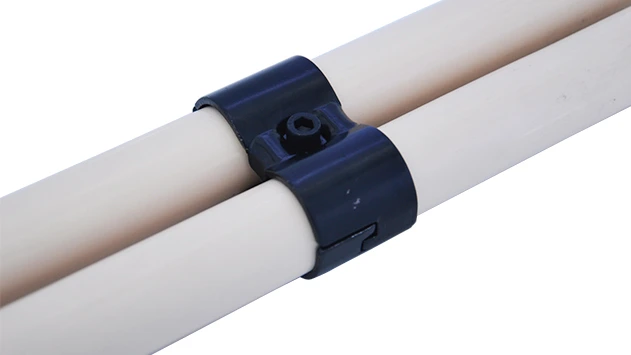
Parallel Lean Pipe Joint
Parallel lean pipe joint used for 2 pcs 28MM lean pipe connection in parallel direction to enhance frame structure, usually for heavy payload requirement for workbench. flow rack, hand trolley.
Walk into any manufacturing facility, and you'll likely spot the backbone of modern production lines: lean pipe systems. These unassuming combinations of pipes, joints, and accessories form workbenches, material racks, and roller tracks that keep operations running smoothly. But here's the thing—no two production floors are identical. What works for a small electronics workshop might grind a automotive parts plant to a halt. And more often than not, the culprit? Standard lean pipe joints that just don't "fit."
Imagine a team spending hours assembling a workbench, only to find the standard parallel joints force the shelves into awkward heights. Or a roller track that jams because the pre-made joints can't align the rollers at the precise 3-degree angle needed for smooth material flow. These aren't just minor inconveniences—they translate to wasted time, frustrated workers, and bottlenecks in your lean system. That's where custom-built parallel lean pipe joints step in. They're not just a "nice-to-have"; for many operations, they're the difference between a system that works and one that thrives .
The Trouble with "One-Size-Fits-All" Lean Pipe Joints
Standard lean pipe joints are designed for simplicity and mass production. They come in fixed angles (90°, 45°, 180°), standard diameters, and basic materials—think chrome-plated steel or plastic. For straightforward setups, like a basic two-shelf material rack, they do the job. But step into a facility with unique needs, and their limitations become glaringly obvious.
1. Rigid Adjustability (or Lack Thereof)
Most standard parallel lean pipe joints lock pipes into fixed distances. Need to space shelves 14 inches apart instead of the standard 12? Too bad. The holes don't line up, and forcing it risks bending the pipe or stripping the joint. This rigidity is a nightmare for ergonomics. A workbench that's 2 inches too low for tall workers leads to hunching; 2 inches too high for shorter team members causes shoulder strain. Over time, that's not just discomfort—it's lost productivity and higher injury rates.
2. Load Capacity Gaps
Standard joints are tested for "average" loads—say, 50kg per shelf. But what if your operation moves heavy components, like engine parts or large circuit boards? A standard joint might buckle under 75kg, turning a "lean" system into a safety hazard. On the flip side, lightweight operations (think medical device assembly) might find standard steel joints overkill—adding unnecessary weight to mobile workbenches and making adjustments cumbersome.
3. Clashing with Existing Systems
Many facilities aren't starting from scratch. They have legacy aluminum profile workbenches or vintage roller tracks that need integrating with new lean setups. Standard joints rarely play nice with non-standard components. A 28mm steel pipe joint won't connect cleanly to a 30mm aluminum profile, leaving gaps that disrupt material flow. The result? Frankenstein setups held together with zip ties and tape—hardly the "lean" ideal.
| Feature | Standard Lean Pipe Joints | Custom Parallel Lean Pipe Joints |
|---|---|---|
| Adjustability | Fixed distances/angles; limited to pre-drilled holes | Tailored spacing, angles, and hole placements |
| Load Capacity | One-size load rating (e.g., 50kg max) | Engineered for specific weights (100kg+, if needed) |
| Material Compatibility | Works with standard pipes only (e.g., 28mm steel) | Designed to pair with aluminum profile, stainless steel, or mixed materials |
| Ergonomic Fit | Generic dimensions; may force awkward worker positioning | Adjusted for team height, reach, and workflow habits |
Custom Parallel Lean Pipe Joints: Built for Your Reality
Custom-built parallel lean pipe joints aren't about overcomplicating things—they're about solving specific problems. These aren't "designer" parts; they're practical tools engineered to fit your space, your materials, and your team. Let's break down why they're becoming a must-have for forward-thinking operations.
Flexibility That Adapts to Your Workflow
Take a typical electronics assembly line. Workers alternate between standing and sitting, so workbench heights need to adjust on the fly. Standard parallel joints lock the tabletop at a fixed 36 inches, forcing workers to hunch or stretch. A custom joint, though? It can include extra adjustment holes, allowing the same workbench to drop to 30 inches for seated tasks or rise to 40 inches for standing work. No disassembly, no tools—just a quick twist of a lever.
Or consider a food packaging plant where hygiene is critical. Standard steel joints can harbor bacteria in hard-to-reach crevices. A custom parallel joint made with smooth stainless steel and sealed edges eliminates those gaps, making sanitization a breeze. It's not just about "fitting"—it's about fitting safely and efficiently .
Durability That Keeps Up with Your Demands
Standard joints are built to meet minimum industry standards, not your maximum load. If your team moves 80kg pallets on a roller track daily, a standard joint's plastic components will crack within months. Custom joints flip the script: they start with your load data. A supplier might reinforce the joint with aluminum profile inserts or switch to high-strength nylon for impact resistance. The result? A joint that lasts 3x longer, cutting down on replacement costs and downtime.
I once worked with a furniture manufacturer that was replacing roller track joints every six weeks. Their standard plastic swivel joints couldn't handle the weight of wooden panels. We designed a custom parallel joint with a steel core and reinforced hinges. Two years later, they're still using the same joints—and saving $12,000 annually on replacements.
Compatibility That Bridges Old and New
Most facilities aren't ripping out entire systems to start fresh. They're adding to existing setups. Maybe you have 10-year-old aluminum profile racks that still work great, but you need to connect them to a new lean pipe workbench. Standard joints? They'll fight that connection like a square peg in a round hole. Custom joints, though, act as translators. A supplier can design a joint with one end that fits your old aluminum profile and another that connects to new lean pipes. It's like adding a universal adapter to your toolbox—suddenly, everything works together.

Real-World Impact: How Custom Joints Transform Operations
Talk is cheap—let's look at a concrete example. A mid-sized automotive parts manufacturer in Ohio was struggling with their transmission assembly line. Their workbench used standard parallel lean pipe joints, which forced the component bins into a fixed 12-inch spacing. The problem? Larger transmission parts needed 18 inches, while smaller gears got lost in the 12-inch gaps. Workers were wasting 20 minutes per shift just hunting for parts.
They reached out for a custom solution. We measured their parts, studied their workflow, and designed parallel joints with adjustable spacing—from 8 inches to 20 inches. We also integrated a mini aluminum roller track into the workbench surface, using custom joints to angle the track at 5 degrees for gravity-fed part flow. The result? A 35% drop in "search time," a 15% boost in assembly speed, and zero complaints from the team about strained backs.
Another example: a pharmaceutical lab needed a cleanroom workbench that could withstand daily chemical cleaning. Standard steel joints were rusting, and plastic joints warped under disinfectants. We created a custom parallel joint using corrosion-resistant aluminum and sealed bearings. Now, the workbench survives 5x daily wipe-downs without a scratch—and meets FDA cleanliness standards.

How to Get Started with Custom Parallel Lean Pipe Joints
Thinking custom joints might be the fix for your facility? It's easier than you think. Here's a step-by-step guide to making it happen:
1. Map Your Pain Points
Start by documenting exactly where standard joints are failing. Is it adjustability? Load capacity? Compatibility? Take photos, measure problem areas, and talk to your team—they'll have the best insights. For example, a workbench that's "too low" might actually need a 3-inch height increase, not just "adjustable" joints.
2. Find a Supplier Who Listens
Not all lean pipe suppliers offer custom solutions. Look for ones with in-house engineering teams and a portfolio of custom projects. Ask: "Can you show me a joint you designed for a similar load/space constraint?" A good supplier will visit your facility, take measurements, and collaborate on the design—not just hand you a catalog.
3. Test Before Scaling
Order a small batch of custom joints first. Install them in your trickiest spot—a high-load roller track or an ergonomically problematic workbench. Run them for 2–4 weeks, then gather feedback. Did they solve the problem? Are there tweaks needed? It's better to adjust a prototype than rework 50 joints.
4. Plan for the Future
Design joints with growth in mind. If you're expanding production next year, ask for joints that can adapt to longer pipes or heavier loads. For example, a joint with extra bolt holes today might save you from a full replacement when you add a second shelf tomorrow.
The Bottom Line: Custom Joints = Custom Success
Lean systems are all about eliminating waste—whether it's time, materials, or effort. Standard lean pipe joints, while convenient, often introduce hidden waste: rework, downtime, and frustrated teams. Custom-built parallel lean pipe joints aren't a luxury; they're an investment in efficiency. They turn "close enough" into "perfect fit," and "good enough" into "built to last."
So, the next time you're staring at a workbench that won't align or a roller track that jams, remember: your production line isn't standard—why should your joints be? With custom parallel lean pipe joints, you're not just building a system—you're building a system that works for you .