- Company Articles
- Products and Technology
- Product knowledge
- Custom Castor Install Base for Automated Guided Vehicles (AGVs) in Logistics

Custom Castor Install Base for Automated Guided Vehicles (AGVs) in Logistics
Related Product
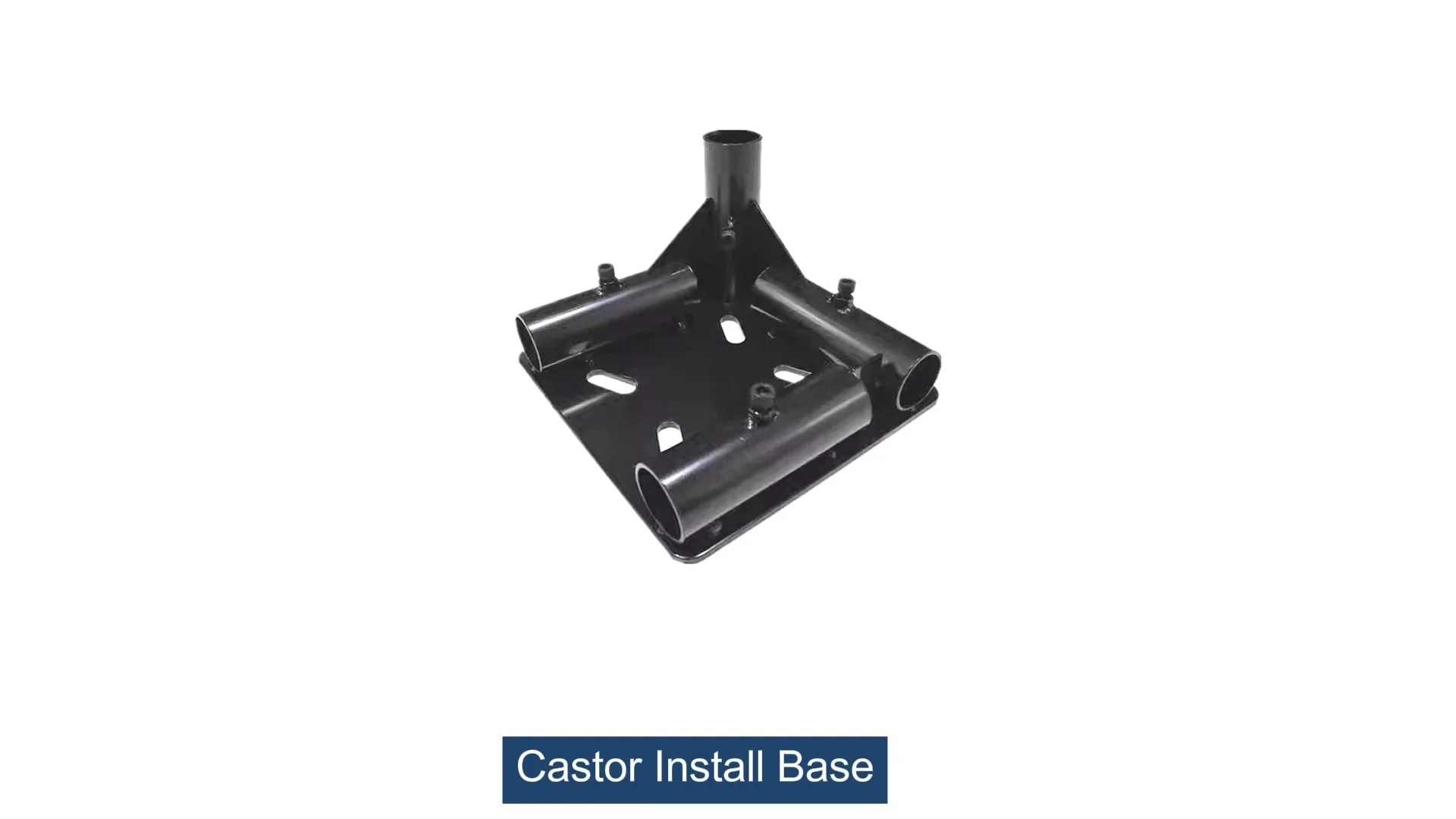
Castor Install Base
Castor install base, used for connection between pipe and castor, it can connect 4 pcs pipe by 1 pcs castor base, to make the structure strong and stable.
Introduction: The Backbone of Modern Logistics
In the fast-paced world of logistics, where every second counts and efficiency is the name of the game, Automated Guided Vehicles (AGVs) have emerged as unsung heroes. These tireless machines glide through warehouses, distribution centers, and manufacturing facilities, ferrying goods from point A to point B with precision and speed, reducing human error, and slashing operational costs. From e-commerce giants rushing to meet same-day delivery deadlines to automotive plants streamlining production lines, AGVs have become indispensable. But here's the thing: even the most advanced AGV—equipped with state-of-the-art sensors, AI-driven navigation, and cutting-edge software—relies on a humble yet critical component to do its job: its mobility system. And at the heart of that mobility system lies the castor install base.
Think about it: an AGV's ability to carry heavy loads, navigate tight corners, absorb shocks from uneven floors, and maintain stability over hours of operation all hinges on how well its castor wheels are connected to its frame. That connection point? The castor install base. It's the bridge between the AGV's body and its wheels, and while it may not have the flash of a laser guidance system, its role is non-negotiable. In this article, we're diving deep into the world of custom castor install bases for AGVs in logistics—why they matter, how they're designed, and why off-the-shelf solutions often fall short in meeting the unique demands of modern material handling.
The Unsung Hero: What Is a Castor Install Base, Anyway?
Let's start with the basics. A castor install base is exactly what it sounds like: a component that mounts the castor wheel to the AGV's chassis. But it's far more than just a simple bracket. Think of it as the AGV's "ankle"—it needs to be strong enough to support the vehicle's weight (plus the load it's carrying), flexible enough to allow the castor wheel to swivel or lock into place, and durable enough to withstand the wear and tear of daily operation. Without a reliable install base, even the highest-quality castor wheel would fail to perform: misalignment could cause the AGV to drift off course, weak materials might crack under heavy loads, and poor design could lead to excessive vibration, damaging both the AGV and the goods it's transporting.
For logistics operations, where AGVs often operate in high-traffic environments with varying floor conditions (smooth concrete, grated metal, even occasional debris), the castor install base becomes even more critical. It must absorb shocks from uneven surfaces to protect fragile cargo, distribute weight evenly to prevent floor damage, and ensure that the AGV remains stable at both high speeds and when stopping suddenly. In short, the castor install base is the unsung hero that keeps AGVs moving—and logistics operations running—without a hitch.

Why "One-Size-Fits-All" Doesn't Work for AGV Castor Install Bases
You might be thinking, "Can't I just buy a standard castor install base from a catalog?" In some cases, maybe—but for most logistics operations, off-the-shelf solutions are a recipe for inefficiency, downtime, and increased costs. Here's why:
- AGVs Are Not One-Size-Fits-All: AGVs come in all shapes and sizes. A small AGV used to transport electronics components in a cleanroom has vastly different requirements than a heavy-duty AGV moving pallets of construction materials. Their weights, dimensions, load capacities, and even heights vary dramatically. A standard install base designed for a 500kg AGV will crumble under a 2-ton load, while one built for a large vehicle will be too bulky and heavy for a compact model, wasting energy and reducing maneuverability.
- Logistics Environments Are Diverse: A warehouse in a cold storage facility (-20°C) demands materials that can withstand extreme temperatures, while a food processing plant requires corrosion-resistant components to handle frequent washdowns. A distribution center with polished concrete floors might prioritize low-friction, smooth-rolling install bases, while a manufacturing plant with grated metal surfaces needs bases that can absorb vibrations and prevent debris from jamming the wheels. Off-the-shelf bases rarely account for these nuances.
- Custom Load Requirements: Some AGVs carry uniform loads (like stacks of boxes), while others transport irregularly shaped items (like machinery parts) that shift weight during movement. A custom castor install base can be engineered with reinforced stress points or adjustable weight distribution to handle these dynamic loads, preventing tipping or instability.
- Integration with Caster Accessories: Modern AGVs often use specialized caster accessories to enhance performance—think brake systems that lock wheels during loading/unloading, swivel locks for straight-line travel, or shock absorbers for fragile cargo. Off-the-shelf install bases may not be compatible with these accessories, limiting the AGV's functionality.
In short, custom castor install bases are not a luxury—they're a necessity for logistics operations that want to maximize AGV performance, minimize downtime, and future-proof their material handling systems.

Designing Custom Castor Install Bases: Key Considerations
Creating a custom castor install base isn't just about "making it fit"—it's about engineering a solution that aligns with the AGV's purpose, the logistics environment, and the operation's long-term goals. Here are the critical factors that go into the design process:
1. Load Capacity: The Foundation of Strength
The first question any designer asks is: "How much weight will this AGV carry?" The install base must support not just the AGV's own weight but also its maximum payload. For example, a pharmaceutical warehouse AGV carrying 300kg of medical supplies will need a base with a different load rating than a automotive AGV hauling 1.5 tons of engine parts. Engineers calculate stress points, using materials and geometries that distribute weight evenly to prevent bending or cracking. Reinforcements like gussets or thicker mounting plates are often added to high-stress areas.
2. Material Selection: Balancing Strength, Weight, and Durability
The choice of material for the install base is make-or-break. Let's break down the most common options and their pros and cons, especially in logistics contexts:
| Material | Key Benefits | Best For | Considerations |
|---|---|---|---|
| Steel | Exceptional strength, high load capacity, low cost | Heavy-duty AGVs, outdoor use, rough environments | Heavy (increases AGV energy consumption), prone to rust (requires coating in humid/damp areas) |
| Aluminum Profile | Lightweight, corrosion-resistant, easy to customize (t-slot design for quick modifications) | Medium-load AGVs, cleanrooms, food/pharmaceutical facilities, indoor use | Lower load capacity than steel (not ideal for >2-ton loads), higher upfront cost |
| Reinforced Plastic | Lightweight, chemical-resistant, low friction | Light-load AGVs, cleanrooms, electronics manufacturing (static control options available) | Limited durability under heavy loads or high impact |
Aluminum profile, in particular, has become a favorite in modern logistics. Its t-slot design allows for easy integration of caster accessories (like brakes or height adjusters) without welding, and its natural corrosion resistance makes it ideal for environments where cleanliness and longevity matter—think e-commerce warehouses or medical supply facilities. Plus, its lightweight nature reduces the AGV's overall energy consumption, extending battery life and cutting operational costs.
3. Floor and Environmental Adaptability
A castor install base must play well with its surroundings. For smooth concrete floors, a low-profile base with minimal clearance might be optimal for stability. For uneven surfaces, adjustable-height bases with shock-absorbing features can keep the AGV level and prevent cargo damage. In cold storage, materials like aluminum (which retains strength in low temps) are preferred over plastics, which can become brittle. In wet environments, stainless steel components or aluminum with protective coatings prevent rust and ensure smooth operation.
4. Compatibility with Caster Wheels and Accessories
The install base doesn't work alone—it's part of a system that includes the castor wheel, axle, bearings, and any accessories like brakes or swivel locks. A custom base must be designed to fit the specific caster wheel size (e.g., 4-inch vs. 6-inch wheels) and axle type, ensuring a tight, wobble-free connection. It should also accommodate caster accessories seamlessly: for example, a base with integrated mounting points for brake pedals or swivel locks eliminates the need for jury-rigged solutions that can fail over time.

The Benefits of Custom Castor Install Bases for Logistics Operations
Investing in custom castor install bases might seem like an extra expense, but the return on investment is clear. Here's how they transform logistics operations:
1. Reduced Downtime, Increased Productivity
Off-the-shelf bases often fail prematurely when pushed beyond their limits, leading to AGV breakdowns, missed deadlines, and costly repairs. Custom bases, engineered for the specific demands of an operation, are far more durable. For example, a logistics company specializing in automotive parts switched to aluminum profile custom bases for their AGVs after experiencing frequent failures with standard steel bases. The result? A 40% reduction in downtime, as the aluminum bases better handled the vibration from transporting heavy engine blocks and resisted corrosion from the plant's coolant spills.
2. Improved Safety
Stability is critical in logistics—an unstable AGV can tip over, damaging goods or injuring workers. Custom install bases are designed to distribute weight evenly, prevent wheel misalignment, and absorb shocks, reducing the risk of accidents. In one case study, a food distribution center reported a 60% drop in near-misses after upgrading to custom bases with anti-slip features, which prevented AGVs from sliding on wet floors during washdowns.
3. Enhanced Efficiency and Cost Savings
Lightweight materials like aluminum profile reduce the AGV's energy consumption, extending battery life and reducing charging time. Custom designs also optimize the AGV's weight distribution, allowing it to carry heavier loads without sacrificing speed. Over time, these efficiencies add up: a mid-sized warehouse with 50 AGVs reported saving $25,000 annually in energy costs after switching to aluminum custom bases.
4. Scalability and Flexibility
Logistics operations are constantly evolving—new products, changing order volumes, and facility expansions all demand adaptable equipment. Custom castor install bases, especially those using modular materials like aluminum profile, can be easily modified or upgraded. Need to increase load capacity? Add a reinforcement plate. Switching to a new caster wheel? The t-slot design allows for quick adjustments without replacing the entire base. This flexibility ensures that AGVs can grow with the business, avoiding the need for costly replacements.
Choosing the Right Partner: What to Look for in a Castor Install Base Supplier
Not all custom castor install base suppliers are created equal. To ensure you get a solution that meets your needs, look for a partner with:
- Engineering Expertise: A supplier with in-house engineers who understand AGV design, material science, and logistics environments. They should conduct load tests, simulate real-world conditions, and collaborate with your team to identify pain points.
- Material Versatility: Access to a range of materials (steel, aluminum profile, reinforced plastics) and the ability to recommend the best option based on your needs, not just their inventory.
- Customization Capabilities: From 3D prototyping to small-batch production, they should be able to turn your unique requirements into a tangible product quickly.
- A Track Record in Logistics: Experience working with AGV manufacturers and logistics providers ensures they understand the industry's unique challenges—like tight deadlines, diverse load requirements, and strict safety standards.
- Support for the Long Haul: Post-purchase support, including maintenance advice, replacement parts, and design updates as your operation evolves.
The Future of Custom Castor Install Bases: Smart, Sustainable, and Connected
As logistics becomes more automated and data-driven, castor install bases are evolving too. Here's what to watch for:
- Smart Monitoring: Install bases with built-in sensors that track wear and tear, temperature, and load distribution, sending real-time data to maintenance teams. This predictive maintenance reduces unexpected breakdowns.
- Sustainable Materials: Recycled aluminum and carbon fiber composites are emerging as eco-friendly alternatives, aligning with the logistics industry's push for greener operations.
- 3D-Printed Prototypes: Faster, more cost-effective prototyping allows for rapid testing and iteration, getting custom bases from design to deployment in record time.
At the end of the day, custom castor install bases are more than just metal or aluminum brackets—they're a strategic investment in the efficiency, safety, and scalability of logistics operations. In a world where AGVs are the workhorses of material handling, their mobility systems deserve the same attention as their high-tech brains. So, the next time you see an AGV gliding through a warehouse, take a moment to appreciate the unsung hero keeping it moving: the custom castor install base.