- Company Articles
- Products and Technology
- Product knowledge
- Custom Castor Install Base for Bespoke Conveyor Systems in Food Processing

Custom Castor Install Base for Bespoke Conveyor Systems in Food Processing
Related Product
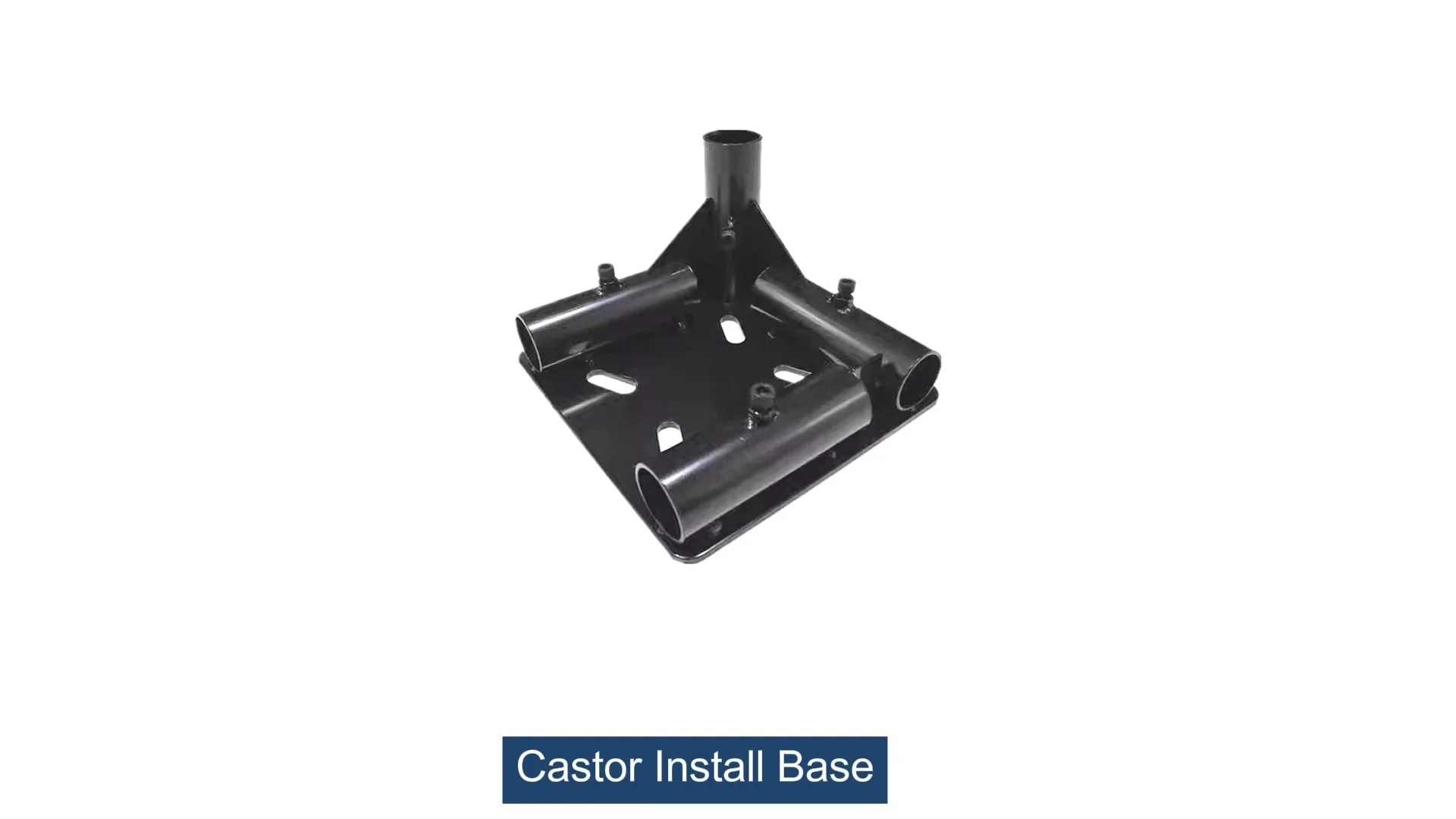
Castor Install Base
Castor install base, used for connection between pipe and castor, it can connect 4 pcs pipe by 1 pcs castor base, to make the structure strong and stable.
Walk into any modern food processing plant, and you'll hear the hum of machinery, the rhythmic clatter of products moving along lines, and the focused chatter of workers coordinating to get fresh goods from production to packaging. It's a symphony of efficiency—but like any symphony, every instrument matters. Today, we're talking about an unsung hero in this orchestra: the custom castor install base. It's not flashy, it rarely gets a second glance, but without it, the conveyor systems that keep food processing plants running smoothly would stumble. Let's dive into why these unassuming components are the quiet foundation of your favorite snacks, meals, and beverages.
The Unique Demands of Food Processing: More Than Just "Moving Stuff"
Food processing isn't like other manufacturing. When you're handling ingredients that will end up on someone's plate, the stakes are sky-high. Think about it: a single spill, a tiny gap where bacteria could hide, or a wobbly conveyor that jostles delicate products—any of these could derail production, trigger costly recalls, or worse, compromise consumer safety. That's why every piece of equipment, right down to the castor install base, has to meet absurdly high standards.
Hygiene is non-negotiable. Floors in food plants are often wet—from sanitizing sprays, accidental spills, or washing down lines at the end of shifts. Castor install bases can't rust, can't trap moisture, and must be easy to wipe clean. Then there's mobility: production lines aren't static. A bakery might need to reconfigure its conveyor system seasonally to handle holiday cookie rushes; a meat processor might shift lines to accommodate different cuts. Your castor bases need to glide smoothly across uneven floors, lock securely when in place, and stand up to constant movement without wearing down.
And let's not forget durability. Food processing plants run long hours—sometimes 24/7 during peak seasons. Conveyors carry heavy loads: cases of canned soup, crates of fresh vegetables, pallets of frozen pizza. A flimsy castor install base that bends or breaks under pressure isn't just an inconvenience; it's a production stopper. When the line stops, workers stand idle, deadlines loom, and profits shrink. No plant manager wants that headache.
Conveyor Systems: The Backbone of Modern Food Production
Before we get deeper into castor install bases, let's talk about the star they support: the conveyor. Conveyors are the circulatory system of food processing plants. They move raw ingredients from storage to mixing stations, ferry partially prepared products through ovens or chillers, and transport finished goods to packaging lines. Without conveyors, workers would be hauling heavy loads by hand, slowing everything down and increasing the risk of injury.
But not all conveyors are created equal. A conveyor for moving fragile pastries needs gentle, vibration-free movement; one for bulk grains might need to handle rough, abrasive materials. That's where bespoke conveyor systems come in. Plant managers don't just buy a "conveyor"—they work with suppliers to design systems tailored to their unique products, space, and workflow. And if the conveyor is custom, everything that supports it should be too—including the castor install base.
Imagine a small artisanal chocolate factory. Their conveyors are narrow, to fit between tempering machines and molding stations, and they need to tilt slightly to guide delicate truffles into packaging trays. A standard, off-the-shelf castor base might not adjust to that tilt, or might not fit the conveyor's unique frame. The result? Truffles tumble off, workers spend extra time cleaning up, and production targets slip. That's why custom castor install bases aren't a luxury—they're a necessity for any plant that wants to truly optimize its operations.

The Critical Role of Castor Install Bases: Stability Meets Mobility
So, what exactly is a castor install base? In simple terms, it's the bridge between the conveyor frame and the caster wheels. It's the metal (or sometimes plastic) plate or bracket that bolts the caster to the bottom of the conveyor, ensuring the wheels stay securely attached while allowing smooth movement. But "simple" doesn't mean "unimportant." Think of it like the foundation of a house: you don't see it, but if it's weak, the whole structure suffers.
Stability is job one. A conveyor loaded with 500 pounds of dough shouldn't wobble when it's moving. A well-designed castor install base distributes that weight evenly across the casters, preventing the conveyor from tipping or sagging. This isn't just about product safety—it's about worker safety too. A wobbly conveyor could cause a worker to lose balance, or items to fall and create a tripping hazard.
Then there's mobility. Ever tried moving a heavy piece of furniture with cheap wheels? It's clunky, it gets stuck on cracks, and it might scratch the floor. Now multiply that frustration by 100 in a food plant, where every second counts. A custom castor install base is engineered to work with specific caster types—whether they're swivel casters for tight turns, locking casters for stability during operation, or heavy-duty casters for rough floors. The base ensures the casters rotate smoothly, lock securely, and withstand the daily grind of a busy plant.
And let's not overlook alignment. Conveyors need to line up perfectly with other equipment—mixers, ovens, packaging machines. If the castor install base is slightly off-kilter, the entire conveyor might sit at an angle, causing products to drift to one side or get stuck. Custom bases are designed to the exact measurements of the conveyor and the plant's layout, ensuring precise alignment every time. No more "close enough"—in food processing, "close enough" can cost thousands.

Custom vs. Off-the-Shelf: Why One Size Never Fits All
You might be thinking, "Can't I just buy a standard castor install base and call it a day?" Sure, you could—but would you wear shoes two sizes too small to run a marathon? Probably not. The same logic applies here. Off-the-shelf bases are designed to work with "average" conveyors, but food processing plants aren't average. They have unique challenges, unique layouts, and unique products. Let's break down the differences in a quick comparison:
| Feature | Off-the-Shelf Castor Install Bases | Custom Castor Install Bases |
|---|---|---|
| Size & Fit | Limited sizes; may require modification to fit custom conveyors. | Tailored to your conveyor's exact dimensions; no gaps or awkward adjustments. |
| Material Options | Typically basic steel or plastic; may not meet food-grade hygiene standards. | Choose from food-safe materials like stainless steel or aluminum profile ; resistant to corrosion and easy to sanitize. |
| Load Capacity | One-size-fits-all ratings; risk of overloading with heavy, specialized products. | Engineered to handle your specific load (e.g., 1,000 lbs for frozen pizzas vs. 200 lbs for pastries). |
| Special Features | No options for tilting, height adjustment, or specialized locking mechanisms. | Can include custom features like height adjusters for uneven floors or quick-release locks for fast reconfiguration. |
| Long-Term Cost | Lower upfront cost, but higher risk of breakdowns, replacements, and production delays. | Higher upfront investment, but fewer repairs, less downtime, and better efficiency over time. |
The bottom line? Off-the-shelf bases might save you a few dollars today, but they'll cost you in the long run. Custom bases are an investment in reliability—and in food processing, reliability is everything.

Materials Matter: Aluminum Profile and Beyond for Food-Grade Safety
When it comes to materials for castor install bases in food processing, there's no room for cutting corners. The wrong material can harbor bacteria, rust in wet environments, or degrade under constant sanitization. That's why many plants are turning to aluminum profile and stainless steel for their custom bases.
Aluminum profile is a standout choice. It's lightweight, so it doesn't add unnecessary bulk to the conveyor, but it's surprisingly strong—strong enough to handle heavy loads without bending. It's also naturally resistant to corrosion, which is a must in damp, sanitized environments. And here's a bonus: aluminum is easy to clean. Unlike porous materials that trap food particles, aluminum profiles have smooth surfaces that wipe clean with a quick spray of sanitizer. No hidden crevices, no bacterial hotspots—just peace of mind.
Stainless steel is another top contender, especially for plants handling acidic or salty products (like pickles or cured meats). It's incredibly durable, resistant to rust, and meets the strictest food safety standards. Some custom bases even combine aluminum and stainless steel for the best of both worlds: aluminum for lightweight mobility, stainless steel for high-stress areas like caster attachment points.
But material choice isn't just about safety—it's about sustainability too. Aluminum is 100% recyclable, and many suppliers now offer eco-friendly options, aligning with the growing trend of "green" food processing. When you choose a custom base made from recycled aluminum, you're not just investing in your plant—you're investing in the planet.
Designing for Specific Needs: It's All in the Details
So, what goes into designing a custom castor install base? It starts with a conversation—between you, your conveyor supplier, and the base manufacturer. Let's walk through a typical design process:
Step 1: Assess Your Needs – What's the conveyor carrying? How heavy is the load? Will it move over smooth concrete or uneven tile? Do you need to tilt the conveyor for product flow? Answering these questions helps the designer choose the right size, material, and features.
Step 2: Measure Twice, Design Once – Precision is key. The design team will take detailed measurements of your conveyor frame, caster wheels, and even your plant's floor layout. They'll use CAD software to create a 3D model, ensuring every bolt hole lines up and every angle is perfect.
Step 3: Test for Real-World Conditions – A good manufacturer won't just send you a design; they'll test it. They'll simulate heavy loads, repeated movement, and exposure to sanitizing chemicals to make sure the base holds up. If something fails, they'll tweak the design before production.
Step 4: Add the Finishing Touches – This is where custom features shine. Maybe you need a base that can be adjusted by 2 inches to level the conveyor on a sloped floor. Or perhaps you want quick-release pins so workers can swap out casters in minutes for maintenance. The designer will incorporate these details to make your life easier.
Case Study: How Custom Castor Bases Transformed a Dairy Plant's Efficiency
Let's put this into perspective with a real-world example (names changed for privacy). Maplewood Dairy, a mid-sized creamery in the Midwest, was struggling with its yogurt packaging line. Their conveyor, which moved tubs of yogurt from filling to labeling, kept jamming. The problem? The off-the-shelf castor install bases were too narrow for the conveyor's frame, causing it to wobble. Workers had to stop the line every hour to realign the conveyor, costing them 10+ hours of production weekly.
They reached out to a custom supplier, who designed bases with wider mounting plates and adjustable feet to level the conveyor. The new bases were made from stainless steel to withstand daily washdowns, and they included locking casters that held the conveyor firmly in place during operation. The result? Zero jams, zero downtime, and a 15% boost in weekly production. "It's like night and day," said Maplewood's plant manager. "We should have done this years ago."
Choosing the Right Supplier: More Than Just a Vendor
Not all custom castor install base suppliers are created equal. When shopping around, look for these qualities:
Experience in Food Processing – A supplier who specializes in automotive parts might not understand the unique hygiene needs of food plants. Look for someone who can speak your language—terms like "3-A Sanitary Standards" or "USDA compliance."
Collaborative Design Process – You should feel like a partner, not just a customer. A good supplier will ask questions, listen to your concerns, and work with you to refine the design.
Quality Materials and Testing – Don't be afraid to ask for material certifications and test reports. A reputable supplier will be happy to show you proof that their bases meet safety and durability standards.
Fast Turnaround – In food processing, time is money. Look for a supplier who can design, test, and deliver your bases in a reasonable timeframe—without cutting corners on quality.
Conclusion: Investing in the Foundation for Success
At the end of the day, custom castor install bases are more than just metal brackets—they're the foundation of a more efficient, safer, and more profitable food processing plant. They might not get the spotlight, but they deserve it. Every time a conveyor glides smoothly across the floor, every time a product arrives at packaging unbroken, every time a worker avoids a strain injury—you can thank the castor install base.
So, the next time you're evaluating your production line, don't overlook the details. Invest in custom solutions that fit your plant's unique needs. Your workers will thank you, your bottom line will thank you, and—most importantly—your customers will thank you, with every delicious, safely produced bite.