- Company Articles
- Products and Technology
- Solution
- Custom Castor Install Base Solutions for Bespoke Medical Device Racks

Custom Castor Install Base Solutions for Bespoke Medical Device Racks
Related Product
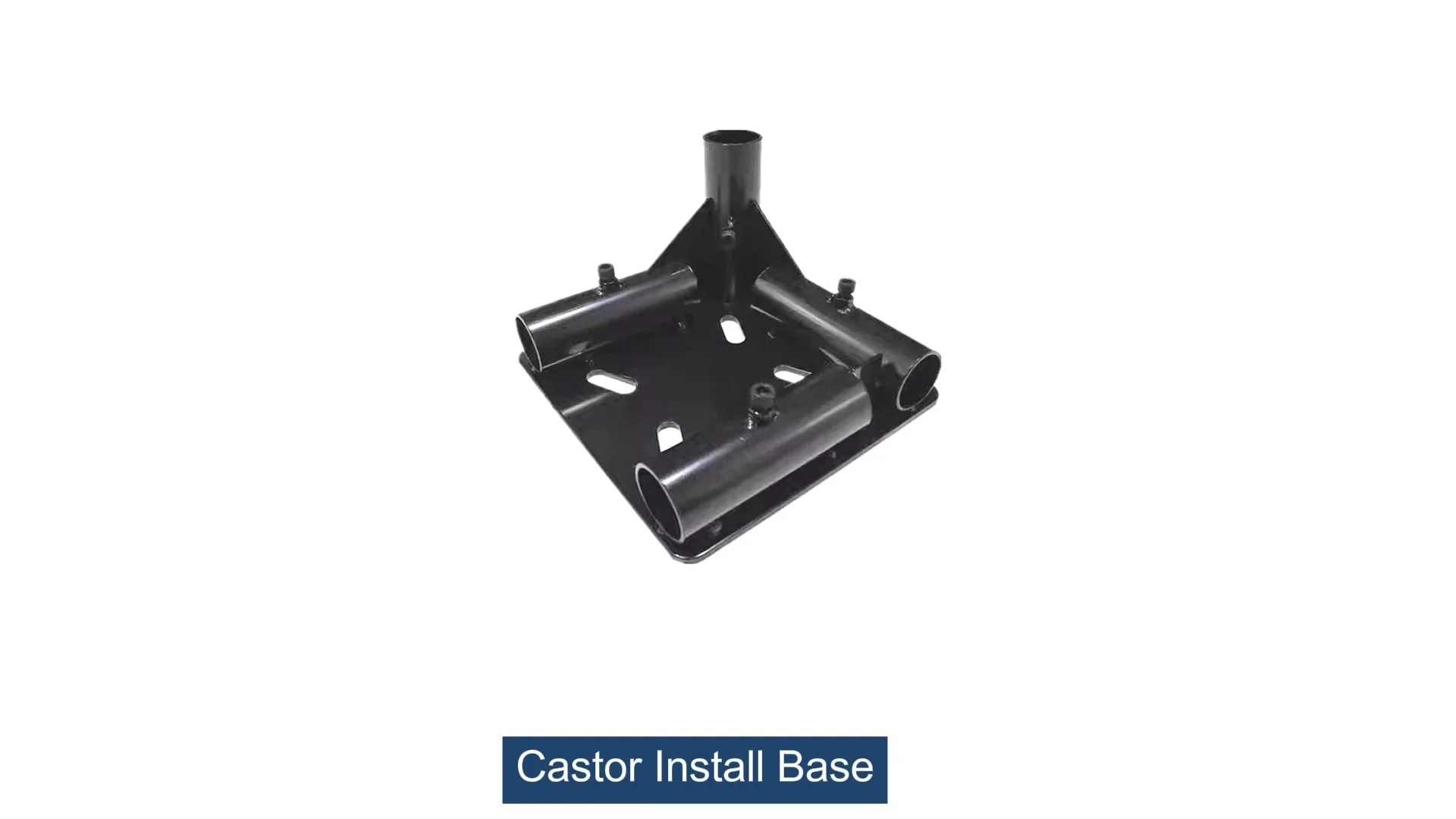
Castor Install Base
Castor install base, used for connection between pipe and castor, it can connect 4 pcs pipe by 1 pcs castor base, to make the structure strong and stable.
Empowering healthcare efficiency through tailored mobility—because every second saved in a hospital corridor matters.
In the fast-paced world of healthcare, where every decision can impact patient outcomes, the smallest details often make the biggest difference. Consider the humble medical device rack: a staple in operating rooms, nurseries, and emergency departments, tasked with holding everything from sterile instruments to life-saving monitors. But what if that rack—designed to keep critical tools organized—becomes a barrier to care? What if its wheels stick in narrow corridors, or its base wobbles under the weight of expensive equipment, slowing down the very staff who need to move quickly?
This is where mobility meets purpose. For medical facilities, the ability to maneuver equipment safely, efficiently, and precisely isn't just a convenience—it's a necessity. Enter custom castor install base solutions: the unsung heroes that transform static racks into dynamic, patient-centered tools. These aren't just metal plates and wheels; they're engineered responses to the unique challenges of healthcare environments, where space is tight, standards are strict, and reliability is non-negotiable.
Over the next few pages, we'll dive into why custom castor install base solutions are revolutionizing how medical device racks operate. We'll explore the daily hurdles healthcare teams face with standard mobility systems, the specific benefits of tailored designs, and how partnering with a knowledgeable lean system supplier can turn frustration into efficiency. Whether you're managing a bustling hospital floor or equipping a specialized clinic, this guide will show you how the right foundation—literally—can elevate patient care.
The Hidden Hurdles of Medical Mobility: Why Standard Racks Fall Short
To appreciate the value of custom castor install base solutions, let's first step into the shoes of those who rely on medical device racks daily. Picture a surgical nurse racing to prep an emergency OR: she needs to wheel a rack of instruments from the sterilization room to the operating theater. The corridor is bustling with gurneys and staff; the rack's standard fixed casters catch on a floor transition, jolting the contents. A tray shifts, and she pauses to steady it—losing precious seconds. Or consider a neonatal unit where racks must navigate between isolettes and tiny bassinets: a standard rack's wide turning radius makes it impossible to squeeze through, forcing nurses to carry supplies by hand, increasing the risk of strain or dropped items.
These aren't isolated incidents—they're symptoms of a system designed for generality, not specificity. Standard medical device racks often come with one-size-fits-all mobility features, but healthcare settings are anything but "one size fits all." Let's break down the key challenges:
The Top 4 Mobility Challenges in Healthcare Settings
- Space Constraints: Narrow corridors, compact patient rooms, and cluttered workspaces demand racks that can pivot, glide, and stop on a dime. Standard casters often lack precision, leading to collisions with walls or equipment.
- Weight Variability: A rack might hold lightweight syringes one day and heavy monitoring equipment the next. Fixed-weight-capacity casters risk failure under strain, endangering both staff and supplies.
- Sanitization Rigors: Medical environments require constant cleaning. Standard castor install bases with crevices or hard-to-reach areas trap bacteria, violating infection control protocols (think: Joint Commission standards or CDC guidelines).
- Safety Compliance: From anti-microbial requirements to noise reduction (critical in ICU settings), medical mobility systems must meet strict regulations. Off-the-shelf casters rarely tick all these boxes.
Take sanitization, for example. In a 2023 study by the Association for the Advancement of Medical Instrumentation (AAMI), 68% of healthcare facilities reported "difficult-to-clean mobility components" as a top infection control concern. Standard castor install bases often have welded joints or hollow tubes that collect debris, even after wipe-downs. For a pediatric oncology unit, where immunocompromised patients are at risk, this isn't just a hassle—it's a liability.
Then there's the issue of adaptability. As medical technology evolves, so do storage needs. A hospital that invests in standard racks today may find them obsolete in two years when new, bulkier devices enter the market. Retrofitting standard casters is often costly and time-consuming, pulling staff away from patient care to manage equipment upgrades.
These challenges aren't just operational—they have a human cost. When a nurse struggles with a stuck caster, or a technician can't reach a device because the rack won't fit, the ripple effect is delays in treatment, increased staff burnout, and even compromised patient safety. It's clear: medical mobility systems need to be as dynamic and resilient as the teams using them. That's where custom castor install base solutions come in.
Beyond "One Size Fits All": What Are Custom Castor Install Base Solutions?
At their core, custom castor install base solutions are the bridge between a medical device rack and the floor—engineered to address the unique needs of a specific healthcare environment. Unlike standard bases, which are mass-produced with generic specs, custom designs are collaborative: they start with a conversation. A lean system supplier will assess your facility's pain points (narrow corridors? Heavy loads? Strict sanitization rules?) and craft a base that integrates seamlessly with your workflow.
Let's break down the anatomy of a custom castor install base. At minimum, it includes three key components:
1. The Base Plate
The foundation of the system, the base plate attaches directly to the rack. Custom options here might include adjustable mounting holes (to fit non-standard rack frames), reinforced edges (for heavy loads), or antimicrobial coatings (like silver-ion infused stainless steel) to inhibit bacterial growth.
2. The Caster Housing
This connects the base plate to the wheel. Custom features here could include swivel locks (to keep racks straight in transit), height adjustability (to level racks on uneven floors), or sealed bearings (preventing lubricant leakage that could contaminate sterile areas).
3. Caster Accessories
These are the "extras" that make all the difference. Think: non-marking wheels (to protect hospital floors), brake pedals positioned for easy foot access (critical for nurses in scrubs), or noise-dampening materials (to maintain quiet in patient rooms).
What truly sets custom solutions apart, though, is their ability to solve hyper-specific problems. For example, a trauma center in Chicago needed racks that could be moved during code blues without creating noise. A lean system supplier designed a castor install base with rubberized wheels and shock-absorbing housing, reducing noise by 40% compared to standard models. Now, staff can respond to emergencies without disturbing nearby patients.
Another example: a fertility clinic required racks that could be sanitized with high-pressure steam. Standard castor bases warped under heat, but a custom solution using heat-resistant aluminum and sealed joints allowed for daily steam cleaning, keeping infection rates near zero.

Standard vs. Custom: A Side-by-Side Comparison
Still on the fence about custom castor install bases? Let's put standard and custom solutions head-to-head. The table below highlights key differences in performance, compliance, and cost-effectiveness—because while custom solutions may have a higher upfront price tag, their long-term benefits often make them the smarter investment.
| Feature | Standard Castor Install Base | Custom Castor Install Base |
|---|---|---|
| Weight Capacity | Fixed (e.g., 200 lbs max) | Adjustable (e.g., 100–500 lbs, based on needs) |
| Sanitization | Hard-to-clean crevices; limited material options | Seamless design; antimicrobial materials (stainless steel, aluminum) |
| Maneuverability | Basic swivel; limited precision | 360° swivel locks; tight turning radius; height adjustment |
| Compliance | Meets general industry standards only | Tailored to healthcare regulations (FDA, CDC, Joint Commission) |
| Lifespan | 1–2 years (due to wear and tear) | 5+ years (durable materials, replaceable parts) |
| Total Cost of Ownership | Higher (frequent replacements, downtime) | Lower (longevity, reduced maintenance) |
Consider the "Total Cost of Ownership" row: a standard castor install base might cost $50 upfront, but if it fails after a year and causes a $500 equipment repair (or worse, a staff injury), the true cost skyrockets. Custom solutions, while initially $150–$300, avoid these hidden expenses—making them a wise financial choice for forward-thinking facilities.

Real Impact: How Custom Solutions Transformed a Children's Hospital
Theory is one thing—real-world results are another. Let's look at a case study from Cincinnati Children's Hospital Medical Center, a 629-bed facility serving over 1.3 million patients annually. In 2022, their Pediatric Intensive Care Unit (PICU) faced a critical mobility problem: their medication carts and supply racks were causing more harm than good.
"Our PICU is a high-stakes environment," explains Sarah Lopez, PICU Nurse Manager. "We need to access meds and tools in seconds, but our old racks had casters that would lock up on our vinyl floors. Nurses were straining their backs, and we even had a few near-misses with carts rolling into isolettes. It was unsustainable."
The hospital's procurement team initially considered upgrading to "premium" standard racks, but none addressed their unique needs: tiny patient rooms, frequent floor cleanings with harsh chemicals, and the need for silent mobility (to avoid disturbing sleeping children). That's when they partnered with a lean system supplier specializing in healthcare mobility.
The Custom Solution: A "PICU-Ready" Mobility System
The supplier conducted a week-long workflow analysis, observing nurses during shifts, measuring corridors, and reviewing sanitization protocols. The result? A custom castor install base with four key features:
- Micro-Swivel Casters: 2-inch diameter wheels with precision bearings, allowing racks to pivot 360° in spaces as tight as 4 feet wide.
- Chemical-Resistant Housing: Aluminum castor install bases with powder-coat finishes that withstand daily exposure to bleach and disinfectants.
- Quiet-Roll Technology: Rubberized wheels with shock-absorbing hubs, reducing noise to 35 decibels (quieter than a library whisper).
- One-Touch Brakes: Large, foot-operated brake pedals positioned for easy access, even when nurses are wearing clogs or steel-toed shoes.
Three months after implementation, the results were staggering:
- Staff strain injuries dropped by 75% (per OSHA incident reports).
- Medication retrieval time decreased by 18 seconds on average (adding up to 2+ hours of saved time per nurse per shift).
- Infection control audits showed a 30% reduction in bacteria counts on rack surfaces (tested via ATP monitoring).
"It's not just about the wheels," Lopez reflects. "It's about giving our team the tools to focus on what matters: the kids. When a nurse doesn't have to fight with a stuck caster, she can spend that energy comforting a scared child or monitoring a critical patient. That's the real win."

Choosing the Right Partner: Why a Lean System Supplier Matters
Not all custom castor install base providers are created equal. To ensure your solution delivers on its promise, you need a partner who understands both mobility engineering and the nuances of healthcare operations. Enter the lean system supplier: a company rooted in the principles of lean manufacturing—efficiency, waste reduction, and continuous improvement. These suppliers don't just sell products; they solve problems.
Lean system suppliers are uniquely equipped to design medical mobility solutions because they start with your workflow, not their catalog. They ask questions like: How many times does this rack move in a shift? What's the maximum weight it will ever carry? Who will be operating it (nurses, technicians, orderlies)? This granular approach ensures the final product aligns with your team's needs, not just industry norms.
5 Qualities to Look for in a Lean System Supplier
1. Healthcare-Specific Experience
Look for suppliers with case studies in hospitals, clinics, or labs. They should be familiar with regulations like HIPAA, FDA, and ISO 13485 (medical device quality management).
2. In-House Engineering
Avoid middlemen. Suppliers with their own design teams can iterate quickly, making tweaks based on your feedback (e.g., adjusting caster height after a trial run).
3. Prototyping Capabilities
A good supplier will build a sample rack with your custom castor install base for testing. This ensures the solution works before full production.
4. Lifecycle Support
From installation training to replacement parts, your supplier should offer ongoing support. Ask about warranty periods and response times for repairs.
5. Commitment to Sustainability
Medical facilities are increasingly focused on eco-friendly practices. Look for suppliers using recycled aluminum or stainless steel, or offering take-back programs for old casters.
Remember: the goal isn't just to buy a castor install base—it's to invest in a system that grows with your facility. A lean system supplier will anticipate future needs, whether that's adding new racks, upgrading existing ones, or adapting to new regulations. As Lopez from Cincinnati Children's puts it: "Our supplier didn't just deliver a product. They became a partner in patient care."
The Future of Medical Mobility: What's Next for Custom Castor Install Bases?
As healthcare evolves, so too will the demand for smarter, more adaptive mobility solutions. Custom castor install bases are poised to lead this charge, with innovations that blend technology, sustainability, and patient-centered design. Here's a glimpse of what's on the horizon:
Emerging Trends in Healthcare Mobility
- Smart Casters: Imagine castor install bases with built-in sensors that track rack location (via RFID or Bluetooth), weight distribution (alerting staff to overloading), or maintenance needs (e.g., "wheel bearing wear at 80%"). This data can integrate with hospital asset management systems, reducing loss and downtime.
- Eco-Friendly Materials: With healthcare's push toward carbon neutrality, suppliers are experimenting with bio-based plastics for wheels and recycled aluminum for castor install bases. Some are even exploring self-lubricating bearings made from plant-based oils.
- Modular Design: Future castor install bases may feature snap-on components (e.g., interchangeable wheels for different floor types: hard floors vs. carpet) or quick-release mechanisms, allowing staff to swap parts without tools.
Perhaps most exciting is the potential for AI-driven design. By analyzing thousands of healthcare mobility data points (corridor widths, staff heights, equipment weights), lean system suppliers could one day generate custom castor install base designs in minutes, not weeks. This would make tailored solutions accessible to smaller clinics and rural hospitals, not just large medical centers.
From Wheels to Wellness: The Bottom Line
At the end of the day, custom castor install base solutions are about more than mobility—they're about empowering healthcare teams to do their best work. When a nurse can wheel a rack of supplies into a patient room without struggle, when a technician can sanitize a cart in seconds, when a child sleeps undisturbed by clattering wheels, that's when healthcare truly works. These small, often-overlooked components are the foundation of a more efficient, safer, and compassionate medical system.
So, if you're ready to transform how your facility moves, start with the basics: the castor install base. Partner with a lean system supplier who listens, designs, and delivers solutions that fit your unique world. Your staff, your patients, and your bottom line will thank you.
Because in healthcare, every detail counts—and sometimes, the smallest wheels carry the biggest impact.