- Company Articles
- Products and Technology
- Solution
- Custom Castor Installation Base for Atypical Material Racks: Engineering Solutions

Custom Castor Installation Base for Atypical Material Racks: Engineering Solutions
Related Product
Castor Installation Base
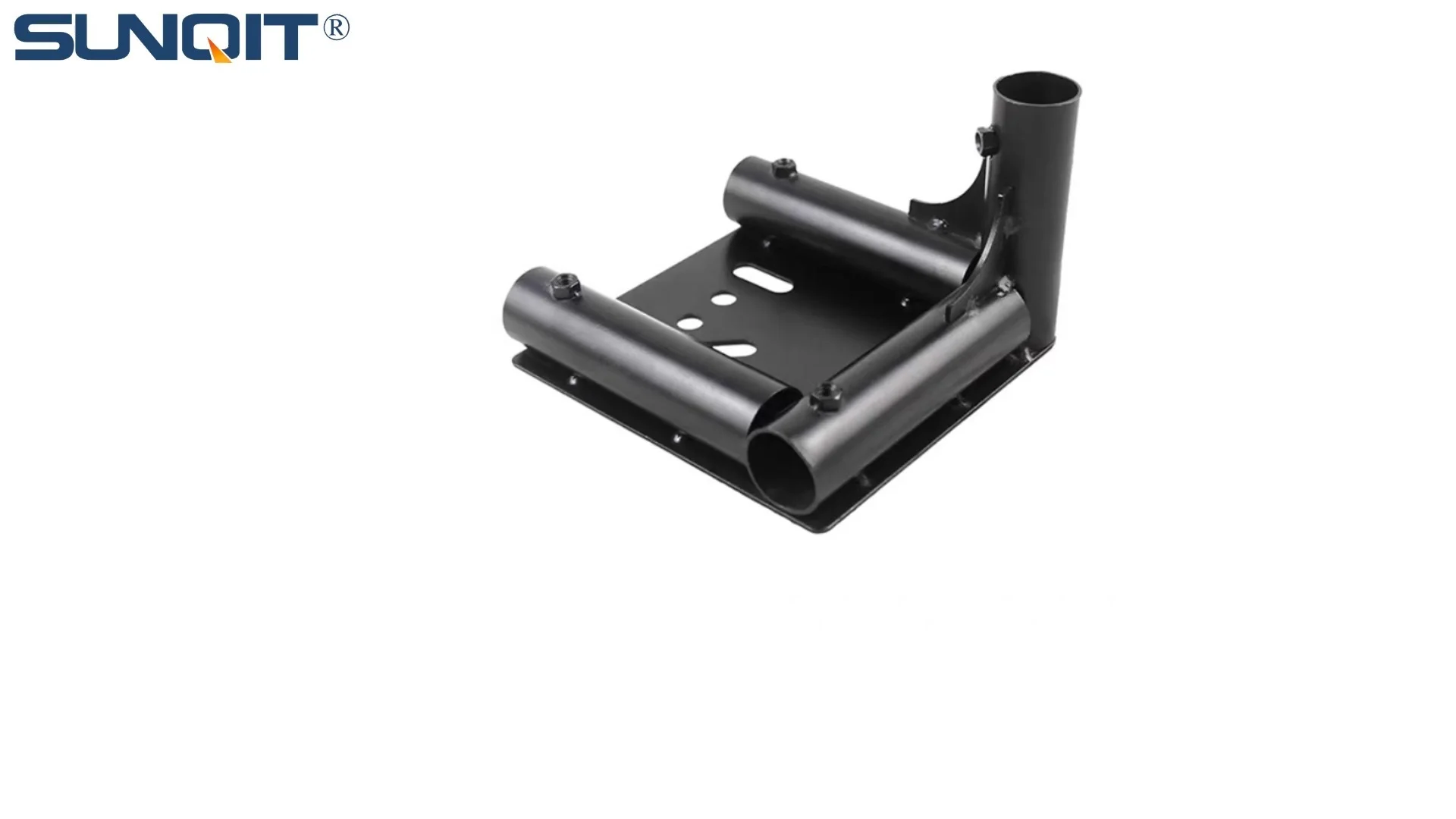
Pipe fitting castor installation base,Well made, precise and strong. Made of high quality of steel,black painting surface treatment for greater resistance to corrosion. It is used for castor or foot lever connection with lean pipe.
Custom Castor Installation Base for Atypical Material Racks: Engineering Solutions
Walk into any busy warehouse or manufacturing facility, and you'll likely see rows of material racks standing tall—neat, uniform, and seemingly built for efficiency. But what happens when the racks don't fit the mold? When a standard solution feels like trying to force a square peg into a round hole? For facilities dealing with atypical material racks—those with odd dimensions, unique load requirements, or specialized environmental needs—this frustration is all too familiar. Inefficiency creeps in: workers strain to move heavy loads, inventory gets stuck in awkward corners, and safety risks loom. The good news? There's a quiet hero in these scenarios: the custom castor installation base. More than just a "wheel attachment," it's an engineering solution designed to turn chaos into order, one tailored component at a time.
Understanding Atypical Material Racks: Beyond the "One-Size-Fits-All" Myth
First, let's clarify what makes a material rack "atypical." These aren't just racks that look slightly different—they're solutions born from necessity. Maybe a pharmaceutical lab needs a rack that fits through narrow cleanroom doors but still holds bulky equipment. Or a automotive plant requires a structure that can bear the weight of engine blocks while aligning with ergonomic workstations. Atypical racks often come with non-standard dimensions (taller, wider, or more compact than industry norms), unique load capacities (from fragile electronics to 500kg machinery parts), or specific environmental demands (resistance to chemicals, static control, or extreme temperatures). In short, they're the racks that standard catalogs overlook.
Take, for example, a small-batch manufacturing workshop I visited last year. Their specialty? Custom industrial valves, each with unique sizes and weights. Their material racks, cobbled together from second-hand steel shelving, were a nightmare: some shelves sagged under heavy valve bodies, others were too short to store long stems, and none could be moved without a team of workers. The result? Lost time, frequent product damage, and a floor plan that felt like a maze. "We just need something that works for us ," the operations manager sighed. That's where atypical racks—and their (supporting) custom castor installation bases—step in.
The Unsung Role of Castor Installation Bases: More Than Just Wheels
At first glance, a castor installation base might seem simple: a frame with wheels attached. But in reality, it's the bridge between the rack and the floor, the component that determines whether a rack is a static obstacle or a dynamic tool. For atypical racks, this bridge needs to be custom-engineered to address three critical challenges: mobility, stability, and adaptability.
Mobility is about more than just "can it roll?" It's about how it rolls. A rack holding delicate circuit boards shouldn't jostle contents when moved; one storing heavy metal parts needs to glide smoothly without damaging concrete floors. Stability, meanwhile, is non-negotiable. An unstable rack isn't just inefficient—it's dangerous. Finally, adaptability ensures the base can evolve with the rack: if the load increases next year, or the workspace layout changes, the base should adjust without a complete overhaul.
This is where caster and accessories come into play. The right combination of wheels, brakes, and mounting hardware can transform a clunky rack into a precision tool. For instance, swivel casters with total-lock brakes allow 360-degree movement while ensuring the rack stays put during loading/unloading. Heavy-duty polyurethane wheels absorb shocks, protecting both the rack's contents and the floor. And adjustable mounting plates ensure the base aligns perfectly with the rack's unique frame—no gaps, no wobbles.
Engineering Custom Castor Bases: The Nuts and Bolts (and Casters) of Design
Designing a custom castor installation base isn't guesswork—it's a process rooted in data, collaboration, and testing. Let's break down the key steps, using the automotive plant example I mentioned earlier. Their challenge? A material rack for engine blocks that needed to fit through 80cm-wide aisles, support 600kg per shelf, and align with a lean system workflow that prioritized just-in-time part delivery.
Step 1: Listen to the Problem (Not Just the Specs)
Too often, engineers jump straight to drawings. But the best solutions start with conversation. We sat down with the plant's floor workers, not just the managers. "The old rack scrapes the floor when we turn," one assembler noted. "And we need to lock it in place exactly under the crane hook—millimeters matter." These insights—floor damage, precision positioning—weren't in the initial spec sheet, but they shaped the final design.
Step 2: Material Matters: Why Aluminum Profile Steals the Show
For atypical racks, material choice is pivotal. Steel is strong, but it's heavy and hard to modify. Wood is cheap, but it can't handle industrial loads. That's why aluminum profile has become a go-to for custom bases. Aluminum extrusion profiles—those T-slot frames you've seen in workshops—offer a rare blend of strength and flexibility. They're lightweight (so the base itself doesn't add unnecessary load), corrosion-resistant (ideal for humid or chemical-exposed environments), and infinitely customizable. Need to add a reinforcing bracket? Slide a T-slot nut into the profile and bolt it on. Want to attach a brake lever? Drill a hole—no welding required.
In the automotive plant's case, we opted for 40x40mm aluminum profile for the base frame. It was strong enough to support the engine blocks but light enough that two workers could move the rack easily. Plus, the T-slots allowed us to mount the casters at variable widths, ensuring the base fit through those narrow aisles without compromising stability.
Step 3: Caster Selection: It's All in the Details
Choosing casters for an atypical rack is like picking shoes for a hike: the wrong pair ruins the journey. For the engine block rack, we started with load capacity. Each shelf held two 250kg engine blocks, so the base needed to support 1,500kg total (including the rack itself). We selected heavy-duty swivel casters with 125mm polyurethane wheels—polyurethane offers a smooth ride, resists oil (critical in automotive settings), and won't mark floors. To address the "precision positioning" concern, we added total-lock brakes: these lock both the wheel and the swivel plate, ensuring the rack stays put even when jostled during loading.
But what about uneven floors? Many facilities, especially older ones, have slightly sloped or cracked concrete. A rack that wobbles is a hazard, so we integrated adjustable leveling feet into the base design. These threaded feet, mounted at the corners of the aluminum frame, can be twisted up or down to stabilize the rack on uneven surfaces. Think of them as the "leveling legs" of the base—simple, but game-changing for safety.
From Design to Deployment: The Customization Process in Action
Let's walk through how the automotive plant's castor base went from concept to reality. It's a process that mirrors most custom projects, blending technical expertise with hands-on problem-solving.
1. Consultation & Data Gathering: We started with measurements—of the engine blocks, the aisles, the ceiling height (to ensure the rack could be moved without hitting overhead pipes), and even the floor slope (we used a laser level to map unevenness). We also documented the workflow: how often the rack needed to be moved, where it needed to stop, and who would operate it (to ensure brake levers were at a comfortable height).
2. CAD Design & Simulation: Using the data, our engineers created 3D models in CAD software. We tested virtual scenarios: What if the rack hit a 2cm floor bump? Would the casters absorb the shock? Could two workers push it up a 1-degree slope? Simulation helped us tweak the design—we added diagonal bracing to the aluminum frame for extra rigidity and adjusted caster placement to balance weight distribution.
3. Prototyping & Testing: Next, we built a prototype using off-the-shelf aluminum profile and casters (close enough to the final specs to test functionality). The plant's workers put it through its paces: moving it through aisles, loading dummy engine blocks, and testing the brakes. Feedback was immediate: "The brake lever is too low—my back aches bending to reach it." We adjusted the lever height by 15cm. "The wheels squeak on our floor." We swapped in lubricated bearings. Small fixes, but they made all the difference.
4. Production & Installation: With the prototype approved, we fabricated the final base. The aluminum profile was cut to size, drilled, and assembled with T-slot bolts. Casters and adjustable leveling feet were mounted, and the base was powder-coated blue (the plant's safety color) for visibility. On installation day, the operations manager watched as two workers moved the fully loaded rack into place with ease. "We could have used this six months ago," he laughed. "Think of all the time we wasted."
The Impact: When Custom Bases Meet Lean System Principles
At their core, custom castor installation bases are more than just engineering solutions—they're enablers of lean system practices. Lean is all about eliminating waste: wasted time, wasted effort, wasted space. Atypical racks with poorly designed bases are hotbeds of waste. Workers waste time wrestling with immobile racks; space is wasted when racks can't be repositioned for new workflows; and effort is wasted on unnecessary lifting and carrying.
The automotive plant's new bases tackled these wastes head-on. By making racks mobile, they cut material handling time by 40%—no more waiting for a forklift to move parts. The adjustable leveling feet reduced product damage by stabilizing loads, while the narrow base design freed up 15% of floor space (previously wasted on "buffer zones" around immobile racks). Most importantly, workers reported less fatigue and fewer near-misses—proof that safety and efficiency can go hand in hand.
Another example: a food packaging facility that upgraded to custom bases for their turnover trolley and rack system. Their old trolleys, with rigid steel bases, couldn't navigate around production line machinery, leading to bottlenecks. We designed a base with swivel casters and a slim aluminum frame, allowing trolleys to glide through tight gaps. The result? A 25% increase in throughput, as materials reached packaging stations faster.
Key Components of a Custom Castor Installation Base: A Breakdown
To better understand what goes into these bases, let's break down their core components. The table below compares standard off-the-shelf bases with custom-engineered ones, highlighting why customization matters for atypical racks.
| Component | Standard Base | Custom Base (Atypical Racks) | Why It Matters |
|---|---|---|---|
| Frame Material | Thin steel or plastic | Aluminum profile (40x40mm or larger) | Aluminum offers strength without weight, critical for mobility and load capacity. |
| Caster Type | Generic rubber wheels, fixed or limited swivel | Heavy-duty polyurethane swivel casters with total-lock brakes | Polyurethane resists chemicals/abrasion; total-lock brakes ensure stability during loading. |
| Stabilization | No leveling features | Adjustable leveling feet with rubber pads | Prevents wobbling on uneven floors, reducing product damage and safety risks. |
| Mounting | Fixed bolt holes (one-size-fits-all) | Custom mounting plates with variable hole patterns | Ensures a perfect fit with the rack's unique frame, eliminating gaps or stress points. |
| Weight Capacity | Up to 500kg | Custom-engineered (often 1,000kg+) | Supports atypical rack loads, from heavy machinery to bulk materials. |
The Future of Atypical Racks: Customization as the New Standard
As manufacturing and warehousing grow more specialized, the demand for atypical material racks will only rise. And To meet this demand, custom castor installation bases won't just be "nice-to-haves"—they'll be essential. The key to their success lies in collaboration: engineers working alongside floor workers, designers prioritizing real-world usability, and suppliers offering flexible materials like aluminum profile. After all, the best engineering solutions aren't just about specs on a page—they're about making someone's workday a little easier, a little safer, and a lot more efficient. So, the next time you see a rack that seems "out of place," take a closer look at its base. Chances are, it's not just a rack—it's a story of problem-solving, one custom caster at a time. And in the world of atypical solutions, that's the most valuable engineering feat of all.