- Company Articles
- Products and Technology
- Product knowledge
- Custom Conveyor Systems with 3030a EU Standard Aluminum Profile

Custom Conveyor Systems with 3030a EU Standard Aluminum Profile
Related Product
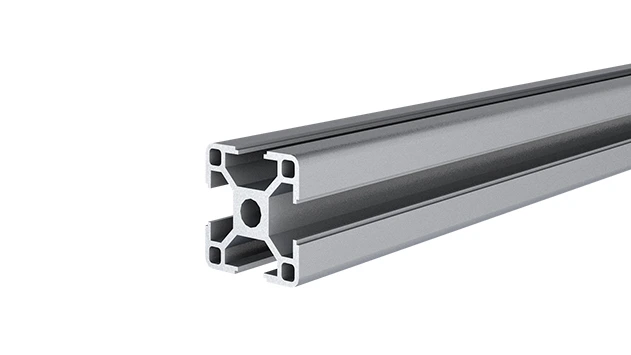
3030A EU Standard Aluminum Profile
3030 is a 3.00 x 3.00CM fractional 30 series square extrusion T-slot profile with four open T-slots, each side with 3.00cm face. The profile has align-a-grooves to assist in aligning connecting profiles.
Walk into any modern factory, warehouse, or distribution center, and you'll likely hear the steady hum of conveyor systems moving products, parts, and packages with clockwork precision. These unsung heroes of industrial workflow are the backbone of efficiency—they reduce manual labor, cut down on errors, and keep operations running like well-oiled machines. But here's the thing: no two workplaces are exactly alike. A one-size-fits-all conveyor might work for some, but for businesses aiming to truly optimize their processes, custom conveyor systems are the game-changer. And when it comes to building these tailored solutions, there's one material that stands out above the rest: the 3030a EU standard aluminum profile .
In this article, we'll dive deep into why 3030a aluminum profiles have become the go-to choice for custom conveyor systems, how they integrate with essential components like aluminum profile accessories and roller conveyors , and how they align with lean system principles to transform your workflow. Whether you're a manufacturer looking to streamline production lines or a logistics manager aiming to speed up order fulfillment, this guide will show you how 3030a profiles can turn your unique challenges into opportunities for growth.
Why 3030a EU Standard Aluminum Profile? The Foundation of Customization
Before we jump into conveyor systems, let's start with the star of the show: the 3030a EU standard aluminum profile. What makes this material so special, and why has it become a staple in industrial design? Let's break it down.
First, the basics: 3030a refers to the profile's dimensions—30mm in width and 30mm in height, with a standard "a" series cross-section design. But numbers alone don't tell the story. What sets this profile apart is its adherence to EU standards, which means rigorous testing for strength, durability, and safety. For businesses operating in Europe or exporting to EU markets, compliance isn't just a bonus—it's a necessity. 3030a profiles meet these standards, giving you peace of mind that your conveyor system is built to last and safe to use.
But compliance is just the starting point. Aluminum, by nature, is a dream material for industrial applications. It's lightweight, yet surprisingly strong—strong enough to support heavy loads without adding unnecessary bulk to your conveyor frame. Unlike steel, it's corrosion-resistant, making it ideal for environments where moisture or chemicals are present (think food processing or pharmaceutical facilities). And let's not forget aesthetics: aluminum has a clean, modern look that fits seamlessly into today's sleek industrial spaces, avoiding the clunky, outdated vibe of older steel systems.
The real magic, though, lies in its modularity. 3030a profiles are designed with T-slots running along their length—narrow grooves that allow for easy attachment of accessories without welding or drilling. This means you can assemble, disassemble, and reconfigure your conveyor system in minutes, not days. Need to adjust the height? Swap out a bracket. Add a new section to accommodate growth? Just connect another profile. This flexibility is why 3030a profiles are the cornerstone of custom conveyor design—they adapt to your needs, not the other way around.
Building Blocks: Aluminum Profile Accessories That Make Customization Possible
A 3030a aluminum profile is only as good as the accessories that bring it to life. Without the right connectors, brackets, and fasteners, even the most durable profile would be little more than a fancy metal bar. That's where aluminum profile accessories come in—they're the glue that holds your custom conveyor system together, quite literally.
Let's start with connectors, the unsung heroes of modular design. The 90° aluminum profile connector is a classic example. As the name suggests, it joins two 3030a profiles at a right angle, forming the corners of your conveyor frame. What makes these connectors so useful is their simplicity: most use set screws or bolts that tighten into the T-slots, creating a secure hold without damaging the profile. Need a different angle? There's the 45° aluminum profile connector for slopes or diagonal supports, or the 135° aluminum profile connector for more complex geometries. For straight runs, internal straight aluminum joint s create seamless, flush connections between profiles, keeping the frame sturdy and visually clean.
Then there are the brackets—essential for mounting components like roller tracks, motors, or safety guards. The roller track placon mount for aluminum profile flat is a perfect example. This bracket attaches directly to the T-slot of a 3030a profile, providing a stable base to secure roller tracks (more on those later). For heavier loads, the roller track placon mount for aluminum profile high raises the track slightly, adding clearance and reducing stress on the frame. And let's not forget end caps: 3030 aluminum profile end cap s snap onto the ends of profiles, covering sharp edges to prevent injuries and keeping dust and debris out of the T-slots—small details that make a big difference in safety and maintenance.
Accessories aren't just about structure, though—they also add functionality. Take the aluminum profile rubber strip , for instance. This soft, flexible strip fits into the T-slots, creating a non-slip surface for workers or cushioning delicate products as they move along the conveyor. For noise reduction, aluminum profile anti-slip foot adjuster s stabilize the conveyor while dampening vibrations, making the workspace quieter and more comfortable. Even something as simple as a nylon handle attached to a movable conveyor section can turn a heavy, awkward adjustment into a one-person job.
The beauty of these accessories is that they're designed to work together. A 90° connector pairs with a flat placon mount to hold a roller track, which is then secured with bolts through the T-slots. This modular ecosystem means you're not locked into a single design—you can mix and match components to create a conveyor system that's exactly what you need. And because most accessories are standardized, you can easily source replacements or add-ons later, ensuring your conveyor grows with your business.

Roller Conveyors: The Heart of Material Movement
Now that we've covered the frame and accessories, let's talk about the component that actually moves the goods: the roller conveyor. A roller conveyor uses a series of rotating cylinders (rollers) mounted on a frame to transport products via gravity or power. When paired with 3030a aluminum profiles, roller conveyors become a customizable workhorse capable of handling everything from small electronic components to heavy pallets.
Gravity roller conveyors are the simplest and most cost-effective option. They rely on a slight incline to move products, with the rollers reducing friction so items glide smoothly from point A to point B. For these systems, the 3030a profile frame is typically built at a 3-5° angle, with roller track s mounted using placon mounts (remember those accessories?). The choice of rollers matters here: for lightweight items like plastic bins, swivel roller balls 0.5 inch might be enough, while heavier loads require larger, sturdier rollers like stainless steel swivel roller balls 1 inch . 3030a profiles handle this versatility effortlessly—their T-slots can accommodate different roller track widths and mounting heights, ensuring the conveyor matches your product's size and weight.
Powered roller conveyors, on the other hand, use motors to drive the rollers, making them ideal for flat surfaces, heavy loads, or precise speed control. Here, the 3030a frame not only supports the rollers but also houses the motor, gearboxes, and wiring. Aluminum's lightweight nature is a huge advantage here—adding motors to a steel frame would require reinforced supports, but 3030a profiles keep the overall weight manageable, making installation and maintenance easier. Plus, the modular design means you can add or remove powered sections as needed. For example, a factory might use a powered roller conveyor to move heavy engine parts to an assembly station, then switch to a gravity roller section to feed lighter components to a workbench —all using the same 3030a profile frame.
One of the biggest benefits of using 3030a profiles with roller conveyors is adaptability. Need to change the direction of the conveyor? Add a curve using 135° connectors and curved roller tracks. Want to separate products into different lanes? Install dividers using aluminum guide rails (like aluminum guide rail a or aluminum guide rail b ). Even the roller spacing can be adjusted by moving the placon mounts along the T-slots—closer spacing for small items, wider spacing for larger ones. This level of customization ensures your roller conveyor doesn't just move products; it moves them intelligently , aligning with your workflow instead of disrupting it.
| Roller Type | Typical Load Capacity | Best For | Compatible 3030a Accessories |
|---|---|---|---|
| Swivel Roller Balls 0.5 inch | Up to 5kg per roller | Small parts, electronics, lightweight bins | Flat placon mounts, aluminum guide rail a |
| Stainless Steel Swivel Roller Balls 1 inch | Up to 15kg per roller | Medium loads, food-grade applications (stainless steel resists corrosion) | High placon mounts, 90° aluminum profile connectors |
| 40 Steel Roller Track (Yellow Wheel) | Up to 30kg per roller | Heavy boxes, pallets, industrial parts | Center support brackets, roller track joint connectors |
| 38 Aluminum Roller Track (Black ESD Wheel) | Up to 10kg per roller | Electronics manufacturing (ESD protection prevents static damage) | ESD workbench brackets, aluminum profile rubber strips |
Lean System Integration: From Waste to Efficiency
In today's fast-paced industrial world, efficiency isn't just a buzzword—it's a survival strategy. That's where lean system principles come in: a methodology focused on minimizing waste (time, materials, effort) while maximizing value. Custom conveyor systems built with 3030a aluminum profiles are a perfect fit for lean manufacturing and logistics, as they're designed to eliminate inefficiencies at every turn.
Let's start with waste reduction. Traditional conveyor systems are often overbuilt, with fixed layouts that force workers to take detours or handle products multiple times. A custom 3030a-based conveyor, by contrast, is tailored to your workspace's layout. For example, if your production line has a tight corner, you can design a curved conveyor using 135° connectors instead of installing a straight conveyor that requires workers to manually move products around the bend. This cuts down on "motion waste"—the unnecessary movement of people or products—and keeps the workflow smooth.
Another lean principle is "just-in-time" production, where materials arrive exactly when they're needed, reducing inventory storage costs. Custom conveyors with 3030a profiles make this possible by syncing with your production schedule. For instance, a gravity roller conveyor feeding parts to an assembly workbench can be adjusted to deliver components at the exact rate the workers need them—no more piles of inventory cluttering the workspace, and no more delays waiting for materials. The modular design also makes it easy to add or remove sections as production demands change, ensuring you're never paying for unused capacity.
Quality is another area where lean and 3030a conveyors intersect. Aluminum profiles are lightweight but rigid, so the conveyor frame doesn't flex under load. This stability ensures products move smoothly, reducing the risk of jams, spills, or damage—all of which are forms of "defect waste" in lean terms. Add accessories like plastic roller track guide rail yellow (high-visibility guides) or aluminum profile rubber strip s (cushioning for fragile items), and you further minimize errors, keeping quality high and rework low.
Perhaps the biggest lean advantage, though, is continuous improvement. Lean isn't a one-time project—it's an ongoing process of refinement. With 3030a profiles, reconfiguring your conveyor to test a new workflow takes hours, not weeks. Want to try moving a workbench closer to the conveyor? Just disassemble the frame, reposition the profiles, and reattach the accessories. The ability to experiment quickly means you can constantly tweak your system to find better, more efficient ways of working—exactly what lean is all about.
Real-World Applications: How 3030a Conveyors Solve Unique Challenges
To truly understand the power of custom conveyor systems with 3030a EU standard aluminum profiles, let's look at some real-world scenarios where they've made a difference. These examples show how the right design can turn bottlenecks into strengths.
Case 1: Electronics Manufacturing Facility
A mid-sized electronics company was struggling with their circuit board assembly line. Their old steel conveyor was fixed in place, and workers had to reach across the line to grab components, leading to fatigue and slowdowns. The solution? A custom conveyor using 3030a profiles with
38 aluminum roller track black ESD with side guide
s. The ESD (electrostatic discharge) wheels protected sensitive circuit boards from static damage, while the side guides kept parts aligned. The team also added a detachable section that extended directly to each worker's
workbench
, reducing reach distance by 60%. Thanks to the modular design, they could reposition the conveyor when they added a new assembly station six months later—no need to buy a whole new system.
Case 2: Food and Beverage Warehouse
A beverage distributor needed a conveyor to move cases of soda from the storage area to the loading dock. The challenge? The warehouse had a sloped floor, and traditional steel conveyors were too heavy to install on the uneven surface. A custom gravity conveyor with 3030a profiles solved the problem. The lightweight aluminum frame was easy to mount on adjustable feet (using
aluminum foot base
s), and
stainless steel swivel roller balls 1 inch
resisted corrosion from occasional spills. The team even added
aluminum profile rubber strip
s along the edges to prevent cases from slipping off—critical for safety in a fast-paced environment. The result? Loading times cut by 30%, and the conveyor was light enough to reposition seasonally when storage needs changed.
Case 3: Automotive Parts Supplier
An automotive parts supplier needed a conveyor to transport heavy metal components (up to 50kg each) between machining and painting stations. They required a powered system to handle the weight, but space was limited. Using 3030a profiles, the design team created a compact, L-shaped conveyor with
40 steel roller track yellow wheel
s and a variable-speed motor. The 90° turn was made possible with
90° aluminum crossing joint
s, and the frame was reinforced with
gusset alp 3030
brackets for extra strength. The modular design also allowed them to add a small gravity roller section at the end, where parts could cool before painting—eliminating the need for a separate cooling area. Productivity increased by 25%, and the supplier was able to take on larger orders thanks to the improved throughput.
The Future of Custom Conveyors: Durability, Sustainability, and Growth
As industries evolve, so too do the demands on conveyor systems. Businesses today need solutions that are not only efficient but also durable, sustainable, and ready to scale. 3030a EU standard aluminum profiles check all these boxes, making them a future-proof choice for custom conveyors.
Durability is a given with aluminum. Unlike steel, which can rust or corrode over time, aluminum forms a natural oxide layer that protects it from the elements. This means your conveyor will stand up to years of heavy use, even in harsh environments like factories with high humidity or warehouses near the coast. And because 3030a profiles are made from high-grade aluminum alloy, they won't warp or bend under constant stress, ensuring the conveyor maintains its precision for the long haul.
Sustainability is another key advantage. Aluminum is 100% recyclable, and recycling it uses just 5% of the energy required to produce new aluminum. When your conveyor eventually reaches the end of its life (decades from now, with proper care), the 3030a profiles can be melted down and reused, reducing your environmental footprint. The modular design also plays a role: instead of replacing the entire conveyor when you need an upgrade, you can swap out individual components, cutting down on waste.
Finally, scalability. As your business grows, your conveyor system needs to grow with it. With 3030a profiles, adding a new section is as simple as purchasing extra profiles and accessories—no need to redesign from scratch. Whether you're expanding your production line, opening a new warehouse, or diversifying your product range, your custom conveyor can adapt. This scalability not only saves money but also gives you the flexibility to seize new opportunities without being held back by outdated infrastructure.
Conclusion: Your Workflow, Reimagined
At the end of the day, a conveyor system isn't just about moving products—it's about moving your business forward. Custom conveyor systems built with 3030a EU standard aluminum profiles do exactly that by putting you in control. With their modular design, durable construction, and endless customization options, these conveyors transform your workspace from a collection of disconnected processes into a unified, efficient system that works for you.
Whether you're integrating roller conveyors to speed up production, using aluminum profile accessories to tailor the design to your space, or aligning with lean system principles to eliminate waste, 3030a profiles give you the tools to build a conveyor that's as unique as your business. And in a world where efficiency and adaptability are the keys to success, that's not just an advantage—it's a necessity.
So, if you're tired of one-size-fits-all solutions that hold you back, it's time to consider a custom conveyor system with 3030a EU standard aluminum profiles. Your workflow, your team, and your bottom line will thank you.