- Company Articles
- Products and Technology
- Product knowledge
- Custom Design with 4040C EU Standard Aluminum Profile: Tailored for Your Industry

Custom Design with 4040C EU Standard Aluminum Profile: Tailored for Your Industry
Related Product
4040C EU Standard Aluminum Profile
4040C is a 4.00x4.00 CM fractional 40 series square extrusion T-slot profile with four open T-slots, each side with 4.00cm face. The profile has align-a-grooves to assist in aligning connecting profiles.
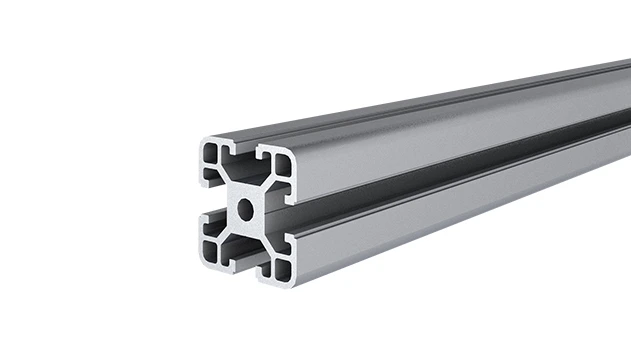
Walk into any modern factory, warehouse, or lab, and you'll notice a silent workhorse behind the scenes: the structures that hold everything together. From assembly lines to workbenches, material racks to testing stations—these setups aren't just metal and bolts. They're the backbone of efficiency, flexibility, and productivity. But here's the thing: no two industries (or even two teams within the same industry) work the same way. A one-size-fits-all approach to industrial infrastructure? It's like trying to fit a square peg into a round hole. That's where the 4040C EU Standard Aluminum Profile comes in. More than just a piece of metal, it's a canvas for customization—designed to adapt to your workflow, your challenges, and your vision for a smoother operation.
What Even Is a 4040C EU Standard Aluminum Profile, Anyway?
Let's start with the basics. The "4040C" in its name isn't just a random code—it tells you exactly what you're dealing with. The first two numbers ("40") refer to the profile's width: 40 millimeters. The next two ("40")? Its height, also 40 millimeters. So, it's a square aluminum extrusion, 40x40mm in cross-section. The "C" denotes a specific design variant within the EU standard lineup—think of it as a particular "flavor" of 40x40 profile, optimized for versatility and compatibility with a wide range of accessories. And "EU Standard"? That's your guarantee of quality. EU standards for aluminum extrusion profile are strict, ensuring consistent dimensions, material strength, and finish across every piece. No surprises, no mismatched parts—just reliability you can build your entire operation on.
But what makes it an "extrusion profile"? Picture this: a solid aluminum billet (a block of raw aluminum) is heated until it's malleable, then forced through a die—a custom-shaped tool—that presses it into the 40x40mm cross-section with precision. This process creates a profile with a uniform structure, internal channels (called "T-slots"), and a smooth surface. Those T-slots are where the magic happens. They're not just gaps; they're built-in connection points that let you attach accessories—brackets, shelves, casters, you name it—without welding or drilling. It's like a grown-up version of building blocks, but for industrial use.
The material itself? Most 4040C profiles are made from 6063-T5 aluminum alloy. In plain English: it's lightweight (about a third the weight of steel), yet surprisingly strong. T5 tempering (a heat treatment process) gives it excellent structural integrity, so it can handle heavy loads without bending or warping. And aluminum's natural resistance to corrosion means it holds up in damp environments, from food processing plants to outdoor warehouses. Plus, it's recyclable—so if you ever need to reconfigure your setup, the old profiles can be melted down and reused. Sustainability meets practicality? That's a win-win.
Why 4040C Stands Out: It's Not Just About Being "Good Enough"
Sure, there are other aluminum profiles out there—30x30mm, 40x80mm, even steel alternatives. But 4040C hits a sweet spot that makes it the go-to for custom industrial design. Let's break down why it's more than just "another profile":
Strength without the bulk : At 40x40mm, it's sturdy enough to support workbenches loaded with tools, material racks stacked with parts, or conveyor systems moving products. Yet, because it's aluminum, it's light enough to assemble and reconfigure without heavy machinery. A team of two can put together a custom workstation in an afternoon—no need for a crane or welding crew.
Modularity that grows with you : Industries change. New products, new processes, new regulations—your infrastructure needs to keep up. With 4040C, you're not stuck with a permanent setup. Need to add a shelf to your workbench? Slide a bracket into the T-slot and tighten a screw. Want to raise your material rack by 10cm? Swap out the legs for longer ones. It's like Legos for adults, but instead of building castles, you're building a production line that adapts to your business's growth.
Compatibility with endless accessories : What good is a profile without the parts to make it useful? 4040C plays nice with a huge range of aluminum profile accessories—from 90° connectors that let you build right angles, to end caps that give a clean finish and protect against sharp edges. Need to add wheels? Attach casters. Want to mount a monitor? Use a bracket. The ecosystem of accessories is so vast, you can design almost anything: workbenches, flow racks, safety barriers, even custom test rigs. It's the ultimate "mix and match" system.
Cost-effective in the long run : Let's talk money. Yes, aluminum profiles can cost more upfront than, say, welded steel. But think about the big picture. Steel is heavy—shipping costs more, installation is harder, and if you need to reconfigure, you're probably cutting and rewelding, which means downtime and labor costs. 4040C? It's lightweight (lower shipping), easy to assemble (lower labor), and reusable (no wasted materials when you change your setup). Over time, those savings add up. Plus, because it's corrosion-resistant, you won't be replacing rusted parts every few years. It's an investment that pays for itself.

The Customization Process: From Idea to Reality (Without the Headache)
So, you're sold on 4040C. Now what? How do you turn a pile of aluminum extrusion profiles into a custom solution that solves your specific problem? It starts with a conversation—and a good lean system supplier who understands both the product and your industry.
Let's walk through a typical process. Say you're a manager at a small medical device manufacturer, and you need a new assembly workbench. Your current setup is a basic wooden table, but you need something that can hold tools, organize small parts, and adjust height for ergonomic use (your team complains about back pain from hunching). Here's how it would unfold:
Step 1: Define the problem (and the "wish list") You sit down with the supplier and say, "We need a workbench that's 1.2m long, 0.8m deep, adjustable in height from 75cm to 90cm. It should have a shelf for tools, a tray for small parts, and ESD protection (since we work with sensitive electronics). Oh, and we need to move it occasionally, so casters would help." The supplier doesn't just nod—they ask questions: "What's the maximum weight the top will hold? Do you need power outlets integrated? Any specific color to match your facility?" The more details, the better the end result.
Step 2: Design and prototyping Using CAD software, the supplier drafts a 3D model of the workbench. They'll select 4040C profiles for the frame (since it's strong enough but not overkill), adjustable feet (to fine-tune height), an ESD-safe top (maybe aluminum honeycomb panel for lightweight durability), and casters with brakes (so it stays put when in use). They'll also pick aluminum profile accessories like 90° connectors for the corners and shelf brackets that slide into the T-slots for easy adjustment. Once the design is approved, they might build a small prototype—a corner section, say—to test the fit and feel. "Does this height adjustment mechanism work smoothly? Is the shelf deep enough for your tools?"
Step 3: Production and assembly Once the prototype checks out, the supplier cuts the 4040C profiles to length, sorts the accessories, and packages everything with clear instructions. Depending on your team's skill level, you might assemble it yourself (it's as simple as sliding parts together and tightening screws with an Allen wrench) or have the supplier send a technician. Either way, it's quick—no waiting weeks for custom welding.
Step 4: Iterate (because nothing's perfect the first time) A month later, you realize the shelf is a bit too low, or you need an extra tray. No problem. You order a few more brackets and a length of 4040C, adjust the shelf height, and boom—your workbench evolves with your needs. That's the beauty of modular design: it's never "final."
Accessories: The Unsung Heroes of Customization
A 4040C profile on its own is just a stick of aluminum. It's the accessories that turn it into a workbench, a rack, or a conveyor. Think of them as the "verbs" to the profile's "noun"—they let you do things with it. Let's dive into some of the most useful ones:
Connectors: The glue that holds it all together Without connectors, you'd just have a pile of profiles. 90° aluminum profile connectors are the most common—they join two profiles at a right angle, perfect for building frames. There are also 45° connectors (for slopes or angled structures), 135° connectors (for corners that aren't quite right angles), and even "cross" connectors that let you attach a profile perpendicular to another, like a shelf in the middle of a frame. Most connectors use set screws that tighten into the T-slots, creating a secure hold without damaging the profile.
End caps: Finishing touches with purpose Ever run your hand along a metal profile and get a cut from a sharp edge? Not with end caps. 4040 aluminum profile end caps snap or screw into the ends of the profile, covering rough edges and adding a clean, professional look. They also keep dust and debris out of the T-slots, which can gunk up connections over time. Plus, they come in different colors—so you can match your company's branding or color-code workstations by department.
Casters: For when "stationary" just won't cut it Need your workbench or material rack to move? Casters (wheel attachments) are a game-changer. Look for swivel casters with brakes—they let you roll the setup into place, then lock it down so it doesn't shift during use. Heavy-duty casters can handle loads up to 200kg per wheel, so even fully loaded racks are easy to maneuver.
Shelves and panels: Adding surface area A frame is great, but you need somewhere to put things. Aluminum honeycomb panels are lightweight but strong, making them ideal for workbench tops or shelves. They're also ESD-safe when coated, which is crucial for electronics manufacturing. For open-air storage (like material racks), wire mesh panels let air circulate and make it easy to see what's inside. Both attach to the 4040C frame using shelf brackets that slide into the T-slots—adjustable, of course.
Gussets: Reinforcement when you need extra strength For setups that carry heavy loads (think a workbench with a CNC machine on top), gusset plates add stability. These triangular metal brackets fit into the corners of a frame, distributing weight more evenly and preventing the profile from flexing. Gusset alp 4040 (specifically designed for 40x40 profiles) are a popular choice—small, unobtrusive, but mighty.
Beyond Workbenches: 4040C in Action Across Industries
Workbenches are just the tip of the iceberg. 4040C's versatility means it shows up in industries you might not expect. Let's take a tour:
Manufacturing: Assembly lines that adapt Automotive plants, electronics factories, even toy makers—they all need assembly lines that can switch between products. 4040C frames support conveyor systems (like roller track for moving parts), flow racks (for organizing components in order of use), and pick-to-light stations (where lights guide workers to the right part). When a new model comes out, instead of rebuilding the entire line, you just reconfigure the 4040C sections—add a new conveyor segment, adjust a workbench height, or reposition a material rack. It's lean manufacturing in action: reducing waste (time, materials, labor) by staying flexible.
Healthcare: Clean, sterile, and customizable Hospitals and labs need furniture that's easy to clean, corrosion-resistant, and adaptable. 4040C profiles with stainless steel or powder-coated finishes are perfect for medical carts (to transport supplies), lab workstations (with integrated sinks or equipment mounts), and storage racks (for medications or samples). Since aluminum doesn't harbor bacteria, it meets strict hygiene standards. And if a lab adds a new piece of equipment? Just extend the workstation with a few more 4040C profiles and brackets.
Retail and Warehousing: Storage that grows with inventory Warehouses deal with seasonal spikes—more stock in Q4, less in Q1. 4040C material racks (like "Material Rack B (3 row and 3 floor)" from some suppliers) can be expanded by adding shelves or extending the frame. In retail backrooms, they're used for custom display fixtures—adjustable in height to fit different product sizes, and easy to repaint when rebranding. Even pop-up shops use 4040C for temporary shelving—lightweight enough to transport, sturdy enough to hold merchandise.
Education: Labs and makerspaces for hands-on learning Schools and universities love 4040C for science labs and makerspaces. Students can build custom project stands, robotics workbenches, or prototype frames without welding. Teachers can reconfigure the room layout in minutes for group work or demonstrations. And since it's safe (no sharp edges with end caps) and durable (can handle student "enthusiasm"), it's a no-brainer for educational settings.
Choosing a Lean System Supplier: It's About Partnership, Not Just Parts
You could buy 4040C profiles and accessories from a random online store, but here's the truth: not all suppliers are created equal. A good lean system supplier isn't just a seller—they're a partner who helps you turn your vision into reality. So, what should you look for?
Industry expertise : A supplier who specializes in automotive manufacturing might not understand the unique needs of a pharmaceutical lab. Look for someone who's worked with businesses like yours. They'll ask the right questions, suggest accessories you didn't know existed, and avoid rookie mistakes (like recommending a profile that's too weak for your load).
Customization support : Do they offer design services, or do you have to figure it out yourself? The best suppliers have in-house engineers who can draft CAD models, create prototypes, and tweak designs until they're perfect. They'll also help you source hard-to-find accessories or even modify standard parts to fit your needs.
Quality control : EU Standard is a start, but how do they ensure every profile and accessory meets that standard? Ask about their testing processes—do they check for dimensional accuracy? Load capacity? Finish consistency? A supplier who skimps on quality will leave you with wobbly workbenches or parts that don't fit.
After-sales service : What happens if a connector breaks, or you need to expand your setup six months later? A good supplier will have your back. They'll stock replacement parts, offer troubleshooting help, and even send a technician if you're stuck. Avoid suppliers who disappear once the sale is made.
Case Study: How 4040C Transformed a Small Electronics Shop
Let's put all this into context with a real-world example (names changed for privacy). Meet "TechFlow," a family-owned electronics manufacturer with 30 employees, making custom circuit boards for industrial machines. A year ago, their production floor was a mess: rigid steel workbenches that couldn't be adjusted, material racks that were too tall for shorter workers, and a conveyor system that took a week to reconfigure for new orders. Lead times were long, errors were frequent, and employee morale was low.
Their solution? Partnering with a lean system supplier to redesign the floor using 4040C aluminum extrusion profiles. Here's what changed:
Adjustable workbenches : Each workstation was built with 4040C frames and height-adjustable legs. Workers could now set their bench to elbow height, reducing back strain. ESD-safe aluminum honeycomb panels on top protected sensitive components from static damage. T-slots along the edges let them attach tool holders, magnifying lamps, and power strips—everything within arm's reach.
Modular material racks : Instead of fixed steel racks, they installed custom "Material Rack B (3 row and 3 floor)" units using 4040C. Each shelf height was adjustable, so small parts bins could be placed at eye level, and larger components on lower shelves. Roller track on the top shelf let bins slide forward, eliminating the need to reach deep into the rack.
Flexible conveyor system : A 4040C frame supported a roller track conveyor between workstations. When a new circuit board design required a different assembly sequence, the team could reposition the conveyor sections in hours, not weeks. Casters on the conveyor segments made them easy to move, and 90° connectors let them create turns to navigate around the floor layout.
The results? Lead times dropped by 35%, error rates fell by 20%, and employee feedback was overwhelmingly positive. "I no longer leave work with a sore back," one assembler noted. "And when we get a rush order, we can shift the line in minutes instead of panicking." TechFlow didn't just buy profiles—they invested in a system that grew with their business.
Wrapping Up: The Future of Work is Custom, and 4040C is Leading the Way
In a world where industries evolve faster than ever, rigidity is the enemy of progress. Your infrastructure shouldn't hold you back—it should empower you to adapt, innovate, and stay ahead. The 4040C EU Standard Aluminum Profile isn't just a tool for building structures; it's a tool for building resilience. It lets you design a workspace that fits your team, your products, and your goals—today, tomorrow, and five years from now.
Whether you're a small manufacturer looking to streamline your assembly line, a lab manager needing ESD-safe workbenches, or a warehouse supervisor tired of fixed racks, 4040C offers a blank canvas. And with the right lean system supplier by your side—one who listens, designs, and supports—you can turn that canvas into a masterpiece of efficiency. So, what will you build first?
| Feature | 4040C EU Standard Aluminum Profile | 3030 EU Standard Aluminum Profile | Steel Square Tubing (40x40mm) |
|---|---|---|---|
| Dimensions | 40x40mm | 30x30mm | 40x40mm |
| Material | 6063-T5 Aluminum | 6063-T5 Aluminum | Mild Steel |
| Weight (per meter) | ~1.8kg | ~1.1kg | ~4.5kg |
| Connection Method | T-slot accessories (no welding) | T-slot accessories | Welding or bolts (drilling required) |
| Corrosion Resistance | High (natural aluminum oxide layer) | High | Low (requires painting/coating) |
| Best For | Medium to heavy loads, custom workbenches, racks, conveyors | Light to medium loads, small workstations, display fixtures | Extremely heavy loads, permanent structures |