- Company Articles
- Products and Technology
- Product knowledge
- Custom Duplex Aluminum Pipe Joint Designs for Specialized Production Needs

Custom Duplex Aluminum Pipe Joint Designs for Specialized Production Needs
Related Product
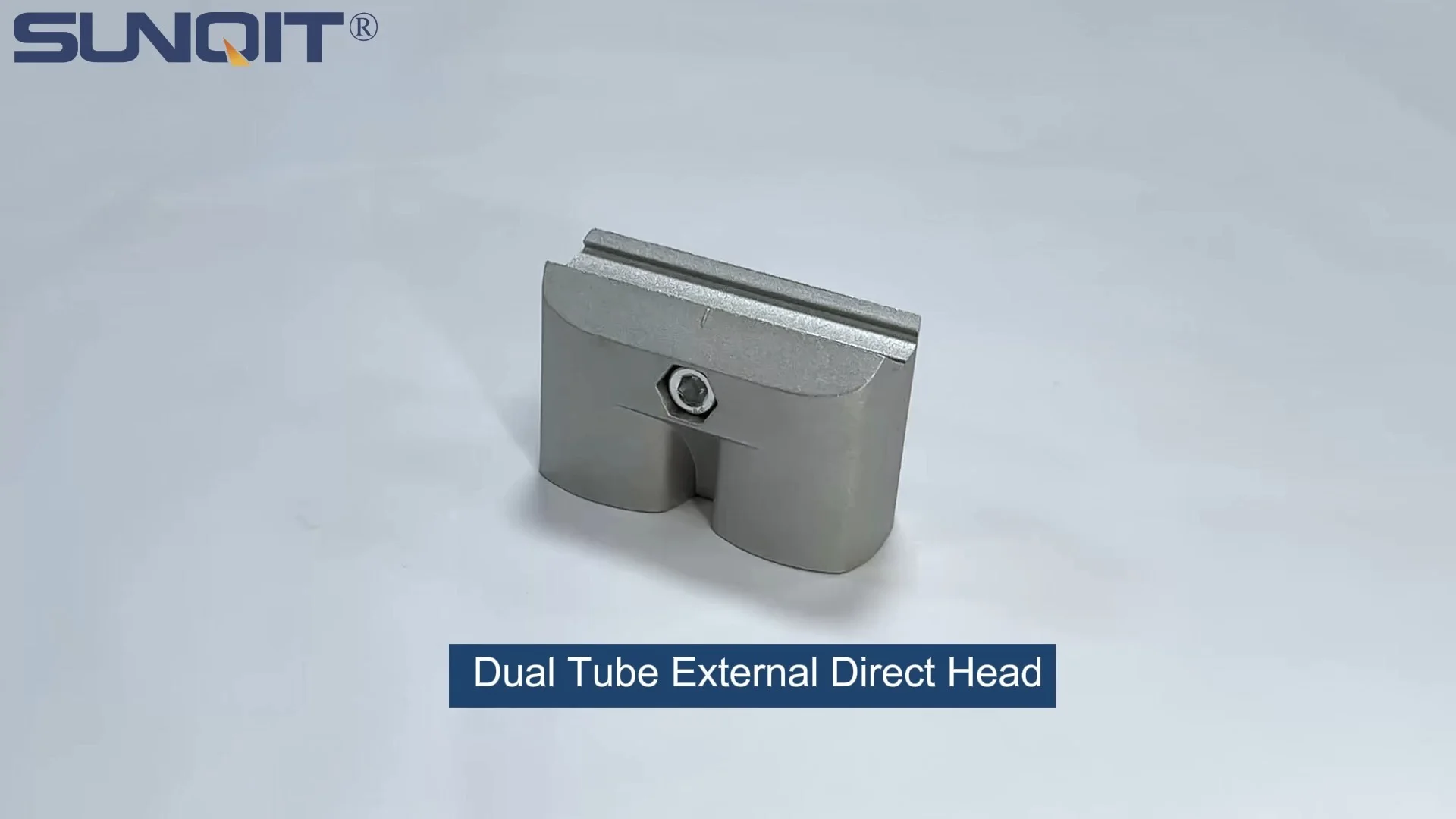
Duplex Aluminum Pipe Joint
Duplex Aluminum pipe joint used for one pcs 28pcs aluminum pipe and one pcs of 28mm duplex pipe connection in straight angle.
Walk into any modern production facility, and you'll quickly spot the heartbeat of operations: the assembly lines, workstations, and material handling systems that keep products moving from concept to completion. But behind the scenes, there's a silent challenge many production managers face daily: rigidity. Standard equipment, with fixed structures and one-size-fits-all designs, often struggles to keep up with evolving product specs, shifting demand, or unique workflow requirements. This is where the flexibility of aluminum lean pipe systems—especially those built with custom duplex aluminum pipe joints—begins to transform how teams work.
Duplex aluminum pipe joints aren't just another hardware component. They're the connective tissue that turns static workspaces into dynamic, adaptable environments. Unlike traditional fixed joints, these custom-designed connectors allow for quick reconfigurations, precise adjustments, and seamless integration with a wide range of aluminum pipe accessories , from roller tracks to casters. For facilities aiming to streamline processes, reduce downtime, and scale efficiently, custom duplex aluminum pipe joints aren't just an upgrade—they're a strategic investment in the future of production.
What Are Duplex Aluminum Pipe Joints, and Why Do They Matter?
At their core, duplex aluminum pipe joints are engineered connectors designed to link aluminum pipes (often referred to as aluminum lean pipe ) into sturdy, yet flexible structures. The "duplex" in their name speaks to their dual functionality: they provide both structural stability and rotational or directional adaptability, allowing pipes to be joined at multiple angles or adjusted on-site without specialized tools. This is a far cry from standard welded or fixed plastic joints, which lock systems into place and require complete overhauls when workflows change.
But what truly sets custom duplex aluminum joints apart is their ability to be tailored to specific production needs. Whether a facility requires joints that support heavy loads (like those in automotive part assembly), resist static electricity (critical for electronics manufacturing), or fit into tight spaces (common in pharmaceutical cleanrooms), these joints can be modified in terms of material thickness, joint angles, and accessory compatibility. This level of customization is game-changing for teams trying to implement lean system principles—eliminating waste, optimizing flow, and responding quickly to inefficiencies.
The Benefits of Customization: Beyond "Good Enough"
Standard off-the-shelf joints might work for basic setups, but specialized production environments demand more. Let's break down why custom duplex aluminum pipe joints are worth the investment:
1. Flexibility That Keeps Pace With Change
Consider a small electronics manufacturer that produces both smartphones and wearables. Their assembly needs shift constantly: smartphone lines require taller workstations with ESD protection, while wearable lines need lower, more compact setups to handle tiny components. With standard joints, reconfiguring workstations would mean disassembling entire structures and replacing parts—costing hours of downtime. Custom duplex joints, however, allow teams to adjust heights, add or remove shelves, or reposition work surfaces in minutes. A quick twist of a joint, a swap of a connector, and the line is ready for the next product run. This agility is invaluable in today's fast-paced manufacturing landscape, where product lifecycles grow shorter by the year.
2. Durability Without the Weight
Aluminum is already prized for its strength-to-weight ratio, but custom duplex joints take this a step further. By engineering joints with reinforced stress points (like thicker walls at connection sites) or corrosion-resistant coatings (ideal for food processing or outdoor applications), manufacturers can ensure their structures stand up to heavy use without adding unnecessary bulk. For example, a flow rack used to transport metal components might require joints that support 500 lbs per shelf. A custom design would beef up the joint's load-bearing capacity while keeping the overall rack lightweight enough for workers to move with ease using caster wheels—no forklift required.
3. Cost-Effectiveness Over Time
It's easy to assume custom parts cost more upfront, but the long-term savings tell a different story. Standard joints often force facilities to overcompensate—buying heavier pipes than needed, adding unnecessary supports, or replacing entire systems when a single joint fails. Custom duplex joints, by contrast, are designed to fit the exact load, space, and workflow requirements of a facility. This precision reduces material waste, minimizes maintenance costs, and extends the lifespan of the entire structure. A study by the Lean Manufacturing Institute found that facilities using custom aluminum lean pipe systems reported 30% lower equipment replacement costs over five years compared to those using standard setups—largely due to the adaptability of custom joints.

Standard vs. Custom: A Closer Look
To better understand the difference, let's compare standard joints with custom duplex aluminum pipe joints across key factors:
| Feature | Standard Joints | Custom Duplex Aluminum Joints |
|---|---|---|
| Flexibility | Limited to fixed angles (90°, 45°) with minimal adjustability. | Multi-angle rotation, on-site adjustability, and modular compatibility with accessories. |
| Load Capacity | Pre-set limits (often 100-200 lbs per joint). | Tailored to specific needs (up to 1000+ lbs with reinforced designs). |
| Accessory Compatibility | Works with a narrow range of standard aluminum pipe accessories . | Engineered to integrate with specialized accessories (ESD casters, heavy-duty roller tracks, custom brackets). |
| ESD Protection | Rarely included; requires additional coatings (if compatible). | Can be built with conductive materials or ESD-safe coatings for electronics manufacturing. |
| Lead Time | Readily available (same-day shipping). | 2-4 weeks for design and production (offset by long-term efficiency gains). |

Real-World Applications: From Workbenches to Flow Racks
Custom duplex aluminum pipe joints shine in specialized applications where "close enough" isn't acceptable. Let's explore two common scenarios where these joints make a tangible difference:
1. Tailored Workbenches for Precision Tasks
A workbench isn't just a table—it's a command center for assembly, testing, or packaging. In aerospace manufacturing, for example, workers might need a bench that tilts 30° to access the underside of a component, has integrated LED lighting, and includes a static-dissipative surface. Standard workbenches offer fixed heights and basic surfaces, but a custom setup using duplex aluminum joints can address all these needs. The joints allow the bench top to pivot, while aluminum pipe accessories like bracket mounts for lights or ESD grounding clips can be added without weakening the structure. Even better, if the aerospace team shifts to larger components next year, the joints can be adjusted to raise the bench height or widen the surface—no need to buy a new bench.
2. Flow Racks Optimized for Material Flow
Material handling is the backbone of lean production, and flow racks are critical for keeping parts moving to assembly lines efficiently. But not all parts are created equal: a rack holding small plastic components might need shallow shelves with roller tracks for quick access, while one storing heavy metal gears requires deep shelves with non-slip surfaces and reinforced joints. Custom duplex joints allow for variable shelf depths, adjustable roller track angles (to control the speed of part movement), and even integrated stop mechanisms to prevent parts from sliding off. For a automotive supplier, this means reducing the time workers spend searching for parts by 40%—and that's time that goes straight back into production.

The Customization Process: From Idea to Implementation
Creating custom duplex aluminum pipe joints isn't a guessing game—it's a collaborative process between the facility and the supplier. Here's how it typically works:
Step 1: Assess Needs and Constraints
The process starts with a deep dive into the facility's workflow. What are the pain points? Is the current setup too rigid? Are there safety concerns (like static buildup or heavy lifting)? What are the load requirements, space limitations, and compliance standards (e.g., FDA for food production, ISO for electronics)? A good supplier will send a consultant to the facility to observe operations, measure spaces, and interview workers to understand their daily challenges.
Step 2: Design and Prototyping
Using the assessment data, the supplier's engineering team designs a prototype joint. This might involve 3D modeling to test load capacity, angle flexibility, and compatibility with existing aluminum pipe accessories . For example, if a facility needs joints that work with 1-inch diameter aluminum lean pipe and 0.5-inch swivel roller balls, the prototype will ensure a snug fit that won't slip under pressure. Once the design is finalized, a physical prototype is built and tested in the facility—often under real-world conditions—to catch any issues before full production.
Step 3: Production and Integration
After the prototype is approved, the supplier manufactures the custom joints in bulk. Most aluminum joints are extruded or CNC-machined for precision, then coated (if needed) for ESD protection or corrosion resistance. Once delivered, the facility can integrate the joints into existing structures or build new ones from scratch. Suppliers often provide on-site support during this phase to ensure proper installation and answer questions from the maintenance team.
Choosing the Right Supplier: What to Look For
Not all suppliers are equipped to deliver high-quality custom duplex aluminum pipe joints. When evaluating potential partners, keep an eye out for these key traits:
- Engineering Expertise: Look for suppliers with in-house engineers who specialize in lean manufacturing and aluminum extrusion. They should be able to troubleshoot design challenges and suggest innovative solutions.
- Material Quality: Aluminum grades matter—6061-T6, for example, offers excellent strength and weldability, making it ideal for heavy-duty joints. Ask about material certifications to ensure compliance with industry standards.
- Customization Range: Can they modify joint angles, add threaded inserts for accessories, or integrate ESD features? The more flexible their design capabilities, the better.
- Support Services: Post-purchase support is critical. Do they offer training for your team on reconfiguring joints? Can they quickly replace a damaged joint if needed?
The Future of Production: Adaptable, Efficient, Human-Centric
At the end of the day, production isn't just about machines and materials—it's about people. Rigid systems create frustration, slow down work, and limit creativity. Custom duplex aluminum pipe joints, paired with aluminum lean pipe and the right aluminum pipe accessories , put control back in the hands of workers. They allow teams to design spaces that fit how they think and move, reducing fatigue and increasing satisfaction. And when workers are happy and efficient, production thrives.
For facilities ready to move beyond "good enough" and embrace the flexibility of custom solutions, duplex aluminum pipe joints are more than a tool—they're a catalyst for transformation. They turn static production lines into living, breathing systems that grow, adapt, and evolve with the needs of the business. In a world where change is the only constant, that's not just an advantage—it's essential.