- Company Articles
- Products and Technology
- Solution
- Custom Engraving Options for 2020 Aluminum Profile End Caps: Branding Solutions

Custom Engraving Options for 2020 Aluminum Profile End Caps: Branding Solutions
Related Product
2020 Aluminum Profile End Cap
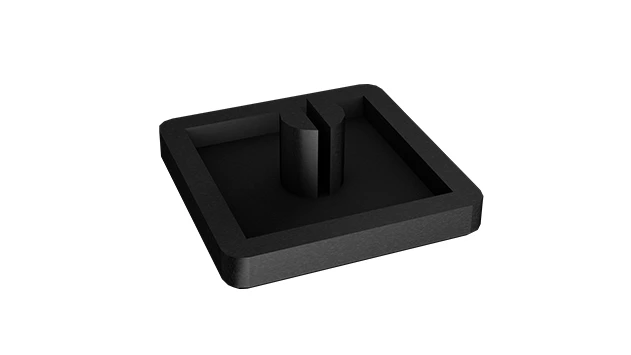
The aluminum profile end cap adds a finishing touch to your project and closes off profile ends to limit dust and debris buildup, also it can avaid some scratch for material and labor during the assemble work.
Walk into any modern factory, warehouse, or workshop, and you'll likely spot rows of sleek, modular structures—workbenches, material racks, flow racks, and conveyor systems—all built from aluminum extrusion profiles. These systems are the backbone of lean manufacturing, prized for their flexibility, durability, and ability to adapt to evolving production needs. But if you look closer, there's a small detail that often goes unnoticed: the end caps that seal the open ends of those aluminum profiles. They're easy to overlook, right? After all, their main job is to cover sharp edges, prevent dust buildup, and give the structure a finished look. But what if those humble end caps could do more? What if they could become a silent brand ambassador, reinforcing your company's identity every time someone walks by?
That's where custom engraving for 2020 aluminum profile end caps comes in. These tiny components, often an afterthought in the design process, hold untapped potential to elevate your brand, streamline operations, and add a touch of professionalism that sets your facility apart. In this article, we'll dive deep into why custom engraving matters, the techniques available, how it integrates with aluminum extrusion profile systems, and real-world examples of businesses leveraging this simple yet impactful solution. Whether you're a manufacturer looking to boost brand visibility or a lean system integrator aiming to deliver extra value to clients, this guide will show you how to turn a functional part into a powerful branding tool.
Why Bother with Custom Engraved End Caps? It's the Little Things That Count
Let's start with the basics: Why would you invest time and resources into engraving something as small as an end cap? The answer lies in the psychology of perception. In business, people notice details—whether it's a clean workspace, well-organized tools, or yes, even the finish on your equipment. A generic, unmarked end cap says, "We settled for the basics." A custom-engraved one, though? It says, "We care about every part of our operation, right down to the smallest component." That attention to detail builds trust, both with employees (who take pride in a well-curated workspace) and with visitors (clients, auditors, partners) who form impressions based on what they see.
But it's not just about aesthetics. Custom engraving adds functional value too. Imagine you run a large facility with dozens of workbenches, each used for different tasks. Engraving end caps with department names, project codes, or even QR codes makes it easier to track equipment, assign workstations, and streamline maintenance. For example, if a workbench needs repairs, a quick scan of the QR code on the end cap could pull up its maintenance history—no more hunting through spreadsheets. In lean systems, where efficiency is king, this kind of traceability is gold.
Then there's brand reinforcement. Every time an employee, client, or supplier walks past your workbenches or material racks, those engraved end caps are quietly shouting your brand. A crisp logo, a tagline, or even just your company name etched into the aluminum creates repeated, low-effort exposure. It's like having a mini billboard on every piece of equipment, but subtler—so subtle that people don't feel like they're being marketed to, but still absorb your brand identity over time.
The Canvas: Getting to Know 2020 Aluminum Profile End Caps
Before we jump into engraving techniques, let's talk about the star of the show: the 2020 aluminum profile end cap. If you're familiar with aluminum extrusion profiles, you know they come in various sizes, denoted by numbers like 2020, 3030, or 4040. The "2020" refers to the profile's cross-section dimensions—20mm by 20mm. These compact profiles are incredibly versatile, used in everything from small workbenches and shelving units to lightweight conveyor systems and machine guards. And to finish them off, you need end caps specifically designed to fit their dimensions.
2020 aluminum profile end caps are typically made from durable plastic or aluminum. Plastic end caps are lightweight and cost-effective, while aluminum ones offer better durability and a more premium look—perfect for engraving. They snap or press into the open ends of the profile, creating a smooth, finished edge. What makes them ideal for engraving is their flat, uniform surface—no curves or irregularities to complicate the process. Whether you choose plastic or aluminum, the key is that the material can hold an engraving without chipping, fading, or wearing off over time.
Another advantage of 2020 profiles is their popularity. Since they're a standard size, finding compatible end caps (and suppliers who can engrave them) is easy. You won't have to custom-order specialty parts or wait weeks for production. This accessibility makes custom engraving a feasible option for businesses of all sizes, from startups to large manufacturers.

Engraving Techniques: Which One Is Right for Your Brand?
Now, let's get into the nitty-gritty: how to actually engrave those end caps. There are three main techniques used today, each with its own strengths, weaknesses, and ideal use cases. Let's break them down so you can choose the best fit for your needs.
1. Laser Engraving: Precision at Its Finest
If you want sharp, detailed engravings—think intricate logos, small text, or even fine patterns—laser engraving is the way to go. Here's how it works: A high-powered laser beam vaporizes or discolors the surface of the end cap, creating a permanent mark. The laser is controlled by computer software, so it can reproduce even the most complex designs with pinpoint accuracy. Want to engrave your company logo with gradient shading? No problem. Need tiny text that's still readable? Laser engraving handles that too.
The benefits don't stop at precision. Laser engraving is fast, making it great for large batches. It's also non-contact, meaning there's no physical tool touching the end cap, so there's less risk of damage. And because the mark is created by altering the material's surface (rather than adding ink or paint), it won't fade, peel, or wear off—even in high-traffic areas like factory floors. The only downside? It's slightly more expensive than mechanical engraving, especially for very deep marks. But for most businesses, the trade-off for quality is worth it.
2. Mechanical Engraving: When Durability Matters Most
Mechanical engraving (also called diamond drag engraving) uses a physical tool—a sharp, rotating bit—to cut into the end cap's surface. This method creates deeper, more tactile marks than laser engraving, which can be an advantage if you want the engraving to be felt as well as seen (useful for braille or high-visibility labels). Because the cuts are deeper, mechanical engravings are incredibly durable, standing up to scratches, impacts, and harsh cleaning chemicals—perfect for end caps on material racks or conveyor systems that see heavy use.
That said, mechanical engraving isn't as precise as laser engraving. Fine details or very small text might get blurred, and the process is slower since the tool has to physically move across the surface. It's also more likely to cause slight burring (rough edges) on softer materials like plastic, though a good supplier will smooth these out post-engraving. If your priority is longevity over intricate design, mechanical engraving is a solid choice.
3. Chemical Etching: For Large Batches and Complex Designs
Chemical etching is a less common choice for end caps, but it has its place, especially for large-scale production. The process involves applying a stencil (mask) of your design to the end cap, then exposing the surface to an acid or corrosive chemical that eats away at the unmasked areas, creating a recessed engraving. It's great for producing identical marks across hundreds or thousands of end caps, and it can handle complex designs that would be difficult with mechanical engraving.
However, chemical etching has significant drawbacks. It's messy, requires specialized equipment (and safety precautions), and the etch depth is harder to control than with laser or mechanical methods. It's also not ideal for small runs, as creating the stencil adds setup time and cost. For most businesses, laser or mechanical engraving will be more practical, but if you're producing end caps in bulk for a large deployment (like outfitting an entire factory), chemical etching might be worth considering.
| Engraving Method | Cost Range | Durability (1-5) | Precision (1-5) | Ideal Use Case |
|---|---|---|---|---|
| Laser Engraving | Medium | 4 | 5 | Logos, small text, detailed designs, small to medium batches |
| Mechanical Engraving | Low to Medium | 5 | 3 | Deep, tactile marks, high-wear environments, simple text/logos |
| Chemical Etching | High (Setup) + Low (Per Unit) | 4 | 4 | Large batches (1000+ units), complex designs, uniform marks |

Fitting Engraved End Caps into Your Aluminum Extrusion Profile Ecosystem
So you've decided to go with custom engraving—great! Now, how do these end caps fit into your existing aluminum extrusion profile setup? The good news is that 2020 aluminum profile end caps are designed to be compatible with standard aluminum extrusion profiles, so they'll work seamlessly with the rest of your system. But there are a few things to keep in mind to ensure a cohesive look and function.
First, material matching. If your aluminum extrusion profiles are anodized (a common finish that adds corrosion resistance and a matte texture), consider choosing aluminum end caps with the same finish. This ensures the engraving will stand out against the background—for example, a silver anodized end cap with a black laser engraving creates a sharp contrast. If you're using plastic end caps, opt for a color that complements your profiles (many suppliers offer end caps in standard colors like black, white, or gray) to make the engraving pop.
Second, compatibility with aluminum profile accessories. Your end caps need to work with the other components in your system—joints, brackets, feet, and panels. For example, if you're using a 2020 profile to build a workbench, the end cap should sit flush with the profile so it doesn't interfere with attaching a tabletop or side panel. Most reputable suppliers will provide dimensional specs for their end caps, so double-check that the height, width, and insertion depth match your profiles. It's also a good idea to order a sample end cap first, engrave it, and test-fit it in your system to ensure there are no surprises.
Finally, think about the overall design of your structure. Where will the end caps be visible? On a workbench, the front and side end caps are more noticeable than the back ones, so prioritize engraving those. On a material rack, end caps at eye level (like on the front of shelves) will get more attention than those near the floor. By strategically placing engraved end caps in high-visibility areas, you maximize their branding impact without over-engraving (and over-spending) on less visible parts.
Beyond Branding: Unexpected Benefits of Custom Engraved End Caps
We've talked about branding and functionality, but custom engraving has other perks that might not be obvious at first glance. Let's explore a few of these hidden advantages.
**Counterfeiting Prevention:** In industries where equipment or components are valuable (or where knockoffs are common), custom engravings can act as a security feature. A unique logo, serial number, or micro-engraved pattern makes it harder for counterfeiters to replicate your equipment, protecting your brand reputation and intellectual property. For example, if you sell lean system kits (including aluminum extrusion profiles and accessories), engraving end caps with your logo helps customers verify they're getting genuine products.
**Employee Engagement:** It might sound trivial, but employees notice when their workspace feels intentional. A factory with mismatched, unmarked equipment can feel chaotic; one with branded, organized tools feels like a place where people care about their work. Engraved end caps contribute to that sense of order and pride, which can boost morale and productivity. Imagine walking into a workshop where every workbench has your team's department name engraved on the end cap—it fosters a sense of ownership and belonging.
**Marketing Opportunities:** Your facility itself is a marketing tool, especially if you host tours or have clients visit. Engraved end caps turn your equipment into subtle brand ambassadors. A client who sees your logo on a workbench might not consciously register it, but it reinforces your brand in their mind. Over time, these small impressions add up, making your company more memorable when they're ready to place an order or recommend a supplier.
Real-World Stories: How Businesses Are Using Engraved End Caps to Stand Out
Still not convinced? Let's look at some real examples of businesses that have embraced custom engraved end caps and reaped the rewards.
Case Study 1: Electronics Manufacturer Boosts Team Pride with Department Logos
A mid-sized electronics manufacturer in California was struggling with low morale on its production floor. Employees felt disconnected from the company's brand, and the workspace felt generic. The operations manager decided to revamp the facility, starting with the workbenches—all built from 2020 aluminum extrusion profiles. Instead of using plain black end caps, they had each department's name ("Assembly," "Testing," "Packaging") and the company logo laser-engraved on the front end caps. The result? Within a month, employees reported feeling more "seen" and proud of their workspace. The HR team even noticed fewer absences and more engagement in team meetings. "It's like we went from working in a warehouse to working in a place that cares about us," one employee noted in a survey. Plus, visitors now comment on how organized and professional the floor looks—an added bonus for client presentations.
Case Study 2: Automotive Supplier Streamlines Maintenance with QR Code Engravings
An automotive parts supplier in Michigan operates 12 production lines, each with custom-built workstations and material racks made from aluminum extrusion profiles. Keeping track of maintenance schedules for each station was a nightmare—spreadsheets were outdated, and technicians wasted time hunting down equipment histories. The solution? Engraving QR codes on the end caps of each workstation. Now, when a technician needs to service a machine, they scan the QR code with their phone and instantly access maintenance logs, part numbers, and even step-by-step repair guides. Downtime has decreased by 15%, and the maintenance team estimates they save 10+ hours per week on administrative tasks. "It's like giving each workstation its own ID card," the maintenance supervisor explained. "No more guessing—we have all the info we need right at our fingertips."
Case Study 3: Lean System Integrator Differentiates Services with Branded End Caps
A lean system integrator in Texas was competing in a crowded market, struggling to stand out from competitors who offered similar aluminum extrusion profile systems. They needed a way to add value without raising prices. The solution? Offering custom-engraved end caps as a standard feature in their workbench and rack packages. Clients could choose to engrave their logo, project name, or even the integrator's logo (for a small discount). The result? Clients loved the personalization, and the integrator saw a 20% increase in repeat business. "It's a small thing, but it makes our systems feel custom-built, not just off-the-shelf," the sales director said. "Plus, when clients post photos of their new workspaces on social media, our logo is right there on the end caps—free advertising!"
Choosing a Supplier: What to Look for in an Engraved End Cap Partner
Now that you're sold on custom engraving, the next step is finding a supplier who can deliver quality end caps with crisp, durable engravings. But not all suppliers are created equal—here's what to look for to ensure you get the best results.
**Experience with Aluminum Extrusion Profiles:** This might seem obvious, but it's worth emphasizing. You need a supplier who understands aluminum profiles (and end caps) inside out. They should be familiar with standard sizes like 2020, 3030, and 4040, and they should be able to recommend the right end cap material (plastic vs. aluminum) for your needs. Avoid general engraving shops that don't specialize in industrial components—they might not understand the tolerances or durability requirements of end caps used in manufacturing environments.
**Engraving Capabilities:** Ask about their engraving equipment. Do they use state-of-the-art laser engravers with high-resolution settings? Can they handle mechanical engraving for deeper marks? Request samples of their work—ideally, engraved end caps similar to what you're looking for—to check for clarity, precision, and edge quality. A good supplier will be happy to provide samples and walk you through their process.
**Design Support:** Not everyone has a ready-to-go design file for engraving. If you need help finalizing your logo, text, or layout, look for a supplier who offers design assistance. They should be able to advise on font sizes (to ensure readability), logo simplification (complex designs might not engrave well), and contrast (how to make the engraving stand out on your end cap color). Some suppliers even offer mockups—digital previews of how the engraving will look on the end cap—so you can approve the design before production.
**Turnaround Time and Minimum Orders:** How quickly can they produce your engraved end caps? If you need a small batch (say, 50 end caps for a new workbench), you don't want to wait weeks. Ask about lead times for both small and large orders, and check if they have minimum order requirements (some suppliers require 100+ units for custom engraving, which might be a problem for small businesses). A flexible supplier will work with your needs, even for small runs.
**Quality Control:** Finally, inquire about their quality control process. How do they ensure each end cap is engraved correctly? Do they inspect for defects (like misaligned text, shallow engravings, or burrs) before shipping? A reliable supplier will have strict QC standards to ensure you receive consistent, high-quality end caps every time.
Design Tips: Making Your Engraving Shine (Literally and Figuratively)
You've chosen your supplier and decided on an engraving method—now it's time to design your engraving. Here are some tips to ensure your end caps look professional and effective:
**Keep It Simple:** Less is more when it comes to engraving. A cluttered design (too much text, tiny details, or multiple elements) will be hard to read, especially from a distance. Stick to one or two elements: your logo, a short tagline, or a part number. If you're including text, use a clean, sans-serif font (like Arial or Helvetica) that's easy to read at small sizes. Avoid script fonts or overly decorative typefaces—they might look nice on paper, but they often blur when engraved.
**Size Matters:** The 2020 aluminum profile end cap is small (remember, it's 20mm by 20mm), so your design needs to be scaled accordingly. As a rule of thumb, text should be at least 4mm tall to be readable with laser engraving; mechanical engraving might require slightly larger text. Your supplier can help you determine the maximum design size that fits on the end cap without looking cramped.
**Contrast Is Key:** The engraving needs to stand out against the end cap color. If you're using a black end cap, a white or silver engraving (achieved with laser engraving on anodized aluminum, which lightens the material) will pop. If you're using a white end cap, black engraving is classic and readable. Avoid low-contrast combinations (like gray text on a silver end cap)—the engraving will blend in and lose its impact.
**Test, Test, Test:** Always order a proof before committing to a large batch. A proof is a single engraved end cap (or a digital mockup) that lets you check for errors: Is the text misspelled? Is the logo centered? Is the engraving depth consistent? It's better to catch mistakes on a proof than after you've received 500 end caps with a typo.
Final Thoughts: Small Caps, Big Impact—Elevate Your Brand One End Cap at a Time
At the end of the day, custom engraving for 2020 aluminum profile end caps is more than just a design choice—it's a statement. It says you value quality, attention to detail, and the power of branding in every aspect of your business. Whether you're looking to boost employee pride, impress clients, streamline operations, or differentiate your products, engraved end caps offer a simple, cost-effective way to achieve those goals.
So the next time you're designing a lean system, building a workbench, or upgrading your facility, don't overlook those small, unassuming end caps. With a little creativity and the right supplier, they can become one of your most effective branding tools—quietly working 24/7 to reinforce your brand, streamline your workflow, and make your facility stand out from the rest.
After all, in a world where so many businesses focus only on the big picture, it's the little things—the custom-engraved details—that make all the difference.