- Company Articles
- Products and Technology
- Product knowledge
- Custom Five Way Straight Lean Pipe Joint Chrome: Tailored for Specialized Industries

Custom Five Way Straight Lean Pipe Joint Chrome: Tailored for Specialized Industries
Related Product
Five Way Straight Lean Pipe Joint Chrome
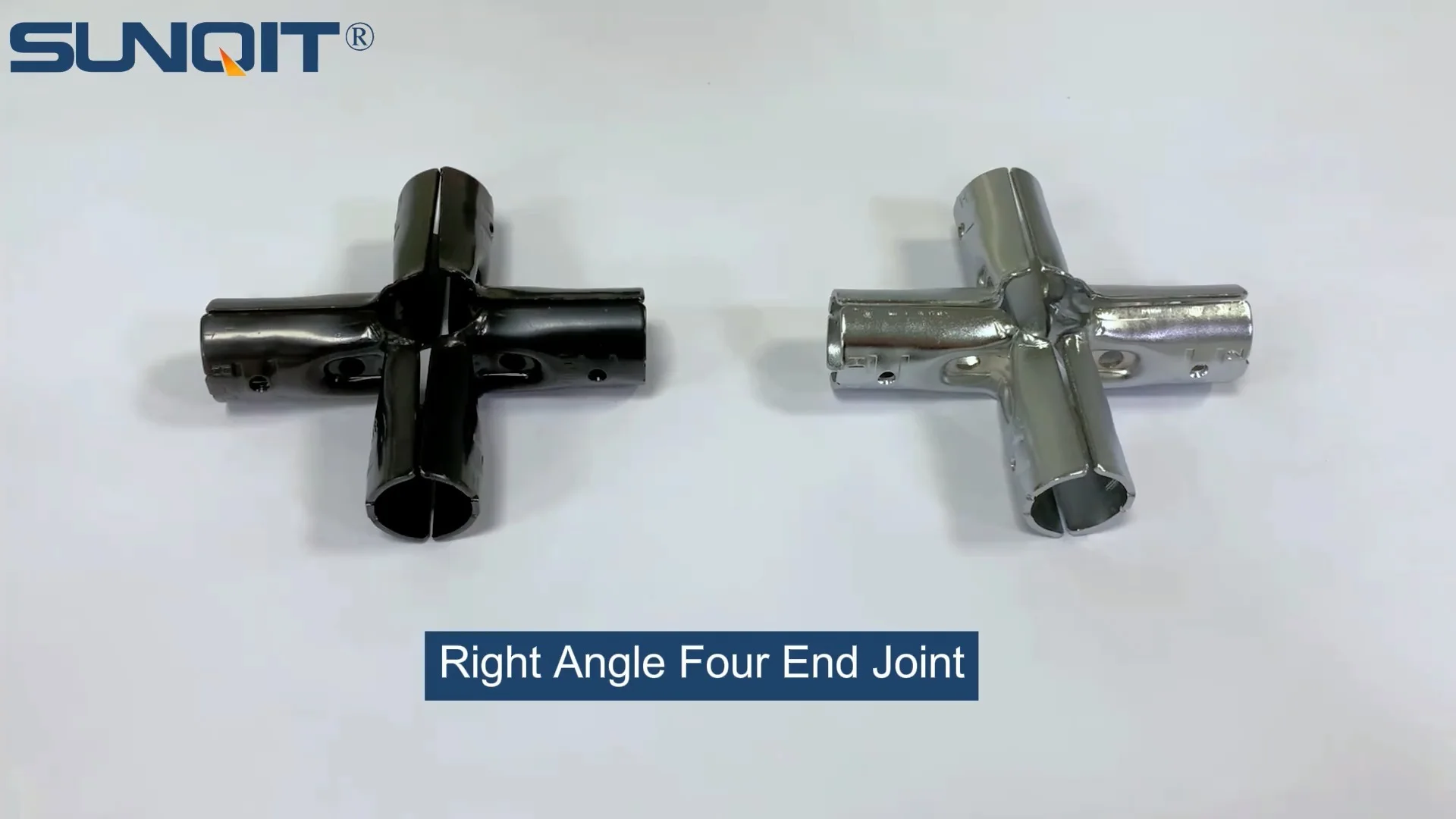
Five way straight lean pipe joint, for 5 pcs 28mm lean pipe connect in straight angle,which used widely in workbench, flow rack, hand trolley frame connection.
The Backbone of Modern Manufacturing – Lean Pipe Systems
Walk into any modern manufacturing facility today, and you'll likely notice a common thread: efficiency. From the rhythmic hum of assembly lines to the organized flow of materials, every element is designed to minimize waste, maximize productivity, and adapt to the ever-changing demands of production. At the heart of this efficiency revolution lies the lean pipe system – a modular, flexible framework that has become indispensable in industries ranging from automotive to electronics. But what makes these systems so versatile? The answer often comes down to the smallest yet most critical components: lean pipe joints.
Lean pipe systems, also known as "flexible pipe systems," are built on the principles of lean manufacturing – a philosophy centered on eliminating waste and optimizing workflows. These systems use lightweight, durable pipes (often steel, aluminum, or stainless steel) and a variety of joints to create custom workbenches, material racks, conveyor systems, and production lines. Unlike rigid, fixed structures, lean pipe systems can be easily reconfigured, expanded, or repurposed, making them ideal for businesses that need to adapt quickly to new product lines, seasonal demands, or process improvements.
In production assemble, where precision and speed are paramount, the right lean pipe system can mean the difference between a smooth, efficient workflow and a bottlenecked, frustrating process. Imagine a team of assemblers struggling to reach tools because their workbench isn't designed to hold all necessary components, or a material rack that can't be adjusted to fit new product dimensions – these are the kinds of inefficiencies lean pipe systems are built to solve. And at the core of these solutions are the joints that hold everything together, dictating how the system can be shaped, how much weight it can bear, and how easily it can evolve.
Understanding Lean Pipe Joints: The Unsung Heroes of Flexibility
If lean pipe systems are the skeleton of a manufacturing facility, then lean pipe joints are the joints of that skeleton – the connective tissue that allows for movement, strength, and adaptability. These small but mighty components come in a variety of shapes and sizes, each designed to serve a specific purpose. From simple 90° elbows to complex multi-way connectors, the choice of joint directly impacts the system's functionality.
Most lean pipe joints are made from metal (often zinc-plated steel or chrome-plated steel) and feature a clamp-style design that securely fastens pipes together without the need for welding or drilling. This "tool-free" assembly is a game-changer for manufacturers, as it allows teams to build, modify, or disassemble structures in minutes, not hours. Whether you're creating a workbench, a flow rack, or a conveyor system, the joint determines how pipes intersect, how much weight the structure can support, and how easily it can be reconfigured.
But not all joints are created equal. For standard, straightforward structures, a basic three-way or four-way joint might suffice. However, specialized industries – think aerospace, medical device manufacturing, or high-precision electronics – often require more complex configurations. This is where custom joints, like the five way straight lean pipe joint chrome, step in. These tailored components are engineered to meet unique spatial constraints, load requirements, and workflow demands, making them indispensable for businesses that can't afford to compromise on efficiency or precision.
Spotlight on Custom Five Way Straight Lean Pipe Joint Chrome: What Makes It Unique?
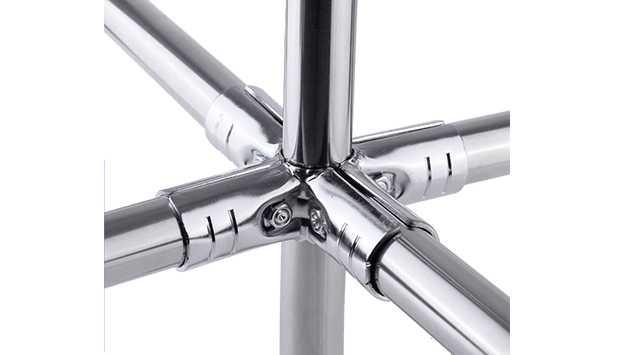
The custom five way straight lean pipe joint chrome is a standout in the world of lean pipe components. As the name suggests, it features five connection points, allowing for the integration of five separate pipes in a straight, linear configuration. This design is particularly valuable in scenarios where multiple material flows or workstations need to converge without sacrificing space or stability. But what truly sets this joint apart is its combination of versatility, durability, and customization options – qualities that make it a favorite among specialized industries.
First, let's talk about the "chrome" in its name. Chrome plating isn't just for aesthetics (though it does give the joint a sleek, professional finish). Chrome adds a layer of protection against corrosion, rust, and wear, making the joint ideal for use in harsh environments – think factories with high humidity, exposure to chemicals, or frequent cleaning (like medical device facilities). This durability ensures that the joint maintains its strength and functionality over time, reducing the need for frequent replacements and lowering long-term maintenance costs.
Then there's the "custom" aspect. Unlike off-the-shelf joints, which are mass-produced to fit standard pipe sizes and configurations, custom five way joints are engineered to meet specific requirements. Need a joint that fits a non-standard aluminum profile? Or one that can support heavier loads than a standard model? Suppliers can adjust the joint's material thickness, clamp strength, or connection angles to match your needs. For example, a manufacturer producing large aerospace components might require a five way joint with reinforced clamps to support the weight of heavy tools and materials, while a electronics plant might need a smaller, more compact version to fit into tight cleanroom spaces.
Another key feature is compatibility. The five way straight joint is designed to work seamlessly with a range of lean pipe accessories, including roller tracks, casters, and workbench surfaces. This means you can build complex structures – like a multi-level material rack with integrated conveyor tracks – using a single joint type, reducing the number of components you need to source and simplifying assembly. It's this flexibility that makes the five way joint a cornerstone of lean solution design, allowing manufacturers to create systems that are as unique as their production processes.

Why Specialized Industries Demand Custom Solutions
Specialized industries operate in a league of their own. They face unique challenges that standard manufacturing setups simply can't address – whether it's strict regulatory requirements (like FDA guidelines for medical devices), ultra-precise workflow needs (like aerospace component assembly), or the need to handle delicate materials (like semiconductors). In these environments, "one-size-fits-all" lean pipe components often fall short, leading to inefficiencies, safety risks, or non-compliance.
Take the medical device industry, for example. Cleanrooms are the norm here, and every piece of equipment must be easy to sanitize, corrosion-resistant, and free of crevices where bacteria can hide. A standard lean pipe joint with rough edges or a non-corrosive coating might not meet these standards, putting product quality at risk. A custom five way straight lean pipe joint chrome, with its smooth, chrome-plated surface and seamless design, eliminates these concerns, ensuring compliance with strict hygiene protocols.
Then there's the aerospace sector, where components are often large, heavy, and require precise alignment during assembly. A standard joint might not support the weight of a turbine blade or the torque needed to keep a workbench stable during intricate machining. Custom five way joints can be engineered with thicker walls, reinforced clamps, and higher load capacities to meet these demands, ensuring that the structure remains stable and safe – even under extreme conditions.
Electronics manufacturing is another area where customization is key. With products getting smaller and more complex (think smartphones, microchips), workstations need to be compact yet highly functional. A five way joint allows for the integration of multiple tools, material bins, and ESD (electrostatic discharge) protection systems in a tight space, reducing clutter and minimizing the risk of damage to sensitive components. And because these joints can be custom-sized, they can fit perfectly into existing production lines without requiring major overhauls.
In short, specialized industries demand custom solutions because their success depends on it. A well-designed, tailored lean pipe system – anchored by high-quality joints like the five way straight chrome model – isn't just a convenience; it's a competitive advantage. It allows businesses to work faster, safer, and more efficiently, all while meeting the unique demands of their industry.
Real-World Applications: Transforming Workflows Across Industries
To truly understand the impact of the custom five way straight lean pipe joint chrome, let's dive into some real-world applications. These examples highlight how this joint solves specific challenges and drives tangible improvements in specialized industries.
Automotive Assembly: Streamlining Material Flow
A leading automotive parts manufacturer was struggling with bottlenecks in their transmission assembly line. The existing material racks could only hold two types of components at a time, forcing workers to walk back and forth to retrieve parts – a waste of time and energy. The solution? A custom flow rack built using five way straight lean pipe joints chrome. By integrating five vertical pipes into a single joint, the rack could now hold five different component bins in a compact, linear design. Workers could access all parts from one station, reducing walk time by 40% and increasing assembly speed by 25%. The chrome plating also stood up to the factory's daily cleaning routines, ensuring the rack remained rust-free and functional for years.
Medical Device Manufacturing: Cleanroom Compliance
A medical device company needed a workbench for assembling surgical instruments in a Class 8 cleanroom. Standard workbenches had crevices where bacteria could accumulate, and their joints weren't corrosion-resistant enough to withstand daily sanitization with harsh chemicals. The manufacturer turned to a custom solution: a workbench built with five way straight lean pipe joints chrome and aluminum profile. The chrome joints had smooth, seamless surfaces that were easy to wipe down, while the aluminum profile added lightweight strength. The five way joints allowed for the integration of tool holders, ESD mats, and a built-in material shelf – all in a footprint small enough to fit in the cleanroom. Post-installation, the company passed its FDA inspection with zero compliance issues, and assembly errors dropped by 15% due to the organized workspace.
Aerospace: Heavy-Duty Material Handling
An aerospace supplier specializing in jet engine components needed a material rack to hold large, heavy turbine blades during inspection. Standard racks couldn't support the 200kg weight of each blade, and their joints kept loosening under the load. The solution was a custom rack using reinforced five way straight lean pipe joints chrome. Engineers thickened the joint walls and added locking clamps to ensure a secure fit. The five way design allowed for three vertical supports and two horizontal crossbars per section, distributing the weight evenly across the structure. The result? A rack that safely held 10 blades at once, reduced inspection time by 30%, and eliminated the risk of accidents from collapsing structures.
Electronics: ESD Protection and Compact Design
A semiconductor manufacturer needed a workstation for assembling microchips, where electrostatic discharge (ESD) could destroy sensitive components. The workstation had to include ESD-safe mats, tool holders, a static-dissipative conveyor, and storage for small parts – all in a space only 1.2 meters wide. Using five way straight lean pipe joints chrome (with ESD-compliant chrome plating), the team designed a multi-level workstation. The five way joints connected the main frame, a upper shelf for tools, a lower shelf for materials, and a side-mounted conveyor track. The compact design fit perfectly in the factory, and the ESD protection ensured zero chip damage during assembly. Productivity increased by 20% as workers no longer had to reach across cluttered surfaces.
The Customization Process: From Blueprint to Production
Creating a custom five way straight lean pipe joint chrome isn't just about picking a joint and adding a few extra holes. It's a collaborative process that starts with understanding the customer's unique needs and ends with a component that fits seamlessly into their workflow. Let's walk through the typical steps involved in bringing a custom joint from concept to reality.
Step 1: Needs Assessment
It all begins with a conversation. The supplier (often a specialized lean pipe supplier with experience in custom components) works closely with the customer to identify key requirements: What's the intended use? What's the maximum load the joint needs to support? What environment will it operate in (temperature, humidity, exposure to chemicals)? Are there size or space constraints? For example, a food processing plant might need a joint that's corrosion-resistant and easy to clean, while a automotive factory might prioritize load capacity and quick assembly.
Step 2: Design and Engineering
Armed with this information, the supplier's engineering team gets to work. Using CAD (Computer-Aided Design) software, they draft 3D models of the joint, incorporating features like reinforced walls, custom connection angles, or specialized clamps. They also run simulations to test load capacity, stress points, and durability. For example, if the joint needs to support 300kg, engineers will simulate the weight distribution to ensure the clamps won't slip and the material won't bend.
Step 3: Material Selection
The choice of material is critical. For most custom five way joints, chrome-plated steel is the go-to, thanks to its strength and corrosion resistance. But in some cases, aluminum might be preferred for its lightweight properties (like in aerospace applications), or stainless steel for extreme hygiene (like in medical settings). The supplier will recommend the best material based on the application, balancing performance, cost, and longevity.
Step 4: Prototyping and Testing
Once the design is finalized, a prototype is built. This prototype undergoes rigorous testing: load testing (to ensure it can handle the specified weight), corrosion testing (exposure to chemicals or salt spray), and durability testing (simulating years of use). If the prototype fails any test, the design is revised, and the process repeats until it meets all requirements. For example, a prototype joint might initially loosen under heavy load, prompting engineers to add a locking mechanism to the clamp.
Step 5: Production and Quality Control
After the prototype is approved, production begins. The supplier uses precision manufacturing techniques (like die casting or CNC machining) to create the joints, ensuring consistency across every unit. Each joint is then inspected for defects, plated with chrome (or another coating), and tested again to ensure it meets the customer's specs. Finally, the joints are packaged and shipped, often with detailed assembly instructions to ensure proper installation.
This process might sound involved, but it's necessary to ensure the joint performs as expected. For specialized industries, the investment in customization pays off in the form of improved efficiency, reduced downtime, and compliance with industry standards.
Benefits of Choosing Custom Five Way Straight Lean Pipe Joint Chrome
Why invest in a custom five way straight lean pipe joint chrome when standard joints are readily available? The answer lies in the unique benefits this component brings to specialized industries. Let's break down the key advantages:
Enhanced Workflow Efficiency
The five way design allows for more connections in a single joint, reducing the number of components needed to build complex structures. For example, instead of using three separate joints to connect five pipes, you can use one five way joint. This simplifies assembly, reduces clutter, and creates a cleaner, more organized workspace. In production assemble, this translates to faster access to tools and materials, and fewer delays caused by disorganized setups.
Unmatched Durability
Chrome plating isn't just for show – it's a protective barrier. Chrome-resistant to rust, corrosion, and scratches, ensuring the joint holds up in harsh environments. Whether it's exposure to chemicals, humidity, or heavy use, a chrome-plated joint will maintain its strength and functionality longer than uncoated alternatives. This durability reduces the need for frequent replacements, lowering maintenance costs and minimizing downtime.
Flexibility to Adapt
Specialized industries rarely have static workflows. New products, updated regulations, or process improvements often require changes to production setups. The custom five way joint's modular design makes reconfiguration a breeze. Need to add a new material bin? Simply connect a new pipe to the joint. Want to relocate a workbench? Disassemble the joint, move the structure, and reassemble – no welding or drilling required. This flexibility ensures your lean pipe system can evolve with your business.
Precision for Unique Needs
Off-the-shelf joints are designed for general use, but specialized industries need precision. A custom five way joint can be engineered to fit exact pipe diameters, angles, or load capacities. For example, if your facility uses non-standard aluminum pipe (say, 30mm instead of the standard 28mm), a custom joint can be sized to fit perfectly, ensuring a secure, wobble-free connection. This precision eliminates the risk of unstable structures or inefficient workflows caused by ill-fitting components.
Cost-Effectiveness in the Long Run
At first glance, custom joints might seem more expensive than standard ones. But consider the long-term savings: fewer components needed, reduced maintenance, faster assembly times, and fewer errors in production. For example, the automotive manufacturer we mentioned earlier saved $50,000 annually after installing their five way joint flow rack – the reduced walk time and increased assembly speed more than offset the initial cost of the custom joints. When you factor in these benefits, custom joints often prove to be the more cost-effective choice.
Comparing Joint Types: Why Five Way Stands Out
To truly appreciate the value of the custom five way straight lean pipe joint chrome, it helps to compare it with other common joint types. Below is a breakdown of how it stacks up against three-way, four-way, and 90° crossing joints in terms of functionality, applications, and key advantages.
| Joint Type | Number of Connections | Material Options | Load Capacity (kg) | Best For Industries | Key Advantage |
|---|---|---|---|---|---|
| Five Way Straight Lean Pipe Joint Chrome | 5 (straight, linear) | Chrome-plated steel, stainless steel, aluminum | 200–500 (customizable) | Aerospace, medical, automotive, electronics | Integrates multiple flows in compact spaces; high durability |
| Three Way Lean Pipe Joint | 3 (T-shaped or Y-shaped) | Zinc-plated steel, plastic | 100–200 | General manufacturing, warehousing | Simple, cost-effective for basic structures |
| Four Way Straight Lean Pipe Joint | 4 (straight, linear) | Zinc-plated steel, chrome-plated steel | 150–300 | Food processing, logistics | Good for dual material flows; moderate durability |
| 90° Crossing Lean Pipe Joint | 4 (cross-shaped, 90° angles) | Zinc-plated steel, aluminum | 100–250 | Warehousing, retail | Space-saving for perpendicular connections |
As the table shows, the five way joint outperforms others in load capacity, customization, and suitability for specialized industries. While three-way and four-way joints work well for basic setups, they lack the versatility and strength needed for complex, high-demand environments. The 90° crossing joint is useful for perpendicular connections but can't match the five way joint's ability to integrate multiple linear flows.
Future Trends: Innovations in Lean Pipe Technology
The world of lean pipe systems is evolving, and the custom five way straight lean pipe joint chrome is no exception. As industries embrace smart manufacturing, sustainability, and advanced materials, we can expect to see exciting innovations in how these joints are designed, used, and integrated into production lines.
One trend to watch is the integration of IoT (Internet of Things) technology. Imagine a five way joint embedded with sensors that monitor load capacity, temperature, or vibration. If a joint is overloaded or loosening, the sensor could send an alert to maintenance teams, preventing accidents before they happen. This "smart joint" technology would be particularly valuable in high-risk industries like aerospace or nuclear manufacturing, where safety is critical.
Another trend is the use of advanced materials. While chrome-plated steel is currently the gold standard, manufacturers are exploring lightweight alternatives like carbon fiber-reinforced polymers (CFRP). These materials offer the same strength as steel but with 50% less weight, making them ideal for applications where portability is key (like mobile workstations in healthcare). Additionally, sustainable materials – like recycled aluminum or biodegradable coatings – are gaining traction as industries focus on reducing their environmental footprint.
Finally, 3D printing is poised to revolutionize custom joint production. With 3D printing, suppliers can create highly complex joint designs (like internal channels for wiring or custom locking mechanisms) that would be impossible with traditional manufacturing methods. This technology also allows for on-demand production, reducing lead times from weeks to days – a game-changer for industries with tight deadlines or urgent reconfiguration needs.
Conclusion: Empowering Specialized Industries Through Tailored Lean Solutions
The custom five way straight lean pipe joint chrome is more than just a component – it's a catalyst for efficiency, innovation, and success in specialized industries. By combining versatility, durability, and precision, this joint empowers manufacturers to build lean pipe systems that are as unique as their production processes. Whether you're assembling surgical instruments in a cleanroom, building jet engines, or producing microchips, the right joint can transform your workflow, reduce waste, and drive growth.
But the key to unlocking these benefits lies in choosing the right partner. A reputable lean pipe supplier with experience in custom solutions will work with you to understand your needs, engineer a joint that meets your specs, and support you through every step of the process – from design to installation. With their expertise, you can be confident that your custom five way joint will not only solve today's challenges but also adapt to tomorrow's opportunities.
In the end, lean manufacturing is about more than just eliminating waste – it's about empowering people to do their best work. And when your tools and systems are tailored to your needs, there's no limit to what you can achieve. The custom five way straight lean pipe joint chrome is a testament to that philosophy: a small component with a big impact, helping specialized industries build the future, one joint at a time.