- Company Articles
- Products and Technology
- Product knowledge
- Custom Lean Pipe Clamp B Chrome Options: Tailoring to Specialized Industrial Needs

Custom Lean Pipe Clamp B Chrome Options: Tailoring to Specialized Industrial Needs
Related Product
Lean Pipe Clamp B Chrome
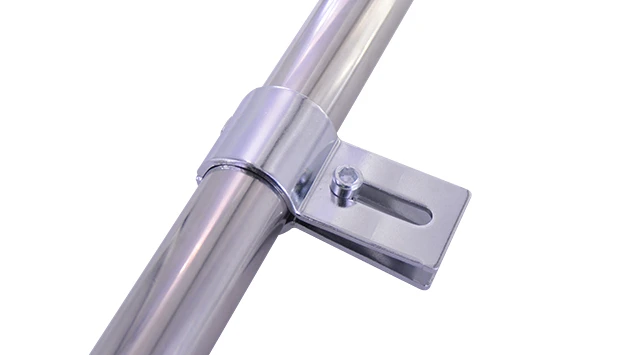
Lean pipe clamp is used for turnover trolley, workbench, flowrack adjust the frame or fix some accessory.
Walk into any bustling factory, and you'll quickly realize that efficiency isn't just about big machines or high-tech robots. It's in the details—the way workbenches are arranged, how materials flow from one station to the next, and yes, even the small components that hold everything together. In lean manufacturing, where every second and every square foot counts, these "small" components can make or break a production line. One such unsung hero? The Lean Pipe Clamp B Chrome . It might not grab headlines, but for plant managers, engineers, and operators dealing with specialized workflows, this humble clamp is often the key to unlocking smoother operations, reducing downtime, and scaling productivity.
But here's the thing: industrial needs aren't one-size-fits-all. A food processing plant handling corrosive liquids has different requirements than a medical device manufacturer working in sterile cleanrooms. A car assembly line needs sturdier setups than a electronics workshop assembling delicate circuit boards. That's where customization comes in. Standard clamps might work for basic tasks, but when precision, durability, or specific environmental resistance is non-negotiable, custom Lean Pipe Clamp B Chrome options become indispensable. In this article, we'll dive into why these clamps matter, how customization solves real-world problems, and why they're more than just "parts"—they're the backbone of tailored industrial efficiency.
What Even Is a Lean Pipe Clamp B Chrome, Anyway?
Let's start with the basics. Lean pipe systems—also known as "flexible pipe systems"—are the modular workhorses of modern manufacturing. Made from materials like steel, aluminum, or stainless steel, these pipes (often paired with lean pipe joint and other accessories) are used to build everything from workbenches and flow racks to material trolleys and conveyor supports. They're popular because they're lightweight, easy to assemble, and infinitely reconfigurable—perfect for adapting to changing production needs.
Enter the Lean Pipe Clamp B Chrome : a specialized connector designed to secure lean pipes together or attach them to other structures (like walls, floors, or workbench frames). The "B" typically refers to a specific design variant—think of it as a unique shape or size optimized for certain load capacities or pipe diameters. The "chrome" part? That's a protective coating applied to the clamp's surface, usually over steel. Chrome plating isn't just for aesthetics (though it does give the clamp a sleek, professional look); it adds a hard, corrosion-resistant layer that stands up to moisture, oils, and chemicals common in industrial settings. This makes the clamp durable enough to handle daily wear and tear, even in environments where standard steel might rust or degrade over time.
But what really sets this clamp apart is its versatility. Unlike rigid brackets or welded joints, Lean Pipe Clamp B Chrome is designed for quick adjustments. Need to raise a workbench by 2 inches to improve ergonomics? Loosen the clamp, reposition the pipe, and tighten it back down. Switching from assembling small parts to large components and need to reconfigure your flow rack? The clamp lets you disassemble and rebuild in minutes, no welding or special tools required. It's this flexibility that makes lean pipe systems so valuable—and the clamp is the linchpin holding that flexibility together.
Why "One-Size-Fits-All" Fails in Specialized Industries
Imagine a scenario: Maria, a plant manager at a mid-sized aerospace parts manufacturer, is struggling. Her team assembles precision components for jet engines, and their current workbench setup uses standard lean pipe clamps. But here's the problem: the clamps are too loose for the thin-walled aluminum pipes they're using, causing the workbench to wobble slightly during delicate operations. Worse, the clamps aren't corrosion-resistant enough—despite regular cleaning, they're starting to rust from the coolant mist in the air, leaving small particles that could contaminate sensitive parts. Maria's tried tightening the clamps more, but that just damages the pipes. She's even considered switching to heavier steel pipes, but that would make the workbench too for her team to reposition when needed. Sound familiar?
This is where standard clamps fall short. Most off-the-shelf options are designed for general use—say, 28mm diameter steel pipes in dry, moderate-temperature environments. But specialized industries demand more. Let's break down the common pain points:
- Non-standard pipe sizes: Industries like electronics or medical device manufacturing often use smaller-diameter pipes (15mm or 20mm) for lightweight setups. Standard clamps, built for 28mm or 30mm pipes, either slip off or require shims that compromise stability.
- Extreme environments: Food processing plants use high-pressure washdowns with caustic cleaners; chemical facilities have fume exposure; outdoor warehouses face rain, snow, or humidity. Standard steel clamps rust, while plastic clamps degrade. Chrome-plated clamps help, but custom thicknesses or additional coatings (like powder coating over chrome) might be needed for extra protection.
- Weight and load requirements: Automotive or heavy machinery plants need clamps that can support hundreds of pounds without bending. Conversely, labs or cleanrooms might need lightweight clamps that don't add unnecessary bulk to mobile trolleys.
- Ergonomic or space constraints: Tight work cells (common in electronics assembly) need clamps with low profiles to avoid snagging on tools or materials. Or, in ergonomic setups, clamps might need to lock at specific angles to keep pipes from rotating during use.
In short, when your operation is anything but "standard," your clamps shouldn't be either. Custom Lean Pipe Clamp B Chrome options address these gaps by adapting to the pipe size, environment, and load you actually need—not what the manufacturer assumes you need.
The Customization Toolkit: How Suppliers Tailor Clamp B Chrome to Your Needs
So, what exactly can be customized about a Lean Pipe Clamp B Chrome ? More than you might think. Suppliers that specialize in lean pipe systems (like many lean pipe and accessories providers) offer a range of tweaks to make the clamp fit your workflow like a glove. Let's walk through the most common customization options:
1. Pipe Diameter Adjustments
This is the most requested customization. If your setup uses 20mm aluminum pipes instead of the standard 28mm steel, a custom clamp can be machined with a smaller inner diameter to grip tightly without slipping. Some suppliers even offer "multi-fit" clamps that work with a range of sizes (e.g., 20mm-25mm) using adjustable jaws, but for precision, a fixed custom diameter is often better.
2. Chrome Coating Thickness
Not all chrome plating is created equal. Standard clamps might have a 0.0005-inch chrome layer—fine for dry environments. But for high-moisture or corrosive settings, suppliers can increase the thickness to 0.001 inches or more, adding durability. Some even offer duplex coatings: chrome over nickel, which enhances corrosion resistance further. For example, a seafood processing plant using daily saltwater washdowns would benefit from this extra layer to prevent pitting or rust.
3. Material Upgrades
While Lean Pipe Clamp B Chrome is traditionally steel-based, some applications call for alternative base materials. For instance, if weight is critical (like in aerospace tooling), suppliers can use aluminum as the base metal, then chrome-plate it. Aluminum is 30% lighter than steel but still strong enough for moderate loads. For ultra-high-strength needs (think: supporting engine parts during assembly), a chrome-plated alloy steel (with added manganese or chromium for tensile strength) might be used instead of standard carbon steel.
4. Locking Mechanisms
Standard clamps often use a simple bolt-and-nut system: tighten the bolt to secure the pipe, loosen to adjust. But in high-vibration environments (like near industrial fans or heavy machinery), bolts can loosen over time, risking instability. Custom options might include locking nuts (with nylon inserts to prevent slipping), cam levers for tool-free adjustments, or even quick-release pins for setups that need frequent reconfiguration (like event-based manufacturing lines that switch products weekly).
5. Shape and Profile Modifications
The "B" in Lean Pipe Clamp B Chrome refers to its basic shape, but that shape can be tweaked. Maybe you need a clamp with a curved jaw to fit around a rounded pipe, or a flat base to bolt directly to a concrete floor. Some suppliers even offer custom cutouts or notches to route cables (for power tools or sensors) through the clamp, keeping work areas neat and reducing trip hazards. For example, a robotics workshop might request clamps with integrated cable channels to keep power cords from dangling off workbenches.
Beyond the Clamp: Integrating with Lean Pipe Joint and Accessories
A clamp is rarely used in isolation. To build a fully functional lean pipe system, it needs to play nice with other components—like lean pipe joint , elbows, tees, and brackets. Custom clamps aren't just about the clamp itself; they're about ensuring seamless integration with your existing lean pipe and accessories . This is where supplier expertise becomes critical.
Let's say you're building a custom workbench for a medical device assembly line. The workbench needs to hold a microscope, a small parts bin, and a static-dissipative mat—all while being height-adjustable for operators of different heights. You've chosen aluminum lean pipes for lightweight mobility, so you need clamps that fit 20mm aluminum pipes (not standard 28mm steel). But you also need those clamps to connect to a lean pipe joint that supports a side shelf for the parts bin. If the clamp's bolt hole spacing doesn't align with the joint's mounting points, the whole setup falls apart.
Custom clamp suppliers solve this by designing with your entire system in mind. They'll ask: What lean pipe joint models are you using? What's the spacing between bolt holes? Do you need the clamp to swivel, or stay fixed? By aligning the clamp's dimensions with your existing accessories, they ensure a "plug-and-play" experience—no drilling new holes, no jury-rigging with washers, no wasted time.
Another example: flow racks, which use roller tracks to let materials glide from one station to the next. The racks are built with lean pipes, and the roller tracks are secured with clamps. If the clamps are too tall, they'll raise the track above the pipe, causing materials to jam. If they're too short, the track might sag under weight. A custom clamp can be designed with a specific height to keep the track perfectly aligned, ensuring smooth material flow. It's these small, precise adjustments that turn a "good enough" rack into a "never jams, always efficient" rack.
Real-World Wins: How Custom Clamps Transform Workflows
Enough theory—let's look at how custom Lean Pipe Clamp B Chrome has solved actual problems for businesses. These aren't hypothetical scenarios; they're stories from manufacturers who turned to customization and never looked back.
Case Study 1: Automotive Supplier Cuts Downtime by 30%
A tier-1 automotive supplier was struggling with their transmission assembly line. The line used standard steel lean pipes and clamps to support overhead tool hangers. But the clamps, designed for 28mm pipes, kept slipping on the supplier's 25mm pipes (chosen for lighter weight). Every few hours, a hanger would sag, forcing operators to stop production and readjust. The fix? Custom
Lean Pipe Clamp B Chrome
with a 25mm inner diameter and a locking nut to prevent slipping. Post-installation, downtime from hanger adjustments dropped by 30%, and operators reported feeling more confident in the setup's stability.
Case Study 2: Food Processor Eliminates Rust Contamination
A bakery that produces frozen pizza crusts was using standard steel clamps on their dough-mixing station lean pipe racks. The daily washdowns with sanitizing solution were causing the clamps to rust, and tiny rust flakes were occasionally falling into dough batches—leading to quality control failures. Switching to custom chrome-plated clamps (with a thicker 0.0015-inch chrome layer) solved the issue. The clamps withstood the washdowns, rust disappeared, and the bakery saw zero contamination incidents in the following six months.
Case Study 3: Electronics Plant Creates Ergonomic Workbenches
An electronics manufacturer was facing high turnover due to operator complaints about uncomfortable workbenches. The benches were built with fixed-height lean pipes, using standard clamps that didn't allow for adjustment. Workers of shorter stature had to stretch to reach tools, while taller workers hunched over—both leading to fatigue and errors. The solution? Custom
Lean Pipe Clamp B Chrome
with a cam lever locking mechanism, allowing operators to adjust bench height in seconds (from 30 inches to 40 inches) without tools. Within three months, error rates dropped by 15%, and employee satisfaction scores improved significantly.
Standard vs. Custom: A Quick Comparison
| Feature | Standard Lean Pipe Clamp B Chrome | Custom Lean Pipe Clamp B Chrome |
|---|---|---|
| Pipe Diameter Compatibility | Limited (usually 28mm or 30mm steel) | Tailored to your pipe size (15mm-50mm, steel/aluminum) |
| Chrome Coating | Standard thickness (0.0005 inches) | Adjustable thickness (up to 0.002 inches) or duplex coatings |
| Locking Mechanism | Bolt-and-nut (may loosen in vibration) | Options: Locking nuts, cam levers, quick-release pins |
| Material | Carbon steel | Alloy steel, aluminum, or stainless steel (for extreme environments) |
| Integration with Accessories | Limited to standard lean pipe joint models | Designed to fit your specific lean pipe joint and accessories |
| Lead Time | 1-3 days (in stock) | 2-4 weeks (depending on complexity) |
| Cost | Lower upfront cost | Higher upfront cost, but lower long-term costs (reduced downtime, better efficiency) |
How to Choose a Custom Clamp Supplier
Not all suppliers are created equal when it comes to customization. To ensure you get a clamp that solves your problem (and doesn't create new ones), look for these qualities:
- Engineering expertise: They should ask detailed questions about your application—pipe material, load capacity, environment, existing accessories. Avoid suppliers who push a "one-custom-fits-all" solution.
- Prototyping capabilities: A good supplier will offer a prototype before full production. This lets you test the clamp in your actual workflow to catch issues (like misaligned holes or weak locking mechanisms) early.
- Material knowledge: They should explain the pros and cons of different base materials (steel vs. aluminum) and coatings (chrome vs. powder coating) for your environment. If they can't discuss corrosion resistance in saltwater vs. chemical fumes, keep looking.
- Quality control: Ask about testing—do they perform salt spray tests for corrosion resistance? Load tests to ensure the clamp holds your specified weight? Certifications (like ISO 9001) are a good sign.
- Flexibility: Even after delivery, needs change. Can they modify the design if you switch to larger pipes next year? A supplier invested in your long-term success will say yes.
Wrapping Up: Clamps as Catalysts for Efficiency
At the end of the day, Lean Pipe Clamp B Chrome might not be the flashiest part of your production line. But as we've seen, it's the details that turn a chaotic workspace into a well-oiled machine. Custom options transform these clamps from generic parts into problem-solvers—addressing unique pipe sizes, harsh environments, and specialized load needs that standard clamps can't handle.
Whether you're building a workbench for delicate electronics, a flow rack for heavy automotive parts, or a mobile trolley for food processing, the right clamp ensures your system is stable, adjustable, and built to last. And when your system works better, everything else follows: fewer delays, happier operators, lower costs, and a competitive edge in a fast-paced industry.
So, the next time you're evaluating your lean pipe setup, don't overlook the clamp. It might just be the small change that makes a big difference. After all, in manufacturing, efficiency isn't about perfection—it's about precision. And precision starts with the parts that hold everything together.