- Company Articles
- Products and Technology
- Solution
- Custom Lean Solutions: Lean Pipe Fixed Clamps for Unique Production Needs

Custom Lean Solutions: Lean Pipe Fixed Clamps for Unique Production Needs
Related Product
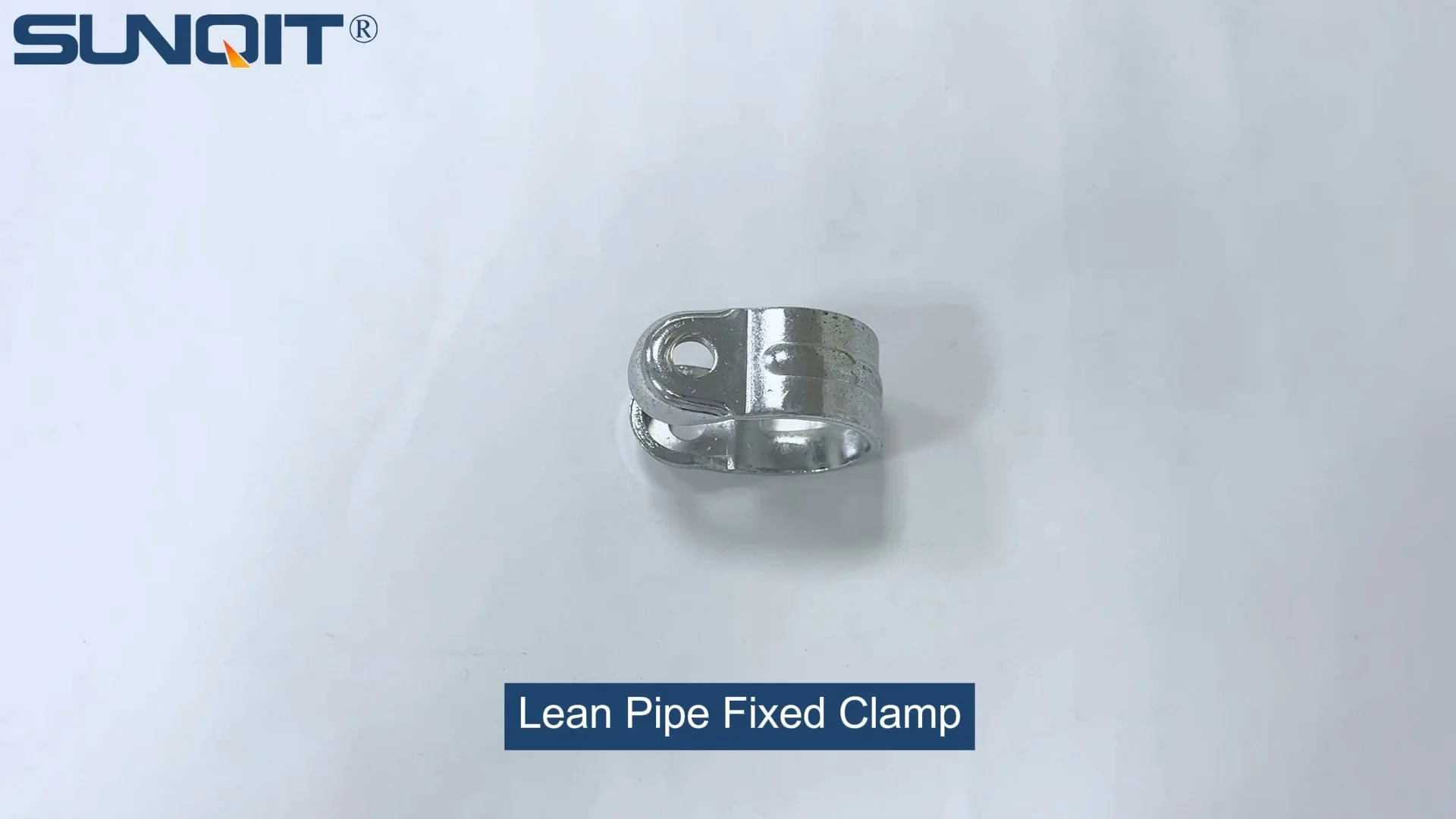
Lean Pipe Fixed Clamp
Lean pipe fixed clamp is used for pipe connector fixing the correct position during workbench flow rack hand trolley assemble work.
Walk into any thriving production facility, and you'll notice something that sets it apart from the rest: a sense of flow. Workstations hum with purpose, materials glide from one stage to the next without bottlenecks, and teams adapt quickly when orders surge or product specs change. Behind this seamless rhythm often lies a quiet hero: lean pipe fixed clamps . These unassuming components are the backbone of flexible, custom lean systems—tools that turn rigid production lines into adaptable ecosystems built for the unique needs of your business.
In today's fast-paced manufacturing world, "one-size-fits-all" setups are relics of the past. A electronics plant assembling delicate circuit boards has different needs than a automotive parts facility moving heavy components. Even within the same factory, a morning's batch production might demand a different layout than the afternoon's custom orders. This is where custom lean solutions shine—and at the heart of those solutions are the humble yet powerful lean pipe fixed clamps, working in tandem with lean pipe workbenches , flow racks , and mobile components like caster wheels .
The Problem with Rigid: Why Production Needs Flexibility
Think about the last time your production line hit a snag. Maybe a new product required a taller workstation, but the existing bench was bolted to the floor. Or perhaps a sudden rush order meant materials needed to move faster, but the old storage rack forced workers to bend and reach awkwardly. These aren't just minor inconveniences—they're productivity killers. Rigid setups lead to wasted time, increased ergonomic strain, and missed deadlines. Worse, they stifle innovation: when reconfiguring takes days (or requires calling in contractors), teams stop suggesting improvements, and your facility falls behind competitors who can pivot in hours.
This is where lean manufacturing principles meet practical engineering. Lean isn't just about cutting waste—it's about creating systems that grow with your needs. And at the core of that adaptability are modular components that can be reimagined, rearranged, and repurposed. Enter lean pipe systems: lightweight, durable, and infinitely configurable. But even the best pipes and profiles are useless without the right connectors. That's where lean pipe fixed clamps come in—they're the glue that holds your custom solution together, quite literally.
What Are Lean Pipe Fixed Clamps, Anyway?
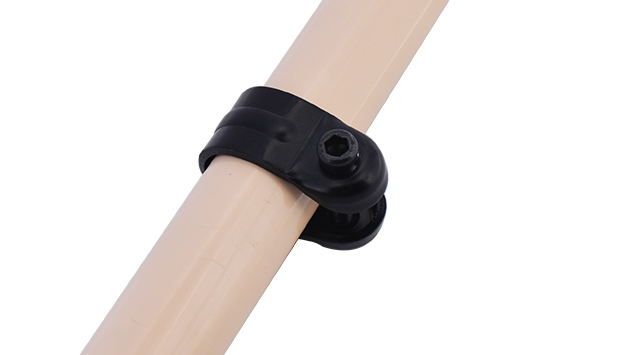
At first glance, a lean pipe fixed clamp might look like a simple metal bracket. But don't let its simplicity fool you. These clamps are precision-engineered to secure lean pipes (often made of steel, aluminum, or plastic-coated materials) to joints, profiles, or work surfaces, creating stable structures that can withstand the daily grind of production. Unlike swivel or adjustable clamps, fixed clamps lock pipes into place with unwavering stability—critical for setups where movement could compromise safety or accuracy, like assembly workbenches or heavy-duty material racks.
But "fixed" doesn't mean "permanent." The magic lies in their design: most fixed clamps use bolts, levers, or friction-based mechanisms that allow for tool-free (or minimal-tool) disassembly. Need to shorten a workbench? Loosen the clamps, adjust the pipes, and re-tighten. Want to add a shelf to a flow rack? Slide a new pipe into the clamp, secure it, and you're done. This balance of rigidity and reusability is what makes them indispensable for custom lean solutions.
Materials matter, too. High-quality fixed clamps are often made from zinc-plated steel for corrosion resistance, or aluminum for lightweight setups. For cleanrooms or food-grade environments, stainless steel clamps ensure compliance with hygiene standards. The choice depends on your facility's conditions—another reason why customization starts with the right components.
Building Your Custom Ecosystem: How Fixed Clamps Work with Key Components
Lean pipe fixed clamps rarely work alone. They're part of a larger toolkit that includes workbenches, flow racks, casters, and profiles—each piece playing a role in creating a cohesive, efficient system. Let's break down how fixed clamps integrate with these essentials to solve real production challenges.
1. Lean Pipe Workbenches: The Foundation of Productivity
A workbench isn't just a table—it's where your team spends most of their day, assembling, inspecting, or packaging products. An ill-designed workbench leads to fatigue, errors, and slowdowns. With lean pipe fixed clamps, you can build a workbench tailored to your tasks. Need a surface height of 36 inches for assembly line workers? Use clamps to secure aluminum profiles at that exact height. Want a lower shelf for tools? Add a second tier with pipes and clamps, no welding required. Even accessories like LED task lights or tool hooks can be attached via clamps, keeping everything within arm's reach.
Consider a scenario where a medical device manufacturer needs workbenches that accommodate both sitting and standing workers. With fixed clamps, they can build dual-height stations: a lower section for seated tasks (like component sorting) and an upper section for standing assembly. When team members rotate shifts, the clamps ensure the structure stays stable, even with constant use. And if a new product requires a wider surface? Simply add longer pipes and reposition the clamps—no need to buy a whole new bench.
2. Flow Racks: Keeping Materials Moving
In lean manufacturing, "flow" is everything. Materials should move to the point of use just in time, without workers wasting steps retrieving them. Flow racks—tilted shelves with rollers—make this possible by letting gravity feed components to the front. But to work effectively, flow racks need to be angled correctly, sized for your containers, and sturdy enough to hold daily inventory. Fixed clamps are the secret to getting this right.
Imagine a bakery that uses flow racks to store ingredient bins. The bins come in two sizes: 5-gallon buckets for flour and 2-gallon containers for sugar. With fixed clamps, the bakery can adjust the rack's shelf spacing to fit both—wider gaps for the buckets, narrower for the containers. The clamps secure the roller tracks to the vertical pipes, ensuring the angle stays consistent (too steep, and bins slide too fast; too shallow, and workers have to pull them). When the bakery introduces a new 3-gallon bin for nuts, they just loosen the clamps, adjust the tracks, and re-lock—no downtime, no new rack needed.
3. Caster Wheels: Mobility When You Need It
Not every structure should stay put. Mobile trolleys for material transport, or portable workstations for line-side support, need to move smoothly—then lock into place when in use. Here, fixed clamps pair with caster wheels to create stable, movable units. The clamps attach the caster mounts to the trolley's base pipes, ensuring the wheels don't wobble under load. When the trolley reaches its destination, brake-equipped casters lock, and the fixed clamps keep the entire structure rigid during use.
A furniture manufacturer, for example, uses mobile trolleys to carry upholstery materials to assembly stations. Each trolley is built with fixed clamps securing pipes to casters, allowing it to roll over uneven factory floors without tipping. When workers need to load fabric rolls, they lock the casters, and the clamps ensure the trolley stays steady—even when lifting heavy materials. After use, the trolley folds (thanks to hinged joints and removable clamp sections) for compact storage, saving floor space.
| Production Component | Role of Lean Pipe Fixed Clamps | Key Benefit | Common Material Pairing |
|---|---|---|---|
| Lean Pipe Workbench | Secures vertical/horizontal pipes to create stable, height-adjustable surfaces | Ergonomic customization for worker comfort and task efficiency | Aluminum profile (lightweight) or steel pipe (heavy-duty) |
| Flow Rack | Locks roller tracks to shelf frames, maintaining optimal tilt angle for material flow | Consistent, gravity-driven material feeding to reduce retrieval time | Zinc-plated steel pipe (corrosion-resistant) with plastic roller tracks |
| Mobile Trolley | Attaches caster mounts to base pipes, ensuring wheel stability under load | Safe, smooth mobility with secure locking during use | Stainless steel pipe (hygiene-sensitive environments) with brake casters |
| Tool Storage Rack | Fastens horizontal bars for hanging tools or shelves for bins | Customizable storage density to keep tools organized and accessible | Plastic-coated lean pipe (scratch-resistant) with aluminum brackets |

From Blueprint to Floor: A Case Study in Customization
Let's put this all together with a real-world example. Consider a small electronics manufacturer, "TechFlow," that assembles smart home devices. Their production line was struggling with two issues: (1) Workbenches were too low for taller workers, causing back strain, and (2) Material storage racks were too deep, making it hard to reach components at the back.
TechFlow's solution? A custom lean system built with fixed clamps, aluminum profiles, and flow racks. Here's how they did it:
Step 1: Redesign Workbenches – Using aluminum profiles and lean pipe fixed clamps, they adjusted bench heights from 32 inches to 38 inches for standing workstations. They added lower shelves (secured with clamps) for tool storage and attached LED lights via clamp-on brackets to brighten work areas. Workers reported less fatigue within a week.
Step 2: Revamp Material Racks – TechFlow replaced deep steel racks with flow racks built from lean pipes and fixed clamps. The racks were angled at 15 degrees (locked in place with clamps) to let component bins slide forward. They added dividers (secured with clamps) to separate different part types, reducing search time by 40%.
Step 3: Add Mobility – For off-the-line tasks like quality inspection, they built mobile carts using caster wheels and fixed clamps. The carts could be rolled to workstations, then locked in place—eliminating the need to carry heavy devices across the floor.
The result? Productivity increased by 25% in the first month, and employee satisfaction scores rose significantly. All because they leveraged the flexibility of lean pipe fixed clamps to build a system that fit their unique workflow.

Material Matters: Why Aluminum Profiles Elevate Your System
While lean pipe fixed clamps are critical, the materials they connect matter just as much. Aluminum profiles have become a favorite in modern facilities for good reason: they're lightweight, strong, and resistant to corrosion—perfect for environments where durability and mobility are key. When paired with fixed clamps, aluminum profiles create structures that are both rigid and easy to reconfigure.
Aluminum's lightweight nature makes it ideal for mobile setups. A workbench built with aluminum profiles and fixed clamps is easy to move (with casters) but stays stable during use. In contrast, steel pipes add weight, which can be an advantage for heavy loads but a drawback for frequent repositioning. For most mid-weight applications—like electronics assembly or packaging—aluminum strikes the perfect balance.
Another benefit? Aluminum profiles often feature T-slots, which let you attach accessories (like shelves, hooks, or bins) without drilling. Fixed clamps can secure pipes directly into these slots, creating a seamless connection. This modularity means you can add or remove components as needs change, without damaging the profiles themselves.
Beyond the Clamp: Cultivating a Lean Mindset
Custom lean solutions aren't just about components—they're about fostering a culture of continuous improvement. When your team sees that the production line can adapt to their needs (thanks to tools like fixed clamps), they're more likely to suggest tweaks that boost efficiency. Maybe a worker notices a better way to arrange a flow rack, or a supervisor realizes a workstation could be reconfigured for a new product. With a modular system, those ideas can be tested quickly, without major investments.
Training is part of this, too. Teaching your team how to use lean pipe fixed clamps (how to tighten them properly, adjust pipes, or swap components) empowers them to take ownership of their workspace. A 10-minute tutorial on clamp adjustment can turn a frustrating bottleneck into a 5-minute fix—no maintenance team needed.
Choosing the Right Supplier: Your Partner in Customization
Not all lean pipe fixed clamps (or suppliers) are created equal. To build a system that lasts, look for a supplier who offers:
Quality Components – Clamps should be made from durable materials (zinc-plated steel, aluminum, stainless steel) with smooth mechanisms that don't jam. Avoid cheap plastic clamps—they'll crack under stress, costing you more in replacements.
Customization Support – A good supplier will help you design your system, not just sell you parts. They'll ask about your workflow, facility layout, and pain points, then recommend the right clamps, pipes, and accessories for the job.
Fast Delivery – When you need to reconfigure a workstation quickly, waiting weeks for parts isn't an option. Look for suppliers with local warehouses or fast shipping to minimize downtime.
Conclusion: Your Production Line, Reimagined
In the end, custom lean solutions are about more than efficiency—they're about giving your team the tools to succeed. Lean pipe fixed clamps may seem small, but they're the difference between a rigid, frustrating production line and one that adapts, grows, and thrives. Whether you're building workbenches, flow racks, or mobile carts, these clamps (paired with the right components) let you create a system that fits your unique needs—today, tomorrow, and as your business evolves.
So, take a look at your facility. Where are the bottlenecks? What could be more efficient? Chances are, the solution starts with a simple question: "How can we build this better?" With lean pipe fixed clamps, the answer is always "custom-fit for you."