- Company Articles
- Products and Technology
- Product knowledge
- Custom Length Options for 40 Aluminum Roller Track Grey: Tailored to Your Facility

Custom Length Options for 40 Aluminum Roller Track Grey: Tailored to Your Facility
Related Product
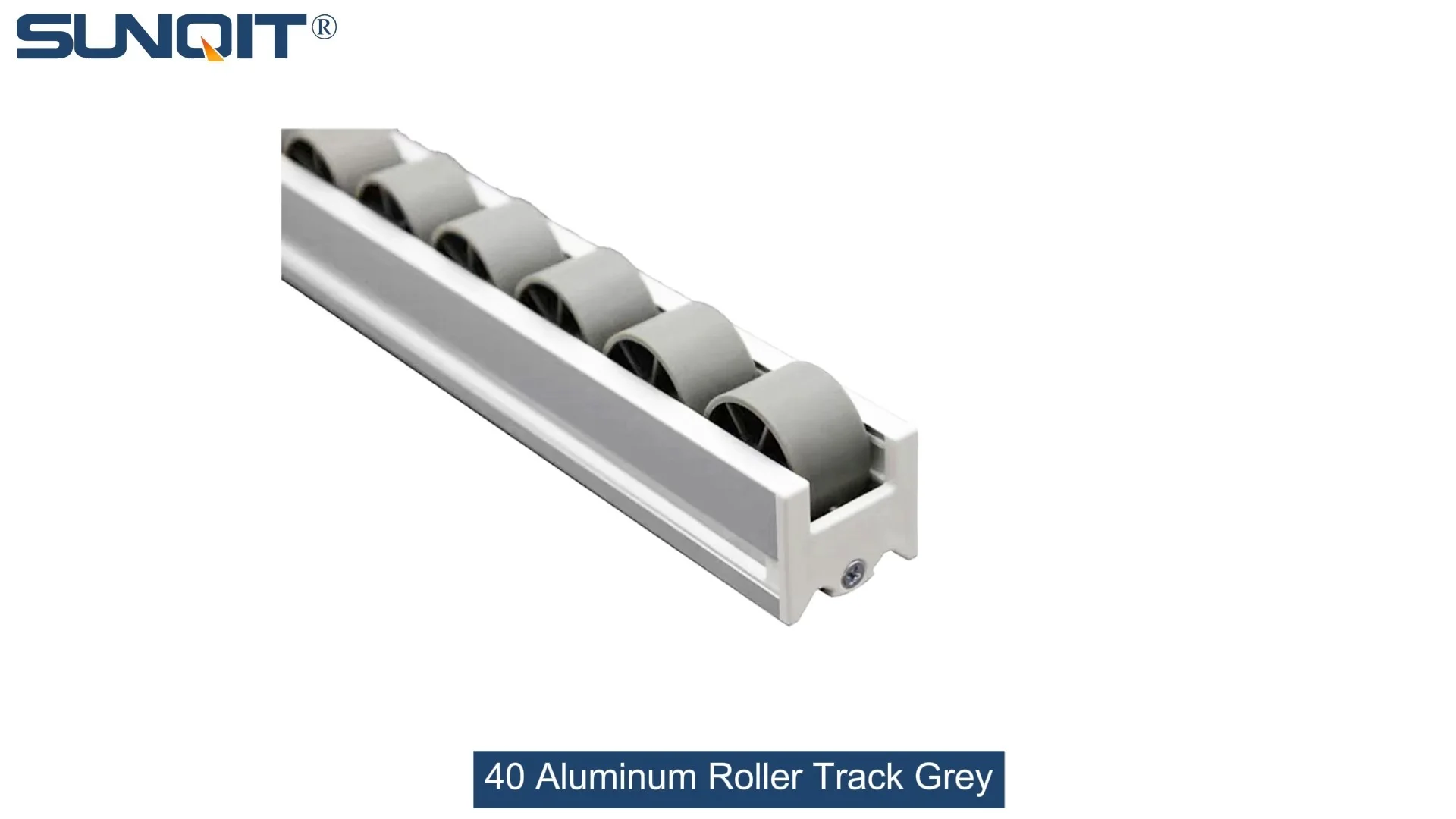
40 Aluminum Roller Track Grey
Durable and smooth-running modular roller rails. The system is fully assembled. The roller rail profile contains plastic rollers mounted on steel axles. Aluminum frame with plastic wheel make it anti corrosion,and material convey more smooth.
Walk into any manufacturing plant, warehouse, or assembly facility, and you'll likely spot a common challenge: material handling systems that feel like they're forcing the space to adapt—instead of the other way around. Racks that leave awkward gaps, conveyor belts that kink in tight corners, or roller tracks that either overhang or come up short. It's the frustration of "one-size-fits-all" in a world where no two facilities are the same. That's where the 40 Aluminum Roller Track Grey comes in—and more importantly, its custom length options. This isn't just about a track; it's about building a material handling system that bends to your space, your workflow, and your unique needs. Let's dive into why custom lengths matter, how this aluminum roller track stands out, and how it can transform the way you move materials.
What is 40 Aluminum Roller Track Grey, Anyway?
First, let's get familiar with the star of the show: the 40 Aluminum Roller Track Grey. At its core, it's a lightweight yet durable track designed to move materials—from small components to heavier boxes—smoothly across workstations, flow racks, or assembly lines. The "40" refers to its standard width (40mm), making it versatile enough for most medium-duty applications without being overly bulky. The "aluminum" speaks to its construction: a high-grade aluminum extrusion that's resistant to rust, lightweight for easy installation, and strong enough to handle daily wear and tear. And the "grey" finish? It's not just about looks (though it does add a clean, professional touch to any facility); the matte grey coating also hides minor scratches and scuffs, keeping your workspace looking polished even after years of use.
But what really sets this track apart is its functionality. The rollers—typically made of high-quality plastic or steel—are spaced evenly along the track, allowing materials to glide with minimal friction. Whether you're pushing a bin of electronics components across an ESD workbench or sliding a carton down to a packing station, the motion is smooth, consistent, and quiet. Unlike heavier steel tracks, the aluminum design means you won't need a team of workers to install it; a couple of people with basic tools can mount it to walls, racks, or workbenches in hours, not days.
Why Custom Lengths? Because "Close Enough" Costs You More Than You Think
Imagine (oops, scratch that—let's consider ) a scenario: Your facility has a 12-foot gap between two workbenches where you need a roller track to move parts from pre-assembly to final inspection. The standard track lengths available are 10 feet and 14 feet. If you go with 10 feet, you're left with a 2-foot gap—enough to catch a bin, causing jams or even damaging parts. If you opt for 14 feet, you'll have to cut 2 feet off, which weakens the track's structural integrity (aluminum isn't as forgiving as steel when cut improperly) and leaves rough edges that could snag materials. Either way, you're compromising. That's the hidden cost of "close enough".
Custom lengths eliminate this compromise. With the 40 Aluminum Roller Track Grey, you can order exactly 12 feet, 3 inches, or 8 feet, 7 inches—whatever your space demands. No gaps, no overhangs, no cutting. It's precision engineering for your unique layout. But the benefits go beyond just fitting the space. Let's break them down:
- Workflow Efficiency: A track that fits perfectly means materials flow without interruptions. No more stopping to nudge a stuck bin or readjust a misaligned carton. In a lean system, every second counts—and a seamless flow reduces downtime, speeds up production, and keeps workers focused on tasks that add value.
- Space Optimization: Warehouses and manufacturing floors are expensive real estate. Wasted space from ill-fitting tracks adds up over time. Custom lengths let you utilize every inch, whether it's a narrow corridor between machines or a tight corner in a packing zone. It's like tailoring a suit—suddenly, the space feels intentional, not cluttered.
- Long-Term Durability: Cutting a standard track weakens its structure. The 40 Aluminum Roller Track Grey is engineered to distribute weight evenly along its length; cutting it disrupts that balance, leading to premature bending or roller misalignment. Custom lengths arrive factory-cut and finished, ensuring the track retains its strength and performance for years.

Aluminum vs. Steel: Why the Material Matters for Customization
You might be wondering: Why aluminum? Steel tracks are sturdy, right? They are—but when it comes to custom lengths, aluminum has a clear edge. Steel is heavy, which makes cutting and installing custom lengths a labor-intensive process (and heavy tracks are harder to adjust if you later reconfigure your space). Aluminum, on the other hand, is lightweight, making it easy to transport, maneuver, and mount—even for teams without specialized equipment. Its malleability also means it can be precision-cut to exact lengths without cracking or warping, ensuring a clean, straight edge every time.
Another perk? Corrosion resistance. If your facility deals with moisture (like a food processing plant) or harsh chemicals (such as a automotive workshop), steel tracks can rust over time, compromising both appearance and function. Aluminum, especially with the grey protective coating, stands up to these elements, reducing maintenance costs and extending the track's lifespan. For facilities aiming to stay lean and low-maintenance, this is a game-changer.

The Customization Process: From Blueprint to Installation
So, you've decided custom lengths are the way to go—now what? The process is surprisingly straightforward, and it starts with a conversation. Reputable suppliers of 40 Aluminum Roller Track Grey will work with you to understand your space, your workflow, and your goals. Here's a typical breakdown:
- Consultation: You share your facility layout (blueprints, photos, or even a rough sketch work) and explain where the track will go. Maybe it's between two flow racks, along a workbench, or as part of a conveyor system. The supplier will ask about the weight of materials you're moving (to confirm the track's load capacity) and any special considerations (like ESD requirements or low-clearance areas).
- Design & Quotation: Using your input, the supplier will draft a custom length plan. This might include CAD drawings to visualize how the track fits, along with recommendations for accessories (more on those later). They'll then provide a quote, including the cost of the track, any custom cutting fees (often minimal, since aluminum is easy to machine), and delivery timelines.
- Manufacturing: Once approved, the track is cut to your exact length at the factory. This isn't a DIY job with a hacksaw; suppliers use precision cutting tools to ensure the edges are smooth and the track remains straight. The grey finish is then reapplied to cut ends (if needed) to maintain consistency.
- Delivery & Installation: The custom track arrives ready to install. Because it's pre-cut to fit, installation is faster—no on-site cutting, no measuring twice. Most teams can mount it using standard tools and accessories like the roller track placon mount for aluminum profile flat, which secures the track firmly to aluminum profiles without drilling into the track itself.
The best part? Lead times for custom lengths are often shorter than you'd expect. Since aluminum is easy to machine, most suppliers can turn around a custom order in 1–2 weeks, depending on quantity. Compare that to waiting for a specialty steel track, and it's clear why aluminum is the go-to for facilities that need solutions now .

Beyond the Track: Accessories That Make Custom Systems Shine
A custom-length track is powerful on its own, but it's the accessories that turn it into a fully integrated system. Let's highlight a few that pair perfectly with the 40 Aluminum Roller Track Grey:
- Roller Track Placon Mount for Aluminum Profile Flat: This but essential accessory is what bridges the track to your existing aluminum profiles (like those used in workbenches or flow racks). The "flat" design means it sits flush against the profile, keeping the track stable and level. No more wobbly tracks or loose connections—just a secure, rattle-free setup.
- End Stops & Guides: These prevent materials from sliding off the end of the track or veering off course. For example, if you're using the track to feed parts into a workbench, a rubber end stop will gently catch bins, preventing damage to both the parts and the track.
- Connectors: Need to join two custom-length tracks at an angle? Swivel connectors let you create 90° or 45° turns without kinking. This is a lifesaver for facilities with tight corners or complex layouts.
- Casters (for Mobile Setups): Pair the track with a turnover trolley, and you've got a mobile material station that can be wheeled to wherever it's needed. The lightweight aluminum track ensures the trolley remains easy to maneuver, even when loaded.
These accessories aren't just add-ons; they're the details that make your custom track feel like a tailored solution. For example, a electronics manufacturer in California recently used the 40 Aluminum Roller Track Grey with roller track placon mount for aluminum profile flat to mount tracks directly to their ESD workbenches. By adding end stops and angled connectors, they created a closed-loop system where components flow from receiving to assembly to testing—all without manual lifting. The result? A 30% reduction in time spent moving materials, and fewer dropped or damaged parts.
Standard vs. Custom: A Side-by-Side Look
Still on the fence about custom lengths? Let's compare the pros and cons of standard vs. custom 40 Aluminum Roller Track Grey in a real-world scenario. Say you need a track for a 15-foot gap between two flow racks:
| Factor | Standard Length (10ft + 5ft) | Custom Length (15ft) |
|---|---|---|
| Fit to Space | Requires joining two tracks; creates a seam that may catch materials. | Perfect fit; no seams or gaps. |
| Installation Time | 2–3 hours (measuring, cutting, joining, securing seams). | 1 hour (mount directly to profiles with placon mounts). |
| Long-Term Durability | Seam weakens over time; risk of roller misalignment at the joint. | Single piece; even weight distribution; rollers stay aligned. |
| Cost (Material + Labor) | $120 (two tracks) + $80 (installation labor) = $200 total. | $150 (custom track) + $40 (installation labor) = $190 total. |
| Workflow Impact | Potential jams at the seam; workers may slow down to guide materials over the joint. | Smooth, uninterrupted flow; materials glide from start to finish. |
The numbers speak for themselves: custom lengths save time, reduce labor costs, and eliminate workflow disruptions. What starts as a small upcharge for customization often pays for itself within months—especially when you factor in reduced downtime and fewer damaged materials.
Real-World Wins: How Custom Tracks Transform Facilities
Let's look at a few examples of how businesses have leveraged custom 40 Aluminum Roller Track Grey to solve unique challenges:
Case 1: A Small Electronics Assembly Shop This shop had a problem: their assembly line was squeezed into a 25-foot-wide space, with workbenches on either side. Standard 10-foot tracks left 5 feet of unused space in the middle, which workers were using to stack boxes—cluttering the area and slowing down movement. They switched to 25-foot custom tracks, mounted directly to the workbench frames using roller track placon mount for aluminum profile flat. Suddenly, the middle space was clear, and components flowed smoothly from one bench to the next. Workers reported spending 20% less time walking back and forth, and the shop was able to add a third workstation in the freed-up space.
Case 2: A Beverage Distribution Warehouse This warehouse used flow racks to store cases of soda and juice. Their standard 8-foot roller tracks were too short for the 10-foot-deep racks, leaving cases stacked haphazardly at the back. Custom 10-foot tracks let them utilize the full depth of the racks, increasing storage capacity by 25% without expanding the warehouse. The grey finish also reduced glare under overhead lights, making it easier for pickers to read labels quickly.
Case 3: A Furniture Manufacturing Plant Moving wooden panels across the shop floor was a hassle—until they installed custom-length 40 Aluminum Roller Track Grey along the assembly line. The lightweight aluminum was easy to mount on existing steel frames, and the smooth rollers reduced friction, so even heavy panels could be pushed with minimal effort. By tailoring the track lengths to their 12-foot and 14-foot workstations, they eliminated gaps where panels would get stuck, cutting down on production delays by 15%.
Integrating with Lean Systems: More Than Just a Track, It's a Lean Tool
At its core, lean system philosophy is about eliminating waste—whether that's wasted time, wasted space, or wasted effort. The 40 Aluminum Roller Track Grey with custom lengths aligns perfectly with this mindset. Here's how:
- Waste of Motion: Workers no longer have to bend, lift, or carry materials across the floor. Custom tracks bring materials directly to the point of use, reducing unnecessary movement.
- Waste of Space: By fitting tracks to the exact dimensions of your facility, you maximize every square foot—no more unused corners or awkward gaps.
- Waste of Defects: Smooth, seamless tracks reduce the risk of damaged materials (from jams or falls), cutting down on scrap and rework.
In short, this track isn't just a piece of equipment—it's a tool that helps you build a leaner, more efficient operation. And when paired with other lean solutions like flow racks or ESD workbenches, it becomes part of a cohesive system that grows with your business.
Final Thoughts: Your Facility Deserves a Track That Fits
The 40 Aluminum Roller Track Grey is more than a material handling solution—it's a reminder that your facility doesn't have to adapt to tools. Tools should adapt to your facility. Custom lengths turn a simple track into a tailored system that fits your space, your workflow, and your goals. Whether you're running a small workshop or a large manufacturing plant, the benefits are clear: smoother flow, less waste, lower costs, and a workspace that feels intentional.
So, the next time you're shopping for roller tracks, ask yourself: "Is this track working for me, or am I working around the track?" If it's the latter, it might be time to explore custom lengths. With suppliers offering fast turnaround times, affordable pricing, and accessories like the roller track placon mount for aluminum profile flat to simplify installation, there's no reason to settle for "close enough".
Your facility is unique. Your material handling system should be too. The 40 Aluminum Roller Track Grey with custom lengths isn't just a purchase—it's an investment in efficiency, durability, and the future of your operation. Now, go build something that fits.