- Company Articles
- Products and Technology
- Product knowledge
- Custom Lengths for T Slot Aluminum Pipe with Board Holder: Ordering Guide

Custom Lengths for T Slot Aluminum Pipe with Board Holder: Ordering Guide
Related Product
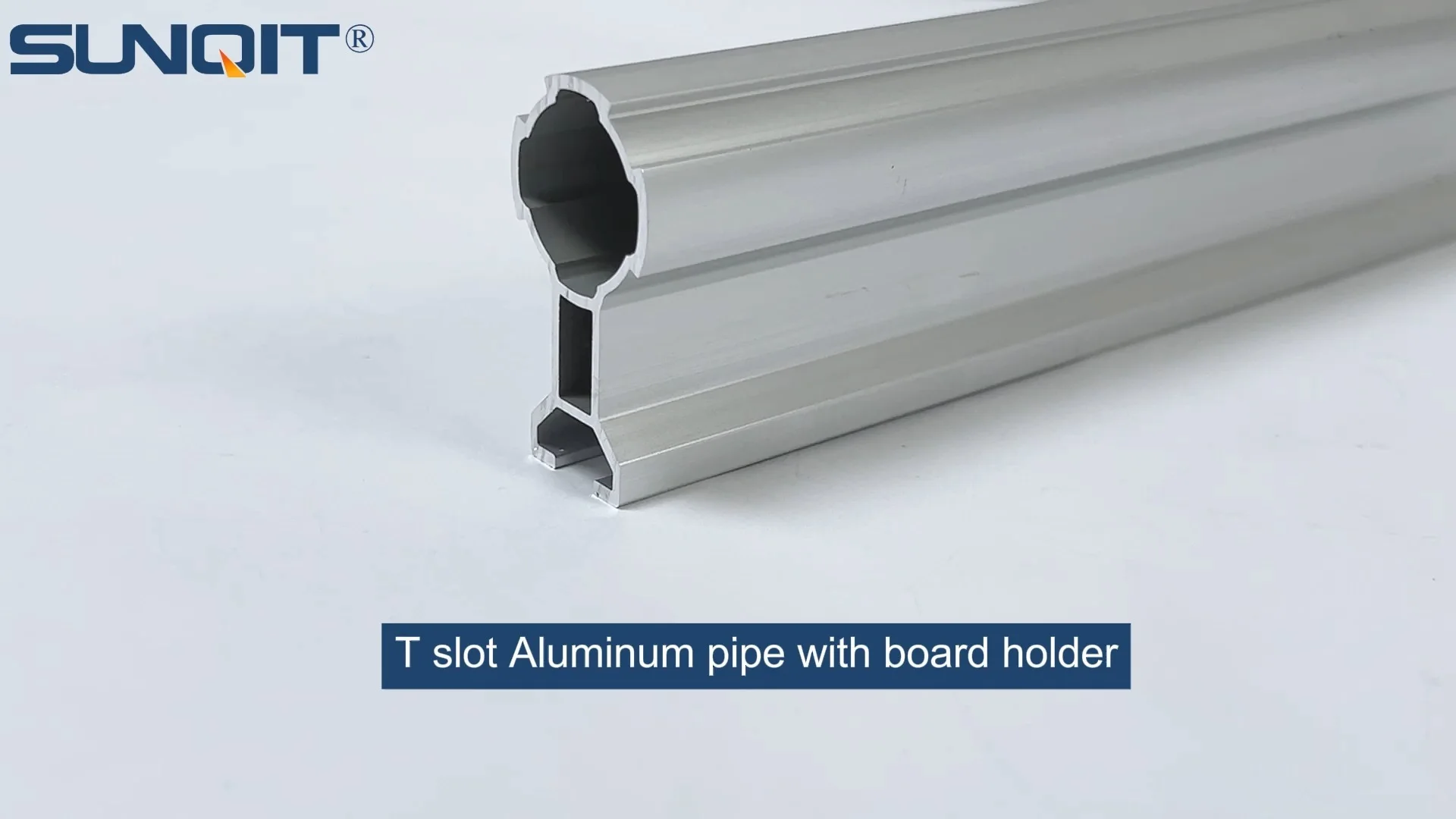
T Slot Aluminum Pipe with Board Holder
T slot Aluminum pipe with board holder,the pipe one side connected by a joint, the other side with a slot which can hold a tray or a aluminum pannel
Why Custom Lengths Matter: The Frustration of One-Size-Fits-All Solutions
If you've ever set up a workspace—whether a garage workshop, a factory production line, or a retail stockroom—you've likely encountered the same problem: pre-cut aluminum pipes that just don't fit. Maybe they're a few centimeters too long, forcing you to saw them down (and risk damaging the T-slots). Or perhaps they're too short, leaving gaps that make your workbench wobbly or your material rack unstable. These small inconsistencies add up, turning what should be a smooth setup into a frustrating, time-consuming project.
That's where custom lengths for T Slot Aluminum Pipe with Board Holder come in. They're not just a "nice-to-have"—they're a game-changer for anyone who wants a workspace that's efficient, organized, and tailored to their unique needs. Whether you're building a custom workbench, a modular material rack, or a conveyor system, custom-cut pipes eliminate waste, reduce setup time, and ensure every component fits like it was designed for your space (because it was).
Understanding T Slot Aluminum Pipe: The Backbone of Modular Workspaces
Before we dive into ordering custom lengths, let's start with the basics: What exactly is T Slot Aluminum Pipe, and why is it the go-to material for modern workspaces? At its core, T Slot Aluminum Pipe is a lightweight, durable aluminum profile with T-shaped grooves running along its length. These grooves aren't just decorative—they're the key to its versatility. By sliding bolts, brackets, or accessories into the slots, you can build, modify, and reconfigure structures without welding, drilling, or specialized tools. It's like building with giant, industrial-grade Legos.
Unlike rigid steel pipes or flimsy plastic alternatives, T Slot Aluminum Pipe strikes the perfect balance of strength and flexibility. It's strong enough to support heavy tools, materials, or even entire workbenches, yet lightweight enough to move or reposition as your needs change. And because it's aluminum, it resists rust and corrosion, making it ideal for both indoor and semi-outdoor use (think a covered warehouse patio or a garage with high humidity).
But what truly sets T Slot Aluminum Pipe apart is its compatibility with aluminum profile accessories. From corner brackets and end caps to casters and, yes, board holders, these accessories turn basic pipes into fully functional structures. And when you pair them with custom lengths, you unlock a level of precision that pre-cut pipes can never match.

The Board Holder: More Than Just an Accessory
If T Slot Aluminum Pipe is the backbone of your workspace, the Board Holder is the "hands" that hold everything together. At first glance, it might seem simple—a bracket designed to secure boards, panels, or worktops to the pipes—but its role is critical. A well-designed board holder doesn't just keep your surfaces in place; it lets you adjust them. Need to tilt your workbench top for better ergonomics? Slide the board holder up or down. Want to swap out a plywood panel for a metal tool board? Loosen a few bolts, and you're done. It's flexibility you won't get with fixed screws or glue.
When ordering custom lengths for T Slot Aluminum Pipe, the board holder is often the reason you need precision. For example, if you're building a workbench with a 120cm-wide top, your pipes need to span exactly 120cm (plus a little extra for the board holder's brackets). Too short, and the board will overhang, creating weak points. Too long, and the pipes will stick out, wasting space. The board holder bridges the gap between pipe and surface, making custom lengths essential for a seamless fit.

Key Considerations When Ordering Custom Lengths
1. Measure Twice, Order Once: The Art of Accurate Measurements
The first rule of custom lengths? Measure your space carefully. This might sound obvious, but it's how many projects go off track because of a rushed measurement. Start by mapping out your workspace on paper or with a digital tool (apps like SketchUp or even Google Drawings work well). Mark where the T-slot pipes will go: vertical supports, horizontal rails, crossbars—every piece matters.
Next, grab a reliable measuring tool. A digital tape measure is best for precision; laser measurers work great for long distances (like spans across a room). Measure the exact distance between mounting points—for example, the floor to the bottom of your workbench top, or the distance between two vertical supports. Then, add a small buffer for error: most suppliers recommend 1-2mm to account for cutting tolerances (the tiny variations that happen when a machine cuts the pipe). But don't overdo it—too much buffer, and you'll end up with pipes that are still too long.
Pro tip: If you're unsure, mock up the structure with string or cardboard first. This lets you visualize the final setup and catch measurement mistakes before you place your order.
2. Load Capacity: Don't Underestimate Weight
Aluminum is strong, but even the sturdiest T Slot Aluminum Pipe has limits. The longer the pipe, the more it will flex under weight. For example, a 1m pipe might support 80kg without bending, but stretch that to 2m, and the capacity could drop to 40kg. If you're using custom lengths to support heavy items—like a workbench loaded with power tools or a material rack stacked with metal parts—you need to factor in the pipe's diameter, wall thickness, and alloy.
Most suppliers provide load charts that show how much weight a pipe can handle at different lengths. For example, a 30mm diameter pipe with a 2mm wall might handle 100kg over 1.5m, while a 20mm pipe with a 1.2mm wall might only handle 30kg over the same span. If you're unsure, share your project details with your supplier—they can recommend the right pipe (diameter, wall thickness) for your custom length and load.
3. Compatibility with Aluminum Pipe Accessories
T Slot Aluminum Pipe doesn't work alone—it relies on aluminum pipe accessories to turn pipes into functional structures. When ordering custom lengths, make sure your pipes are compatible with the accessories you plan to use. The most important factor is the T-slot size: common sizes are 6mm, 8mm, and 10mm (the width of the slot opening). A pipe with an 8mm slot won't work with a bracket designed for 6mm, and vice versa.
Board holders are a prime example. Most board holders clamp onto the T-slot, so the slot size and pipe diameter must match. If you're using a board holder designed for 30mm pipes, a 25mm custom pipe will be too narrow, and the holder will slip. Check the accessory specs before ordering, or ask your supplier to confirm compatibility—they'll often have charts that list which accessories work with which pipe sizes.
4. Material and Finish: More Than Just Looks
T Slot Aluminum Pipe comes in different alloys and finishes, and your choice will affect durability, weight, and cost. The most common alloy is 6063-T5, which is lightweight, corrosion-resistant, and strong enough for most workshop or factory uses. If you need extra strength (for heavy machinery or outdoor use), 6061-T6 is a better choice, though it's slightly heavier and more expensive.
Finishes matter too. Anodized aluminum (a protective oxide layer) is standard—it resists scratches and looks clean, making it great for visible workspaces like retail displays. Powder-coated finishes add color (think blue, red, or yellow) and extra protection, ideal for high-wear areas. For custom lengths, the finish won't affect the fit, but it will affect how your workspace looks and lasts over time.
The Ordering Process: Step-by-Step
Step 1: Define Your Project Scope
Before you contact a supplier, clarify what you're building. Are you making a single workbench, a row of material racks, or a full production line? The size of your project will affect minimum order quantities (MOQs) and lead times. Small projects (5-10 pipes) might have MOQs of 1 piece per length, while large orders could qualify for bulk discounts. Knowing your scope also helps you list all the pipe lengths you need—no one wants to place a second order because they forgot a crossbar.
Step 2: Gather Your Measurements (and Double-Check Them)
Using your workspace map, list each custom length you need. Include details like: "4 vertical supports: 95cm each" or "6 horizontal rails: 120cm each." Note if any pipes need special cuts (like angles or notches)—most suppliers offer custom cutting, but it may cost extra. Once you have your list, measure again. It's easy to mix up "110cm" and "101cm," but that 9cm difference could ruin your project.
Step 3: Choose Your Pipe Specs and Accessories
Next, select the pipe diameter, wall thickness, and finish (anodized, powder-coated, etc.). If you're unsure, share your project details with the supplier—they'll recommend specs based on load, environment, and budget. Then, list the aluminum pipe accessories you need: board holders, brackets, casters, end caps. Some suppliers bundle pipes and accessories, which can save time and money.
Step 4: Contact Suppliers and Request Quotes
Now it's time to reach out to suppliers. Look for suppliers with experience in custom T-slot solutions—they'll have the tools to cut pipes precisely and the knowledge to answer your questions. When requesting a quote, include: your list of custom lengths, pipe specs, accessories, and delivery location. Ask about lead times (most custom orders take 1-2 weeks) and shipping costs (pipes are long, so freight can add up). Don't be afraid to compare quotes—prices can vary, and some suppliers offer discounts for first-time buyers.
Step 5: Review the Quote and Confirm Details
Once you get quotes, review them carefully. Check that the pipe lengths, specs, and accessories match what you ordered. Look for hidden fees: some suppliers charge extra for cutting, drilling, or rush delivery. If something is unclear, ask for clarification—better to delay the order than receive pipes that don't fit. Once you're happy, confirm the order in writing (email works) and ask for a tracking number when the pipes ship.
Step 6: Receive and Inspect Your Pipes
When your custom pipes arrive, inspect them immediately. Check that the lengths are correct (measure a few—you don't need to check every single one, but spot-checking helps). Look for dents, scratches, or damaged T-slots—these can ruin the pipe's functionality. If there's a problem, contact the supplier right away—most have return policies for defective products.
Standard vs. Custom Lengths: When to Choose Which
Custom lengths aren't always necessary. For simple projects—like a small shelf or a temporary workbench—standard lengths might be cheaper and faster. To help you decide, here's a breakdown of the pros and cons:
| Feature | Standard Lengths | Custom Lengths |
|---|---|---|
| Cost | Lower per unit; available in bulk at hardware stores. | Higher per unit, but less waste (no need to cut down pipes). |
| Availability | In-stock at most suppliers; same-day pickup possible. | 1-2 week lead time (varies by supplier). |
| Waste | High—you'll likely cut pipes down, leaving scraps. | Low—precision-cut to your exact measurements. |
| Setup Time | Longer—you'll need to cut, deburr, and clean pipes. | Shorter—pipes are ready to use out of the box. |
| Flexibility | Limited—stuck with pre-set sizes (e.g., 1m, 2m, 3m). | Unlimited—tailored to your workspace's unique dimensions. |
In general, choose standard lengths for small, simple projects where precision isn't critical. Choose custom lengths for workbenches, material racks, or production lines where fit, stability, and efficiency matter most.
Common Mistakes to Avoid
Mistake #1: Ignoring Fitting and Bracket Space
One of the biggest errors is forgetting that aluminum pipe joints and brackets take up space. For example, if you're connecting two pipes with a 90° joint, the joint itself will add 2-3cm to the total length. If you measure 100cm between two walls and order a 100cm pipe, the joint will make the total length 102-103cm, and the pipe won't fit. Always subtract the joint's length from your measurement before ordering.
Mistake #2: Overlooking T-Slot Orientation
T Slot Aluminum Pipe can have slots on 2, 3, or 4 sides. If you order a pipe with slots on only two sides but need to mount accessories on all four, you'll be stuck. Check the slot orientation (e.g., "4-slot" or "2-slot") before ordering—this info is usually in the product description or can be provided by the supplier.
Mistake #3: Rushing the Measurement Process
It's tempting to measure quickly, especially if you're eager to start your project. But a 5-minute measurement mistake can cost hours of rework. Take your time: measure twice, have a second person verify, and mock up the structure if needed. It's better to delay ordering by a day than to receive pipes that are useless.
Real-World Examples: How Custom Lengths Transform Workspaces
Example 1: The Garage Workshop
Jake, a hobby woodworker, wanted to build a workbench in his 2.4m-wide garage. Standard 2m pipes were too short (leaving 40cm gaps), while 3m pipes were too long (sticking out the garage door). He ordered custom 2.3m pipes for the horizontal rails, paired with a board holder for his plywood top. "The difference is night and day," he said. "No more sawdust-covered scraps, no more wobbly workbench. It fits like it was built for the space—because it was."
Example 2: The Factory Production Line
A small electronics factory needed a material rack to feed components to their assembly line. The space between their conveyor and wall was 185cm—too narrow for standard 200cm racks, too wide for 150cm. Custom 185cm T-slot pipes with board holders let them build a rack that fit perfectly, reducing the time workers spent reaching for parts by 20%.
Conclusion: Invest in Your Workspace, Invest in Efficiency
Custom lengths for T Slot Aluminum Pipe with Board Holder aren't just about avoiding frustration—they're about building a workspace that works for you. By taking the time to measure carefully, choose the right specs, and partner with a reliable supplier, you'll end up with a setup that's efficient, durable, and adaptable. And in the long run, that means less time fixing mistakes, more time getting work done, and a workspace you'll actually enjoy using.
So, the next time you're tempted to grab a pack of standard pipes, ask yourself: Is "good enough" really enough? For most of us, the answer is no. Custom lengths are an investment in your productivity—and that's always worth it.