
- Company Articles
- Products and Technology
- Solution
- Custom Lengths of 1.0mm Stainless Steel Pipe for Tailored Workbench Solutions
If you've ever stood in front of a cluttered workspace, staring at a workbench that's either too short, too narrow, or just not built to handle your daily tasks, you know the frustration. A workbench isn't just a piece of furniture—it's the heart of your operation, whether you're assembling electronics, repairing machinery, or organizing tools in a garage. And when that heart doesn't fit, everything slows down. That's where custom lengths of 1.0mm stainless steel pipe come in. These versatile, durable tubes are changing the game for workbench design, letting you build a solution that fits your space, your workflow, and your unique needs. Let's dive into how this simple yet powerful material, paired with the right accessories, can transform your workspace from chaotic to efficient.
Why 1.0mm Stainless Steel Pipe? It's All About Balance
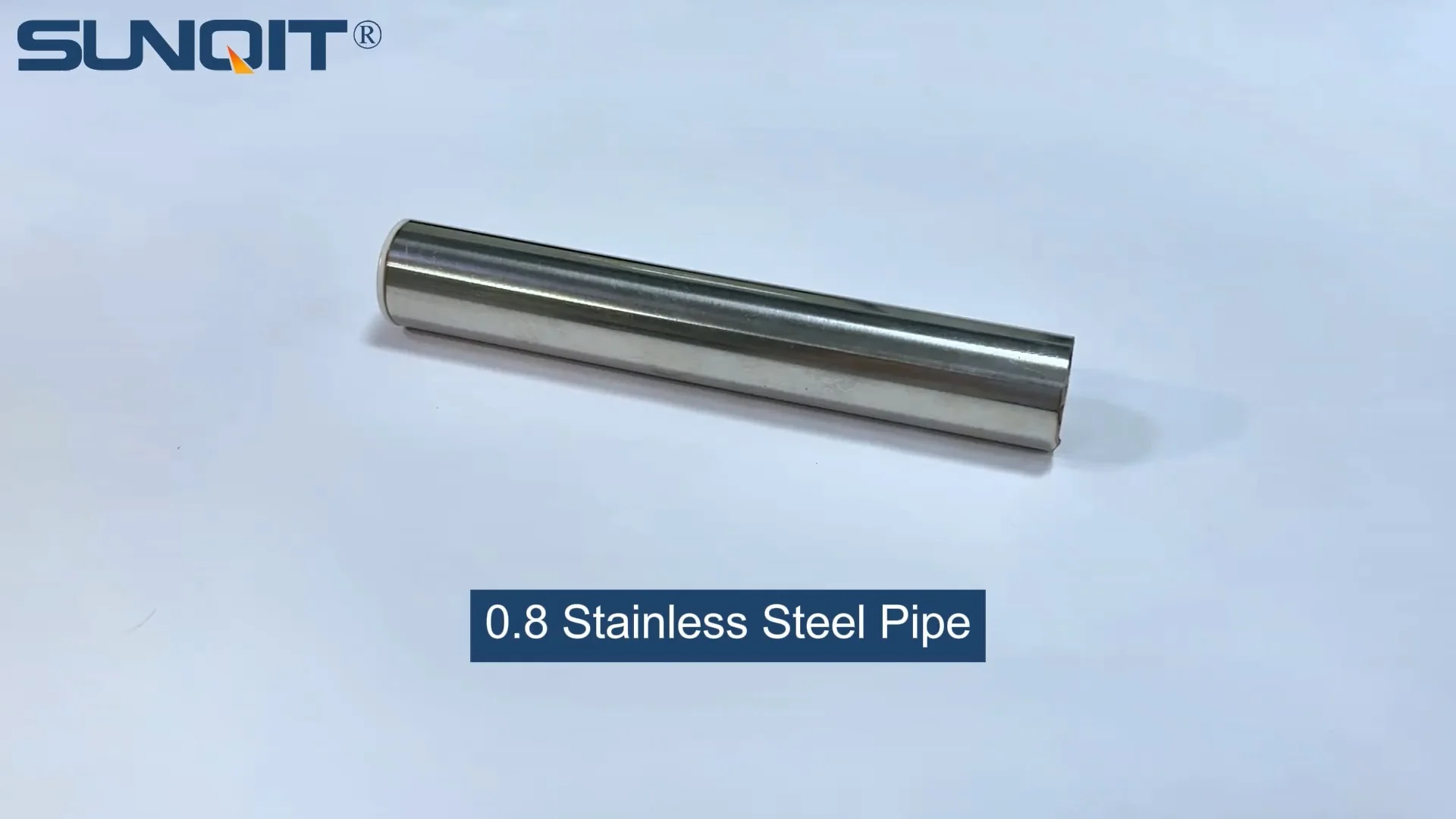
Stainless steel has long been a go-to for industrial and commercial settings, and for good reason. It's tough, resistant to rust and corrosion, and easy to clean—qualities that matter when your workbench sees daily use, spills, or exposure to chemicals. But not all stainless steel pipes are created equal. The 1.0mm thickness hits a sweet spot that's often missing in generic options. Let's break it down:
- Strength without the bulk: At 1.0mm, this pipe is sturdy enough to support heavy tools, parts bins, or even small machinery, but it's not so thick that it adds unnecessary weight. That means your workbench stays portable (more on that later with caster wheels) without sacrificing stability.
- Flexibility in design: Thicker pipes can be rigid and hard to cut or shape, while thinner ones might bend under pressure. 1.0mm stainless steel pipe strikes the balance, making it easy to customize lengths on-site or order pre-cut sizes that fit your exact dimensions. Whether you need a 3-foot bench for a corner nook or a 10-foot assembly line station, this pipe adapts.
- Part of a larger system: 1.0mm stainless steel pipe isn't a standalone product—it's part of the broader stainless steel pipe series , which includes a range of joints, connectors, and accessories designed to work together seamlessly. This means you're not just buying a pipe; you're investing in a modular system that can grow and change with your needs.
Think of it like building with high-quality Legos for adults. The pipe is the base, and the accessories are the pieces that let you add shelves, wheels, or roller tracks to make the workbench truly yours.
The Problem with "One-Size-Fits-All" Workbenches
Walk into any hardware store or industrial supply website, and you'll find pages of standard workbenches: 4 feet long, 2 feet deep, with a fixed height and maybe a shelf underneath. They're affordable, they're in stock, and they work—for some people. But if your workspace is anything but "standard," these benches quickly become more of a hassle than a help.
Let's say you run a small electronics repair shop. Your space is tight—maybe a 10x12 foot room with a desk, a tool chest, and a few storage cabinets. A standard 4-foot bench might take up half the floor space, leaving no room to move around. Or maybe you're part of a manufacturing team, and your assembly line requires a bench that's 8 feet long to align with the conveyor belt next to it. A standard 6-foot bench would create a gap, forcing workers to stretch or move materials manually, wasting time and energy.
Then there's the issue of functionality. A woodworker might need a bench with a vise and a smooth, flat surface for cutting. A lab technician might need a bench that's easy to sanitize and resistant to chemicals. A mechanic might want a bench that can roll around the garage to reach different vehicles. A one-size bench can't check all these boxes. That's where custom lengths of 1.0mm stainless steel pipe shine—they let you build a workbench that's designed for you , not the other way around.

Building Your Dream Workbench: Key Components to Pair with Stainless Steel Pipe
Custom length stainless steel pipe is the foundation, but the real magic happens when you pair it with the right accessories. Let's explore the essentials that turn a simple pipe frame into a high-performance lean pipe workbench —a term you might have heard in manufacturing circles, referring to workbenches built for efficiency and adaptability.
1. Caster Wheels: Mobility When You Need It
Ever tried to move a heavy wooden workbench across a concrete floor? It's not fun. Adding caster wheels to your stainless steel pipe workbench changes everything. These small but mighty accessories let you roll the bench wherever it's needed—whether you're rearranging your shop for a new project or moving tools closer to a job site.
But not all caster wheels are the same. For a workbench, you'll want options like:
- Lockable casters: Keep the bench steady when you're working, then unlock and roll when you need to reposition. Perfect for garages or workshops where space is shared.
- Heavy-duty casters: If your bench will hold tools, machinery, or heavy parts, opt for casters with a high weight capacity (think 200+ pounds per wheel). Stainless steel or rubber wheels work best for durability and to avoid scratching floors.
- Swivel casters: These rotate 360 degrees, making it easy to maneuver tight corners. Great for small spaces where you need precision movement.
Pairing 1.0mm stainless steel pipe with the right caster wheels means your workbench isn't stuck in one spot—it's a mobile tool that adapts to your day.
2. Roller Tracks: Let Materials Flow Smoothly
Whether you're assembling products, sorting parts, or moving items from one station to the next, manually lifting and carrying materials is a drain on time and energy. That's where roller tracks come in. These simple rails, fitted with small wheels, let materials glide across the workbench surface with minimal effort.
Imagine a production line where each worker adds a component to a product. With a roller track along the edge of the workbench, the product can slide from one station to the next—no lifting, no straining, just smooth, continuous flow. Or in a warehouse, a roller track on a workbench can help sort packages by weight or destination, making order fulfillment faster and easier.
1.0mm stainless steel pipe provides a sturdy frame to mount roller tracks, ensuring they stay aligned and can handle the weight of your materials. Plus, since the pipe is customizable, you can add roller tracks to just one section of the bench or run them the entire length—whatever fits your workflow.
3. Adjustable Shelves and Storage
A workbench isn't just a surface—it's also storage. Tools, parts, manuals, and supplies need to be within arm's reach to keep you productive. With custom stainless steel pipe, you can add shelves at any height, width, or depth. Need a narrow shelf for small screws and bolts? Done. Want a wide shelf to hold a toolbox or a printer? No problem. You can even add hooks, bins, or pegboards to the sides of the bench for easy access to frequently used items.
The best part? Since the system is modular, you can add or remove shelves as your needs change. If you take on a new project that requires more storage, just grab a few extra pipes and joints, and expand your bench—no need to buy a whole new one.

Custom Workbench Configurations: A Table to Fit Your Needs
To give you a better idea of how custom 1.0mm stainless steel pipe workbenches can be tailored, let's look at some common configurations. The table below breaks down options for different workspaces, including recommended lengths, caster wheel types, roller track inclusion, and key benefits.
| Workspace Type | Recommended Length | Caster Wheel Type | Roller Track Inclusion | Key Benefit |
|---|---|---|---|---|
| Small Electronics Shop | 3–4 feet | Lockable swivel (2-inch wheels) | Not needed (focus on surface space) | Compact design fits tight spaces; mobility for rearranging. |
| Manufacturing Assembly Line | 6–10 feet | Heavy-duty fixed (3-inch wheels, non-swivel) | Full length (steel wheels for durability) | Aligns with conveyor systems; materials flow smoothly between stations. |
| Automotive Repair Garage | 5–7 feet | Lockable heavy-duty swivel (4-inch rubber wheels) | Partial (1–2 foot section for tools/parts) | Rolls to vehicle; rubber wheels protect garage floors; roller track for small parts. |
| Lab/Medical Facility | 4–5 feet | Non-marking lockable (2.5-inch wheels) | Not needed (sterile surface priority) | Easy to clean stainless steel; mobility for moving between labs. |
| Warehouse Sorting Station | 8–12 feet | Fixed (non-swivel, 3-inch steel wheels) | Full length (plastic wheels for quiet operation) | Long surface for sorting; roller track speeds up material movement. |
This table is just a starting point. The beauty of custom solutions is that you can mix and match features to create something that's uniquely yours. For example, a home workshop might combine a 5-foot length with lockable casters and a partial roller track for moving lumber or metal sheets—whatever makes your workflow smoother.
From Consultation to Assembly: How It All Comes Together
You might be thinking, "This sounds great, but how do I actually get a custom workbench built?" The process is simpler than you might expect, and it starts with a conversation. Here's a step-by-step breakdown of how most suppliers approach tailored workbench solutions:
Step 1: Assess Your Needs
First, a supplier will ask about your workspace: How much room do you have? What tasks will the workbench be used for? Do you need it to move, or will it stay in one place? What's the maximum weight it needs to support? This info helps narrow down the basics, like length, width, and height.
For example, if you mention you'll be using the bench for heavy machinery, the supplier might recommend reinforcing the frame with extra 1.0mm stainless steel pipes or adding cross-braces for stability. If mobility is key, they'll discuss caster wheel options and weight capacity.
Step 2: Design the Bench
Using your input, the supplier will create a basic design—often with a sketch or 3D model. This includes details like pipe lengths, joint types (from the stainless steel pipe series ), and accessory placement (casters, roller tracks, shelves). They'll share this with you for feedback, making adjustments until it fits your vision.
Don't worry if you're not a designer—most suppliers have experience with all kinds of workspaces and can suggest features you might not have considered. For example, adding a lip along the edge of the bench to prevent tools from rolling off, or incorporating a pegboard for hanging frequently used items.
Step 3: Cut and Prepare Materials
Once the design is finalized, the supplier will cut the 1.0mm stainless steel pipes to your custom lengths. This is where the magic of 1.0mm thickness comes in—precision cutting is easy, so you get exact measurements without warping or weakening the pipe. They'll also prepare accessories like casters, roller tracks, and joints, ensuring everything is compatible.
Step 4: Assembly
Depending on the supplier, you might receive the parts for DIY assembly (great for small benches) or have a team come to your site to build it (better for large or complex setups). Either way, assembly is straightforward—stainless steel pipe joints are designed to click or screw together, requiring minimal tools. Most people can assemble a basic bench in under an hour with a wrench and a level.
Step 5: Test and Adjust
Once the bench is built, take it for a spin (literally, if it has casters). Roll it around, load it with tools, and test any roller tracks with actual materials. If something feels off—maybe the height is wrong or the casters don't roll smoothly—suppliers will adjust on the spot. This final step ensures the bench works for you before it's considered done.
Durability That Lasts: Why Stainless Steel Stands the Test of Time
Investing in a custom workbench is a big decision, and you want to know it will last. Stainless steel is famous for its longevity, and 1.0mm thickness only adds to that. Here's why these benches stand up to daily use:
- Rust and corrosion resistance: Stainless steel contains chromium, which forms a protective layer against moisture and chemicals. Spill oil, cleaning solution, or even water on the bench, and it won't rust or stain. This is a game-changer for labs, garages, and food processing facilities where cleanliness is critical.
- Scratch and dent resistance: While no material is indestructible, 1.0mm stainless steel is tough enough to handle dropped tools, heavy parts, and daily wear. Unlike wood, which can chip or splinter, or plastic, which can crack, stainless steel holds its shape and appearance for years.
- Easy maintenance: A quick wipe with a damp cloth is usually all it takes to clean a stainless steel workbench. No sanding, painting, or refinishing required. This saves time and money over the life of the bench.
To put it in perspective: A well-built 1.0mm stainless steel pipe workbench can easily last 10–15 years, even in high-traffic industrial settings. Compare that to a standard particleboard bench, which might start falling apart after 2–3 years, and the investment becomes clear.
Real Stories: How Custom Workbenches Transformed Workspaces
Still not convinced? Let's hear from people who've made the switch to custom 1.0mm stainless steel pipe workbenches. Their stories show how a tailored solution can solve real-world problems.
Case Study 1: The Small Machine Shop
Mark owns a machine shop with just three employees in a 500-square-foot space. For years, he used a generic 6-foot wooden workbench, but it took up so much room that his team could barely move between stations. "We were constantly bumping into each other, and tools kept falling off the edges because there wasn't enough surface space," he says. "I thought about moving to a bigger space, but that would have doubled our rent."
Instead, Mark worked with a supplier to design a 4-foot stainless steel pipe workbench with lockable casters. "It's narrow enough to fit along the wall, but we can roll it out when we need extra space," he explains. "The stainless steel surface is easy to clean—no more oil stains seeping into wood—and we added a small shelf underneath for tool storage. Productivity is up because we're not wasting time navigating around the bench, and the team loves that it looks professional."
Case Study 2: The Automotive Assembly Line
A mid-sized auto parts manufacturer was struggling with bottlenecks on their assembly line. Their standard 6-foot workbenches didn't align with the 8-foot conveyor belt next to them, so workers had to manually carry parts the extra 2 feet—a slow, repetitive task that led to fatigue and errors.
"We needed a bench that matched the conveyor length, but nothing standard existed," says Lisa, the production manager. "We tried extending the wooden benches with plywood, but they sagged under the weight of the parts. That's when we found custom stainless steel pipe workbenches."
The supplier built two 8-foot benches with roller tracks along the edge, aligned perfectly with the conveyor. "Now parts slide right from the conveyor to the bench, and workers can focus on assembly instead of lifting," Lisa says. "We've cut production time by 15% and reduced errors by 20%. It's amazing how a simple change in length and adding roller tracks made such a big difference."
Common Myths About Custom Workbenches—Debunked
Despite the benefits, some people hesitate to invest in custom workbenches because of misconceptions. Let's set the record straight:
Myth 1: "Custom means expensive."
It's true that custom workbenches can cost more upfront than standard ones, but they often save money in the long run. A $200 generic bench that needs replacing every 3 years costs $66 per year. A $500 custom stainless steel bench that lasts 15 years costs just $33 per year. Plus, custom benches improve efficiency, which can boost revenue or reduce labor costs—making the investment pay off even faster.
Myth 2: "Lead times are too long."
While complex designs might take a few weeks, most basic custom workbenches are ready in 7–10 days. Suppliers keep 1.0mm stainless steel pipes and standard accessories (like casters and joints) in stock, so cutting and assembly is quick. Compare that to waiting for a specialty standard bench to ship from overseas—you might get your custom bench faster.
Myth 3: "Stainless steel is too heavy to move."
1.0mm stainless steel is lightweight for its strength. A 4-foot bench with a basic frame and casters weighs around 50–60 pounds—easy for one person to move. Heavier benches (8+ feet) might weigh 100–150 pounds, but with heavy-duty casters, two people can roll them effortlessly.
Final Thoughts: Your Workbench Should Work for You
At the end of the day, a workbench is more than just a place to put your tools. It's where ideas become products, where repairs turn into solutions, and where your team spends hours each day focused on getting the job done. Why settle for a bench that's "good enough" when you can have one that's perfect ?
Custom lengths of 1.0mm stainless steel pipe offer the flexibility, durability, and functionality to build a workbench that fits your space, your workflow, and your goals. Paired with accessories like caster wheels for mobility and roller tracks for smooth material flow, these benches are more than furniture—they're tools that help you work smarter, not harder.
So if you're tired of fighting with a workbench that doesn't fit, take the first step: reach out to a supplier specializing in stainless steel pipe series and lean pipe workbench solutions. Share your workspace challenges, your goals, and your vision. You might be surprised at how quickly a custom design comes together—and how much better your workday becomes once you have a bench that's built for you .