- Company Articles
- Products and Technology
- Product knowledge
- Custom Machining of 4040F EU Standard Aluminum Profile: Holes, Slots & Cutouts

Custom Machining of 4040F EU Standard Aluminum Profile: Holes, Slots & Cutouts
Related Product
4040F EU Standard Aluminum Profile
4040F is a 4.00x4.00 CM fractional 40 series square extrusion T-slot profile with four side open T-slots, each side with 4.00cm face. The profile has align-a-grooves to assist in aligning connecting profiles.
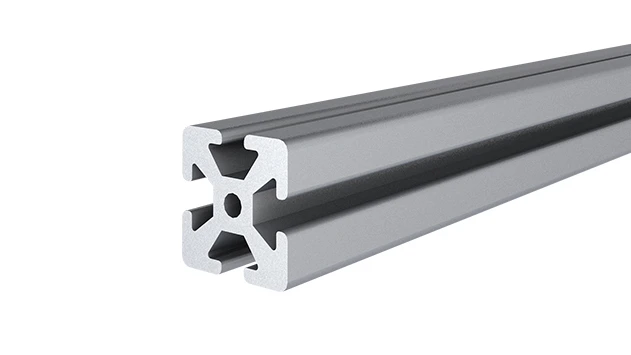
Walk into any modern factory, workshop, or automation facility, and you'll likely spot the unsung hero of industrial design: aluminum profiles. Sleek, strong, and surprisingly versatile, these metal frameworks form the backbone of workbenches, material racks, machine guards, and even complex automation systems. Among the most widely used is the 4040F EU Standard Aluminum Profile —a 40mm x 40mm extrusion (hence the "4040" moniker) engineered to meet strict European standards for consistency and performance. But while off-the-shelf profiles work for basic setups, many projects demand something more: custom machining. Holes drilled to exact depths, slots shaped for sliding components, cutouts tailored for cables or sensors—these details turn a generic piece of metal into a solution that fits like a glove. Let's dive into how custom machining transforms 4040F profiles, and why it matters for your next project.
What Makes the 4040F EU Standard Aluminum Profile So Popular?
Before we get into machining, let's talk about why the 4040F is a staple in manufacturing. First, its dimensions: 40mm x 40mm strikes a sweet spot between strength and weight. It's sturdy enough to support heavy equipment (think workbenches loaded with tools) but light enough for easy assembly and reconfiguration—key for lean manufacturing setups. The "F" in its name often refers to a specific groove design, typically featuring T-slots along its length. These slots are pre-engineered to accept aluminum profile accessories like bolts, brackets, and end caps (yes, even the humble 4040 aluminum profile end cap ), making assembly a breeze without welding.
EU standards add another layer of reliability. Unlike generic profiles, 4040F from reputable suppliers adheres to strict tolerances for straightness, wall thickness, and material composition (usually 6063-T5 aluminum, prized for its corrosion resistance and machinability). This consistency means parts from different batches fit together perfectly—a must for projects where precision is non-negotiable.
Why Off-the-Shelf Isn't Enough: The Case for Custom Machining
Off-the-shelf 4040F profiles come with standard T-slots, but every project has unique needs. Imagine building a custom workbench for an electronics assembly line. The team might need holes for mounting power strips at a specific height, slots for sliding tool trays at a 15° angle, or rectangular cutouts to route cables cleanly through the frame. Standard profiles can't deliver that—you'd end up drilling haphazardly, risking cracks, misalignment, or weakening the structure. Custom machining solves this by tailoring the profile to your exact design, ensuring functionality, safety, and a polished finish.
Another example: a lean system supplier designing a material rack for a warehouse. To maximize storage density, they need adjustable shelves that lock into place at 10cm intervals. Standard T-slots might be spaced too far apart, so the supplier machines additional slots into 4040F uprights, ensuring the rack adapts to varying box sizes without compromising stability. Custom machining isn't just about adding features—it's about making the profile work for you , not the other way around.

The Big Three: Holes, Slots, and Cutouts Explained
When it comes to custom machining 4040F profiles, three operations stand out: drilling holes, cutting slots, and creating cutouts. Each serves a unique purpose, and mastering them requires a mix of technical skill and material know-how.
1. Holes: Precision Anchors for Assembly
Holes are the most common machining request, and for good reason. They're used to mount brackets, secure panels, or attach the profile to other structures. But not all holes are created equal:
- Tapped holes: These have internal threads (e.g., M5, M6) for direct bolt insertion. Perfect for attaching components without nuts, saving space. Machinists use taps to cut threads, ensuring they're deep enough to hold torque without stripping.
- Through holes: Simple, straight holes that pass entirely through the profile. Ideal for bolts with nuts or for routing cables. Tolerances here are tight—even a 0.2mm mismatch can make assembly frustrating.
- Counterbored holes: Wider at the top to recess bolt heads, leaving a flush surface. Great for workbenches or panels where a smooth finish matters.
The key challenge? Avoiding "breakout"—when the drill exits the profile, tearing the metal instead of cutting cleanly. Experienced machinists use sharp bits and adjust feed rates to keep edges crisp, ensuring holes mate perfectly with aluminum profile accessories like brackets or connectors.
2. Slots: Flexibility in Motion
Slots take the 4040F's built-in T-slots a step further, adding adjustability where standard grooves fall short. Common types include:
- Linear slots: Longer than standard T-slots, these allow components to slide over a wider range. Think of a material rack where shelves need to move 30cm, not just the 5cm between pre-existing T-slots.
- Keyway slots: Shaped like a keyhole, these lock components in place rotationally. Useful for axles or shafts that need to spin without slipping.
- Angled slots: Tilted at 10–45°, these accommodate sloped surfaces (e.g., a conveyor guide that funnels parts toward a sensor).
Milling is the go-to method for slots. CNC mills with precision rails carve slots to exact depths and widths, often with tolerances as tight as ±0.05mm. The goal? A slot that's smooth enough for easy sliding but tight enough to prevent unwanted movement once locked down.
3. Cutouts: Function Meets Form
Cutouts are where creativity meets engineering. These are custom-shaped removals from the profile, designed for specific tasks:
- Cable cutouts: Rectangular or semicircular notches to route wires through the profile, keeping cords organized and out of the way. Common in workbenches and machine frames.
- Weight-reduction cutouts: Strategic holes or slots to lighten the profile without sacrificing strength. Useful for mobile structures like carts or adjustable frames.
- Component clearances: Odd-shaped cutouts to fit sensors, motors, or valves that protrude from the frame. For example, a robotic arm mount might need a semicircular cutout to avoid hitting the profile during movement.
Cutouts require careful planning. Remove too much material, and the profile weakens; too little, and the component won't fit. Machinists often use 3D modeling first to simulate the cutout, then employ laser cutting (for precision) or water jet cutting (for thick walls) to execute it cleanly.
Matching Machined Profiles with Aluminum Profile Accessories
What good is a custom-machined profile if it doesn't play nice with accessories? The 4040F's true power lies in its ability to integrate with brackets, end caps, connectors, and more. Custom machining ensures this integration is seamless.
Take the 4040 aluminum profile end cap , for example. A standard end cap snaps into the profile's open end to cover sharp edges. But if you've machined a slot near the end of the profile, the end cap might not fit unless the cutout is positioned just right. A skilled supplier will account for this, adjusting the slot's location to leave room for the end cap while still meeting your functional needs.
Similarly, brackets designed for T-slots rely on precise hole spacing. If you're using a corner bracket that requires bolts 30mm apart, custom-drilled holes at that exact interval will make assembly faster and the joint stronger than forcing a fit with mismatched standard holes.
The Role of a Lean System Supplier in Custom Machining
You could try machining 4040F profiles in-house, but partnering with a lean system supplier often makes more sense. Here's why:
- Material expertise: Suppliers work with aluminum daily. They know how 6063-T5 reacts to drilling, cutting, and milling, avoiding common pitfalls like cracking or warping.
- Advanced equipment: From CNC mills to laser cutters, suppliers have tools that deliver tighter tolerances than most in-house shops. This precision translates to better-performing end products.
- Design support: A good supplier doesn't just machine—they advise. If your design calls for a large cutout that might weaken the profile, they'll suggest alternatives (like reinforcing ribs or a smaller cutout) to keep the structure strong.
Consider a small manufacturer needing a custom workbench. They sketch a design with cable cutouts, tool-mount holes, and adjustable shelves. Instead of buying raw profiles and struggling with a drill press, they partner with a supplier who machines the 4040F frames to spec, pre-fits the aluminum profile accessories , and even assembles the bench. The result? A workbench that's ready to use in days, not weeks, and built to last.
Comparing Machining Techniques: Which Is Right for You?
| Machining Type | Common Techniques | Typical Tolerance | Best For |
|---|---|---|---|
| Holes | CNC drilling, tapping | ±0.1mm | Mounting brackets, bolts, cables |
| Slots | Milling, broaching | ±0.05mm | Adjustable shelves, sliding components |
| Cutouts | Laser cutting, water jet cutting | ±0.2mm | Cable management, component clearance |
Quality Control: Ensuring Your Machined Profile Performs
Custom machining is only as good as its precision. Reputable suppliers follow strict quality control steps:
- Tolerance checks: Using calipers, micrometers, or coordinate measuring machines (CMMs) to verify hole depths, slot widths, and cutout dimensions match the design (often within ±0.1mm for critical features).
- Material integrity tests: Inspecting for cracks, burrs, or deformation after machining. A small burr might seem minor, but it can scratch workers or damage cables over time.
- Fit testing: Assembling the machined profile with the intended accessories (e.g., brackets, end caps) to ensure everything lines up. If a bolt won't thread or a bracket wobbles, the part goes back for rework.
These steps might add a little time to the process, but they're worth it. A profile that meets specs the first time reduces waste, cuts assembly headaches, and ensures your project stands the test of time.
Final Thoughts: Custom Machining as a Catalyst for Innovation
The 4040F EU Standard Aluminum Profile is already a versatile tool, but custom machining unlocks its full potential. Whether you're building a workbench, a material rack, or a complex automation system, tailored holes, slots, and cutouts turn a generic extrusion into a solution that's efficient, durable, and uniquely yours.
And let's not forget the role of partnership. Working with a lean system supplier who understands both the material and your needs can transform a good project into a great one. They bring expertise, equipment, and a focus on efficiency—all hallmarks of lean manufacturing. So the next time you reach for a 4040F profile, ask: "What if this could be exactly what I need?" With custom machining, the answer is almost always, "It can."