- Company Articles
- Products and Technology
- Solution
- Custom Parallel Lean Pipe Joint Solutions for Specialized Manufacturing Needs

Custom Parallel Lean Pipe Joint Solutions for Specialized Manufacturing Needs
Related Product
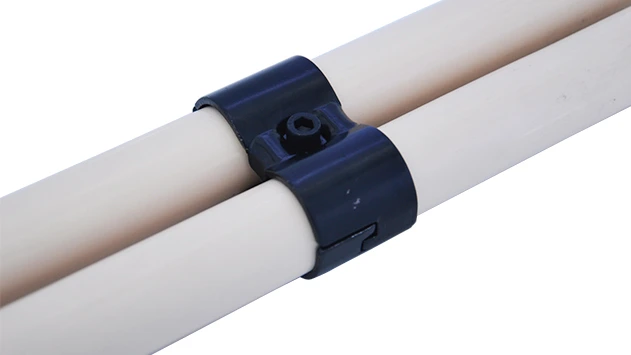
Parallel Lean Pipe Joint
Parallel lean pipe joint used for 2 pcs 28MM lean pipe connection in parallel direction to enhance frame structure, usually for heavy payload requirement for workbench. flow rack, hand trolley.
In the fast-paced world of modern manufacturing, where production lines hum 24/7 and customer demands shift overnight, one thing has become crystal clear: rigidity is the enemy of progress. Walk into any factory floor, and you'll likely spot the telltale signs of inefficiency—awkwardly positioned workbenches that force workers to stretch, clunky material racks that slow down part retrieval, or conveyor systems that can't adapt to new product sizes. These aren't just minor inconveniences; they're silent profit killers, draining time, energy, and resources that could be invested in innovation. The solution? Lean systems built on flexibility—and at the heart of that flexibility lies a humble yet powerful component: the parallel lean pipe joint.
The Problem with "One-Size-Fits-All" Manufacturing Setups
Let's start with a scenario many manufacturers know all too well. A mid-sized electronics plant invests in a batch of standard workbenches and flow racks, designed to handle their current product line. Six months later, they land a contract for a new, larger circuit board. Suddenly, the workbenches are too short, the flow racks can't accommodate the bulkier components, and the conveyor tracks—once perfectly aligned—now create bottlenecks as workers struggle to maneuver the new parts. What was supposed to be a growth opportunity becomes a logistical nightmare, with managers scrambling to patch together temporary fixes that only band-aid the problem.
This isn't an anomaly; it's the norm for facilities relying on off-the-shelf manufacturing equipment. Standardized systems are designed to meet generic needs, but specialized manufacturing—whether in aerospace, medical devices, or consumer electronics—thrives on specificity. Each product has unique dimensions, weight requirements, and workflow demands. A "one-size-fits-all" approach to workbenches, racks, or conveyor systems doesn't just limit productivity; it stifles the ability to pivot, innovate, and scale.
Lean Systems: Beyond the Buzzword—A Culture of Adaptability
Enter lean manufacturing—a philosophy built on eliminating waste, streamlining processes, and prioritizing continuous improvement. At its core, lean isn't just about cutting costs; it's about creating systems that respond to change. And lean pipe systems have emerged as the physical embodiment of this. Made from lightweight, modular components like pipes, joints, and accessories, these systems can be assembled, disassembled, and reconfigured in hours, not weeks. But if lean pipes are the building blocks, then parallel lean pipe joints are the mortar that holds the flexibility together.
Here's why parallel joints matter: unlike fixed-angle connectors, they allow pipes to run parallel to each other, creating stable, adjustable frameworks for everything from workbenches to material racks. Think of them as the Swiss Army knife of manufacturing hardware—versatile, reliable, and ready to adapt. Whether you need to widen a workbench by 6 inches, add a third shelf to a flow rack, or angle a roller track for better gravity flow, parallel joints make it possible without rebuilding the entire structure from scratch.

Parallel Lean Pipe Joints: The Unsung Heroes of Customization
Let's break down what makes parallel lean pipe joints so indispensable. At their most basic, these joints are connectors that secure two or more lean pipes in a parallel arrangement, maintaining consistent spacing and alignment. But their true power lies in their diversity. From fixed parallel joints that lock pipes in place for heavy-duty applications to rotating parallel joints that allow for angle adjustments, there's a joint for every scenario. Some even come with built-in clamps or slots for attaching accessories like tool hooks, label holders, or ESD (electrostatic discharge) mats—turning a simple frame into a fully functional workstation.
Take, for example, the parallel rotatory lean pipe joint . This nifty component lets one pipe rotate relative to another, making it ideal for workbenches that need adjustable shelves or flow racks that require angled roller tracks. A manufacturer producing both small circuit boards and large industrial sensors, for instance, could use these joints to tilt a roller track slightly for the lightweight boards (ensuring they glide smoothly) and flatten it for the heavier sensors (preventing them from sliding too quickly). It's this level of granular control that turns a static setup into a dynamic, responsive one.

The Customization Process: From "This Isn't Working" to "Perfect Fit"
Custom parallel lean pipe joint solutions aren't just about swapping out standard parts for fancy ones—they're about collaborating with suppliers to design systems that fit your unique workflow. Here's how the process typically unfolds:
Step 1: The "Pain Point" Consultation
It starts with a conversation. A good supplier won't just ask, "What size do you need?" They'll dig deeper: "Where are your current bottlenecks?" "What's the heaviest part you move?" "How often do your product lines change?" For a food packaging plant, the pain point might be sanitization—needing stainless steel components that can withstand daily washdowns. For a medical device manufacturer, it could be ESD protection to prevent static damage to sensitive electronics. By identifying these specifics, the supplier can recommend the right materials (aluminum, stainless steel, etc.) and joint types upfront.
Step 2: Design Engineering—Where Ideas Meet CAD
Once the needs are clear, the design team gets to work. Using 3D CAD software, they draft models of the proposed system, incorporating custom parallel joints where needed. This isn't just about aesthetics; it's about engineering for strength and safety. For example, if a client needs a lean pipe workbench that supports 500 lbs of equipment, the engineer will calculate the load distribution and select joints with the appropriate weight rating—ensuring the frame won't warp or collapse under stress. They'll also consider ergonomics: adjusting the height of shelves using parallel joints to reduce worker bending, or angling a roller track to minimize reaching.
Step 3: Prototyping—Testing Before Committing
No one wants to invest in a system that looks good on paper but fails in real life. That's why prototyping is critical. Many suppliers now use 3D printing to create quick, low-cost prototypes of custom joints, allowing clients to test fit, function, and durability before full production. A furniture manufacturer, for instance, might test a prototype flow rack with custom parallel joints to see if it can handle the weight of wooden planks without sagging. If the joints flex too much, the design is tweaked—maybe switching to a reinforced aluminum joint or adding a center support bracket—until it passes muster.
Step 4: Installation & Training—Making It Work for Your Team
Once the design is finalized, the system is built and installed. But the best suppliers don't just drop off the parts and leave. They train your team on how to disassemble, reconfigure, and maintain the system. This is key because the true value of lean systems lies in their adaptability—if your workers know how to adjust a parallel joint to widen a shelf or reposition a roller track, they can solve minor issues on the spot without waiting for a technician.
Why Aluminum Lean Pipe? The Material That Elevates Custom Solutions
While parallel joints are the "brains" of a custom lean system, the "brawn" often comes from the pipes themselves. And here's where aluminum lean pipe shines. Traditional lean pipes are often made of steel with a PE (polyethylene) coating, which is durable but heavy and prone to chipping. Aluminum, on the other hand, offers a host of advantages:
- Lightweight yet strong: Aluminum is 30% lighter than steel, making it easier to assemble and reconfigure—no need for heavy machinery or extra workers. Despite its lightness, it's surprisingly strong; 6061 aluminum alloy, for example, has a tensile strength of 45,000 psi, more than enough for most manufacturing applications.
- Corrosion-resistant: Unlike steel, aluminum doesn't rust, making it ideal for humid environments (like food processing plants) or facilities that require regular cleaning (pharmaceutical labs). It also holds up well to chemicals, so you won't have to worry about coatings peeling off.
- Aesthetic and professional: Let's face it—manufacturing floors are often chaotic. Aluminum's sleek, silver finish adds a touch of professionalism, which can boost worker morale and impress clients during facility tours.
- Eco-friendly: Aluminum is 100% recyclable, and recycling it uses just 5% of the energy required to produce new aluminum. For companies prioritizing sustainability, this is a major win.
Pair aluminum lean pipe with compatible accessories—like aluminum guide rails for roller tracks or internal rotatary aluminum joints for adjustable frames—and you've got a system that's as versatile as it is durable.
Real-World Impact: Case Studies in Customization
Still skeptical that custom parallel lean pipe joints can make a meaningful difference? Let's look at two hypothetical but realistic case studies:
Case Study 1: Electronics Manufacturer Eliminates Assembly Line Bottlenecks
A mid-sized electronics company producing smart home devices was struggling with their assembly line. Their workbenches were fixed-height, and workers often had to bend or stretch to reach components, leading to fatigue and errors. Worse, when they introduced a new, larger device, the existing flow racks couldn't accommodate the bigger boxes, causing backups as workers manually carried parts to stations.
The solution? A custom lean pipe workbench system using aluminum lean pipe and parallel rotatory joints. The workbenches were designed with adjustable-height shelves (thanks to the rotating joints), allowing workers to set the height to their comfort level. For the flow racks, parallel fixed joints were used to align aluminum roller tracks, which were angled slightly to let boxes glide to stations via gravity. The result? A 22% reduction in assembly time, a 15% drop in errors, and fewer worker complaints about strain.
Case Study 2: Automotive Supplier Adapts to Seasonal Demand Swings
An automotive parts supplier faced a unique challenge: seasonal demand spikes. During the summer, they produced small plastic clips for car interiors; in the winter, they switched to larger metal brackets for truck frames. Their standard steel racks were too rigid—they couldn't adjust shelf height or width, so they ended up with unused space in summer and overcrowded racks in winter.
Working with a supplier, they invested in a modular system using aluminum lean pipe and parallel double-end fixed joints. The joints allowed them to quickly add or remove shelves as needed—narrow shelves for the small clips, wide shelves for the metal brackets. They also added caster wheels to the racks (using caster accessories compatible with the parallel joints), making it easy to reconfigure the factory layout seasonally. The payoff? They reduced storage space needs by 30% in summer and eliminated overcrowding in winter, cutting down on time wasted searching for parts.
Custom vs. Off-the-Shelf: The Numbers Speak for Themselves
Still on the fence about custom vs. off-the-shelf? The table below compares the two options across key metrics:
| Metric | Custom Parallel Lean Pipe Joint Solutions | Off-the-Shelf Lean Systems |
|---|---|---|
| Adaptability to Product Changes | High—easily reconfigurable with new joints/accessories | Low—fixed dimensions; may require full replacement |
| Ergonomic Fit for Workers | High—tailored to worker height, reach, and tasks | Low—one-size-fits-all design may cause strain |
| Long-Term Cost Efficiency | Higher upfront cost, but lower over time (no replacement costs) | Lower upfront cost, but higher over time (replacement for new products) |
| Material Quality | High—choice of aluminum, stainless steel, or specialty materials | Variable—often limited to basic steel or PE-coated pipes |
| Lead Time | 4–6 weeks (design, prototyping, production) | 1–2 weeks (in-stock items) |
Choosing the Right Supplier: What to Look For
Not all lean pipe suppliers are created equal. To ensure you get a custom solution that delivers, look for these qualities:
- Engineering Expertise: They should have in-house engineers who understand manufacturing workflows, not just product specs.
- Prototyping Capabilities: A supplier that offers prototypes (3D printed or physical) lets you test before you buy.
- Material Variety: They should offer options like aluminum, stainless steel, and ESD-compatible components.
- Post-Sale Support: Training, maintenance guides, and quick access to replacement parts are crucial for long-term success.
The Future of Manufacturing: Lean, Custom, and Connected
As manufacturing continues to evolve—driven by Industry 4.0, automation, and shifting consumer demands—flexibility will only become more critical. Custom parallel lean pipe joint solutions aren't just a trend; they're a foundational element of the factories of tomorrow. Imagine a facility where workbenches adjust automatically based on worker biometrics, or flow racks reconfigure themselves via IoT-connected joints when a new order comes in. While that future is still emerging, today's custom systems are laying the groundwork.
At the end of the day, manufacturing is about solving problems—whether it's making a better product, reducing costs, or keeping workers safe. Custom parallel lean pipe joints may seem like small components, but they're powerful tools in that mission. They turn rigid, frustrating setups into flexible, efficient ones—proving that sometimes, the smallest adjustments can lead to the biggest gains.
So, if you're tired of wrestling with systems that don't fit your needs, it might be time to explore custom solutions. After all, in manufacturing, the difference between "good enough" and "excellent" often comes down to how well your tools adapt to you .