- Company Articles
- Products and Technology
- Product knowledge
- Custom Parallel Rotatory Lean Pipe Joints: Tailoring to Your Needs

Custom Parallel Rotatory Lean Pipe Joints: Tailoring to Your Needs
Related Product
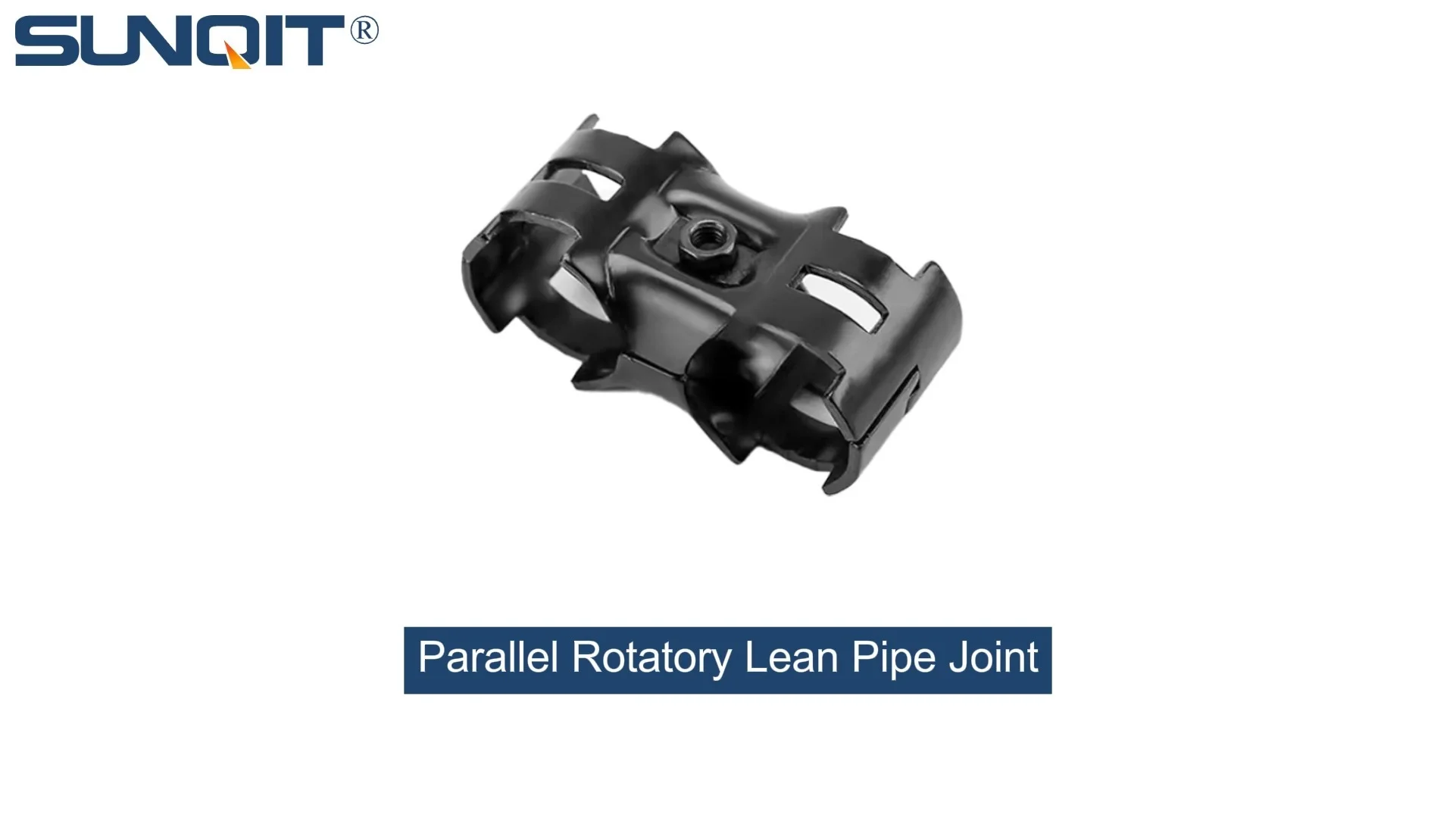
Parallel Rotatory Lean Pipe Joint
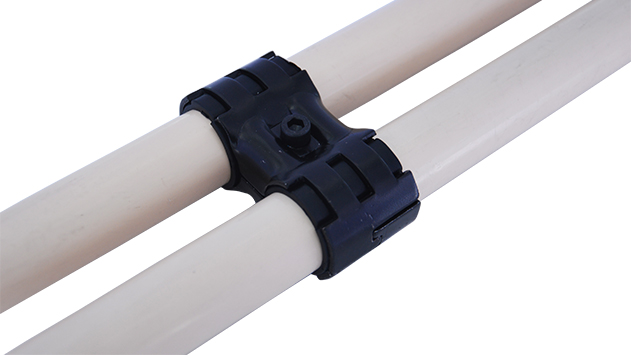
Parallel rotatory lean pipe joint, for 2 pcs pipe conenction in parallel direction with rotatory function.
Walk into any modern manufacturing facility, warehouse, or workshop, and you'll notice a quiet revolution happening—workspaces that bend, adjust, and evolve with the tasks at hand. Gone are the days of rigid, immovable equipment that dictates how work gets done. Instead, there's a focus on flexibility, and at the heart of this shift lies a humble yet powerful component: the lean pipe joint . But not just any joint—custom parallel rotatory lean pipe joints, the unsung heroes that turn generic structures into tailored solutions. In this article, we'll dive into why these small but mighty connectors matter, how customization elevates their impact, and why they're becoming indispensable for businesses that refuse to be boxed in by "one-size-fits-all" equipment.
The Rise of Lean Pipe Systems: Beyond the Basics
Before we zoom in on parallel rotatory joints, let's take a step back and appreciate the bigger picture: lean pipe systems. Born from the principles of lean manufacturing—efficiency, waste reduction, and continuous improvement—these systems are built around modularity. Think of them as the "building blocks" of the industrial world: lightweight pipes (often aluminum, stainless steel, or coated steel), a variety of joints, and accessories like casters, roller tracks, and workbench surfaces. Together, they let you construct everything from simple material racks to complex assembly lines, all without welding, heavy tools, or permanent installations.
The magic of lean pipe systems lies in their adaptability. A workbench today can become a conveyor tomorrow, and a material rack next month—all by reconfiguring the pipes and joints. But here's the catch: even within this flexible framework, standard components can sometimes hit a wall. Maybe your team needs a workbench that tilts at a 15-degree angle for ergonomic assembly, or a material rack that swivels to feed parts to two different production lines. That's where custom solutions, especially custom parallel rotatory lean pipe joints, come into play.
What Are Parallel Rotatory Lean Pipe Joints, Anyway?
Let's break down the name: "parallel" means the joint connects pipes that run alongside each other (not perpendicular, like a T-joint), and "rotatory" means it allows those pipes to rotate relative to one another. Imagine two pipes mounted parallel to each other—with a standard fixed joint, they're locked in place. But with a parallel rotatory joint, one pipe can spin or pivot along the axis of the other, opening up a world of movement. This rotation might be limited to a specific angle (say, 0-90 degrees) or full 360-degree swivel, depending on the design.
Why does this matter? In short, it adds dynamic flexibility . Instead of disassembling and rebuilding a structure when your needs change, you can simply adjust the rotation of the joint. Need to angle a roller track downward to speed up material flow? Rotate the joint. Want to fold a mobile trolley to fit through a narrow doorway? Swivel the parallel pipes inward. These joints turn static structures into living, breathing tools that adapt to your workflow, not the other way around.
When Standard Just Isn't Enough: The Case for Customization
Standard parallel rotatory joints are great for many applications—they offer basic rotation, fit common pipe sizes, and work well in general-purpose settings. But every business has its quirks. Maybe you're working with unusually heavy components, so you need a joint that can handle 500 lbs instead of the standard 300. Or your workspace has tight corners, requiring a joint with a lower profile to avoid snagging. Perhaps you're in the electronics industry and need ESD (electrostatic discharge) protection, so the joint must be made from conductive materials. These are the moments when "off-the-shelf" falls short.
Let's take a real-world example: a small automotive parts manufacturer I worked with a few years back. They built custom engine brackets, and their assembly line required a workbench where operators could rotate the bracket 180 degrees to access both sides without lifting it. Standard parallel rotatory joints only allowed 90 degrees of rotation, and the locking mechanism was flimsy—after a few hours of use, the joint would slip, risking product damage. By partnering with a supplier to design a custom parallel rotatory joint with a 180-degree range and a reinforced locking pin, they cut assembly time by 25% and eliminated product defects from slips. That's the power of customization: solving your specific problem, not a hypothetical one.
The Anatomy of a Custom Parallel Rotatory Lean Pipe Joint
So, what goes into making a custom joint? It starts with understanding your needs, then engineering a solution that checks all the boxes. Here are the key elements that often get tailored:
Rotation Range: Standard joints might offer 0-90 degrees, but custom options can go from 0-180 degrees (or even 360, for continuous rotation) with stops at specific angles (e.g., 30°, 45°, 60°) to ensure consistency.
Load Capacity: Materials matter here. Thicker steel or aluminum alloys, reinforced bearings, and larger diameter shafts can boost load capacity from 300 lbs to over 1,000 lbs, depending on the application.
Material & Finish: If you're in a food processing plant, you might need stainless steel joints to resist corrosion and meet standards. For cleanrooms, anodized aluminum with a smooth finish prevents dust buildup. In ESD-sensitive environments (like electronics manufacturing), joints can be coated with conductive materials to dissipate static.
Locking Mechanism: This is critical for safety and stability. Standard joints often use plastic knobs, but custom options might include lever locks, cam locks, or even quick-release pins for one-handed adjustment—perfect for fast-paced environments where every second counts.
Size & Profile: Tight spaces call for compact joints. Custom designs can slim down the joint's width or height, or add recessed components to avoid interfering with other equipment.
Standard vs. Custom: A Quick Comparison
Curious how custom parallel rotatory joints stack up against standard ones? Let's put them side by side:
| Feature | Standard Parallel Rotatory Joint | Custom Parallel Rotatory Joint |
|---|---|---|
| Rotation Range | 0-90 degrees (fixed stops) | 0-180+ degrees (custom stops as needed) |
| Max Load Capacity | Up to 300 lbs per joint | 300 lbs to 1,000+ lbs (engineered for your needs) |
| Material Options | Basic steel or aluminum | Stainless steel, anodized aluminum, ESD-conductive materials |
| Locking Mechanism | Plastic knob or basic lever | Reinforced lever, cam lock, quick-release pin, or motorized (for automated systems) |
| Size/Profile | One-size-fits-most (may be bulky) | Compact, low-profile, or oversized (tailored to space constraints) |
| Application Flexibility | General-purpose (workbenches, simple racks) | Specialized (ergonomic workstations, heavy-duty material handling, ESD environments) |

Where Custom Joints Shine: Real-World Applications
Custom parallel rotatory lean pipe joints aren't just theoretical—they solve tangible problems across industries. Let's explore a few scenarios where they make a measurable difference:
1. Ergonomic Workstations
Repetitive strain injuries (RSIs) are a major issue in manufacturing, often caused by awkward postures—bending, reaching, or twisting for tools or parts. A custom parallel rotatory joint can transform a static workbench into an ergonomic powerhouse. For example, a electronics assembly line might use a workbench with a tilting surface (adjustable from 0-30 degrees) thanks to parallel rotatory joints, letting workers position PCBs at eye level instead of hunching over. Add height-adjustable legs (also connected via rotatory joints) and you've got a workstation that adapts to every operator's height and posture, cutting RSI cases by 40% or more.
2. Multi-Directional Material Racks
Warehouses and distribution centers often struggle with storing irregularly shaped items—think automotive bumpers, medical equipment, or large plastic molds. A standard material rack with fixed shelves forces you to stack items flat, wasting vertical space and making access a hassle. With custom parallel rotatory joints, you can build racks with swiveling arms: each arm holds one item and can rotate 180 degrees, so you can load from the front and unload from the back without moving the entire rack. Pair this with swivel roller balls (small, omnidirectional rollers) on the arms, and even heavy items glide into place with minimal effort.
3. Flexible Conveyor Systems
Conveyors are the arteries of production lines, but standard straight or gently curved conveyors can't always navigate tight factory layouts. Custom parallel rotatory joints let you build "articulated" conveyors: sections connected by rotatory joints that bend like an elbow, allowing the conveyor to snake around equipment or follow the contour of your workspace. For example, a bakery might use a roller conveyor with rotatory joints to move dough trays from the mixer to the oven, bending around a refrigeration unit that can't be relocated. The joints lock into place during operation but unlock for easy cleaning or reconfiguration during maintenance.
4. Mobile Workstations & Trolleys
Mobility is key in dynamic environments, but standard trolleys are often rigid—they either fit through a door or they don't. Custom parallel rotatory joints can make trolleys "foldable" for storage. Imagine a tool trolley with side shelves connected via rotatory joints: during use, the shelves swing out to hold tools; when not in use, they fold inward, reducing the trolley's width by 50% so it can slide into a narrow storage closet. Even better, the joints can be designed to lock automatically when fully extended, so you never have to fumble with pins or latches while moving.

Beyond the Joint: The Role of Lean Pipe and Accessories
A custom parallel rotatory joint is only as good as the system it's part of. To truly maximize its potential, you need to pair it with the right lean pipe and accessories. Here's how these components work together:
Lean Pipes: Aluminum pipes are lightweight and corrosion-resistant, making them ideal for clean environments. Stainless steel pipes offer superior strength for heavy loads. Coated steel pipes (like PE-coated) add grip and noise reduction—perfect for trolleys or workbenches where items might slide. Your custom joint should be engineered to fit your pipe material and diameter (common sizes are 28mm, 30mm, or 40mm) for a snug, wobble-free connection.
Accessories: Casters add mobility, but heavy-duty casters with brakes are a must if your custom joint is part of a mobile workstation. Aluminum profile workbench tops provide a sturdy, flat surface, while anti-slip mats (attached via profile grooves) keep tools from sliding. Roller tracks and swivel roller balls turn static surfaces into dynamic material handlers, working seamlessly with rotatory joints to move parts along the line.
The takeaway? Custom joints don't exist in a vacuum. They're part of a ecosystem, and choosing the right pipes and accessories ensures the entire system works in harmony. A supplier who understands this—who can help you select not just the joint, but the pipes, casters, and rollers to go with it—will deliver a solution that's greater than the sum of its parts.
The Benefits: Why Custom Joints Are Worth the Investment
At this point, you might be thinking, "Custom sounds great, but isn't it expensive?" It's true—custom components often have a higher upfront cost than standard ones. But the long-term benefits almost always outweigh the initial investment. Let's break down the ROI:
1. Adaptability = Longevity: Business needs change—product lines expand, workflows evolve, regulations update. A custom joint that adapts to these changes means you won't have to replace your entire lean pipe system in 2-3 years. Instead, you'll tweak the joints, add new pipes, or reconfigure the structure—extending the system's lifespan by 5-10 years or more.
2. Productivity Gains: When tools and equipment work with your team, not against them, productivity soars. A tilting workbench reduces fatigue, a swiveling material rack cuts retrieval time, and an articulated conveyor eliminates bottlenecks. These small, daily improvements add up to big numbers at the end of the month.
3. Reduced Waste: Lean manufacturing is all about eliminating waste—time, materials, space. Custom joints help here by maximizing space (e.g., foldable trolleys), reducing product damage (e.g., secure locking mechanisms), and minimizing downtime (e.g., quick-adjust joints that don't require tools to reconfigure).
4. Safety First: Standard joints that don't fit your load or environment can fail, leading to accidents. Custom joints are engineered to your safety requirements—whether that's a higher load rating, ESD protection, or non-slip locking—to keep your team and products safe.
Choosing the Right Partner: What to Look for in a Supplier
Not all suppliers are created equal when it comes to custom lean pipe solutions. To ensure you get a joint that meets your needs (and doesn't turn into a headache), look for these qualities:
Design Expertise: A good supplier won't just take your order—they'll ask questions. What's the maximum load? What's the environment like (temperature, humidity, chemicals)? How often will the joint be adjusted? The more they understand your workflow, the better the final product.
Prototyping Capabilities: You don't want to bet on a custom design without testing it first. Ask if they offer prototypes or small-batch runs so you can put the joint through real-world paces before committing to a full order.
Material Knowledge: From aluminum alloys to stainless steel grades, the right material makes all the difference. A supplier who can explain the pros and cons of each option (e.g., "Aluminum 6061 is stronger but heavier than 5052") shows they know their craft.
Quality Control: Custom doesn't mean cutting corners. Ask about their testing process—do they load-test joints to failure? Check for dimensional accuracy? A supplier with rigorous QC ensures your joints will perform reliably, even under stress.
Conclusion: Building Workspaces That Grow With You
In a world where change is the only constant, flexibility isn't a luxury—it's a necessity. Custom parallel rotatory lean pipe joints embody this flexibility, turning static structures into tools that adapt, evolve, and empower your team to do their best work. They're not just connectors; they're enablers—of productivity, safety, and innovation.
Whether you're a small workshop looking to upgrade a single workbench or a large manufacturer reimagining your entire production line, the right custom joint can transform how you operate. It starts with a problem, a conversation, and a partner who's as invested in your success as you are. So, take a look around your workspace—where is rigidity holding you back? That's where a custom parallel rotatory lean pipe joint might just be the solution you've been waiting for.