- Company Articles
- Products and Technology
- Product knowledge
- Custom Plastic Pipe End Caps for 3C Assembly Lines: Meeting Precision Requirements

Custom Plastic Pipe End Caps for 3C Assembly Lines: Meeting Precision Requirements
Related Product
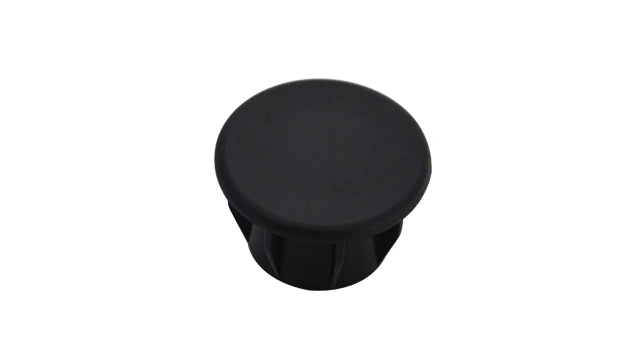
Plastic pipe end cap
Plastic pipe cover, used for 28mm two end cover and protection, to avoid any scratch from sharp metal surface.
Walk into any modern 3C (computers, communications, consumer electronics) manufacturing facility, and you'll witness a carefully orchestrated dance of technology and human expertise. Conveyors hum as circuit boards glide past, workbenches buzz with technicians assembling smartphones and smartwatches, and flow racks stand like organized sentinels, holding components from tiny resistors to larger display modules. In this high-stakes environment, where even a fraction of a millimeter can mean the difference between a functional device and a defective one, every component—no matter how small—matters. One such unsung hero? The custom plastic pipe end cap.
At first glance, these small, often unnoticeable caps might seem trivial. But in reality, they play a critical role in maintaining the precision, safety, and efficiency of 3C assembly lines. Designed to fit snugly on the ends of lean pipes, workbench frames, and flow rack rails, they prevent dust and debris from clogging machinery, protect workers from sharp edges, and ensure components move smoothly through production. Yet, as 3C manufacturers push for faster production cycles, smaller device sizes, and stricter quality standards, the "one-size-fits-all" end caps of the past are no longer sufficient. Today, custom plastic pipe end caps are emerging as a key solution to meet the unique demands of modern assembly lines.
The Critical Role of Plastic Pipe End Caps in 3C Assembly
To understand why custom end caps matter, let's first unpack their core functions in a 3C manufacturing setting. These small components are far more than just "caps"—they're multitaskers that address several critical needs:
Protection Against Contamination: 3C devices, especially those with sensitive electronics like microchips and sensors, are highly vulnerable to dust, metal shavings, and other debris. Lean pipes, which form the backbone of modular workstations and flow racks, often have open ends that can collect or expel such particles. A well-fitted end cap seals these openings, preventing contaminants from entering the pipe (where they might later dislodge and damage components) or escaping into the air (where they could settle on circuit boards during assembly).
Safety for Workers: Lean pipes, workbench frames, and flow rack rails are typically made of metal or aluminum, leaving their cut ends sharp and potentially hazardous. In fast-paced assembly lines, where technicians move quickly and tools are frequently handled, a sharp edge can cause cuts or snag on gloves or clothing. Plastic end caps smooth these edges, reducing the risk of workplace injuries and creating a safer, more ergonomic environment.
Enhanced Equipment Longevity: Without end caps, moisture and corrosive substances (like cleaning agents or oils used in maintenance) can seep into lean pipes, leading to rust or degradation over time. This not only weakens the structural integrity of the pipes but also increases maintenance costs and downtime. Custom end caps, designed with tight tolerances and durable materials, create a watertight seal that extends the lifespan of lean pipe systems, workbenches, and flow racks.
Optimized Component Flow: In flow racks and conveyor systems, components like PCBs, batteries, and display panels must move with precision—too much friction, and they slow down production; too little control, and they might jam or collide. End caps on flow rack rails, for example, can be designed with tapered edges or low-friction surfaces to guide components smoothly onto conveyors or workbenches, reducing bottlenecks and ensuring a steady workflow.
For 3C manufacturers, where even a 1% increase in defect rates can translate to millions in losses, these functions are non-negotiable. But as assembly lines become more customized—with unique lean pipe configurations, specialized workbenches, and compact flow racks to accommodate smaller devices—standard end caps struggle to keep up.
Why "One-Size-Fits-All" End Caps Fall Short in Modern 3C Lines
Standard, off-the-shelf end caps are designed to fit common pipe diameters (e.g., 28mm or 30mm lean pipes) and basic applications. While they work for simple setups, they fail to address the nuances of 3C manufacturing, where customization is king. Here's why:
Poor Fit on Custom Lean Pipe Configurations: 3C assembly lines often use non-standard lean pipe setups to maximize space efficiency. For example, a manufacturer producing smartwatches might use smaller-diameter aluminum pipes (20mm or 25mm) to build compact workbenches, while a factory assembling laptops might opt for thicker, reinforced pipes (32mm or 35mm) to support heavier components. Standard end caps, which are limited to a few sizes, either wobble loosely on smaller pipes (allowing debris in) or crack when forced onto larger ones (compromising safety).
Material Limitations: Most standard end caps are made of low-cost plastics like polypropylene, which lack the durability needed for 3C environments. In facilities where assembly lines run 24/7, end caps are subjected to constant vibration, temperature fluctuations (from HVAC systems and machinery), and occasional impacts from tools or components. Cheap plastics can become brittle over time, cracking and exposing sharp pipe edges—or, worse, breaking off entirely and falling into production, risking component damage.
Insufficient ESD Protection: Electrostatic discharge (ESD) is a silent killer in 3C manufacturing. A single static charge (as small as 250 volts) can damage a microchip, rendering an entire device useless. While some standard end caps claim to be "ESD-safe," they often use generic conductive additives that wear off quickly or provide inconsistent protection. For 3C lines assembling sensitive electronics, this inconsistency is unacceptable—ESD protection must be reliable, long-lasting, and tailored to the specific voltage thresholds of the devices being produced.
Lack of Customization for Workflow Efficiency: 3C manufacturers rely on visual cues and color-coding to streamline workflows. For example, red might indicate a "defective parts" zone, while green signals "ready for assembly." Standard end caps come in limited colors (usually black or gray), making it hard to integrate them into these systems. Without color customization, technicians waste time double-checking labels, increasing the risk of errors.
The result? Standard end caps often lead to increased downtime (from jams or broken caps), higher defect rates (from contamination or ESD damage), and safety incidents—all of which eat into profits. For 3C manufacturers, the solution is clear: custom plastic pipe end caps designed to fit their unique lines, materials, and workflows.

Material Science: Choosing the Right Plastic for Custom End Caps
Custom end caps start with the right material. Unlike standard caps, which prioritize cost over performance, custom solutions are engineered to meet the specific demands of 3C assembly lines. Here's a breakdown of the most common plastics used and their ideal applications:
ABS (Acrylonitrile Butadiene Styrene): A go-to for high-impact environments, ABS is known for its toughness and resistance to cracks. It's ideal for end caps on workbench legs and flow rack rails, where tools or components might accidentally collide with the caps. ABS also holds up well to temperature fluctuations (from -20°C to 80°C), making it suitable for factories with varying HVAC conditions.
Nylon (Polyamide): For end caps that see constant friction—such as those on conveyor rails or flow rack rollers—nylon is a top choice. Its low coefficient of friction ensures components glide smoothly, while its wear resistance prevents the cap from degrading over time. Nylon also has excellent chemical resistance, making it suitable for lines that use industrial cleaning agents.
PVC (Polyvinyl Chloride): When cost is a concern but basic durability is still needed, PVC is a reliable option. It's lightweight, easy to mold, and works well for static environments (e.g., non-ESD workbenches or storage racks). However, it's less impact-resistant than ABS or nylon, so it's best used in low-vibration areas.
Conductive Plastics (e.g., Carbon-Filled ABS): For ESD-sensitive zones (e.g., workstations assembling circuit boards or semiconductors), conductive plastics are non-negotiable. These materials contain additives like carbon black or metal fibers that dissipate static charges, preventing ESD damage. Custom conductive end caps can be tailored to meet specific resistance levels (e.g., 10^6 to 10^9 ohms, as required by IEC 61340 standards for electronics manufacturing).
The key is matching the material to the application. A custom end cap supplier will work with manufacturers to test materials under real-world conditions—simulating vibration, temperature cycles, and impact—to ensure the cap performs as needed for its lifespan (typically 3–5 years in 24/7 operations).

Design Precision: The Secret to Seamless Integration
Even the best material can fail if the end cap's design is flawed. In 3C assembly, where precision is measured in microns, custom end caps must be engineered with meticulous attention to detail. Here are the design elements that matter most:
Tight Tolerances: A snug fit is critical. Custom end caps are designed with inner diameter tolerances of ±0.1mm to ensure they grip pipes firmly without cracking. For example, a 28mm lean pipe would require an end cap with an inner diameter of 28.0mm ±0.1mm—tight enough to prevent wobbling but loose enough to allow easy installation and removal for maintenance.
Compatibility with Pipe Geometry: Not all pipes are round. Some 3C lines use oval or square aluminum profiles (e.g., 20x20mm or 30x30mm T-slot profiles) for workbench frames. Custom end caps can be molded into matching shapes, ensuring full coverage and protection. Even for round pipes, custom designs might include features like flanges (to prevent the cap from sliding off) or tapers (to guide components on flow racks).
Color Customization: As mentioned earlier, color-coding is key to workflow efficiency. Custom end caps can be dyed to match a manufacturer's color system—e.g., blue for "inspection stations," yellow for "active production," and red for "maintenance zones." This visual cue helps technicians quickly identify zones, reducing errors and speeding up training for new staff.
Ventilation and Drainage Features: In humid environments or areas with liquid cleaning agents, end caps can be designed with tiny vents or drainage holes to prevent moisture buildup (which can lead to mold or corrosion). For example, a workbench in a tropical factory might use vented end caps to allow air circulation, while a flow rack near a cleaning station could have drainage holes to channel spills away from components.
To achieve this precision, custom end cap suppliers use advanced tools like 3D scanning (to map the exact dimensions of a manufacturer's pipes) and computer-aided design (CAD) software (to model the cap). Prototypes are then 3D-printed and tested on-site before mass production, ensuring the final product integrates seamlessly with existing assembly line equipment.
Integrating with Lean Systems: Lean Pipe, Workbench, and Flow Rack
Custom end caps aren't standalone components—they're part of a larger lean manufacturing ecosystem. When designed to work with lean pipes, workbenches, and flow racks, they enhance the very principles of lean production: eliminating waste, improving flow, and maximizing value. Let's explore their role in each:
Lean Pipe Systems: Lean pipes form the backbone of modular assembly lines, allowing manufacturers to reconfigure workstations quickly as production needs change. Custom end caps support this modularity by ensuring pipes can be connected, disconnected, and repurposed without damage. For example, a cap with a reinforced inner lip can withstand repeated insertion and removal, making it easy to disassemble and rebuild a workstation for a new product model. Additionally, conductive end caps on lean pipes help ground the entire system, preventing static buildup in ESD zones.
Workbenches: 3C workbenches are where the "magic" happens—technicians assemble, test, and inspect devices here. Custom end caps on workbench legs and frames enhance safety (smooth edges) and functionality (ESD protection). Some designs even include built-in features like tool holders or cable management clips, reducing clutter and improving ergonomics. For example, a workbench assembling smartphones might use end caps with small notches to route charging cables, keeping the surface organized and preventing tripping hazards.
Flow Racks: Flow racks use gravity to move components from "staging" to "assembly" zones, reducing the need for manual handling. Custom end caps play a critical role in ensuring components flow smoothly. Tapered caps at the end of flow rack rails guide components onto conveyors, while low-friction caps minimize resistance, allowing even lightweight parts (like microSD cards or camera lenses) to move consistently. In high-speed lines, this can reduce bottlenecks by up to 30%, according to case studies from electronics manufacturers.
The result? A leaner, more efficient assembly line where every component—from the largest workbench to the smallest end cap—works in harmony.
Case Study: How Custom End Caps Solved a 3C Manufacturer's Downtime Crisis
To put this in context, let's look at a hypothetical but realistic example of a 3C manufacturer that leveraged custom end caps to overcome a critical challenge. We'll call them "TechNova," a mid-sized company producing smart home devices (e.g., security cameras and smart thermostats).
The Problem: TechNova was struggling with frequent downtime on its flow rack lines. Components—specifically, small circuit boards for smart thermostats—were jamming at the transition point between the flow rack and the conveyor belt. A root cause analysis revealed the issue: standard end caps on the flow rack rails were slightly warped (due to poor material quality) and had uneven edges. As circuit boards slid down the rails, they caught on these warped edges, causing jams that took 10–15 minutes to resolve each time. With 4–5 jams per shift, the line was losing 40–75 minutes of production daily—costing TechNova an estimated $12,000 per week in lost output.
The Solution: TechNova partnered with a custom end cap supplier to design a tailored solution. The supplier started by 3D-scanning the flow rack rails (25mm aluminum pipes) to capture exact dimensions, then recommended:
- Material: Carbon-filled ABS for ESD protection (to safeguard the circuit boards) and impact resistance (to withstand component collisions).
- Design: A tapered, low-friction edge to guide circuit boards smoothly onto the conveyor, with an inner diameter tolerance of ±0.05mm to ensure a snug fit on the rails.
- Color: Green (to align with TechNova's "active production" color code).
The Result: After installing the custom end caps, jams decreased by 92%—from 4–5 per shift to just 1–2 per week. Downtime dropped to less than 5 minutes daily, and the line's throughput increased by 12% (from 800 to 900 units per shift). Within three months, TechNova had recouped the cost of the custom end caps, and by the end of the year, the solution had saved the company over $500,000 in lost production.
This example illustrates a key point: custom end caps aren't just a "nice-to-have"—they're a cost-effective investment in efficiency and reliability.
Overcoming the Challenges of Custom End Cap Implementation
While the benefits are clear, adopting custom end caps isn't without challenges. Here's how manufacturers can navigate them:
Cost Concerns: Custom end caps have a higher upfront cost than standard ones (typically 2–3x more per unit). However, this is offset by long-term savings from reduced downtime, fewer defects, and lower maintenance costs. To manage upfront expenses, manufacturers can phase implementation—starting with high-priority zones (e.g., ESD workstations or high-traffic flow racks) before rolling out to the entire line.
Lead Times: Custom end caps require design, prototyping, and testing, which can take 3–4 weeks (vs. 1–2 days for standard caps). Planning ahead is key: manufacturers should factor lead times into production schedules or keep a small stock of prototypes on hand for urgent needs.
Ensuring Compatibility: With multiple pipe sizes, materials, and configurations in a single facility, ensuring custom end caps work across all setups can be tricky. A good supplier will provide a "sample kit" with caps for different pipe types, allowing manufacturers to test fit and performance before full production.
The Future of Custom End Caps: Smart, Sustainable, and Hyper-Precise
As 3C manufacturing evolves, so too will custom end caps. Here are the trends shaping their future:
Smart End Caps with RFID Tags: Imagine an end cap embedded with a tiny RFID chip that tracks when it was installed, its maintenance history, and even its current condition (e.g., wear level or ESD performance). This data can be fed into a factory's IoT system, alerting managers when caps need replacement before they fail—preventing unplanned downtime.
Biodegradable Plastics: With sustainability becoming a priority for manufacturers and consumers alike, suppliers are developing end caps from biodegradable materials like PLA (polylactic acid) or PHA (polyhydroxyalkanoates). These plastics break down naturally at the end of their lifespan, reducing landfill waste.
Self-Lubricating Materials: For high-friction applications (e.g., conveyor rails), end caps made with self-lubricating plastics (e.g., nylon blended with molybdenum disulfide) will reduce the need for manual lubrication, cutting maintenance time and costs.
AI-Driven Design: Advanced AI tools will soon allow suppliers to generate end cap designs automatically based on a manufacturer's input (pipe size, material, application). This will speed up the design process from weeks to days, making custom solutions more accessible to small and mid-sized manufacturers.
Standard vs. Custom End Caps: A Quick Comparison
| Feature | Standard End Caps | Custom End Caps |
|---|---|---|
| Fit Precision | Generic sizes; often loose or tight | ±0.1mm tolerance for snug, secure fit |
| Material Options | Limited (polypropylene, basic PVC) | Wide range (ABS, nylon, conductive plastics) |
| ESD Protection | Rare; inconsistent if available | Tailored to IEC 61340 standards (10^6–10^9 ohms) |
| Color Customization | Basic colors (black, gray, white) | Full color matching to workflow systems |
| Cost (Per Unit) | $0.50–$1.50 | $1.50–$4.00 |
| Long-Term Value | High replacement rate; downtime costs | 3–5 year lifespan; reduced downtime |
Conclusion: Small Component, Big Impact
In the fast-paced world of 3C manufacturing, where every second and every component counts, custom plastic pipe end caps are more than just accessories—they're essential tools for precision, safety, and efficiency. By addressing the limitations of standard caps with tailored materials, tight tolerances, and application-specific designs, they help manufacturers overcome downtime, reduce defects, and stay ahead in a competitive market.
As 3C devices continue to shrink in size and grow in complexity, the demand for custom solutions will only increase. Manufacturers that invest in custom end caps today aren't just solving a problem—they're future-proofing their assembly lines for tomorrow's challenges. After all, in a industry where success hinges on the details, even the smallest component can make the biggest difference.