- Company Articles
- Products and Technology
- Product knowledge
- Custom Saddle Pipe Clamps: Tailoring Solutions for Unique Production Needs

Custom Saddle Pipe Clamps: Tailoring Solutions for Unique Production Needs
Related Product
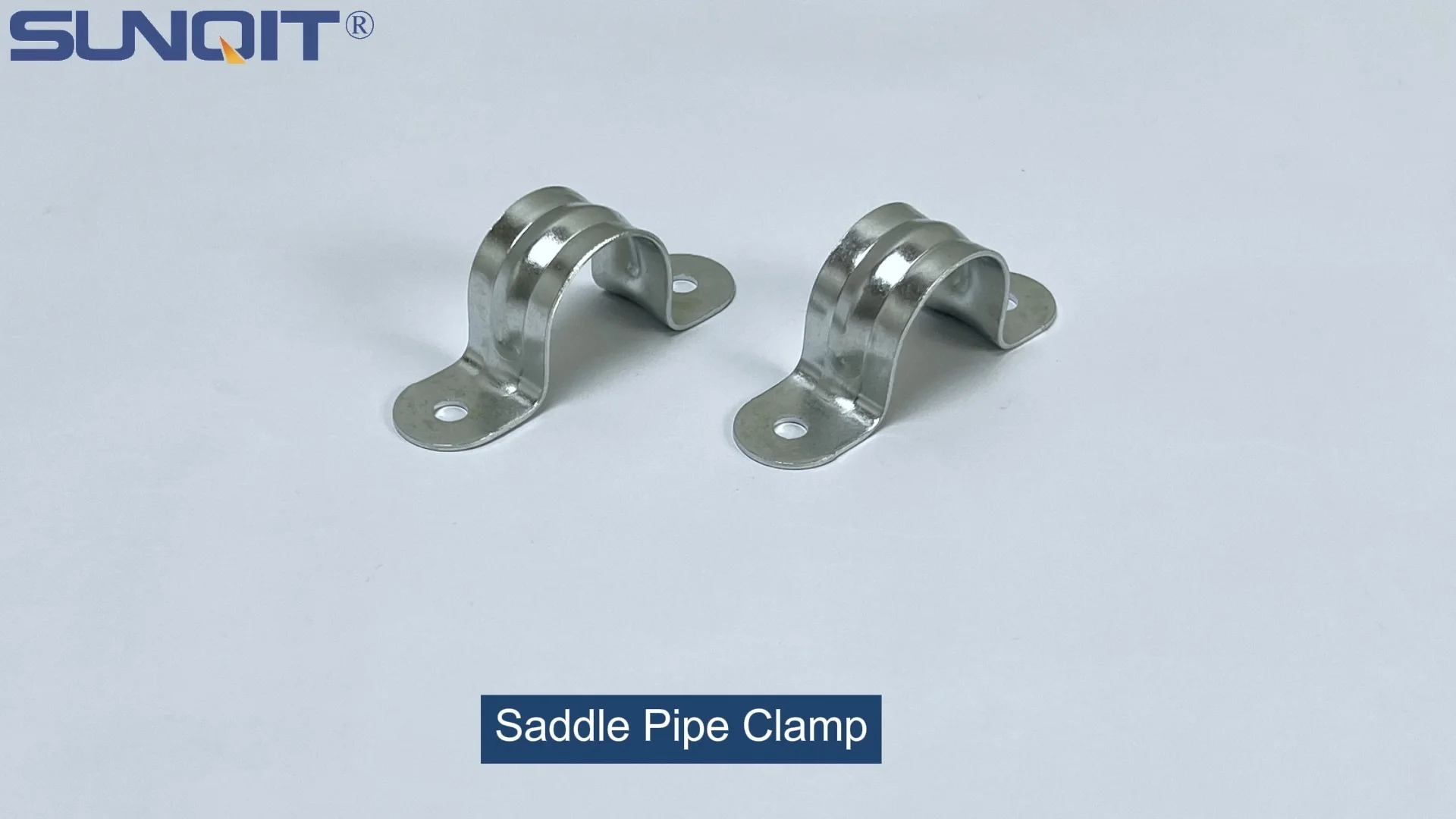
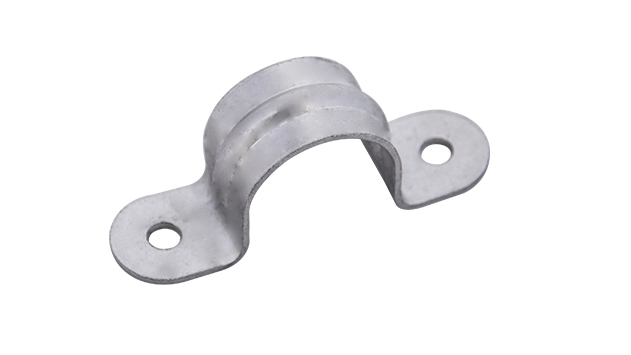
Saddle Pipe Clamp
Saddle pipe clamp, used for board connect with pipe, usually for table top installation.
Walk into any busy factory or production facility, and your eyes might be drawn to the big machines—the robotic arms, the conveyor belts, the towering assembly lines. But if you look closer, you'll notice the unsung heroes holding everything together: the small, unassuming components that turn chaos into order. Among these quiet workhorses are saddle pipe clamps. They might not grab headlines, but ask any production manager, and they'll tell you: the right clamp can mean the difference between a smooth, efficient workflow and a day filled with jams, delays, and frustrated workers.
In today's manufacturing world, where every operation is tailored to specific products, spaces, and goals, "one size fits all" solutions rarely cut it. That's especially true for something as critical as pipe clamps, which secure everything from lean pipe structures to roller tracks and workbenches. Custom saddle pipe clamps aren't just a "nice-to-have"—they're the bridge between generic equipment and a production line that truly works for your team. Let's dive into why these small but mighty tools matter, how they integrate with modern lean systems , and why investing in customization could be the best decision for your facility's efficiency and morale.
What Are Saddle Pipe Clamps, Anyway?
First things first: let's get clear on what a saddle pipe clamp actually is. At its core, it's a device designed to secure two pipes (or a pipe and another structure) together at a specific angle, usually 90 degrees. Picture a "U" shape with a flat base—the "saddle"—that wraps around one pipe, and a bolt or screw that tightens down to hold it in place. Simple enough, right? But don't let the simplicity fool you. The way that saddle is shaped, the materials it's made from, and the way it attaches can make or break its performance in a real-world setting.
Standard saddle clamps are great for basic jobs—think securing a straight pipe to a wall or a simple lean pipe rack. But when your production line has unique needs—unusual pipe diameters, heavy loads, corrosive environments, or tight spaces—standard clamps start to show their limitations. That's where custom versions come in. A custom saddle pipe clamp is built to your exact specifications: the right size for your pipes, the right material for your environment, and the right design to fit into the nooks and crannies of your unique workspace.
Fun fact: The term "saddle" comes from the clamp's resemblance to a horse saddle—curved to fit snugly around the "back" of the pipe, just like a saddle fits a horse. It's a small detail, but it speaks to the clamp's purpose: to hold on tight, no matter what.
Why "One Size Fits All" Fails in Modern Factories
Imagine a bakery where every cake is the same size, shape, and flavor. Boring, right? Now apply that to manufacturing: if every production line used the same clamps, pipes, and structures, we'd still be making the same products we were 50 years ago. Today's factories are dynamic, flexible, and focused on niche markets—and their equipment needs to keep up.
Let's look at a common scenario: a facility that uses aluminum lean pipe (lightweight, corrosion-resistant, perfect for lean systems) for their workbenches and material racks. Their standard clamps, bought in bulk, are designed for steel pipes—slightly larger in diameter. So when they attach the clamps to the aluminum pipes, they're either too loose (causing wobbly structures) or too tight (damaging the aluminum's coating). The result? Workers waste time adjusting unstable workbenches , materials slide off racks, and the team spends more time fixing issues than building products.
Or consider a food processing plant that needs to secure stainless steel pipes near washdown areas. Standard clamps might rust when exposed to water and cleaning chemicals, leading to frequent replacements and even contamination risks. A custom clamp made from stainless steel with a corrosion-resistant finish? That's not just a fix—it's a long-term solution that keeps the line running safely and smoothly.
Then there's space. Many factories today operate in tight quarters, especially in urban areas or repurposed buildings. A standard clamp might stick out too far, blocking a roller track or making it hard for workers to move around. A custom-designed clamp with a low-profile saddle or angled bolts can fit into that tight space, keeping the workflow unobstructed. These aren't just minor inconveniences—they add up to hours of lost productivity over time.
Custom Clamps and Lean Systems: A Match Made in Efficiency
If you're familiar with lean systems , you know the goal is to eliminate waste—whether that's wasted time, materials, or space. Lean manufacturing is all about creating value for the customer by streamlining every step of the process. So where do custom saddle pipe clamps fit into this? They're the "waste eliminators" you didn't know you needed.
Lean systems rely heavily on modular structures—think lean pipe workstations, flow racks, and roller tracks that can be reconfigured as production needs change. But modularity only works if the components holding those structures together are reliable. A loose clamp on a flow rack might cause materials to get stuck, creating a bottleneck. A clamp that's too bulky might make it impossible to reposition a workstation without taking it apart entirely. Custom clamps solve both problems: they're designed to fit your exact modular setup, ensuring stability when you need it and flexibility when you don't.
Take, for example, a electronics manufacturer that uses lean pipe workbenches for assembling circuit boards. Each workstation needs to hold specific tools, bins, and testing equipment—all at precise heights to reduce worker strain. Standard clamps might force the team to use "workarounds," like adding extra pipes or shims to get the right height, which not only looks messy but also creates unnecessary gaps where tools can fall. A custom saddle clamp with an extended saddle or adjustable bolt length lets the team build the workbench exactly as needed, with no extra parts and no wasted space. That's lean in action: eliminating waste (extra parts, time spent adjusting) and adding value (a workstation that fits the task perfectly).
Another example: a automotive parts supplier that uses roller tracks to move heavy components between stations. The tracks need to slope at a very specific angle to control the speed of the parts—too steep, and parts might crash; too shallow, and they get stuck. Standard clamps, which hold the roller track to the support pipes at fixed angles, can't adjust for that precise slope. A custom clamp with a swivel base, though? It lets the team fine-tune the angle to the millimeter, ensuring parts glide smoothly every time. No more jams, no more manual pushing—just a seamless flow that aligns with lean's "continuous flow" principle.

The Anatomy of a Custom Saddle Pipe Clamp: What Can Be Tailored?
So, what exactly makes a saddle pipe clamp "custom"? It's not just slapping a logo on it—it's about engineering every detail to fit your unique situation. Here are the key elements that can be tailored:
- Pipe Diameter: Pipes come in all sizes—from small 1-inch lean pipes to larger 2-inch stainless steel tubes. A custom clamp's saddle is shaped to match your exact pipe diameter, ensuring a snug, wobble-free fit.
- Material: From zinc-plated steel for general use to stainless steel for corrosive environments, or even plastic for lightweight, non-conductive applications (like in electronics manufacturing), the material is chosen to stand up to your facility's conditions.
- Angle: While most clamps are 90 degrees, custom designs can accommodate other angles (45 degrees, 135 degrees) for non-standard structures.
- Mounting Style: Do you need a bolt-on clamp, a welding-ready clamp, or one with a quick-release mechanism for easy reconfiguration? Custom clamps can be built to attach however works best for your team.
- Load Capacity: If you're securing heavy equipment (like a motor on a lean pipe frame), the clamp's thickness, bolt strength, and material are all beefed up to handle the weight without bending or breaking.
- Special Features: Need a clamp that's ESD-safe (to prevent static damage in electronics)? Or one with a rubberized saddle to protect delicate pipes? Custom designs can add these features seamlessly.
The best part? You don't have to reinvent the wheel. Reputable suppliers (like many lean pipe suppliers that specialize in custom solutions) will work with you to understand your needs, then design a clamp that checks all your boxes—often using existing templates as a starting point to keep costs reasonable.

Real-World Impact: How Custom Clamps Solve Common Production Headaches
Still on the fence about whether custom saddle pipe clamps are worth the investment? Let's look at a real-world example (with names changed for privacy) of how they transformed a facility:
Case Study: Precision Parts Co.
Precision Parts Co. is a mid-sized manufacturer of medical device components. Their production line uses a mix of aluminum lean pipes for workbenches and stainless steel roller tracks to move small, delicate parts between stations. For years, they used standard saddle clamps to secure the roller tracks to the lean pipe frames—but they kept running into two problems:
- The standard clamps were designed for steel pipes, so they didn't fit the aluminum lean pipes snugly. This caused the roller tracks to wobble, leading to parts falling off and jamming the line.
- The clamps' zinc-plated steel bolts were starting to rust in the humid, sanitized environment of the medical device facility, risking contamination.
After consulting with a supplier, they ordered custom saddle clamps with:
- A saddle shaped to fit their 1.5-inch aluminum lean pipes perfectly
- Stainless steel construction (bolts included) to resist rust
- A rubberized saddle lining to prevent scratches on the aluminum pipes
The result? Within a week, the wobble was gone. Parts stayed on the roller tracks, jams dropped by 80%, and the team spent less time cleaning up spills and more time assembling components. The stainless steel clamps also eliminated the risk of rust contamination, helping them pass their next FDA inspection with flying colors. "It's amazing how something so small could make such a big difference," said the plant manager. "Our workers are happier, our line is faster, and we're saving money on replacement parts and downtime."
Standard vs. Custom: Is the Investment Worth It?
We get it: custom anything sounds expensive. Why not just buy a pack of standard clamps for $5 each instead of paying $15-$20 for a custom one? The answer lies in the long-term costs of "making do" with subpar equipment. Let's break it down with a comparison:
| Factor | Standard Saddle Clamps | Custom Saddle Clamps |
|---|---|---|
| Upfront Cost | Lower ($3-$8 per clamp) | Higher ($10-$25 per clamp) |
| Fit | Generic—may be loose/tight, leading to wobble or damage | Precise—snug fit for your exact pipes/conditions |
| Durability | May fail early in harsh environments (rust, bending) | Built to last in your specific environment (corrosion-resistant, high-load capacity) |
| Productivity Impact | Potential for jams, rework, and downtime | Smoother workflows, fewer disruptions |
| Worker Morale | Frustration from constant adjustments/failures | Confidence in tools, less stress, higher satisfaction |
| Long-Term Cost | Higher (frequent replacements, downtime, rework) | Lower (fewer replacements, less downtime, higher efficiency) |
The numbers speak for themselves. A facility using 100 clamps might pay $500 upfront for standard ones, but if they need to replace 20% of them every year (due to rust or breakage) and lose 10 hours of production time to jams, that's $100 in replacements + $200 in lost labor (at $20/hour) = $300 per year. Over 5 years, that's $1,500—plus the ongoing frustration. A custom set might cost $1,500 upfront, but with zero replacements and minimal downtime, it pays for itself in under 3 years. And that doesn't even factor in the intangible benefits: happier workers, better quality control, and a production line that feels like it's on your side .
Finding the Right Supplier: What to Look For
Not all custom clamp suppliers are created equal. To ensure you get a product that lives up to your expectations, look for these qualities:
- Experience with Lean Systems: A supplier who understands lean manufacturing principles will "get" why customization matters. They'll ask about your workflow, pain points, and goals—not just your pipe size.
- Engineering Support: You shouldn't have to design the clamp yourself. Look for suppliers with in-house engineers who can help you finalize specs, test prototypes, and troubleshoot.
- Material Expertise: They should be able to recommend the best material for your environment (stainless vs. zinc-plated, etc.) and explain why it's the right choice.
- Quick Turnaround: Custom doesn't have to mean "slow." Many suppliers offer prototype turnaround in 1-2 weeks and production in 3-4 weeks.
- Warranty: A supplier who stands behind their product will offer a warranty (1-5 years) against defects. If they don't, that's a red flag.
Don't be afraid to ask for references or case studies. A good supplier will be happy to share stories of how they've helped other facilities solve similar problems with custom clamps.
Conclusion: Small Clamps, Big Results
At the end of the day, manufacturing is about people—people who show up every day to build, assemble, and create. The tools they use shape their experience: whether they feel supported or frustrated, efficient or bogged down. Custom saddle pipe clamps might not be the flashiest tools in the factory, but they're a tangible way to say, "We care about making your job easier."
In a world where lean systems and modular setups are the norm, customization isn't a luxury—it's the key to unlocking your facility's full potential. By investing in clamps that fit your lean pipe structures, workbenches , and roller tracks perfectly, you're not just buying hardware—you're buying smoother workflows, happier workers, and a production line that's built to grow with you.
So the next time you walk through your facility, take a second look at those clamps. Are they holding things together… or holding your team back? If it's the latter, maybe it's time to consider the custom difference. Your workers (and your bottom line) will thank you.