- Company Articles
- Products and Technology
- Product knowledge
- Custom Sizes Available: Flat Swivel Castor Wheel with Brake for Specialized Equipment

Custom Sizes Available: Flat Swivel Castor Wheel with Brake for Specialized Equipment
Related Product
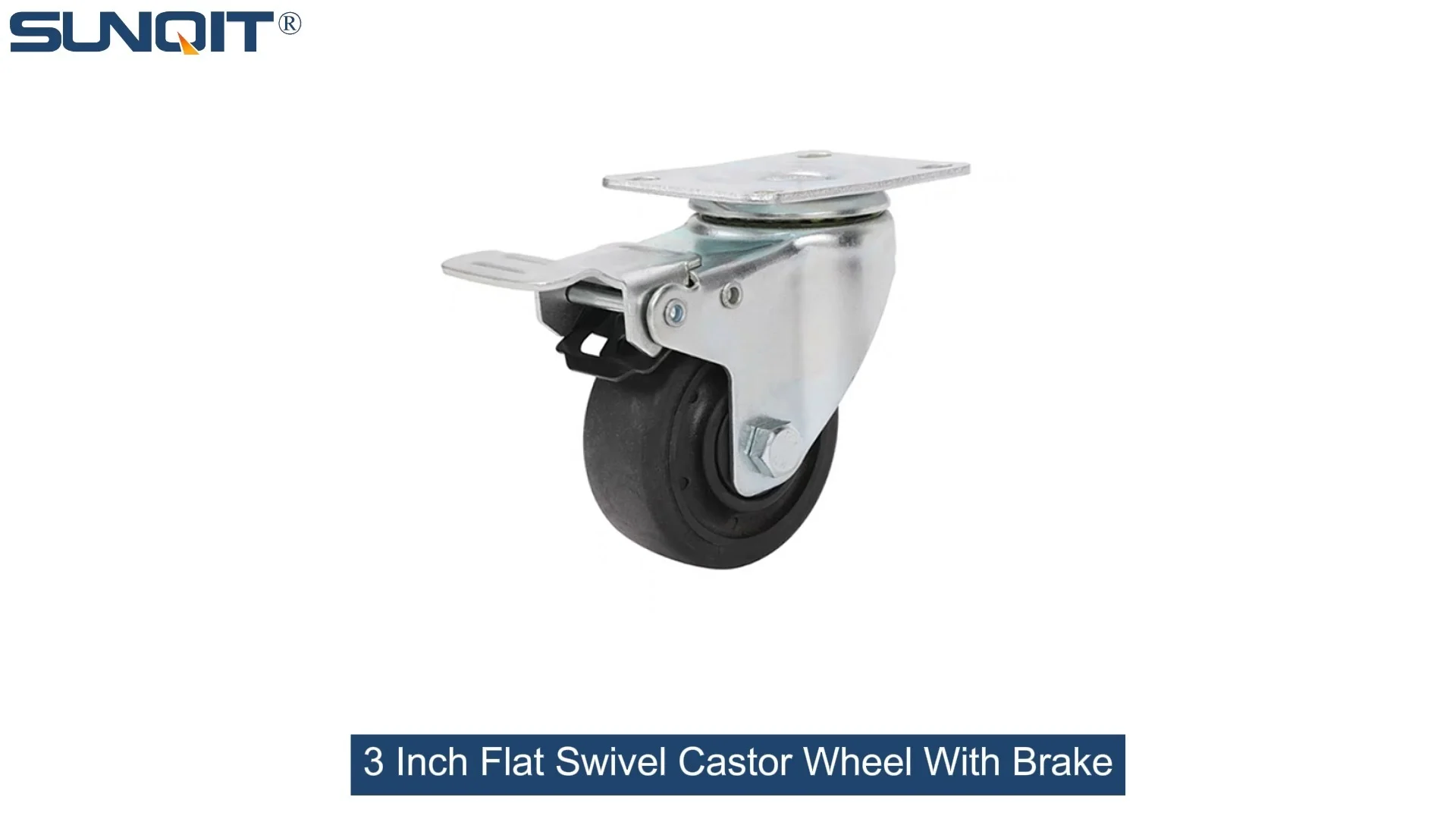
Flat Swivel Castor Wheel With Brake
Chair Casters Ball Bearing Wheels Rubber Base with brake design. Resistant to abrasion, impact and corrosion. Heavy payload can hold 70Kgs per pcs,which can make it works at a stable and smooth status.
Imagine a busy manufacturing floor where every second counts. A technician needs to reposition a heavy workbench to align with a new assembly line, but the castors on the bench wobble, struggle to lock, and leave unsightly marks on the concrete. Down the hall, in a hospital supply room, a nurse tries to maneuver a medication cart through a tight corridor, only to find the wheels catch on a floor transition, risking spills. In a warehouse, a logistics team strains to push a turnover trolley loaded with fragile components, its ill-fitting castors making the journey feel like navigating a obstacle course.
Mobility is the unsung hero of modern workspaces—whether in factories, hospitals, or warehouses. Yet, all too often, the smallest component in this equation gets overlooked: the castor wheel. Standard, one-size-fits-all castors might work for basic carts, but when it comes to specialized equipment—think custom workbenches, medical devices, or heavy-duty turnover trolleys—they fall short. That's where the flat swivel castor wheel with brake steps in, especially when tailored to your exact needs. In this article, we'll explore why custom sizes matter, how these castors transform workflows, and why they're the backbone of efficient, safe, and adaptable operations across industries.
Understanding Flat Swivel Castor Wheels with Brake: More Than Just "Wheels on a Cart"
At first glance, a castor wheel might seem like a simple component: a wheel attached to a mounting plate. But the flat swivel castor wheel with brake is a feat of engineering, designed to balance mobility, stability, and control. Let's break down what makes it unique.
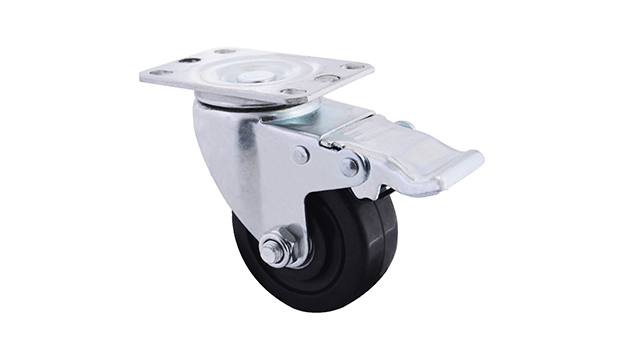
The "flat" in its name refers to the low-profile mounting plate, which sits close to the equipment's base. This design is critical for specialized gear where ground clearance is limited—think medical carts that need to slide under beds or industrial workbenches that must align with conveyor belts. The "swivel" feature allows 360-degree rotation, making tight turns and precise positioning possible, even in cramped spaces. And the "brake"? It's the unsung safety hero, locking both the wheel and swivel mechanism to prevent accidental movement during use.
Every part plays a role: the wheel material (rubber, polyurethane, or nylon) dictates grip and floor protection; the swivel head's ball bearings determine how smoothly it rotates; the brake lever's placement affects ease of use; and the mounting plate's size and bolt pattern ensure a secure fit to your equipment. When any of these elements are off—even by a few millimeters—performance suffers. That's why "close enough" isn't good enough for specialized applications.
Why One-Size-Fits-All Castors Fail Specialized Equipment
Walk into a hardware store, and you'll find shelves of castors labeled "universal" or "standard." But in the world of specialized equipment, "universal" often translates to "compromised." Let's take a manufacturing plant running a lean system —a setup built on efficiency, flexibility, and waste reduction. A standard castor might fit a basic trolley, but what about a custom workbench designed to hold 500kg of tools and components? A too-small castor would buckle under the weight, while one with a bulky mounting plate would raise the workbench higher than ergonomic standards allow, straining workers' backs.
Or consider a turnover trolley and rack used in a pharmaceutical warehouse, where strict regulations require equipment to be easy to sanitize and stable during loading. A standard castor with gaps in its design could trap dust or bacteria, failing compliance checks. Meanwhile, a logistics company moving fragile electronics might need castors with ultra-soft rubber wheels to absorb vibrations—but standard options only come in hard plastic, risking product damage.
The truth is, specialized equipment comes in endless shapes, sizes, and environments. From hospital beds that need to glide silently through patient rooms to industrial ovens on wheels that must withstand high temperatures, each scenario demands a castor that's been fine-tuned to its unique challenges. That's where custom sizing isn't a luxury—it's a necessity.
Key Features of Our Custom Flat Swivel Castor Wheels
Our custom flat swivel castor wheels with brake are built to solve these "one-size-fits-none" problems. Here's what sets them apart:
1. Tailored Load Capacities
We don't just offer "light," "medium," or "heavy-duty"—we calculate load capacity down to the kilogram. A small medical cart might need a 50kg castor, while a industrial workbench could require 800kg per wheel. Our engineers work with you to determine the exact weight each castor will bear (including dynamic loads, like when the equipment is moved) and design a wheel and frame that won't just hold up, but last for years.
2. Precision Brake Mechanisms
Not all brakes are created equal. We offer two options: total-lock brakes (which lock both the wheel and swivel head, preventing any movement) and directional-lock brakes (which keep the wheel straight but allow swiveling). For a workbench where stability during assembly is critical, total-lock is a must. For a trolley that needs to pivot but not roll away, directional-lock works better. We even customize brake lever placement—whether you need it within easy reach of a seated operator or recessed to avoid accidental engagement.
3. Material Science for Every Environment
Floor type, temperature, and exposure to chemicals all matter. Our wheels come in:
-
Rubber:
Quiet, shock-absorbent, ideal for smooth floors like hospitals or offices.
-
Polyurethane:
Durable, non-marking, perfect for concrete or tile in manufacturing plants.
-
Nylon:
Heat-resistant, great for high-temperature environments like bakeries or foundries.
-
Stainless Steel:
Corrosion-proof, essential for food processing or marine applications where moisture is constant.
4. Minimized Swivel Radius
For equipment that needs to navigate tight corners—like a turnover trolley and rack in a narrow warehouse aisle—swivel radius is everything. Our custom castors are engineered with compact swivel heads, allowing a 360-degree turn in as little as 15cm of space. No more backing up, no more awkward maneuvers—just smooth, precise movement.

Applications Across Industries: Where Custom Castors Make a Difference
The right castor doesn't just "work"—it transforms how teams operate. Here are a few industries where our custom flat swivel castor wheels with brake have become game-changers:
Manufacturing: Lean System Integration
In a factory running a lean system , downtime is the enemy. A car parts manufacturer we worked with was struggling to reconfigure their assembly line for a new model—it took 4 hours to move heavy workbenches with standard castors. We designed custom castors with a lower profile (to keep workbenches at ergonomic height) and total-lock brakes (to secure them mid-assembly). Now, reconfiguration takes 45 minutes, and workers report less fatigue from pushing stuck wheels. "It's like upgrading from a bicycle to a sports car," one foreman told us.
Healthcare: Safe, Silent Mobility
A children's hospital needed medication carts that could glide quietly through patient rooms (no more waking sleeping kids!) and lock securely during rounds. Standard castors were too loud and had weak brakes that sometimes slipped. We built castors with soft rubber wheels (for silence) and reinforced brake pads (for a firm lock). Nurses now say the carts "feel like they're floating," and there have been zero incidents of accidental movement since the switch.
Logistics: Turnover Trolley and Rack Efficiency
A logistics company moving electronics between warehouses was losing 10% of products to damage—their standard castors had hard plastic wheels that vibrated during transport. We swapped in custom rubber wheels with a shock-absorbing core and larger diameter (to roll over cracks in the floor). Damage dropped to 1%, and workers noticed the trolleys were easier to push, cutting loading time by 20 minutes per shift.

Customization Options: Standard vs. Tailored Specs
Curious how custom sizing compares to off-the-shelf options? Here's a breakdown of common specs—note how even small adjustments make a big difference:
| Feature | Standard Castor | Our Custom Castor |
|---|---|---|
| Wheel Diameter | 50mm or 100mm (no in-between) | 30mm–200mm (any size in 5mm increments) |
| Mounting Plate Size | 70x70mm or 100x100mm (fixed holes) | Custom dimensions (e.g., 85x62mm) with hole patterns to match your equipment |
| Load Capacity | 100kg or 300kg (no middle ground) | 50kg–1000kg (calculated to your exact needs) |
| Brake Type | Basic wheel lock (no swivel lock) | Total-lock, directional-lock, or custom hybrid designs |
| Wheel Material | Generic rubber or plastic | Rubber, polyurethane, nylon, or stainless steel (matched to your environment) |
How to Choose the Perfect Custom Castor for Your Equipment
Selecting a custom castor isn't about picking random specs—it's about solving a problem. Here's how to start:
Step 1: Calculate Your Load
Add up the weight of the equipment, plus the maximum load it will carry (e.g., tools on a workbench , boxes on a turnover trolley ). Divide by the number of castors (most equipment uses 4) and add 30% for safety (dynamic loads from movement). If the total is 600kg, each castor needs to handle at least 180kg (600/4 + 30%).
Step 2: Assess Your Floor and Space
Is your floor smooth (office tile) or rough (warehouse concrete)? Soft wheels (rubber) work better on smooth floors to avoid scratches; harder wheels (polyurethane) handle rough surfaces. Measure the tightest corner the equipment will navigate—this determines the minimum swivel radius you need.
Step 3: Think About Usage
How often will it move? A cart used once a day can get by with basic bearings, but one moved hourly needs high-quality ball bearings. Do workers need to lock it with one hand? Prioritize easy-to-reach brake levers. Is it used in a cleanroom? Opt for sealed bearings to prevent dust buildup.
Step 4: Don't Forget Caster Accessories
The castor itself is just the start. Accessories like brake extensions (for hard-to-reach levers), mounting shims (to adjust height), or replacement wheels (for quick swaps) can extend its lifespan and usability. We'll help you pick the right extras to make maintenance a breeze.
The Ripple Effect of a Well-Designed Castor
It's easy to underestimate how much a tiny castor impacts daily work. But we've seen the difference: A manufacturing plant that cut assembly line changeover time by 40% after upgrading to custom castors. A hospital that reduced nurse fatigue complaints by 25% because their medication carts now glide instead of jarring. A logistics team that boosted daily deliveries by 15% because their turnover trolley and rack setup moves faster and safer.
These aren't just "nice-to-haves"—they're ROI. A castor that costs a bit more upfront but lasts twice as long, reduces downtime, and improves safety pays for itself in months. And when it's tailored to your equipment, you avoid the hidden costs of "making do" with ill-fitting parts: broken wheels, damaged floors, worker injuries, or lost productivity.
Why Partner With Us for Custom Castor Solutions?
We've been in the caster wheel business for over 20 years, and we've learned one thing: every customer's problem is unique. That's why we don't just sell products—we collaborate. Our process starts with a conversation: What's your equipment? What challenges are you facing? What would "perfect" look like? From there, our engineers design a prototype, test it under real-world conditions, and refine until it meets your needs.
And we stand behind our work. All custom castors come with a 5-year warranty on materials and workmanship, plus a dedicated support team to help with installation, maintenance, or adjustments down the line. Whether you need 10 castors for a small workshop or 500 for a factory expansion, we scale with you.