Custom Sizing Options for Three Way Aluminum Pipe Joints: Meeting Non-Standard Needs

Related Product
Three Way Aluminum Pipe Joint
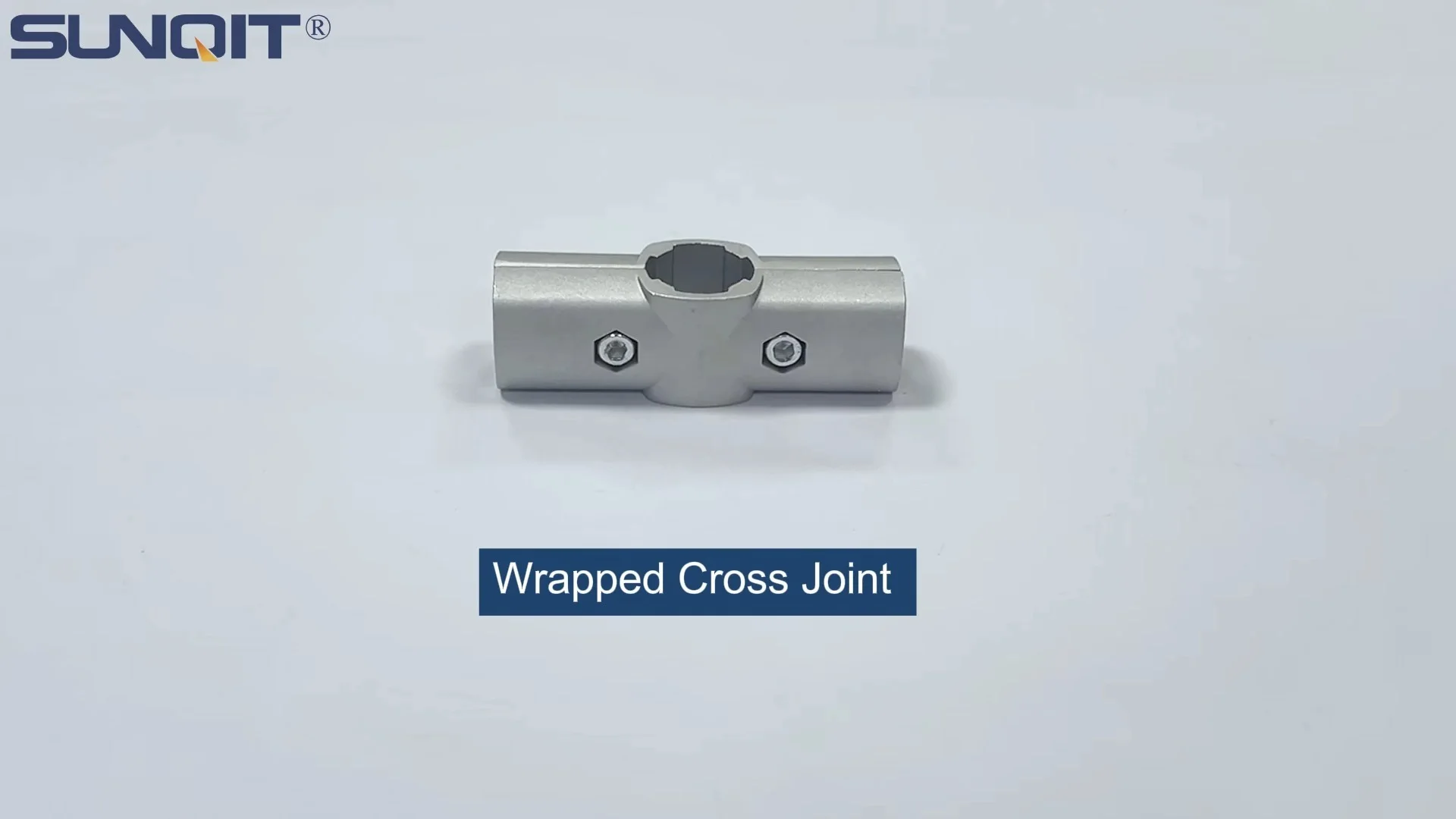
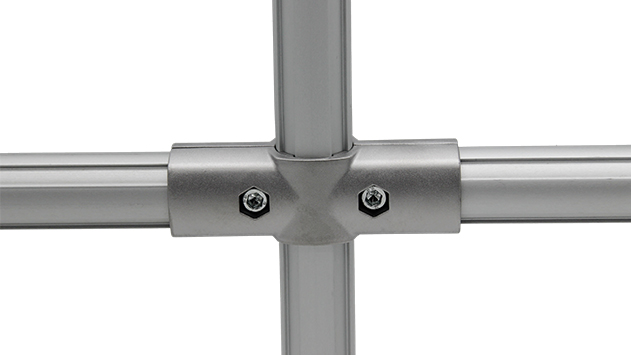
Aluminum 3 way pipe joint for 28mm aluminum pipe connection in 3 direction.
Three Way Aluminum Pipe Joint

Walk into any manufacturing facility, workshop, or warehouse, and you'll likely spot a common thread: the need to adapt. Whether it's a small-scale maker space cobbling together a workbench for prototyping or a large automotive plant reconfiguring its assembly line to accommodate a new model, the one constant is that no two workspaces are identical. This is where the frustration often begins—standard, off-the-shelf components, while convenient, rarely fit the unique contours of a business's specific needs. Nowhere is this more apparent than in the world of aluminum pipe systems, where the humble three way aluminum pipe joint plays a starring role in holding everything together.

Imagine trying to build a material rack that needs to fit under a low ceiling, or a workbench with angled shelves to optimize workflow in a cramped corner. Standard three way joints, with their fixed angles and one-size-fits-most diameters, can feel like trying to force a square peg into a round hole. They limit creativity, slow down production, and sometimes even compromise safety when makeshift solutions are used to bridge the gap. But what if there was a better way? What if those joints could be tailored to your exact specifications—adjusted for angle, diameter, or load capacity—to fit your space like a glove? That's where custom sizing options for three way aluminum pipe joints come into play, and they're changing the game for businesses that refuse to be boxed in by "standard."

Understanding Three Way Aluminum Pipe Joints: The Backbone of Flexible Systems

Before diving into the world of custom sizing, let's start with the basics: what exactly is a three way aluminum pipe joint, and why does it matter? At its core, this unassuming component is the unsung hero of modular aluminum systems. Think of it as the connective tissue that links aluminum pipes (or profiles) together at three points, allowing for the creation of structures like workbenches, material racks, conveyor systems, and even temporary enclosures. Unlike rigid welded connections, these joints are designed to be lightweight, durable, and—most importantly—reconfigurable. Twist, lock, and you've got a stable frame; twist again, and you can disassemble it to build something entirely new. It's this flexibility that makes aluminum pipe systems a cornerstone of lean manufacturing, where adaptability and waste reduction are paramount.

Standard three way aluminum pipe joints typically come in a few common configurations. The most prevalent is the 90-degree "T" shape, which connects one pipe straight through and another at a right angle—perfect for building shelves or adding vertical supports to a horizontal frame. There's also the 135-degree variant, useful for creating angled structures like ramps or sloped material chutes, and the rare but handy 45-degree joint for more specialized layouts. Diameters are equally standardized, often matching common aluminum pipe sizes: 20mm, 28mm, or 30mm, for example. These sizes are designed to pair seamlessly with standard aluminum profiles, which are the long, hollow tubes that form the "bones" of the structure. Together, the pipes and joints (along with other aluminum pipe accessories like casters, brackets, and end caps) create a modular ecosystem that's easy to assemble and widely available.

But here's the catch: "widely available" doesn't always mean "widely applicable." Standard joints are engineered to meet the needs of the masses—the 80% of businesses with run-of-the-mill workspace layouts and average load requirements. They're great for building a basic workbench with straight shelves or a simple material rack with evenly spaced levels. But what about the other 20%? The ones with irregularly shaped rooms, heavy-duty equipment that requires reinforced connections, or existing infrastructure that uses non-standard pipe sizes? For these businesses, standard three way joints can quickly become a bottleneck. A 90-degree angle might be too sharp for a conveyor system that needs a gentle slope to prevent product damage. A 28mm diameter might be too narrow to fit over a custom aluminum profile used in a specialized medical device assembly line. And when you start mixing and matching standard parts to work around these limitations, you often end up with structures that are wobbly, inefficient, or just plain unsafe.

Aluminum, as a material, is part of what makes these joints so versatile. It's lightweight yet strong, resistant to corrosion (especially when anodized or powder-coated), and easy to machine—qualities that make customization not just possible, but practical. Unlike steel, which is heavy and harder to modify, aluminum can be adjusted to precise specifications without sacrificing structural integrity. This means that when a business needs a three way joint with a 60-degree angle instead of 90, or a larger diameter to fit a unique pipe, manufacturers can deliver—without the exorbitant costs or long lead times associated with custom steel components. It's this combination of material flexibility and modular design that makes three way aluminum pipe joints such a critical component in solving non-standard challenges.

The Hidden Costs of "One-Size-Fits-All": Why Standard Sizing Falls Short

To truly appreciate the value of custom sizing, it helps to first understand the limitations of sticking with standard three way aluminum pipe joints. Let's paint a picture: a small electronics manufacturer, let's call them "TechCraft," recently expanded their product line to include larger circuit boards. Their existing assembly workbench, built with standard 90-degree three way joints and 28mm aluminum pipes, was designed for smaller components. Now, with bigger boards, the workbench feels cramped. The shelves are too low, and the vertical supports are positioned in awkward spots, forcing workers to reach over or around them to access tools. TechCraft's team considers buying a new, larger workbench, but that would mean spending thousands of dollars and disposing of the perfectly functional existing one—a waste of resources that goes against their lean principles. Alternatively, they could try to modify the current setup by adding extra pipes and brackets, but the standard joints won't allow for the angled supports they need to raise the shelves without blocking access. They're stuck between a rock and a hard place, all because the joints they're using weren't designed for their new, non-standard needs.

TechCraft's story is far from unique. Across industries, businesses face similar hurdles when standard components don't align with their reality. Let's break down the most common limitations:

1. Rigid Angles Stifle Workflow Optimization

Most standard three way joints are fixed at 90, 45, or 135 degrees—angles that work for basic grid-like structures but fail when workflow demands something more dynamic. For example, in a warehouse picking area, material racks with straight, 90-degree shelves might force workers to take extra steps to retrieve items from the back. A slight 15-degree angle on the shelves could tilt products forward, making them easier to reach and reducing picking time. But with standard joints, achieving that angle would require stacking washers or using makeshift shims, which weaken the structure and create safety hazards. Similarly, in a laboratory setting, where equipment often has irregular shapes, a workbench with fixed 90-degree corners might leave dead space that could be better used for storage or additional tools. Custom angle adjustments in three way joints eliminate these inefficiencies by letting the structure adapt to the workflow, not the other way around.

2. Standard Diameters Can't Accommodate Unique Pipes

Aluminum profiles come in a range of sizes, but standard three way joints are typically limited to the most common diameters (20mm, 28mm, 30mm, etc.). This becomes a problem when a business is using non-standard or specialty pipes. For instance, a manufacturer of industrial ovens might use thicker-walled aluminum pipes (say, 40mm diameter) to withstand high temperatures. Standard joints designed for 30mm pipes won't fit, leaving them with two bad options: either switch to thinner pipes (compromising heat resistance) or invest in expensive custom-machined steel joints (adding weight and cost). Custom three way joints, however, can be engineered to match any pipe diameter, ensuring compatibility without sacrificing performance. This is especially critical for businesses that have already invested in specialized aluminum profiles and can't afford to replace their entire system.

3. Load Capacity Gaps Create Safety Risks

Standard joints are rated for average load capacities—usually between 30kg and 100kg, depending on the size and material. But what if your application requires more? A automotive repair shop using a material rack to store heavy engine parts might need joints that can support 150kg per shelf. Using standard joints here is a recipe for disaster: over time, the joints could bend or fail, causing the rack to collapse and damage both parts and workers. On the flip side, some applications need lighter, more delicate joints—like in a medical device assembly cleanroom, where excess weight could complicate sterilization or movement. Standard joints, which are often overbuilt for such cases, add unnecessary bulk and cost. Custom sizing allows for load capacity tuning: thicker walls for heavy loads, thinner (but still strong) materials for lightweight applications, ensuring safety and efficiency in equal measure.

4. Integration with Legacy Systems Is a Headache

Many businesses don't start with a blank slate—they have existing equipment, older pipe systems, or infrastructure that can't be easily replaced. For example, a food processing plant might have a decades-old conveyor system made with 25mm steel pipes. When upgrading to a modular aluminum system for part of the line, they need three way joints that can connect the new aluminum pipes to the old steel ones. Standard joints, which are designed for aluminum-aluminum connections, won't work here. Welding the two materials is possible but permanent (killing modularity) and risks corrosion at the joint. A custom three way joint with one end sized for 25mm steel and the other for 30mm aluminum, however, solves this problem seamlessly. It bridges the gap between old and new, extending the life of legacy systems while embracing the benefits of modular aluminum.

The bottom line? Standard three way aluminum pipe joints are a great starting point, but they're not a one-size-fits-all solution. When businesses force them to work in non-standard scenarios, they pay hidden costs: wasted space, reduced productivity, safety risks, and unnecessary spending on workarounds. Custom sizing isn't a luxury—it's a strategic investment in a workspace that works for them , not the other way around.

Custom Sizing Options: Tailoring Three Way Aluminum Pipe Joints to Your Exact Needs

So, what exactly does "custom sizing" entail when it comes to three way aluminum pipe joints? It's not just about tweaking a measurement here or there—it's a collaborative process that starts with your unique challenges and ends with a component that fits like it was designed specifically for your space (because it was). Let's break down the key customization options available, and how each can transform a frustrating limitation into a seamless solution.

1. Angle Adjustments: Beyond the 90-Degree Norm

The angle at which the three pipes connect is often the first customization businesses need. While standard joints stick to 45°, 90°, or 135°, custom options open up a world of possibilities—from subtle 5° tweaks to extreme 180° (straight-through) configurations. Let's say a furniture manufacturer needs a material rack that slopes gently to feed table legs into an assembly station. A 5° downward angle on the rack's shelves would let gravity do the work, reducing manual lifting. With a standard 90° joint, the shelves would be flat, requiring workers to push each leg forward. A custom three way joint with a 85° angle (90° minus 5°) solves this, creating a slight slope that keeps the legs moving smoothly. Similarly, in a packaging facility, a 120° joint might be used to create a triangular support structure that's both stable and space-efficient, fitting into a corner that a square 90° frame would waste.

But angle customization isn't just about degrees—it's about precision. Reputable suppliers use computer-aided design (CAD) software to ensure angles are exact, down to 0.1°, so joints align perfectly with your pipes. This precision is critical for structural integrity; a joint that's even 2° off can create uneven stress on the pipes, leading to wobbling or premature failure. When specifying angles, it's important to consider both the immediate application and future reconfigurations. A joint with a fixed custom angle might solve today's problem, but a "variable angle" design (with a locking mechanism that lets you adjust the angle on-site) could offer even more flexibility for tomorrow's needs. It's a balance between specificity and adaptability, and a good supplier will help you choose based on your workflow.

2. Diameter Matching: Fitting Any Pipe, Any Profile

One of the most common custom requests is diameter adjustment. Aluminum pipes (and profiles) come in a wide range of sizes, from tiny 10mm tubes used in electronics assembly to robust 50mm pipes for heavy machinery frames. Standard joints, as we've discussed, are limited to the most popular diameters—but custom joints can be machined to fit any size. For example, a solar panel manufacturer using 35mm aluminum profiles for their assembly line frames would struggle with standard 30mm joints. A custom three way joint with 35mm openings would connect the profiles securely, eliminating the need for adapters or tape (yes, we've seen it) to make standard joints fit. Similarly, a hobbyist workshop using 16mm aluminum pipes for lightweight shelving could order mini three way joints with 16mm diameters, ensuring a snug, rattle-free fit that standard parts can't match.

Diameter customization also extends to "mixed" joints—those designed to connect pipes of different sizes. Imagine a brewery that uses 40mm pipes for its main beer line frames and 28mm pipes for secondary storage racks. A custom three way joint with two 40mm openings and one 28mm opening would let them integrate the racks directly into the main frame, creating a unified system without extra adapters. This not only streamlines assembly but also reduces the number of parts needed, simplifying inventory and maintenance.

3. Material Thickness: Balancing Strength and Weight

Aluminum's strength-to-weight ratio is one of its greatest assets, and customizing the material thickness of a three way joint lets you dial this balance to perfection. Thicker walls (2mm–5mm) are ideal for heavy-duty applications, like supporting tool cabinets on a workbench or holding large batches of materials on a warehouse rack. A standard joint with 1.5mm walls might flex under a 100kg load, but a custom joint with 3mm walls would stand firm, ensuring safety and durability. On the flip side, thinner walls (0.8mm–1.2mm) are perfect for lightweight applications where every gram counts—like in a drone manufacturing cleanroom, where workbenches need to be moved frequently. Thinner walls reduce weight without sacrificing the joint's ability to hold lighter components, making the entire structure easier to reposition.

Material thickness also plays a role in corrosion resistance. In humid environments (like a food processing plant) or outdoor applications (like a garden center's display racks), a thicker wall with a specialized coating (like anodizing or powder coating) can better withstand moisture and wear. Custom joints can be engineered with these environmental factors in mind, ensuring they last longer than a standard, uncoated joint would.

4. Threading and Connection Mechanisms: Beyond the Standard Lock

How the joint attaches to the pipes is another area ripe for customization. Standard three way joints typically use set screws or friction fits to lock onto pipes. While simple, these methods might not be ideal for all applications. For example, in a high-vibration environment (like a manufacturing line with heavy machinery), set screws can loosen over time, requiring frequent retightening. A custom joint could feature a threaded connection, where the pipe screws into the joint, creating a more secure hold that resists vibration. Alternatively, for quick-disconnect needs (like in a trade show booth that's set up and taken down weekly), a custom joint might use a spring-loaded pin mechanism, letting workers assemble and disassemble the structure in minutes instead of hours.

Connection customization also includes compatibility with other aluminum pipe accessories. If your system uses specialized brackets or end caps, a custom joint can be designed with integrated mounting points, eliminating the need for extra hardware. For example, a workbench that needs to hold a power strip could have a custom three way joint with a built-in channel for routing cords, keeping the workspace neat and reducing trip hazards.

5. Surface Treatments: Function Meets Aesthetics

While not strictly a "sizing" option, surface treatments are often part of the customization process, as they enhance both function and appearance. Anodizing, for example, creates a hard, corrosion-resistant layer on the aluminum, making the joint ideal for wet or chemical-exposed environments (like a lab or car wash). Powder coating adds color, which can be used for organization (color-coding different work zones) or branding (matching a company's logo colors). In a retail setting, a custom joint with a brushed aluminum finish might be chosen for its sleek, modern look, elevating the display racks from utilitarian to eye-catching. Even simple treatments like deburring (smoothing sharp edges) can make a big difference in safety, especially in environments where workers handle the joints frequently.

The key takeaway? Custom sizing for three way aluminum pipe joints is a holistic approach that considers every aspect of how the joint will be used—from the angle of the pipes to the environment it will live in. It's about creating a component that doesn't just work , but works better for you .

The Payoff: Why Custom Three Way Aluminum Pipe Joints Are Worth the Investment

At this point, you might be thinking, "Custom sounds great, but isn't it expensive?" It's true that custom three way aluminum pipe joints often have a higher upfront cost than standard ones. But when you factor in the long-term benefits—improved productivity, reduced waste, enhanced safety, and scalability—the investment more than pays for itself. Let's break down the tangible and intangible returns you can expect.

1. Enhanced Productivity: When the Workspace Works for You

Time is money, and a workspace that's tailored to your workflow saves time in ways both big and small. Let's go back to TechCraft, the electronics manufacturer we mentioned earlier. After switching to custom three way joints with adjusted angles and heights, their assembly workbench now fits the larger circuit boards perfectly. Workers no longer have to reach over supports or shuffle tools around to make space—everything is within arm's reach. The result? A 15% increase in board assembly speed, according to their production logs. Over a year, that adds up to hundreds of extra boards produced, directly boosting revenue. Similarly, in a warehouse, custom-angled material racks that bring products closer to pickers can reduce walking time by 20%, letting workers fulfill more orders in a day. These gains aren't just "nice to have"—they're competitive advantages.

2. Reduced Waste: Making the Most of Every Inch

Lean manufacturing principles teach us to eliminate waste, and wasted space is one of the biggest culprits. A custom three way joint that fits into an awkward corner or wraps around an existing column can turn dead space into usable storage or workspace. For example, a small machine shop with a pillar in the middle of the floor might have previously lost 100 square feet of usable area around it. With custom joints that angle around the pillar, they can build a U-shaped workbench that uses that space, adding an extra workstation without expanding the facility. Similarly, custom diameter joints that fit smaller pipes can reduce material waste—using a 20mm pipe instead of a 28mm one for lightweight applications means less aluminum used per structure, lowering costs and environmental impact.

3. Improved Safety: No More "Good Enough" Workarounds

Safety should never be compromised, but standard joints often force businesses into risky workarounds. A warehouse using stacked washers to angle a shelf, or a workshop with over-tightened set screws that crack the pipe, is an accident waiting to happen. Custom joints eliminate these hazards by providing a secure, engineered solution. For example, a custom joint with a reinforced wall for heavy loads ensures the structure won't buckle under weight, protecting workers from falling materials. A joint with a smooth, anodized finish reduces the risk of cuts from sharp edges. And a threaded connection that resists vibration prevents pipes from coming loose, avoiding collapses. The peace of mind alone is worth the investment—but the reduced risk of OSHA fines or workers' compensation claims makes it a no-brainer.

4. Scalability: Growing Without Starting Over

Businesses evolve, and their workspaces need to evolve with them. Custom three way joints are designed with this in mind, making it easier to expand or reconfigure your setup as needs change. Let's say a bakery starts with a small custom material rack for flour bags, built with 30mm pipes and custom joints. As they grow, they add a second rack, and later a conveyor system to move dough between stations. Because the custom joints are compatible with standard aluminum pipes (or other custom components), they can connect the new systems to the old ones seamlessly. There's no need to tear down the original rack and buy a whole new setup—just add on. This scalability not only saves money but also reduces downtime during expansion, keeping production running smoothly.

5. Brand and Morale: A Workspace That Shows You Care

It's easy to overlook the intangible benefits, but a workspace that's thoughtfully designed has a powerful impact on both employees and customers. When workers see that their employer invested in a custom setup that makes their jobs easier and safer, morale improves. They feel valued, which leads to higher engagement and lower turnover. In customer-facing environments—like retail stores or trade show booths—a sleek, custom aluminum structure with matching brand colors (thanks to custom powder coating) sends a message of professionalism and attention to detail. It says, "We care about quality in everything we do." These are the kinds of impressions that build loyalty and set your business apart from competitors still using generic, off-the-shelf setups.

So, is custom sizing for three way aluminum pipe joints worth the investment? For businesses that value productivity, safety, sustainability, and growth, the answer is a resounding yes. It's not just about a better joint—it's about building a better workspace, and a better business along with it.

Real-World Applications: How Custom Three Way Aluminum Pipe Joints Solve Industry-Specific Challenges

Custom three way aluminum pipe joints aren't just theoretical—they're transforming workspaces across industries, from small workshops to large manufacturing plants. Let's dive into a few real-world examples (with identifying details changed for privacy) to see how customization turned a specific challenge into a success story.

Case Study 1: Automotive Repair Shop – Maximizing Space in a Cramped Garage

Joe's Auto Repair is a family-owned shop with a loyal customer base—but a major limitation: their garage is just 1,200 square feet, with two bays and a tiny office. With cars coming in daily, Joe struggled to keep tools, parts, and equipment organized without blocking the work areas. His initial solution was standard metal shelving units, but they were bulky and didn't fit around the garage's uneven walls and support beams. When he discovered aluminum pipe systems, he saw potential—but the standard 90-degree three way joints created square shelves that wasted the odd corners and narrow spaces between bays.

Joe worked with a supplier to design custom three way joints with two key adjustments: first, 15° and 30° angles to wrap around the support beams, and second, a smaller 20mm diameter to fit thinner pipes, reducing the shelves' footprint. The result? A series of L-shaped and triangular tool racks that hugged the walls and beams, freeing up floor space for cars. One rack, positioned between the two bays, used 150° joints (90° + 60°) to create a sloped shelf for oil cans, letting them roll forward as they were used. "We gained at least 100 square feet of usable space," Joe says. "And the racks are so sturdy, I can hang a 50-pound toolbox on them without a wobble. Best decision we ever made."

Case Study 2: Medical Device Manufacturer – Cleanroom Compatibility and Sterility

MedTech Labs produces precision surgical instruments, and their cleanroom assembly area has strict requirements: no sharp edges, easy to sanitize, and no crevices where bacteria can hide. Their existing workbenches, built with standard aluminum joints, had small gaps between the joints and pipes, and the set screws created tiny indentations that were hard to clean. Worse, the 90-degree corners of the shelves collected dust, requiring extra time to wipe down between shifts.

MedTech's solution? Custom three way joints with rounded edges (eliminating sharp corners), a friction-fit connection (no set screws, so no crevices), and an anodized finish that repels moisture and chemicals. The joints were also sized to fit 28mm aluminum pipes with a smooth, seamless surface, making wipe-downs faster and more effective. "Our sanitization time decreased by 30%," reports the plant manager. "And we've had zero issues with bacterial growth in audits since installing them. The custom joints turned a compliance headache into a competitive advantage."

Case Study 3: E-Commerce Fulfillment Center – High-Speed Order Picking

FastShip Fulfillment handles thousands of online orders daily, and their picking accuracy and speed are critical to customer satisfaction. Their original picking racks, with standard flat shelves and 90-degree joints, required pickers to bend down for items on lower shelves and reach up for higher ones, slowing them down. Worse, items in the back of the shelves were often overlooked, leading to shipping errors.

FastShip partnered with a supplier to redesign the racks using custom three way joints with two key features: adjustable angles (from 5° to 15°) that tilted shelves forward, bringing items to the front, and variable heights that matched the average reach of their pickers (eliminating bending and stretching). The joints were also reinforced with thicker walls to support heavier loads, as the racks now held more items per shelf. "Our pick rate increased by 25%," says the operations director, "and errors dropped by 18%. The custom joints made the racks work with our pickers' movements, not against them."

Case Study 4: Brewery – Adapting to Odd-Shaped Tanks and Piping

River Bend Brewery prides itself on its small-batch, artisanal beers—but their production facility is a maze of fermentation tanks, piping, and cooling systems, with very little straight wall space. They needed material racks for malt, hops, and cleaning supplies, but standard square racks wouldn't fit around the tanks or the curved walls of the old building.

Custom three way joints came to the rescue, with angles ranging from 60° to 150° to follow the contours of the space. The joints were also sized to fit 40mm pipes, chosen for their strength to hold heavy malt bags. One rack, positioned between two large fermentation tanks, used a series of 120° joints to create a hexagonal shape that fit perfectly in the gap. "It's like the racks were built into the architecture," says the head brewer. "We're storing 30% more materials than before, and we didn't have to expand the building. Plus, the aluminum won't rust in the humid environment—unlike the steel racks we used to have."

These examples share a common thread: custom three way aluminum pipe joints turned a unique challenge into a unique advantage. They prove that no workspace is too awkward, no requirement too specific—with the right customization, aluminum pipe systems can adapt to any environment.

Standard vs. Custom Three Way Aluminum Pipe Joints: A Side-by-Side Comparison

Feature Standard Three Way Joints Custom Three Way Joints
Angle Options Limited to 45°, 90°, 135° Any angle (5°–180°), including variable/adjustable designs
Diameter Compatibility Restricted to common sizes (20mm, 28mm, 30mm, etc.) Custom diameters (10mm–50mm+), including mixed sizes (e.g., 25mm + 30mm)
Load Capacity Fixed (typically 30kg–100kg) Tunable (5kg–200kg+), with reinforced walls for heavy loads
Connection Mechanisms Standard set screws or friction fits Custom options: threading, spring-loaded pins, integrated brackets, etc.
Surface Treatments Basic (mill finish, sometimes anodized) Specialized: anodizing, powder coating (custom colors), brushed finishes, etc.
Lead Time 1–3 days (in-stock) 2–4 weeks (depending on complexity; rush options available)
Upfront Cost Lower ($5–$20 per joint) Higher ($20–$100+ per joint, depending on customization)
Long-Term Value Lower, due to workarounds and inefficiencies Higher, due to improved productivity, safety, and scalability
Best For Basic, standard layouts with average load needs Non-standard spaces, unique load requirements, specialized environments

Choosing the Right Supplier: What to Look for in a Custom Three Way Aluminum Pipe Joint Partner

Custom three way aluminum pipe joints are only as good as the supplier who makes them. With so many options out there, how do you choose a partner that will deliver quality, precision, and reliability? It's not just about finding the lowest price—it's about finding a team that understands your needs, has the expertise to bring your vision to life, and stands behind their work. Here are the key factors to consider:

1. Engineering Expertise: Beyond "We Can Make It"

A good supplier doesn't just take your order—they collaborate with you to engineer the best solution. Look for a team with in-house engineers who specialize in aluminum extrusion and modular systems. They should ask questions like: What's the maximum load the joint will need to support? What environment will it be in (wet, dry, high vibration)? Will it need to integrate with existing components? A supplier that only asks for dimensions is missing the big picture. For example, if you request a 10° angle joint for a material rack, an experienced engineer might suggest a 12° angle instead, explaining that it provides better weight distribution and reduces stress on the pipes. This level of expertise ensures your custom joint doesn't just fit—it performs.

2. Manufacturing Capabilities: From Prototyping to Production

Customization requires advanced manufacturing tools. Ask about the supplier's production process: Do they use CNC machining for precision? Can they handle small-batch runs (for prototypes) and large-scale production (for full implementation)? Do they have in-house finishing capabilities (anodizing, powder coating) or do they outsource? In-house manufacturing is often better, as it gives the supplier more control over quality and lead times. For example, a supplier with their own CNC machines can tweak the design mid-production if a prototype reveals a need for adjustment, whereas one that outsources might have to start over with a new vendor, delaying your project.

3. Material Quality: Not All Aluminum Is Created Equal

Aluminum quality varies, and using subpar material can compromise your joint's strength and durability. Look for suppliers that use high-grade aluminum alloys (like 6061 or 6063, which are known for strength and corrosion resistance) and can provide material certifications. Avoid suppliers that cut corners with recycled or low-grade aluminum, which may be weaker or prone to warping. A reputable supplier will be transparent about their materials and happy to share test reports or certifications—if they hesitate, that's a red flag.

4. Prototyping and Testing: Try Before You Buy

Even the best designs need testing, which is why prototyping is critical. A good supplier will offer to create a prototype of your custom joint before full production. This lets you test fit, load capacity, and durability in your actual workspace. For example, you might order one prototype joint, install it in your material rack, and realize the angle needs a 2° adjustment to better fit your workflow. The supplier can then tweak the design and send a second prototype before manufacturing hundreds of units. Without prototyping, you risk investing in a joint that doesn't work as expected—costing time and money to fix.

5. Customer Service: Communication Is Key

Custom projects have more moving parts than standard orders, so clear communication is essential. Look for a supplier that assigns a dedicated account manager or project coordinator to your job. This person should be responsive (returning calls/emails within 24 hours), proactive (updating you on production milestones), and willing to address concerns. For example, if a delay arises (due to material shortages or machine issues), a good coordinator will notify you immediately and offer solutions (like expediting a partial shipment). Poor communication, on the other hand, can leave you in the dark, unsure when your joints will arrive or if they'll meet your specs.

6. Reviews and References: Proof of Performance

Finally, do your homework. Check online reviews, ask for customer references, and look for case studies similar to your project. A supplier that's proud of their work will happily share examples of past custom jobs and let you speak to satisfied customers. If a supplier can't provide references or has consistently negative reviews (especially about quality or communication), it's best to keep looking. Remember: you're not just buying a product—you're entering a partnership, and you want to work with someone who has a track record of success.

Choosing the right supplier for custom three way aluminum pipe joints takes time, but it's worth the effort. The right partner will turn your unique challenge into a seamless solution, delivering a joint that fits perfectly, performs reliably, and helps your business thrive.

Conclusion: Embracing Customization to Build a Workspace That Works for You

The world of manufacturing, warehousing, and workshop design is no longer one-size-fits-all. As businesses strive for greater efficiency, safety, and adaptability, the limitations of standard components—like three way aluminum pipe joints—have become impossible to ignore. Custom sizing options offer a way forward, transforming these humble connectors from frustrating constraints into powerful tools that shape workspaces around your unique needs.

From angle adjustments that optimize workflow to custom diameters that fit unique pipes, from reinforced walls for heavy loads to specialized coatings for harsh environments, custom three way aluminum pipe joints are more than just modified parts—they're a statement. They say that your business values innovation, efficiency, and the people who keep it running. They turn dead space into productivity, workarounds into solutions, and limitations into opportunities.

Of course, customization isn't right for every situation. If your workspace is standard, your loads are average, and your workflow is static, standard joints will serve you well. But if you've ever thought, "There must be a better way," or "This setup isn't working for us," then custom sizing is worth exploring. It starts with a conversation—with your team about your challenges, and with a supplier who has the expertise to turn those challenges into a custom solution.

So, take a look around your workspace. Is there a corner that's wasted? A shelf that's hard to reach? A rack that wobbles under heavy loads? These are signs that standard joints might be holding you back. Embrace the power of customization, and build a workspace that doesn't just house your operations—it elevates them. Your team, your customers, and your bottom line will thank you.


Get In Touch with us

Hey there! Your message matters! It'll go straight into our CRM system. Expect a one-on-one reply from our CS within 7×24 hours. We value your feedback. Fill in the box and share your thoughts!