- Company Articles
- Products and Technology
- Solution
- Custom Solutions: 2020 EU Standard Aluminum Profile for 3C Electronics Assembly

Custom Solutions: 2020 EU Standard Aluminum Profile for 3C Electronics Assembly
Related Product
2020 EU Standard Aluminum Profile
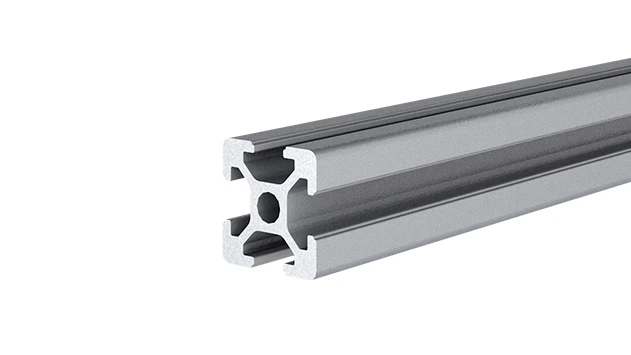
2020 is a 2.00 x 2.00CM fractional 20 series square extrusion T-slot profile with four open T-slots, one on each 2.00 face. The profile has align-a-grooves to assist in aligning connecting profiles.
Step into any 3C electronics manufacturing plant today, and you'll be hit with a quiet but relentless energy. Conveyor belts hum as circuit boards glide by, operators huddle over workbenches wielding precision tools, and shelves groan under the weight of tiny, critical components—all in service of building the smartphones, laptops, and wearables that define our digital lives. But here's the thing about 3C manufacturing: it's a world where change is the only constant. New models launch every few months, component sizes shrink overnight, and production lines that were state-of-the-art last year can feel clunky and outdated by next quarter. That's where flexibility becomes more than a buzzword—it's the difference between keeping up and falling behind. And in this high-stakes environment, one tool has emerged as a quiet hero: the 2020 EU Standard Aluminum Profile.
If you're in 3C manufacturing, you've probably heard of aluminum profiles. But not all profiles are created equal. The 2020 EU Standard Aluminum Profile—named for its 20x20mm cross-section and compliance with strict European quality and safety standards—isn't just another piece of metal. It's a modular building block that adapts to your assembly line's ever-shifting needs, turning rigid workspaces into dynamic, customizable environments. Paired with the right aluminum profile accessories, it transforms how teams build, organize, and innovate. Let's dive into why this unassuming profile is becoming the backbone of modern 3C assembly, and how it can redefine efficiency in your facility.
The 3C Assembly Grind: Why Rigid Systems Fail
Let's start with the basics: 3C electronics—computers, communications, and consumer electronics—are tiny , complex , and fast-moving . A single smartphone might contain over 1,000 components, from microchips smaller than a fingernail to delicate glass screens. Assembling that device requires precision, speed, and a workspace that keeps pace with design tweaks, production ramp-ups, and operator ergonomics. The problem? Many manufacturing facilities still rely on fixed, one-and-done infrastructure: workbenches bolted to the floor, metal racks that can't be adjusted, and conveyor systems that take weeks to reconfigure.
Here's what that rigidity looks like in practice: A new model with a slimmer chassis arrives, and suddenly your assembly workbench is too high for comfortable component placement. Or a supplier changes the size of a critical PCB, and your material rack—built for the old dimensions—can't hold the new parts without jamming. worst, when production scales up for the holiday season, you need to add a third assembly station, but your fixed conveyor system can't be extended without hiring contractors and shutting down lines for days.
And let's not forget ergonomics. 3C assembly line workers spend 8+ hours a day hunched over workbenches, handling tiny parts. A workbench that's 2 inches too low for a 6-foot operator or 2 inches too high for a 5-foot-2 operator isn't just uncomfortable—it's a recipe for fatigue, errors, and even repetitive strain injuries. Rigid systems force teams to adapt to the workspace, instead of the other way around. That's a costly trade-off in an industry where milliseconds and millimeters matter.
Meet the 2020 EU Standard Aluminum Profile: Small Size, Big Impact
So, what makes the 2020 EU Standard Aluminum Profile different? Let's start with the basics: its size. At 20x20mm, it's compact enough to fit into tight assembly spaces but surprisingly strong—thanks to its aluminum extrusion profile design. Extrusion (the process of pushing molten aluminum through a die) creates a uniform, high-strength structure with internal ribs that boost rigidity without adding weight. This means you get a material that's 30% lighter than steel but can still support heavy loads—perfect for workbenches holding testing equipment or material racks stacked with component boxes.
But the real magic is in its modularity. Unlike fixed steel frames, the 2020 profile features T-slots—longitudinal grooves running along its length—that let you attach aluminum profile accessories without drilling or welding. Need to add a shelf? Slide a bracket into the T-slot and secure it with a bolt. Want to adjust a workbench height? Swap out a 10cm profile segment for a 15cm one using internal rotary aluminum joints. It's like building with industrial-grade Legos, but for your assembly line.
Compliance is another non-negotiable. EU standards mean the profile meets strict criteria for corrosion resistance (critical in electronics manufacturing, where moisture and chemicals are common), load-bearing capacity, and even environmental safety—think RoHS compliance to avoid hazardous substances that could contaminate sensitive electronics. For 3C manufacturers exporting to Europe or prioritizing sustainable practices, this isn't just a nice-to-have; it's a requirement.

The Toolkit: Aluminum Profile Accessories That Make It Work
A profile is only as good as the accessories that bring it to life. The 2020 EU Standard Aluminum Profile shines because it pairs with a universe of aluminum profile accessories—joints, brackets, rails, and casters—that turn basic frames into fully functional workspaces. Let's break down the MVPs you'll want in your toolkit:
| Accessory | What It Does | 3C Assembly Use Case |
|---|---|---|
| Internal Rotary Aluminum Joint | A 360° rotating connector that joins two profiles at adjustable angles (0° to 180°). | Adjust workbench height or angle for soldering vs. component placement; build sloped material racks for gravity-fed component flow. |
| Aluminum Guide Rail A | A smooth, anodized rail that mounts to profiles, guiding sliders, bins, or tools along a fixed path. | Slide PCB trays between assembly stations; organize small parts bins on material racks for one-handed access. |
| Roller Track Placon Mount | A bracket that secures roller tracks to aluminum profiles, ensuring stability even with heavy loads. | Build mini-conveyors for moving semi-assembled devices between workstations; mount roller tracks on material racks for easy bin sliding. |
| Caster Wheel with Brake | A swivel wheel with a locking mechanism, attachable to profile legs for mobility. | Create mobile workbenches that roll to where they're needed (e.g., from soldering to testing); move material racks to assembly lines during peak production. |
| T-Slot Rubber Seal Cover | A flexible rubber strip that snaps into T-slots, covering gaps to protect cables or prevent small parts from falling through. | Route power cords and USB cables through workbench T-slots without tangling; seal material rack slots to stop screws or microchips from getting stuck. |
The beauty of these accessories is that they're interchangeable. A single 2020 profile frame can be a workbench on Monday, a material rack on Wednesday, and a testing station by Friday—no welding, no custom fabrication, just a few hand tools and 30 minutes of reconfiguration. For 3C manufacturers juggling multiple product lines or frequent design changes, this adaptability isn't just convenient; it's a competitive edge.
From Workbench to Warehouse: How 2020 Profiles Transform 3C Assembly
Let's get concrete. How does the 2020 EU Standard Aluminum Profile actually show up on the factory floor? Let's walk through three critical areas of 3C assembly where it's making the biggest difference: workbenches, material management, and mini-conveyors.
1. Workbenches: Ergonomic, Adjustable, and Built for the Task
The assembly workbench is ground zero for 3C production. It's where operators spend most of their day, so getting it right matters. Traditional workbenches are static: a flat wooden or metal top, fixed height, and maybe a shelf or two. The 2020 profile workbench? It's a chameleon.
Take soldering stations, for example. Soldering requires precision, so the workbench surface needs to be stable, heat-resistant, and at a height that keeps the operator's wrist straight. With 2020 profiles, you can build a bench with an adjustable-height frame using internal rotary aluminum joints—crank it up to 90cm for a tall operator, down to 75cm for someone shorter. Add a heat-resistant ceramic top, and line the T-slots with tool holders (using aluminum brackets) for soldering irons, flux pens, and tweezers. Need a magnifying lamp? Attach it to the bench frame with a clamp that slides into the T-slot, no drilling required.
Testing stations benefit, too. Imagine a workbench for quality control, where operators inspect screens for dead pixels. The bench top can be tilted 15° using rotary joints to reduce neck strain, and aluminum guide rails along the edges can hold test fixtures that slide into place for different device models. Caster wheels with brakes let the entire bench roll to the end of the assembly line, so testers can work where the action is—no more carrying devices back and forth.
2. Material Racks: Organized, Accessible, and Space-Smart
In 3C assembly, chaos in component storage equals delays. If an operator has to hunt for a specific screw size or dig through a bin of mixed PCBs, production grinds to a halt. Material racks built with 2020 profiles and aluminum profile accessories turn disarray into order.
Consider a "Material Rack B" setup—a 3-row, 3-floor design common in 3C facilities. Using 2020 vertical profiles for the frame and horizontal profiles for shelves, you can customize each shelf height to fit your components. Small parts like screws or capacitors go on the top shelf (within easy reach), while bulkier items like battery packs go on the bottom. Add aluminum guide rail A to each shelf, and suddenly those plastic bins of components slide in and out with zero friction—no more jamming or stuck lids.
For fast-moving parts, swivel roller balls (yes, even the 1-inch stainless steel variety) can be mounted on shelf surfaces, turning static shelves into dynamic picking stations. Tilt the shelf slightly using rotary joints, and gravity does the work: bins slide forward as they empty, keeping components at the front for quick access. And since the rack is built with profiles, you can add or remove shelves in minutes if a new component size arrives—no more buying a whole new rack.
3. Mini-Conveyors: Smooth Flow, Zero Downtime
Moving semi-assembled products between stations—say, from soldering to component placement to testing—used to require bulky, fixed conveyor systems. The 2020 profile changes that with modular mini-conveyors that fit your line's footprint.
Here's how it works: Mount roller tracks to 2020 profiles using roller track placon mounts (those handy brackets from our earlier table). The tracks, lined with plastic roller track guide rails (yellow for "hot" products, grey for "cold" to avoid mix-ups), create a smooth path for products. Since the entire system is built on profiles, you can extend it by adding more track segments and profiles as production grows. Need a 90° turn? Use a 90° aluminum crossing joint to connect two track sections—no custom machining required.
Best of all, these mini-conveyors are lightweight enough to move with caster wheels, so you can reroute them during line changeovers. A facility producing smartwatches might use one setup for 42mm models and quickly reconfigure it for 46mm models by adjusting the track width with aluminum brackets. It's conveyor flexibility without the six-figure price tag of traditional systems.
Case Study: How a Mid-Size 3C Manufacturer Cut Changeover Time by 40%
Talk is cheap—let's look at a real example. Last year, a mid-sized 3C manufacturer in Shenzhen, producing smart home devices, was struggling with changeover delays. They made three product lines: a smart speaker, a motion sensor, and a smart plug—each with different assembly steps and component sizes. Every time they switched production from speakers to sensors, the team spent 8 hours reconfiguring workbenches and material racks, using power tools to disassemble and rebuild steel frames. Production targets were missed, and overtime costs skyrocketed.
Their solution? Partner with a lean system supplier specializing in 2020 EU Standard Aluminum Profiles and aluminum profile accessories. Together, they redesigned three core areas:
- Modular Workbenches: Replaced fixed steel workbenches with 2020 profile frames, internal rotary joints for height/angle adjustment, and caster wheels for mobility. Each bench now has pre-drilled T-slots for quick accessory swaps (e.g., tool holders for speakers vs. testing clamps for sensors).
- Adjustable Material Racks: Built 3-row, 3-floor racks with aluminum guide rails and swivel roller balls. Shelf heights are now adjustable via quick-release levers (no tools needed), and bins slide out effortlessly.
- Mobile Mini-Conveyors: Installed roller track systems on profile frames with casters, allowing the team to reposition tracks in 30 minutes instead of 8 hours.
The results? Changeover time dropped from 8 hours to 4.5 hours—a 40% reduction. Operators reported less fatigue (thanks to adjustable workbenches), and component picking errors fell by 25% (no more digging through disorganized bins). Best of all, the system paid for itself in 6 months through reduced overtime and increased production output.
Choosing the Right Partner: Why a Lean System Supplier Matters
Okay, so you're sold on the 2020 EU Standard Aluminum Profile. Now what? To maximize its potential, you need more than just a profile supplier—you need a lean system supplier who understands both aluminum extrusion profiles and 3C manufacturing. Here's what to look for:
Design Expertise: A good supplier doesn't just sell parts—they collaborate on your layout. They should offer CAD design support to help you map out workbenches, racks, or conveyors tailored to your products. For example, if you're assembling foldable phones (with extra-delicate screens), they'll recommend ESD-safe aluminum profiles and static-dissipative roller track guide rails to prevent damage.
Accessory Breadth: The best suppliers stock a full range of aluminum profile accessories—from rare internal rotary joints to custom-length guide rails. You don't want to wait 6 weeks for a bracket that's out of stock; your supplier should have most parts ready to ship.
Compliance Proof: Ask for certificates proving EU standard compliance (e.g., CE marking, RoHS reports). In 3C manufacturing, non-compliant materials can lead to product defects or regulatory fines—don't take chances.
After-Sales Support: What happens if a caster wheel breaks or a joint wears out? A reliable supplier offers fast replacements and even on-site assistance for complex installations. Look for a partner with a local service team—time zones matter when your line is down.
Future-Proofing Your Line: Why Modularity Wins Long-Term
3C manufacturing isn't slowing down. New technologies—5G, AI, foldable displays—will only make products more complex and production cycles shorter. Rigid systems lock you into today's needs; modular systems like 2020 profiles let you adapt to tomorrow's challenges.
Think about sustainability, too. Aluminum is 100% recyclable, and modular designs mean you can reuse profiles and accessories when you reconfigure—no more sending old steel frames to the scrapyard. It's good for the planet and your bottom line.
At the end of the day, the 2020 EU Standard Aluminum Profile is more than a tool—it's a mindset shift. It's about building assembly lines that grow with your business, empower your team, and turn change from a headache into an opportunity. So why stick with rigid systems that fight against progress? Give your 3C assembly line the flexibility it deserves.
Ready to Build Smarter? Start with the Profile.
The 2020 EU Standard Aluminum Profile isn't just another component in your manufacturing toolkit. It's the foundation of a more agile, efficient, and human-centered assembly line. Paired with the right aluminum profile accessories and a trusted lean system supplier, it transforms how you build, organize, and innovate—one T-slot at a time.
So, what's next? Take a walk through your facility. Identify the rigid pain points: the workbench that's never the right height, the material rack that jams, the conveyor that can't keep up. Then, imagine replacing them with modular, adaptable systems that bend to your needs—not the other way around. That's the power of 2020. Your assembly line (and your team) will thank you.