- Company Articles
- Products and Technology
- Solution
- Custom Solutions with 2020r EU Standard Aluminum Profile: Tailored for Medical Industry Needs

Custom Solutions with 2020r EU Standard Aluminum Profile: Tailored for Medical Industry Needs
Related Product
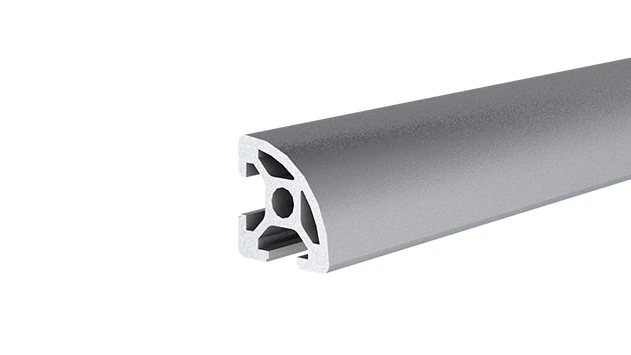
2020R EU Standard Aluminum Profile
2020R is a 2.00 x 2.00CM fractional 20 series square extrusion T-slot profile with four open T-slots, two side with 2.00cm face, the other side with round face. The profile has align-a-grooves to assist in aligning connecting profiles.
In the fast-paced world of medical manufacturing and lab operations, the difference between a smooth workflow and a frustrating bottleneck often comes down to the tools and infrastructure we rely on. Every surface, every rack, every workstation isn't just a piece of equipment—it's a critical part of ensuring precision, safety, and compliance with the strictest industry standards. That's where tailored solutions shine, and few materials have proven as versatile and reliable for these needs as the 2020r EU Standard Aluminum Profile. Designed with adaptability and medical-grade requirements in mind, this aluminum profile isn't just a component; it's the backbone of custom setups that keep labs, assembly lines, and clinics running efficiently. Let's dive into why it's become a go-to choice for medical professionals and how it's transforming spaces from the ground up.
The Unique Demands of Medical Industry Spaces
Walk into any medical device manufacturing facility or research lab, and you'll quickly realize: this isn't your average workshop. The stakes here are sky-high. A single misstep in sterility could compromise a batch of life-saving equipment. A clunky workstation might slow down the assembly of a pacemaker, delaying its journey to a patient in need. And with regulations like ISO 13485 and FDA guidelines breathing down every process, flexibility isn't a luxury—it's a necessity.
Medical spaces demand three non-negotiables: hygiene , precision , and adaptability . Surfaces must be easy to sanitize, resisting bacteria growth and chemical cleaners. Equipment must hold up under constant use without warping or corroding. And perhaps most importantly, layouts need to evolve. Today's lab might need a workbench for testing; tomorrow, it might need a material rack to store sensitive components. Traditional fixed furniture just can't keep up. This is where modular solutions step in, and at the heart of that modularity lies the 2020r EU Standard Aluminum Profile.
Why 2020r EU Standard Aluminum Profile Stands Out
So, what makes this specific aluminum profile a game-changer for medical settings? Let's start with the basics: EU Standard . That label isn't just a stamp—it's a promise. The 2020r profile meets rigorous European union standards for material safety, durability, and performance, meaning it's been tested to withstand the harsh realities of medical environments. But beyond compliance, its physical properties are what truly set it apart.
First, aluminum is inherently corrosion-resistant . Unlike steel, it doesn't rust when exposed to disinfectants or moisture—critical in spaces where daily cleaning with harsh chemicals is the norm. Its smooth, non-porous surface leaves nowhere for bacteria to hide, making it a natural fit for sterile zones. Then there's its strength-to-weight ratio . Aluminum is lightweight enough to reconfigure without heavy machinery but strong enough to support heavy equipment, like microscopes or automated testing devices, on a workbench.
But the real magic? Its modularity . The 2020r profile features a T-slot design, which acts like a built-in puzzle system. With the right aluminum profile accessories—think connectors, end caps, hinges, or brackets—you can assemble, disassemble, and reconfigure structures in hours, not days. Need to adjust the height of a workbench for ergonomic use? Swap out a few brackets. Want to add a roller track to a material rack for smoother component flow? Snap it into the T-slot. This flexibility means medical spaces can grow and change without overhauling entire setups, saving time, money, and resources.

Custom Solutions in Action: From Workbenches to ESD Workstations
Let's get concrete. How does the 2020r Aluminum Profile translate into real-world medical solutions? Let's break down four key setups where it's making a difference.
1. Ergonomic Workbenches: Where Precision Meets Comfort
A medical device assembler spends 8+ hours a day at a workbench, meticulously piecing together tiny components. If that bench is too low, their back aches. If it's cluttered, tools get misplaced, risking errors. Enter the custom workbench built with 2020r Aluminum Profile. These benches are designed to adapt to the user, not the other way around. Adjust the height with telescoping legs (thanks to adjustable aluminum profile accessories), add a shelf for tools, or integrate a non-slip surface for delicate parts. Some even include built-in cable management—no more tangled wires disrupting focus. And because the aluminum frame is easy to clean, sanitizing at the end of a shift is a breeze, keeping compliance checks stress-free.
2. Material Racks: Organized Storage That Grows With You
Storing surgical instruments, test samples, or raw materials for device production requires organization, but also adaptability. A material rack built with 2020r Aluminum Profile can start as a simple 3-tier shelf and expand to 5 tiers as inventory grows—no need to buy a whole new rack. Add dividers using aluminum guide rails to separate different tool types, or install roller tracks on shelves to slide heavy bins in and out with minimal effort. For sterile storage, pair the profile with aluminum honeycomb panels for a smooth, easy-to-wipe surface that meets cleanroom standards. It's organization without the rigidity.
3. Roller Tracks: Streamlining Material Flow
In a busy lab, moving samples or components from one station to another should be seamless. That's where roller tracks come in, and when built with 2020r Aluminum Profile, they're a game-changer. These tracks use lightweight aluminum rails and smooth-rolling wheels (often plastic or stainless steel to avoid contamination) to create gravity-fed or manual conveyor systems. Imagine a roller track mounted along a wall, carrying specimen trays from a testing area to a storage fridge—no more staff carrying heavy loads, reducing the risk of spills or strain. And because the tracks are modular, you can add curves, drops, or stops exactly where needed, tailoring the flow to your lab's unique layout.
4. ESD Workstations: Protecting Sensitive Electronics
Many medical devices, from MRI machine components to wearable health monitors, rely on sensitive electronics. Static electricity can fry these parts in an instant, making ESD (Electrostatic Discharge) protection non-negotiable. An ESD workstation built with 2020r Aluminum Profile combines the profile's structural stability with ESD-safe surfaces and grounding components. The aluminum frame itself can be grounded to dissipate static, while accessories like ESD mats and wrist straps integrate seamlessly into the setup. It's a one-stop solution that keeps both workers and components safe, ensuring that even the most delicate parts make it through assembly unscathed.
The Unsung Heroes: Aluminum Profile Accessories
You could have the best aluminum profile in the world, but without the right accessories, it's just a bunch of metal tubes. Aluminum profile accessories are the glue that holds these custom setups together—and they're designed with the same medical-grade attention to detail as the profiles themselves. Let's highlight a few standouts:
- Connectors and Joints: From 90° angles to 135° bends, these heavy-duty joints lock profiles together securely, ensuring structures don't wobble under load. Many are made from anodized aluminum, adding an extra layer of corrosion resistance.
- End Caps: These simple plastic or aluminum caps snap onto the ends of profiles, covering sharp edges and preventing dust buildup in T-slots—perfect for maintaining sterility.
- Casters: Need a mobile workbench? Add lockable casters to the base of your 2020r setup. These swivel smoothly, even on uneven floors, and lock in place when stability is needed during precision work.
- Guide Rails: As mentioned earlier, aluminum guide rails (like Aluminum Guide Rail A or B) help organize tools on workbenches or direct flow on roller tracks, keeping everything in its lane.
Together, these accessories turn the 2020r Aluminum Profile into a blank canvas, allowing designers to create everything from a compact mobile cart for transporting samples to a full-scale assembly line with integrated lighting and power strips. It's customization at its finest.
Why 2020r Aluminum Profile Beats Traditional Materials
Still not convinced? Let's put it head-to-head with common alternatives. The table below compares 2020r Aluminum Profile with wood, steel, and plastic—three materials often used in non-medical setups.
| Feature | 2020r Aluminum Profile | Wood | Steel | Plastic |
|---|---|---|---|---|
| Hygiene | Non-porous, easy to sanitize with chemicals; resists bacterial growth | Porous; can harbor bacteria even after cleaning | Prone to rust if not properly coated; hard to clean crevices | Can scratch easily, creating hiding spots for dirt |
| Durability | Corrosion-resistant; withstands daily wear without warping | Scratches, dents, and water damage over time | Strong but heavy; prone to rust in humid environments | Weak under heavy loads; can warp in high temperatures |
| Flexibility | Modular; reconfigurable with accessories in hours | Fixed; requires rebuilding to modify | Heavy and rigid; hard to adjust without tools | Limited structural strength; few customization options |
| Weight | Lightweight (easy to move/assemble) | Medium weight; bulky for large setups | Heavy; requires machinery for repositioning | Lightweight but flimsy for heavy use |
| Compliance | Meets EU medical standards (ISO, FDA-friendly) | Not inherently compliant; may require special treatments | May need additional coatings to meet safety standards | Some plastics off-gas chemicals; not always medical-grade |
Clearly, when it comes to medical needs, 2020r Aluminum Profile checks all the boxes. It's the only material that balances hygiene, durability, flexibility, and compliance—making it worth the initial investment for long-term reliability.
Case Study: How a Diagnostic Lab Transformed Its Workflow
Let's wrap this up with a real-world example. A mid-sized diagnostic lab in Germany was struggling with inefficiency. Their old wooden workbenches were warped from years of cleaning, and their material storage was a jumble of fixed shelves that left no room for new equipment. Staff spent 20 minutes a day just searching for tools, and compliance audits flagged their cluttered layout as a risk for cross-contamination.
They turned to a supplier specializing in 2020r Aluminum Profile solutions. The result? A complete overhaul. Out went the wooden benches; in came height-adjustable workbenches with ESD-safe surfaces, built-in tool organizers, and cable management. A modular material rack with roller tracks replaced the fixed shelves, allowing samples to glide from storage to testing stations with minimal handling. Even the mobile carts for transporting specimens got an upgrade—lightweight aluminum frames with lockable casters and sanitizable surfaces.
Within three months, the lab reported: a 30% reduction in time spent searching for tools, zero compliance violations in their next audit, and a noticeable drop in staff complaints about back pain. "It's like night and day," one lab technician noted. "I can adjust my bench to stand or sit, everything has a place, and cleaning takes half the time. We're not just working faster—we're working smarter."
Looking Ahead: The Future of Medical Spaces with 2020r Aluminum Profile
As medical technology advances, so too will the need for adaptable spaces. Think AI-integrated labs, personalized medicine production lines, and telemedicine hubs—all requiring setups that can evolve with new tools and processes. The 2020r EU Standard Aluminum Profile is poised to lead this charge. With ongoing innovations in aluminum profile accessories (like smart sensors that monitor bench usage or antimicrobial coatings for even stricter sterility), the possibilities are endless.
Moreover, sustainability is becoming a key focus in healthcare. Aluminum is 100% recyclable, and modular setups reduce waste by eliminating the need for frequent replacements. This aligns with the industry's push to lower its carbon footprint while maintaining high standards of care.
Final Thoughts: More Than a Material—A Partner in Care
At the end of the day, the 2020r EU Standard Aluminum Profile isn't just about building better workbenches or storage racks. It's about empowering medical professionals to focus on what matters most: saving lives. By providing a foundation that's hygienic, flexible, and compliant, it takes the stress out of managing spaces, letting teams channel their energy into innovation and patient care.
Whether you're setting up a new lab, upgrading an assembly line, or simply looking to make your current space more efficient, consider the 2020r Aluminum Profile. Pair it with the right aluminum profile accessories, and you're not just investing in furniture—you're investing in a solution that grows with you, adapts to challenges, and meets the highest standards of the medical industry. After all, in a field where every detail counts, shouldn't your infrastructure be as reliable as the care you provide?