- Company Articles
- Products and Technology
- Solution
- Custom Solutions with 2040 National Standard Profile for Warehousing Logistics

Custom Solutions with 2040 National Standard Profile for Warehousing Logistics
Related Product
2040 National Standard Profile
45° external bending joint, used for 45° external connection of two aluminum pipes.
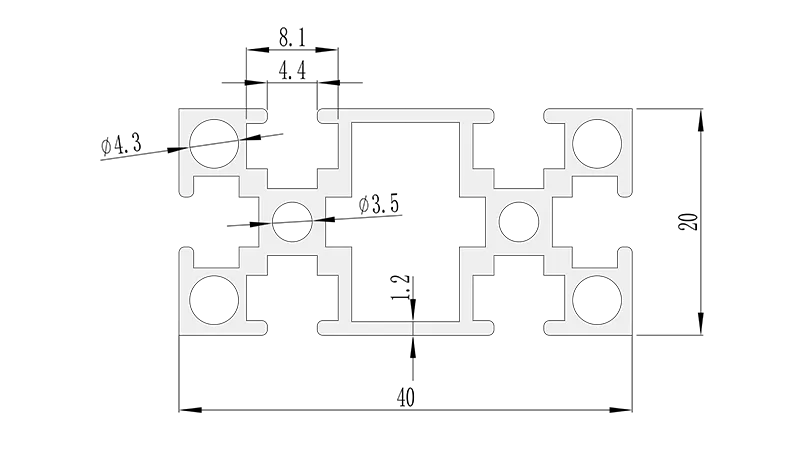
In the fast-paced world of warehousing and logistics, where every square foot of space and every second of time counts, the difference between success and stagnation often lies in the tools we use to organize, move, and manage materials. Whether you're running a small e-commerce fulfillment center, a large-scale manufacturing plant, or a regional distribution hub, the challenge is universal: how do you create a workspace that adapts to your needs, grows with your business, and keeps your team efficient—without breaking the bank? For many operations, the answer has been hiding in plain sight: the 2040 national standard profile. This unassuming aluminum extrusion has quietly revolutionized how warehouses design their workflows, offering a level of customization and flexibility that traditional metal racks, fixed workbenches, and rigid conveyors simply can't match. Let's dive into how this versatile solution, paired with the right aluminum profile accessories, is transforming warehousing logistics from a one-size-fits-all headache into a tailored, efficient, and even enjoyable experience.
The Hidden Cost of "One-Size-Fits-All" Warehousing
Walk into most warehouses, and you'll likely encounter the same familiar sights: heavy steel racks bolted to the floor, workbenches welded into place, and conveyor systems that seem to have been designed for a specific product and nothing else. These setups might work—at first. But as your business evolves, they become anchors. A sudden spike in seasonal demand? You can't expand those fixed racks without calling in contractors. A new product line with different dimensions? That old workbench is now too short, too narrow, or just plain wrong. A shift in workflow to accommodate social distancing or new safety protocols? Good luck reconfiguring that welded conveyor track. The result? Wasted space, frustrated employees, and missed opportunities to scale. It's not just about the upfront cost of installing these systems; it's the hidden cost of rigidity. Every time you can't adjust, you're leaving money on the table—whether through slower order fulfillment, increased labor hours, or the need to invest in entirely new equipment when your needs change.
Enter the 2040 National Standard Profile: A Game-Changer in Flexibility
The 2040 national standard profile isn't just another piece of metal. It's a building block—literally. Made from high-grade aluminum, this extrusion features a T-slot design (a groove running along its length) that allows for quick, tool-free attachment of accessories. Think of it as industrial Legos for adults: strong enough to support heavy loads, light enough to move by hand, and infinitely configurable. The "2040" refers to its dimensions: 20mm in width and 40mm in height, making it compact enough to fit into tight spaces but robust enough for most warehousing tasks. What truly sets it apart, though, is its adherence to national standards. This means that no matter which supplier you buy from, the profile's dimensions, slot size, and compatibility with accessories are consistent. No more worrying about mismatched parts or proprietary systems that lock you into one vendor. It's a universal language for building—one that empowers you to design exactly what you need, when you need it.
Why Aluminum? The Material That Makes It All Possible
At first glance, you might wonder why aluminum is the material of choice here. After all, steel is stronger, right? While it's true that steel has a higher tensile strength, aluminum brings a unique set of advantages that make it ideal for dynamic warehousing environments. For starters, it's lightweight. A 2-meter length of 2040 national standard profile weighs just a fraction of what a steel equivalent would, making it easy for a single person to carry, adjust, or reconfigure—no forklift or heavy machinery required. This not only saves time during setup but also reduces the risk of workplace injuries from lifting heavy materials. Aluminum is also naturally resistant to corrosion, a critical feature in warehouses where humidity, spills, or exposure to chemicals can take a toll on metal equipment. Unlike steel, it won't rust, which means your 2040 profile setups will look and perform like new for years, even in less-than-ideal conditions. And let's not forget sustainability: aluminum is 100% recyclable, aligning with the growing trend of eco-conscious operations looking to reduce their carbon footprint.
Customization at Your Fingertips: Aluminum Profile Accessories
The real magic of the 2040 national standard profile lies in its ecosystem of aluminum profile accessories. These small, specialized components turn a simple extrusion into a fully functional system. From connectors that lock profiles together at any angle to end caps that protect workers from sharp edges, from brackets that mount shelves to T-slot nuts that secure tools—each accessory is designed to work seamlessly with the 2040 profile, turning your vision into reality in minutes, not days. Let's break down some of the most essential accessories and how they empower customization:
- Connectors and Joints: These are the "glue" of the system. Whether you need a 90-degree angle for a workbench corner, a 45-degree slope for a flow rack, or a straight connector to extend a conveyor, there's an accessory for that. Many connectors feature quick-release levers or Allen-key fasteners, making disassembly and reconfiguration a breeze.
- End Caps and Covers: Safety first. These plastic or rubber caps snap onto the ends of profiles, preventing cuts from sharp edges and keeping dust and debris out of the T-slots. They also give your setup a clean, professional look.
- Shelving Brackets and Supports: Need to add a shelf above a workbench or create a multi-tiered storage rack? These brackets slide into the T-slots and lock into place, supporting everything from lightweight boxes to heavy tool chests. Adjustable in height, they let you optimize vertical space with precision.
- Tool Mounts and Holders: Keep frequently used tools within arm's reach by mounting them directly to your 2040 profile workbench. From screwdriver holders to power tool docks, these accessories turn empty wall space into functional storage, reducing time wasted searching for equipment.
The beauty of these accessories is that they're modular. You don't have to buy a complete system upfront; you can start small (say, a single workbench) and add components as your needs grow. Need an extra shelf next month? Just buy a bracket and a length of profile. Want to convert a static rack into a mobile trolley? Add casters (another common accessory) to the base. It's customization on a budget, giving even small businesses the ability to compete with larger operations.
Building Blocks of Efficiency: Key Applications in Warehousing Logistics
Now that we understand the "why" behind the 2040 national standard profile, let's explore the "how"—specifically, how it's being used to solve real-world warehousing challenges. From workbenches that adapt to different tasks to flow racks that keep materials moving and conveyors that adjust to product sizes, the applications are nearly endless. Here are three areas where this system truly shines:
1. Workbenches: Where Precision Meets Flexibility
The workbench is the heart of any warehouse or manufacturing facility. It's where orders are picked, products are assembled, and quality checks are performed. Yet, traditional workbenches are often little more than fixed tables—too high for some workers, too low for others, with no built-in storage and no way to add tools or accessories. The 2040 national standard profile changes that. With a few lengths of profile, some connectors, and a wooden or aluminum top, you can build a workbench that's tailored to your team's needs. Need it to be height-adjustable? Add telescoping legs with locking pins. Want to mount a monitor arm for order tracking software? Slide a T-slot nut into the profile and secure it. Need bins for small parts? Attach shelf brackets at the perfect height. One warehouse we worked with even built a workbench with a fold-down side shelf that could be extended during peak hours and folded up to save space during lulls. The result? Workers reported less fatigue (thanks to ergonomic height adjustment), faster task completion (no more reaching for tools across the room), and a sense of ownership over their workspace—all of which translated to a 15% increase in daily productivity.
2. Flow Racks: Keeping Materials Moving, Without the Fuss
In any operation that relies on first-in, first-out (FIFO) inventory management—like e-commerce fulfillment or manufacturing assembly lines—flow racks are essential. These sloped racks use gravity to move products from the back (where they're stocked) to the front (where they're picked), ensuring that older inventory is used first and reducing the risk of stockouts. But traditional flow racks are often bulky, expensive, and fixed in angle and length. If you change product sizes, you might need an entirely new rack. Not so with 2040 national standard profile flow racks. By combining 2040 profiles with roller track and accessories (like plastic roller track guide rails in yellow or grey), you can build a flow rack that's adjustable in every way. Need a steeper slope for heavier boxes? Adjust the angle of the profile supports. Want to add more lanes to accommodate a new product line? Just add another section of roller track. One distribution center we consulted for was struggling with seasonal spikes in demand for small electronics. Their fixed flow racks couldn't handle the increased volume, leading to bottlenecks at the picking stations. By switching to a 2040 profile flow rack system, they were able to add lanes in a matter of hours (not days) and adjust the slope to handle lighter, smaller packages—all without hiring contractors or investing in new equipment. The result? Picking errors dropped by 20%, and they were able to process 30% more orders during peak season without adding staff.
3. Conveyors: From Rigid to Responsive
Conveyors are the arteries of a warehouse, moving products from point A to point B with minimal human intervention. But traditional conveyor systems are often the most inflexible part of the operation. They're built to a fixed path, require professional installation, and are notoriously hard to modify if your workflow changes. Enter the 2040 national standard profile conveyor. By using the profile as a frame and adding roller track, belt modules, or even motorized components, you can build a conveyor system that's as unique as your workflow. Need a curved section to navigate around a pillar? Use 90-degree aluminum profile connectors to bend the frame. Want to split a single conveyor into two lines? Add a diverter built from 2040 profiles and roller track. One automotive parts manufacturer we worked with needed a conveyor to move small components from the warehouse to the assembly line. Their old system was a straight, fixed belt that required workers to walk back and forth to load parts. By designing a 2040 profile conveyor with a zig-zag path (to fit around existing machinery) and adjustable height (to align with different assembly stations), they cut down on worker movement by 40%, freeing up staff to focus on more skilled tasks. And when they introduced a new part with a larger box size? They simply swapped out the roller track for a wider version—no need to replace the entire conveyor.
The Numbers Speak: Comparing Traditional vs. 2040 Profile Solutions
Still on the fence about whether the 2040 national standard profile is worth the investment? Let's look at the numbers. The table below compares traditional warehousing solutions with those built using 2040 profiles and aluminum profile accessories, based on data from real-world implementations:
| Feature | Traditional Solutions (Steel Racks/Workbenches) | 2040 National Standard Profile Solutions | Key Advantage |
|---|---|---|---|
| Setup Time | 2–5 days (requires welding/bolting to floor) | 2–4 hours (tool-free assembly with accessories) | 90% reduction in setup time |
| Reconfiguration Cost | $500–$2,000 (new parts, labor, disposal of old system) | $50–$200 (additional profiles/accessories) | Up to 90% lower reconfiguration costs |
| Weight (per 2m unit) | 15–20kg (steel) | 3–5kg (aluminum) | Easier to handle, reduces injury risk |
| Lifespan | 5–7 years (prone to rust/corrosion) | 10–15 years (corrosion-resistant aluminum) | Doubled lifespan with minimal maintenance |
| Customization Options | Limited (fixed sizes, pre-designed layouts) | Unlimited (mix/match accessories, adjust on the fly) | Tailored to specific workflow needs |
As you can see, the 2040 profile isn't just a "nice-to-have"—it's a cost-effective investment that pays dividends in time, money, and efficiency. Whether you're setting up a new warehouse or upgrading an existing one, the flexibility to adapt without reinvesting in entirely new systems is a game-changer.
Real-World Stories: How Businesses Are Thriving with 2040 Profile
Numbers tell a story, but nothing brings a solution to life like hearing from businesses that have actually used it. Let's meet two operations that transformed their workflows with the 2040 national standard profile:
Case Study 1: A Small E-Commerce Fulfillment Center
Sarah runs a small e-commerce business selling handmade cosmetics out of a 1,200-square-foot warehouse. As her business grew, she struggled with keeping up with order volume. Her fixed steel racks were overflowing, her workbench was too small for packing multiple orders at once, and her team of three was constantly tripping over boxes. After researching solutions, she invested in $800 worth of 2040 national standard profiles and accessories. With the help of a YouTube tutorial, she built: a custom flow rack for storing inventory (with adjustable lanes for different product sizes), a workbench with built-in shelf bins for packing materials, and a mobile trolley (using casters) to move orders from the picking area to the shipping station. The result? Her team now processes 25% more orders per day, and the warehouse feels twice as spacious—all without moving to a larger facility. "I used to dread peak seasons because we'd run out of space and time," Sarah says. "Now, I can add a shelf or adjust a rack in 10 minutes. It's like having a warehouse that grows with me."
Case Study 2: A Mid-Sized Manufacturing Plant
A mid-sized automotive parts manufacturer was facing a different challenge: frequent changes in production lines. Every time they introduced a new part, they had to redesign their assembly workbenches and conveyor systems, which took weeks and cost tens of thousands of dollars. They decided to test the 2040 national standard profile on one assembly line. Within a month, they'd built adjustable workbenches (with height settings for different workers), a modular conveyor system (that could be extended or shortened as needed), and flow racks for parts that could be reconfigured in hours. When they rolled out the system to all five assembly lines, they saw a 30% reduction in downtime during line changes and a 20% increase in worker satisfaction (thanks to more ergonomic workspaces). "We used to see line changes as a necessary evil," says the plant manager. "Now, they're an opportunity to optimize. The 2040 profile gave us the freedom to experiment and find what works—without the risk of wasting money on fixed systems that become obsolete."
Getting Started: Your First 2040 Profile Project
Ready to dip your toes into the world of 2040 national standard profile solutions? The good news is that you don't need to be an engineer or a DIY expert to get started. Here's a simple three-step guide to your first project:
- Identify Your Pain Point: Start small. Is your current workbench too cluttered? Are your flow racks causing bottlenecks? Pick one problem to solve first. This will keep the project manageable and help you see results quickly.
- Sketch Your Design: You don't need fancy software—just a pencil and paper. Draw the basic structure (e.g., a workbench with a top, legs, and a shelf) and note where you'll need profiles, connectors, and accessories. Most suppliers have online configurators or catalogs that can help you select the right parts.
- Start Building: Order your profiles and accessories (many suppliers offer starter kits for beginners) and set aside an afternoon to assemble. Remember: it's modular, so if something doesn't work, you can easily take it apart and try again. Invite a team member to help—two sets of eyes make the process faster and more fun.
Once you've built your first project, you'll wonder how you ever worked without it. And chances are, you'll already be brainstorming your next one.
Conclusion: The Future of Warehousing Is Customizable
In a world where businesses must adapt or die, the 2040 national standard profile isn't just a tool—it's a strategic advantage. It empowers warehouses and logistics operations to design workflows that fit their unique needs, rather than forcing them to conform to rigid, one-size-fits-all solutions. With its lightweight aluminum construction, endless customization options (thanks to aluminum profile accessories), and cost-effective scalability, it's no wonder that more and more operations are making the switch. Whether you're building a simple workbench, a complex conveyor system, or a fully integrated warehouse layout, the 2040 profile gives you the freedom to create a space that works for you—today, tomorrow, and for years to come. So why wait? Your warehouse's next level of efficiency is just a few profiles and accessories away.