- Company Articles
- Products and Technology
- Application Cases
- Custom Solutions with 4040r EU Standard Aluminum Profile: 3C Industry Case Study

Custom Solutions with 4040r EU Standard Aluminum Profile: 3C Industry Case Study
Related Product
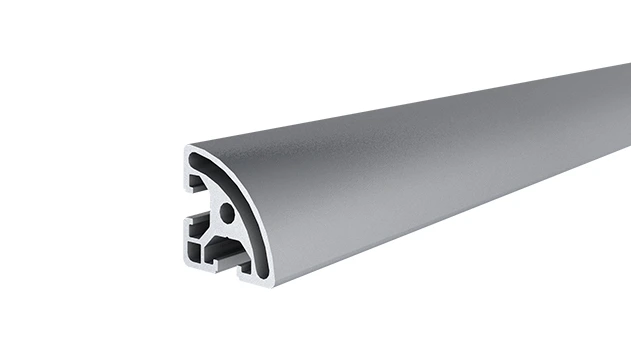
4040R EU Standard Aluminum Profile
4040R is a 4.00x4.00 CM fractional 40 series square extrusion T-slot profile with two side open T-slots, each side with 4.00cm face,the other side is round face. The profile has align-a-grooves to assist in aligning connecting profiles.
Introduction: The Need for Agility in 3C Manufacturing
In the world of consumer electronics—where smartphones, smartwatches, and wireless earbuds evolve faster than the seasons—manufacturing lines don't just need to keep up; they need to adapt . A 3C factory (computers, communications, consumer electronics) today might produce 50 different component variants in a single week, each with unique assembly steps, tooling requirements, and space needs. Yet, walk into many such facilities, and you'll still find the same rigid workbenches, clunky material racks, and static conveyor systems that were installed five years ago. These outdated setups aren't just inefficient—they're bottlenecks, turning rapid product cycles into frustrating delays and missed opportunities.
This is where modularity meets manufacturing. Enter the 4040r EU Standard Aluminum Profile —a but transformative building block that's redefining how 3C factories design, build, and rebuild their production environments. Lightweight yet surprisingly strong, infinitely reconfigurable, and compatible with a universe of accessories, this aluminum extrusion profile isn't just a material upgrade. It's a lean system enabler, turning static factories into dynamic hubs that can pivot with the speed of innovation.
The 3C Industry's Hidden Pain Points: Why "Good Enough" Manufacturing Setups Fall Short
To understand why the 4040r profile matters, let's first unpack the daily struggles of 3C manufacturers. These aren't hypothetical—they're the quiet frustrations that keep plant managers up at night:
- Rapid product obsolescence: A new smartphone model can render an entire assembly line's tooling obsolete in 6 months. Traditional steel workbenches, bolted to the floor and welded into fixed shapes, can't be repurposed without costly cutting and rewelding.
- Small-batch, high-mix production: Today's consumers demand customization—think limited-edition phone cases or region-specific smartwatch bands. Factories need to switch between production runs of 100 units and 10,000 units seamlessly. Static racks and fixed conveyor paths turn these transitions into logistical nightmares.
- ESD sensitivity: Microchips, PCBs, and delicate sensors are (ESD). Many older workbenches lack built-in ESD protection, requiring expensive retrofits (like adding rubber mats or grounding straps) that often peel, wear, or get damaged during reconfigurations.
- Space crunches: Urban 3C factories rarely have the luxury of extra square footage. Every inch counts, but rigid setups force teams to waste space on permanent structures that can't be resized or repositioned as needs change.
The solution? A system that's as flexible as the products it helps build. And that's where the 4040r aluminum profile shines.

What Is 4040r EU Standard Aluminum Profile? More Than Just "Metal Tubes"
At first glance, the 4040r profile looks simple: a 40mm x 40mm square tube with a T-slot running along each edge. But that simplicity is deceptive. As an aluminum extrusion profile , it's engineered for precision: the T-slots accept a wide range of aluminum profile accessories—joints, brackets, panels, and even electronic components—without welding, drilling, or specialized tools. This modularity is its superpower.
Let's break down why it outperforms traditional materials:
| Feature | 4040r Aluminum Profile | Traditional Steel | Wood/Particle Board |
|---|---|---|---|
| Weight | Lightweight (2.7kg/m for 1.5mm wall) | Heavy (7.8kg/m for 1.5mm wall) | Medium (varies by density) |
| Strength | High tensile strength (110-130 MPa); supports 500kg+ per meter when properly braced | Higher raw strength but prone to rust | Low; warps under heavy loads or moisture |
| Reconfigurability | 100% reusable; disassemble and rebuild in hours | Requires cutting/welding; 50% material loss per rework | Disposable; nails/screws damage structure |
| ESD Compatibility | Can be anodized or coated for ESD protection | Requires separate grounding; rust disrupts conductivity | Non-conductive; requires ESD mats (easily damaged) |
| Long-term Cost | Higher upfront, but 3-5x longer lifespan with zero replacement costs | Lower upfront, but high maintenance (painting, rust repair) | Low upfront, but frequent replacement (1-2 years) |
But numbers only tell part of the story. For 3C manufacturers, the real value lies in how the 4040r profile integrates into a complete lean system. Imagine building a workbench in the morning, converting it into a material rack by afternoon, and adding a roller track for kitting by evening—all with hand tools and a few extra brackets. That's the flexibility we're talking about.
Case Study: TechFlow Electronics' 30% Productivity Boost with 4040r
Let's put this into practice with a real-world example. Meet TechFlow Electronics, a mid-sized 3C component manufacturer in Dongguan, China, producing camera modules for smartphones. In early 2024, TechFlow faced a crisis: their biggest client, a global phone brand, announced a new camera design requiring 12 new assembly steps. Their existing setup? Fixed steel workbenches with no adjustability, static wooden racks that couldn't accommodate new component trays, and a conveyor system that took 3 days to re-route for small changes.
The result? Production delays, missed deadlines, and a client threatening to shift orders to a competitor. TechFlow needed a solution—fast. After consulting with a lean system supplier, they decided to rebuild their core assembly area using 4040r aluminum profiles. Here's how it unfolded.
The Problem: A Factory Stuck in "One-Size-Fits-All"
TechFlow's old assembly line had three critical pain points:
- Rigid workbenches: At 80cm tall, they were too low for operators assembling taller camera modules, leading to ergonomic strain and slower work. Modifying them would require cutting steel legs—a 2-week process.
- Static material flow: Components were stored on shelves 5 meters from the line, requiring operators to walk back and forth 20+ times per hour. A fixed conveyor was too narrow for the new, bulkier trays.
- ESD issues: Rubber ESD mats on steel benches were peeling, causing 3-5 component failures per day (each worth $20-$50).
The Solution: A Custom Lean System with 4040r
Working with their supplier, TechFlow designed a modular system centered on 4040r profiles. Here's how each problem was solved:
1. Adjustable Workbenches: Using 4040r profiles and height-adjustable aluminum foot bases, TechFlow built workbenches that could be raised from 75cm to 105cm with a simple twist of a knob. They added ESD-compliant aluminum honeycomb panels for the work surface (no more peeling mats) and mounted tool holders directly into the T-slots. Total assembly time for 10 benches: 8 hours (vs. 2 weeks for steel modifications).
2. On-Demand Material Racks with Roller Track: To eliminate walking, TechFlow installed a gravity-fed roller track system along the assembly line. Built with 4040r profiles as the frame and plastic roller track guide rails (yellow, for visibility), the track delivered component trays directly to operators. When a new tray size came in, they simply swapped the rails—no tools needed. The system cut walking time by 90%.
3. Mobile Workstations with Caster Wheels: For small-batch runs, TechFlow added caster wheels to some workbenches, turning them into mobile units that could be wheeled to different lines. The casters locked securely, ensuring stability during assembly, and the aluminum frame was light enough for one person to move (unlike steel benches, which required 2-3 people).
The Results: From Bottlenecks to Breakthroughs
Three months after implementation, the results spoke for themselves:
- 30% faster assembly time: Adjustible workbenches reduced ergonomic strain, while the roller track cut material handling time.
- 0 ESD failures: The aluminum honeycomb panels and grounded profiles eliminated static damage.
- 80% faster reconfigurations: When the client introduced a new camera module in month 2, TechFlow reconfigured 3 workstations in 45 minutes (vs. 2 weeks for the old setup).
- 20% space savings: Mobile units and compact roller track systems freed up 40 sq.m. of floor space, allowing for a new testing station.
| Metric | Before (Old Setup) | After (4040r System) | Improvement |
|---|---|---|---|
| Assembly Time per Unit | 4.5 minutes | 3.15 minutes | 30% faster |
| ESD-Related Defects | 3-5/day | 0/day | 100% reduction |
| Reconfiguration Time | 14 days | 45 minutes | 99.5% faster |
| Operator Walking Distance | 500m/shift | 50m/shift | 90% reduction |
Why 4040r Works: The Secret Is in the Ecosystem
The 4040r profile isn't a standalone product—it's part of a vast ecosystem of aluminum profile accessories that make customization possible. TechFlow, for example, used:
- Internal rotary aluminum joints: To connect profile sections at 90° or 45° angles without welding.
- Plastic roller track guide rails: For smooth material flow on the gravity track.
- Aluminum guide rail A: To edge the roller track and prevent tray slippage.
- Swivel roller balls (1 inch): Embedded in workbench corners for easy tray sliding.
This ecosystem means a single 4040r profile can become a workbench, a rack, a conveyor frame, or even a testing jig—all with the same base material. For 3C manufacturers, this isn't just convenience; it's cost efficiency. Instead of buying separate equipment for each product line, they invest in a system that adapts.
Beyond the Line: The Ripple Effects of Modular Manufacturing
TechFlow's success isn't an anomaly. Across the 3C industry, factories using 4040r profiles report unexpected benefits that go beyond the assembly line:
Training becomes easier: New operators learn the system faster because the layout is intuitive—no more memorizing which tool goes on which shelf. Everything has a place, and that place can be changed if needed.
Maintenance costs drop: Aluminum resists rust and corrosion, and T-slot accessories are replaceable individually (no need to swap an entire bench if a bracket breaks).
Sustainability improves: Unlike steel or wood, aluminum is 100% recyclable, and the modular design reduces waste. When a factory relocates or upgrades, the 4040r profiles can be disassembled and reused elsewhere.
Conclusion: The 4040r Profile—Your Factory's "Swiss Army Knife"
In the 3C industry, the race isn't just about building better products. It's about building better ways to build products. The 4040r EU Standard Aluminum Profile isn't just a material upgrade—it's a mindset shift. It turns "we can't" into "we can reconfigure," "this will take weeks" into "this will take hours," and static factories into dynamic hubs ready for whatever the next product cycle brings.
For manufacturers tired of watching competitors launch faster, adapt quicker, and deliver more, the message is clear: modularity isn't optional anymore. It's essential. And with 4040r profiles as your foundation, that modular future is already within reach.
So, what will you build first? A workbench that grows with your team? A roller track that brings materials to your operators? Or a lean system that turns today's bottlenecks into tomorrow's breakthroughs? The answer, thanks to 4040r, is: whatever you need.