- Company Articles
- Products and Technology
- Solution
- Custom Solutions with 4080A EU Standard Aluminum Profile for Medical Device Manufacturing

Custom Solutions with 4080A EU Standard Aluminum Profile for Medical Device Manufacturing
Related Product
4080A EU Standard Aluminum Profile
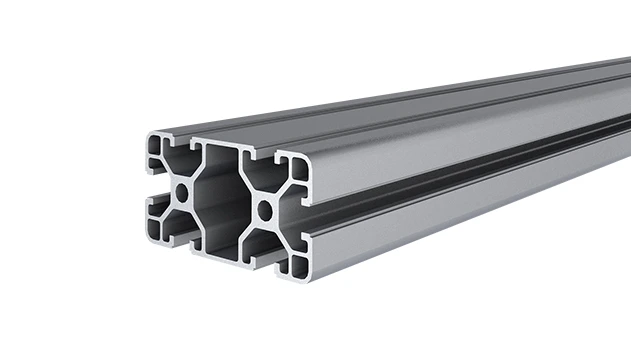
4080A is a 4.00x8.00 CM fractional 40 series square extrusion T-slot profile with two side open T-slots, each side with 4.00cm face, two side with 8.00cm face. The profile has align-a-grooves to assist in aligning connecting profiles.
In the world of medical device manufacturing, precision isn't just a goal—it's a necessity. Every component, from tiny surgical tools to complex diagnostic equipment, demands environments that prioritize cleanliness, efficiency, and adaptability. Yet, many manufacturers find themselves stuck with rigid, one-size-fits-all workspaces that struggle to keep up with evolving production needs, strict regulatory standards, and the constant pressure to reduce waste. This is where the 4080A EU Standard Aluminum Profile emerges as more than just a material; it's a catalyst for reimagining how medical manufacturing floors operate.
Designed with the unique challenges of medical production in mind, the 4080A profile combines durability, modularity, and compliance to create custom solutions that grow with your operations. Whether you're building ergonomic workbenches, streamlined flow racks, or integrating lean systems to minimize inefficiencies, this aluminum profile serves as the backbone of flexible, future-ready manufacturing. Let's dive into how it transforms the way medical devices are made, one modular component at a time.
The Medical Manufacturing Challenge: Why Rigidity Fails
Medical device production is a balancing act. On one hand, you need stability to ensure precision—think of assembling delicate sensors or calibrating life-saving monitors. On the other hand, product lines shift constantly: a new regulatory update might require reconfiguring a workstation, or a surge in demand for a particular tool could mean scaling up a production cell overnight. Traditional fixed structures—welded steel workbenches, static shelving, or inflexible material racks—simply can't keep pace.
Consider the cost of downtime alone. When a production line needs to adapt, teams often spend hours (or days) dismantling and rebuilding workspaces, diverting skilled labor from critical tasks. Then there's the issue of cleanliness. Medical environments demand surfaces that resist corrosion, harbor no bacteria, and stand up to frequent sanitization with harsh chemicals. Many conventional materials, like untreated steel or wood, fall short here, risking contamination and failed audits.
Perhaps most importantly, medical manufacturing thrives on lean principles—eliminating waste, optimizing flow, and empowering teams to work smarter. Rigid setups create bottlenecks: materials pile up because flow racks can't adjust to new part sizes, workbenches cause ergonomic strain because they can't be height-adjusted, and tools get misplaced in cluttered, non-customizable spaces. The result? Slower production, higher error rates, and unnecessary costs.
4080A EU Standard Aluminum Profile: The Foundation of Flexibility
At first glance, aluminum might seem like a simple choice, but the 4080A EU Standard Aluminum Profile is engineered with medical manufacturing's (stringent) demands in mind. Let's break down why it stands out:
Modularity That Adapts to Your Needs
The 4080A profile's T-slot design is its superpower. Unlike welded steel or fixed plastic, this system uses grooves (or "T-slots") along its length, allowing you to attach accessories—like brackets, shelves, handles, or lighting—anywhere along the profile, no drilling or welding required. Need to add a tool holder to a workbench? Slide in a compatible bracket. Want to reconfigure a flow rack to accommodate larger components? Swap out the crossbars in minutes. This modularity means your workspace isn't just built for today's needs; it's ready for tomorrow's changes.
Durability Meets Cleanliness
Medical manufacturing floors are tough environments. Daily sanitization with alcohol, bleach, or industrial-grade disinfectants can degrade lesser materials, but the 4080A profile's aluminum extrusion resists corrosion and chemical damage. Its smooth, non-porous surface leaves no crevices for bacteria or debris to hide, making it easier to maintain compliance with ISO 13485 and FDA standards. And unlike wood or painted steel, it won't chip, splinter, or peel—ensuring a long lifespan even in high-traffic areas.
Strength Without the Weight
Aluminum's strength-to-weight ratio is a game-changer. The 4080A profile is lightweight enough to be reconfigured by a small team (no heavy machinery needed) but strong enough to support heavy loads—think stacks of sterilized instruments, bulk raw materials, or even automated equipment. This balance reduces the risk of workplace injuries from moving heavy fixed structures and makes it easier to implement lean principles like "5S" (Sort, Set in Order, Shine, Standardize, Sustain) by keeping workspaces agile.

Building Custom Solutions: From Workbenches to Lean Systems
The true power of the 4080A profile lies in its ability to be tailored to specific tasks. Let's explore three key applications where it transforms medical manufacturing workflows:
1. Ergonomic Workbenches: Where Precision Meets Comfort
A workbench isn't just a table—it's where skilled technicians spend hours assembling, inspecting, and testing medical devices. Poor ergonomics here leads to fatigue, errors, and even long-term injuries. With the 4080A profile, workbenches become customizable hubs that adapt to human needs, not the other way around.
Imagine a workstation for assembling microsurgical tools. Using 4080A rails, you can adjust the height to match each technician's posture, add adjustable shelves for storing components at eye level, and integrate task lighting via T-slot-compatible brackets. Aluminum profile accessories like 4080 aluminum profile end caps (which seal the profile's ends to prevent dust buildup) and nylon handles (for easy repositioning) ensure the bench remains clean, functional, and compliant. Even better, if your team shifts to a new product line—say, larger diagnostic probes—you can swap out the work surface or add side extensions without replacing the entire bench.
One medical device manufacturer in Germany reported a 22% reduction in assembly errors after switching to 4080A-based workbenches, citing improved ergonomics and better tool organization as key factors. For a field where even a minor mistake can have life-altering consequences, that's more than just an efficiency win—it's a patient safety win, too.
2. Flow Racks: Streamlining Material Handling
In medical manufacturing, material flow is the heartbeat of productivity. Parts need to move smoothly from storage to assembly to quality control, with minimal delays or manual handling. Flow racks built with 4080A profiles make this possible by creating gravity-fed systems that reduce human error and speed up production.
Picture a flow rack for sterile packaging components. Using 4080A uprights and aluminum guide rails, you can design a multi-tiered system where trays glide from loading to picking stations via roller tracks. The modularity of the 4080A allows you to adjust the angle of the rails for faster or slower flow, add dividers to separate different component types, and even integrate sensors to alert teams when stock runs low. Unlike fixed steel racks, which require welding to modify, these flow racks can be reconfigured in hours to accommodate new packaging sizes or updated production schedules.
A U.S.-based manufacturer of insulin delivery devices used 4080A flow racks to cut material retrieval time by 30%, freeing up technicians to focus on assembly rather than searching for parts. The result? A 15% increase in daily production volume without adding staff.
3. Lean Systems: Eliminating Waste, Boosting Efficiency
Lean manufacturing isn't just a buzzword in medical production—it's a regulatory and ethical imperative. Reducing waste (whether in time, materials, or space) lowers costs, speeds up time-to-market, and minimizes the risk of errors. The 4080A profile is a natural fit for lean systems, as its modularity aligns perfectly with principles like "just-in-time" production and continuous improvement.
Take, for example, a lean cell designed for assembling pacemaker components. Using 4080A profiles, the cell can include a U-shaped layout with workbenches, flow racks, and in-process storage—all within arm's reach of technicians. This reduces unnecessary movement (a common waste in lean terms) and keeps materials flowing in a logical sequence. If the production process is updated—say, a new step is added for quality checks—you can insert a new 4080A-based inspection station without disrupting the entire cell. Aluminum profile accessories like caster wheels (for mobile workstations) and plastic roller track guide rails (for smooth material flow) further enhance the system's flexibility, ensuring every square foot of space is used intentionally.
Aluminum Profile Accessories: The Details That Make the Difference
The 4080A profile is powerful on its own, but it's the aluminum profile accessories that truly unlock its potential. These components turn basic rails into fully functional systems, tailored to medical manufacturing's unique demands. Here's a breakdown of essential accessories and how they enhance your setup:
| Accessory | Function | Medical Manufacturing Benefit |
|---|---|---|
| 4080 Aluminum Profile End Cap | Seals the open ends of 4080A profiles | Prevents dust, debris, or liquids from entering the T-slot; maintains a smooth, clean surface for sanitization. |
| 90° Aluminum Profile Connector | Joins two 4080A profiles at a right angle | Creates sturdy, wobble-free corners for workbenches, racks, or frames without welding. |
| T-Slot Rubber Seal Cover | Covers T-slots when not in use | Blocks dust and moisture from accumulating in unused slots; enhances cleanliness and extends profile life. |
| Aluminum Hinge | Attaches folding components (e.g., fold-down shelves) | Adds versatility to workbenches, allowing temporary expansion of workspace or easy storage when not in use. |
| Plastic Roller Track Guide Rail (Yellow/Grey) | Creates smooth pathways for material trays in flow racks | Reduces friction for gravity-fed material flow; color-coding (yellow for sterile, grey for non-sterile) enhances organization. |
These accessories aren't just add-ons—they're the building blocks of customization. By mixing and matching components, you can create solutions that address your specific pain points, whether that's reducing clutter, improving ergonomics, or ensuring strict segregation of sterile and non-sterile materials.
Compliance: Meeting the Highest Standards
In medical manufacturing, compliance isn't optional. Regulatory bodies like the FDA and ISO set rigorous standards for everything from workspace cleanliness to material safety, and failure to meet these can result in production halts, fines, or even product recalls. The 4080A EU Standard Aluminum Profile is designed to simplify compliance, not complicate it.
First, the aluminum itself is inert and non-toxic, making it safe for use in environments where it may come into indirect contact with medical devices (e.g., workbenches for assembling implantable components). Its smooth surface is easy to sanitize with FDA-approved disinfectants, and it resists chemical degradation from frequent cleaning—critical for maintaining ISO 13485 certification.
Additionally, the modular design of 4080A systems makes it easier to implement "clean zone" protocols. For example, you can build separate workbenches or flow racks for sterile and non-sterile processes, with color-coded aluminum profile accessories (like yellow vs. grey roller rails) to prevent cross-contamination. And because the system is so easy to reconfigure, you can quickly adapt to new regulatory requirements—say, a sudden need for additional isolation zones during a product launch—without overhauling your entire facility.
Case Study: How One Manufacturer Transformed Production with 4080A
To see the 4080A in action, look no further than a mid-sized medical device company in Ireland that specializes in orthopedic implants. Prior to adopting 4080A profiles, their production floor was a patchwork of fixed steel workbenches, wooden shelving, and manually pushed carts—leading to frequent bottlenecks, ergonomic complaints, and missed deadlines.
The turning point came when they decided to revamp their assembly line for a new line of knee implants. Using 4080A profiles, they built:
- Ergonomic workbenches with adjustable heights, integrated tool holders, and task lighting, reducing technician fatigue by 40%.
- Modular flow racks with plastic roller tracks, cutting material handling time by 25% and eliminating errors from misplaced parts.
- Mobile inspection stations on caster wheels, allowing quality control teams to move directly to assembly lines instead of waiting for parts to be transported.
The results? Within six months, production output increased by 18%, and the company passed its next FDA inspection with zero findings related to workspace compliance. Perhaps most notably, technician turnover dropped by 15%—a testament to how better workspaces boost morale and retention.
The Future of Medical Manufacturing: Built on 4080A
As medical technology advances, so too must the environments that create it. The 4080A EU Standard Aluminum Profile isn't just a solution for today's manufacturing challenges; it's a foundation for the future. Its modularity makes it compatible with emerging trends like collaborative robotics (cobots), which can be mounted directly to 4080A workbenches, and smart manufacturing systems, where sensors and IoT devices can be integrated via T-slot accessories.
Perhaps most importantly, it empowers manufacturers to focus on what matters most: creating life-saving devices. By reducing the time spent on reconfiguring workspaces, fixing inefficient processes, or addressing compliance issues, 4080A frees up resources to invest in innovation, training, and quality improvement.
Conclusion: More Than a Profile—A Partner in Precision
In medical device manufacturing, every detail counts. The 4080A EU Standard Aluminum Profile understands that, offering a blend of flexibility, durability, and compliance that rigid systems can never match. Whether you're building a single workbench or overhauling an entire production line, it's a tool that adapts to your needs, grows with your business, and helps you deliver the precision your products demand.
So, if you're ready to move beyond the limitations of rigid manufacturing setups, consider the 4080A profile. It's not just aluminum extrusion—it's the key to building a workspace that's as innovative as the devices you create.