- Company Articles
- Products and Technology
- Solution
- Custom Solutions with Stainless Steel Swivel Roller Balls 1 Inch for 3C Assembly

Custom Solutions with Stainless Steel Swivel Roller Balls 1 Inch for 3C Assembly
Related Product
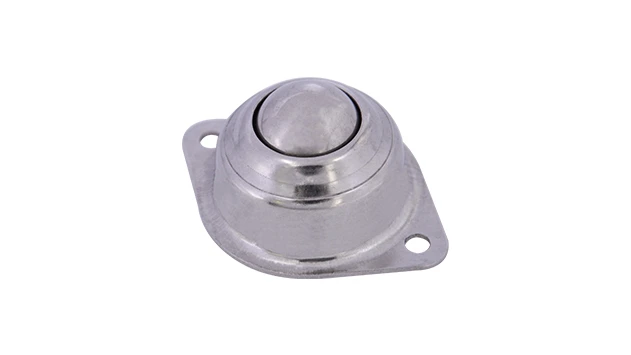
Stainless Steel Swivel Roller Balls 1 Inch
Swivel roller ball casters are convenient and flexible to roll,high-speed and stable operation, used for rotating and changing the direction of the conveyor.Ball transfer unit is made of high quality carbon steel, anti-corrosion and wear resistance.
Walk into a modern 3C assembly workshop, and you'll notice a symphony of precision: workers hunched over delicate circuit boards, robotic arms placing tiny components, and conveyor belts carrying half-assembled devices to the next station. But behind this harmony lies a hidden challenge—one that manufacturers in the 3C industry (consumer electronics like smartphones, laptops, and wearables) face daily: how to keep up with lightning-fast product cycles, ever-changing batch sizes, and the need for pinpoint accuracy , all while keeping costs in check and workers comfortable.
Traditional assembly lines, with their fixed workstations and rigid material flow systems, often fall short. They're slow to adapt when a new model launches, waste time on unnecessary material handling, and can even increase the risk of product damage or worker fatigue. That's where custom lean solutions come in—and at the heart of many of these solutions? components like stainless steel swivel roller balls 1 inch . These small but mighty parts, paired with modular tools like lean pipe workbenches, flow racks, and conveyors, are transforming how 3C assembly lines operate.
3C Assembly: Why One-Size-Fits-All Just Doesn't Work
Let's break down what makes 3C assembly so unique. Unlike automotive or appliance manufacturing, where products stay consistent for years, 3C products evolve in months. A smartphone model might have a lifespan of 12–18 months before a new version with slimmer designs or upgraded components hits the market. This means assembly lines can't afford to be "set it and forget it"—they need to adapt quickly .
Add to that the mix of batch sizes . One week, a factory might be producing 10,000 units of a popular tablet; the next, switching to 500 units of a niche smartwatch accessory. Fixed workstations with permanent tooling can't pivot that fast, leading to downtime while workers reconfigure equipment or, worse, leaving valuable floor space cluttered with underused tools.
Then there's the delicacy of the products . Circuit boards, microchips, and LCD screens are sensitive to static electricity (hence the need for ESD workbenches) and physical damage. Dropping a component or even sliding it roughly across a work surface can ruin hours of precision manufacturing. Workers need tools that let them handle these parts gently, without sacrificing speed.
And let's not forget the human element . Assembly line workers spend 8+ hours a day at their stations, repeating motions like reaching for parts, sliding components, or bending to grab materials from low shelves. Repetitive strain injuries are a real risk, and discomfort leads to lower productivity. The best assembly solutions don't just boost efficiency—they make work easier, safer, and more sustainable for the people on the line.
Stainless Steel Swivel Roller Balls 1 Inch: The Unsung Hero of Smooth Material Flow
Enter the stainless steel swivel roller balls 1 inch —small, spherical components that might not look like much, but play a huge role in solving these 3C assembly headaches. These balls, often embedded into workbench surfaces, flow rack shelves, or conveyor track guides, allow materials to glide with minimal friction. Think of them as tiny, omnidirectional wheels that let workers push, pull, or rotate components with barely a touch.
Why Stainless Steel? Why 1 Inch?
Stainless steel isn't just a material choice—it's a practical one. 3C workshops can get messy: oils from machinery, dust from packaging, even occasional spills. Stainless steel resists rust and corrosion, ensuring the roller balls stay smooth and functional for years, unlike plastic alternatives that can crack or degrade over time. It's also easy to clean, which is critical for maintaining the sterile conditions needed when handling sensitive electronics.
The 1-inch size is intentional, too. Smaller balls (like 0.5 inch) might struggle with heavier loads, such as a tray of circuit boards or a metal housing for a laptop. Larger balls could take up too much space, making it hard to place small components precisely. At 1 inch, these roller balls strike a balance: they can support up to 50kg per ball (depending on the design) while keeping surfaces flat enough for detailed work.
| Feature | Stainless Steel Swivel Roller Balls (1 Inch) | Traditional Plastic Roller Balls |
|---|---|---|
| Durability | Resists rust, corrosion, and impact; lasts 5+ years in heavy use | Prone to cracking or warping; needs replacement every 1–2 years |
| Weight Capacity | Up to 50kg per ball (ideal for 3C component trays) | Typically 15–20kg per ball; risky for heavier loads |
| Friction & Smoothness | Precision bearings reduce friction; materials glide with minimal force | Inconsistent; plastic can "stick" over time, requiring frequent lubrication |
| ESD Compatibility | Can be grounded for ESD protection (critical for 3C components) | Static buildup risk; not suitable for sensitive electronics |

Building a Lean Ecosystem: How Roller Balls Work with Lean Pipe Workbenches, Flow Racks, and Conveyors
Stainless steel swivel roller balls don't work alone. They're part of a larger lean ecosystem designed to streamline every step of the assembly process. Let's look at how they team up with key tools like lean pipe workbenches , flow racks , and conveyors to create a cohesive solution.
1. Lean Pipe Workbenches: The Heart of the Station
The workbench is where the magic happens for assembly workers—and it's where stainless steel roller balls shine brightest. A typical lean pipe workbench uses modular aluminum pipes and internal rotary joints, making it easy to adjust height, add shelves, or reconfigure the layout in minutes. When you embed 1-inch stainless steel roller balls into the work surface, suddenly, moving materials becomes effortless.
Imagine a worker assembling a laptop keyboard. Instead of reaching across a static table to grab a tray of keycaps, they can slide the tray smoothly across the roller balls with one hand, keeping their focus on placing components. No more straining shoulders or wasting time repositioning heavy trays. And because the workbench is modular, if the next laptop model has a wider keyboard, workers can quickly add an extension with more roller balls—no need to replace the entire bench.
For ESD-sensitive tasks (like handling motherboards), these workbenches can be paired with ESD mats and grounded roller balls, ensuring static electricity is safely dissipated. This isn't just about protecting products—it's about giving workers peace of mind that their tools are on their side.
2. Flow Racks: Keeping Materials Moving, Not Waiting
Walk down any 3C assembly line, and you'll see piles of components: screws, cables, plastic casings, and more. If these materials are stored on static shelves, workers waste time walking back and forth to grab what they need. Flow racks —tilted shelves equipped with roller tracks—solve this by letting materials "flow" to the front as they're used, following the "first in, first out" (FIFO) principle.
But flow racks only work well if the roller tracks are smooth. That's where stainless steel swivel roller balls come in. Unlike traditional roller tracks with fixed wheels, racks fitted with 1-inch swivel balls let workers adjust the angle of the shelf slightly, ensuring even heavy trays (like those filled with metal phone frames) glide down without jamming. This reduces the risk of materials getting stuck and causing bottlenecks.
One electronics manufacturer in Shenzhen reported a 25% reduction in material retrieval time after switching to flow racks with stainless steel roller balls. Workers no longer had to bend down to reach the back of shelves—materials came to them, cutting down on fatigue and speeding up assembly.
3. Conveyors: Connecting Stations Without the Hassle
Once a component is assembled, it needs to move to the next station—whether that's testing, packaging, or quality control. Conveyors are the backbone of this material flow, but traditional belt conveyors can be rigid and hard to clean, making them a poor fit for 3C's ever-changing needs.
Modular conveyors with stainless steel roller ball tracks offer a better alternative. These systems use the same 1-inch roller balls to create flexible, easy-to-reconfigure tracks. Need to add a 90-degree turn to route products around a new workbench? Just snap together a few aluminum guide rails and roller ball sections—no welding or heavy tools required. And because the roller balls are smooth, they're gentle on delicate components, reducing the risk of scratches or dents during transport.

From Concept to Assembly Line: A Real-World Example
Let's put this all together with a hypothetical (but realistic) scenario. A 3C manufacturer in Dongguan specializes in assembling smartwatch motherboards. They recently won a contract to produce a new model with a smaller, more compact design—and needed to reconfigure their line in under two weeks to meet the launch deadline.
Here's how a custom lean solution with stainless steel swivel roller balls transformed their process:
- Day 1–3: Assessing the Needs The team identified key pain points: their old wooden workbenches were heavy and hard to adjust, static was damaging 2–3% of circuit boards, and workers were spending 15 minutes per hour just moving component trays.
- Day 4–7: Designing the Solution They opted for modular lean pipe workbenches with ESD surfaces and embedded 1-inch stainless steel roller balls. Flow racks with roller ball tracks were added next to each workstation to keep components within arm's reach. A short, reconfigurable conveyor with roller ball guides connected the assembly stations to the testing area.
- Day 8–10: Installation & Training The aluminum pipes and joints for the workbenches were assembled in hours (no welding needed). The roller balls were screwed into the workbench surfaces and flow rack shelves, and ESD grounding was added. Workers spent a half-day training on adjusting the benches—within hours, they were customizing their stations to their height and workflow preferences.
- Day 11–14: Full Production The new line launched on time. Material retrieval time dropped by 40%, static damage fell to 0.5%, and workers reported less shoulder and back strain. Best of all, when the next smartwatch model arrives in 12 months, they can reconfigure the entire line in a weekend by rearranging the lean pipes and swapping out a few roller ball sections.
"Before, we'd dread model changes—they meant days of downtime and grumpy workers. Now? We can switch from assembling a 42mm watch to a 46mm watch in 4 hours. The roller balls make moving trays so easy, even the new interns can keep up. It's not just about speed—it's about making the job feel less like work and more like problem-solving."
— Production Manager, Dongguan 3C Manufacturer
Beyond Efficiency: Sustainability and the Lean Promise
At the core of these custom solutions is a simple but powerful idea: lean manufacturing . Lean isn't just about cutting costs—it's about eliminating waste (time, materials, space) and building systems that improve over time . Stainless steel swivel roller balls, lean pipe workbenches, and modular conveyors embody this perfectly.
Take the aluminum lean pipes used in the workbenches and flow racks, for example. Unlike traditional steel pipes, they're lightweight, recyclable, and can be disassembled and reused dozens of times. When a workstation is no longer needed, the pipes and joints can be repurposed into a new flow rack or conveyor—no waste, no extra cost. Even the stainless steel roller balls, with their long lifespan, reduce the need for frequent replacements, cutting down on landfill waste.
And because these systems are so easy to adjust, they grow with your business. A small factory starting with 5 workstations can add 10 more as orders increase, using the same components. This scalability means you're not just investing in equipment—you're investing in a long-term partner for growth.
Ready to Transform Your 3C Assembly Line?
The 3C industry waits for no one. Products evolve, customer demands shift, and the factories that thrive are the ones that can adapt. Custom lean solutions, built around components like stainless steel swivel roller balls 1 inch , lean pipe workbenches , flow racks , and conveyors , aren't just tools—they're the key to staying competitive in a fast-paced world.
Whether you're struggling with downtime during model changes, high static damage rates, or worker fatigue, the right lean solution can turn those challenges into opportunities. And it all starts with small, thoughtful components that make a big difference—like a 1-inch stainless steel ball that keeps your assembly line moving, smoothly and efficiently, day in and day out.